
Why walkers choose a waist belt over a backpack
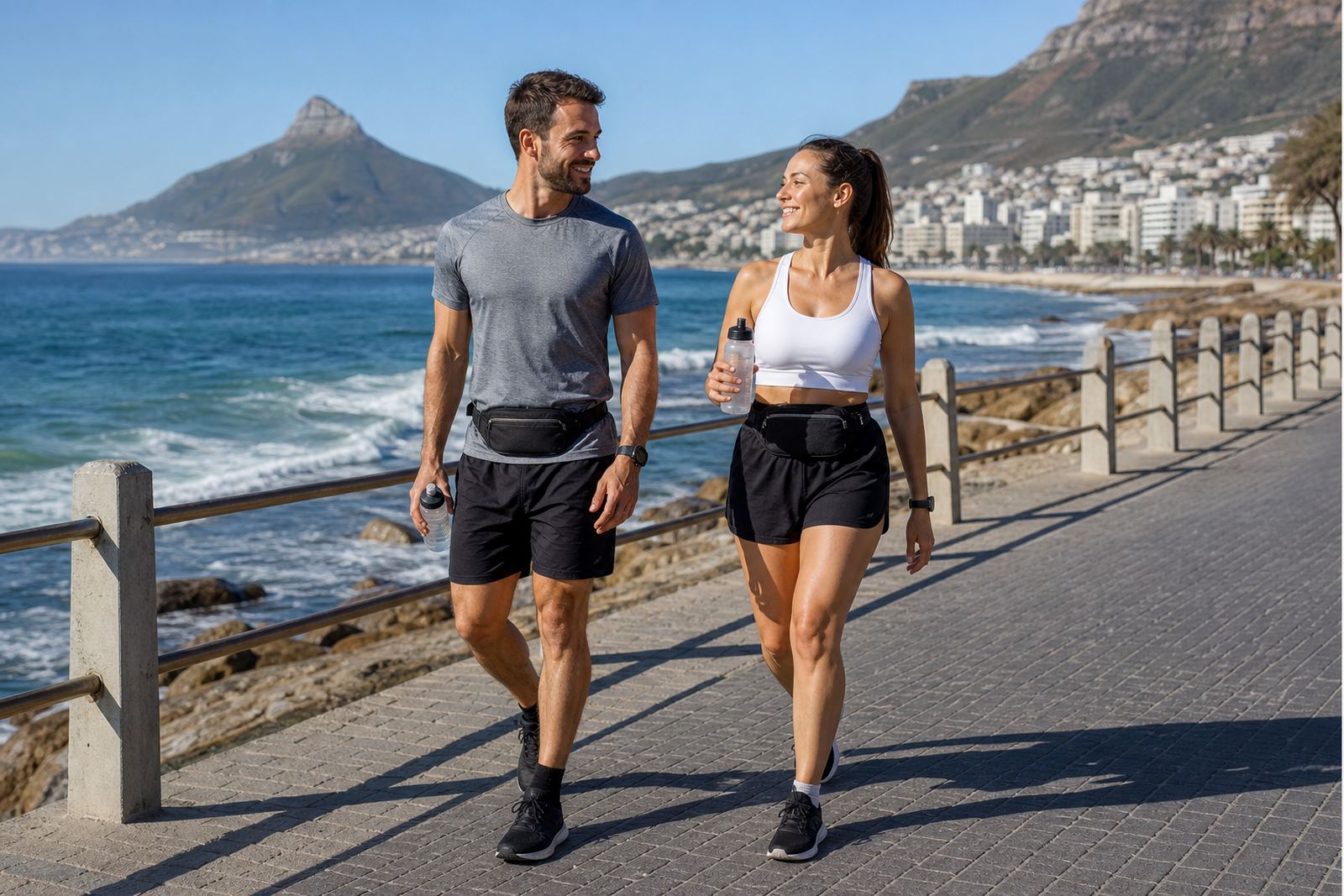
For walkers, the main challenge is simple: you want enough space for the basics without carrying a heavy bag on your back. A good waist belt keeps weight low and centred, which helps on long promenade walks, suburban routes, trail paths and event days when you are on your feet for hours.
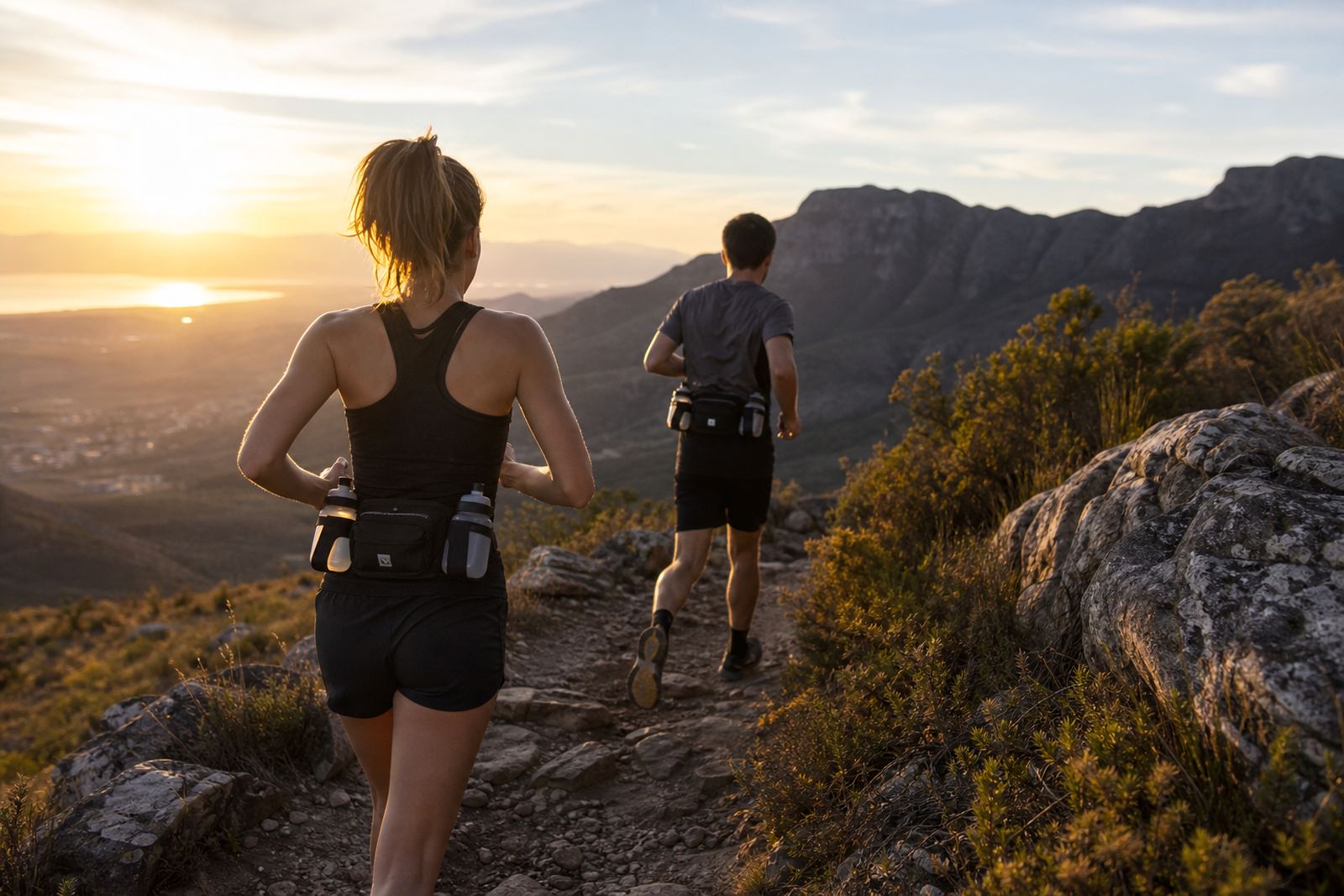
Many walkers use a small bottle, soft flask or hydration pouch, plus a phone, house keys, medication and a snack. A waist belt is easier to wear in hot weather too, especially in coastal areas like Cape Town, Durban and George where a backpack can trap heat and sweat. If you walk before sunrise or after work, reflective detail and a secure fit matter as much as storage.
Waistbag Run focuses on belts that sit snugly without bouncing. That matters for walkers who keep a steady pace, carry a water bottle, or need hands free on uneven paths. It also helps when you are walking through busy event starts where a bag that swings side to side becomes annoying very quickly.
Typical walker kit and how to pack it
A walker’s kit should be practical and light. The best setup is usually one main belt with one or two pockets, plus a hydration option if the route is longer than a normal loop. For shorter city walks, a slim carry setup is often enough. For trail walks or charity events, a little more structure helps.
- 500 ml to 750 ml water carry for short to medium routes
- Soft flask or compact bottle for longer walks
- Phone in a zipped pocket so it does not rub or fall out
- Keys, ID and a bit of cash or a card
- Energy chew, gel or snack for walks over 60 minutes
- Small tissue pack or blister care item
Pack heavier items close to the centre of the belt. Keep the phone on the side that feels easiest to reach without twisting too much. If you use a hydration bottle, check that the opening is easy to access while moving, not only when standing still. That simple layout saves time at water points and keeps the walk comfortable.
Planning for walk events, clubs and charity routes
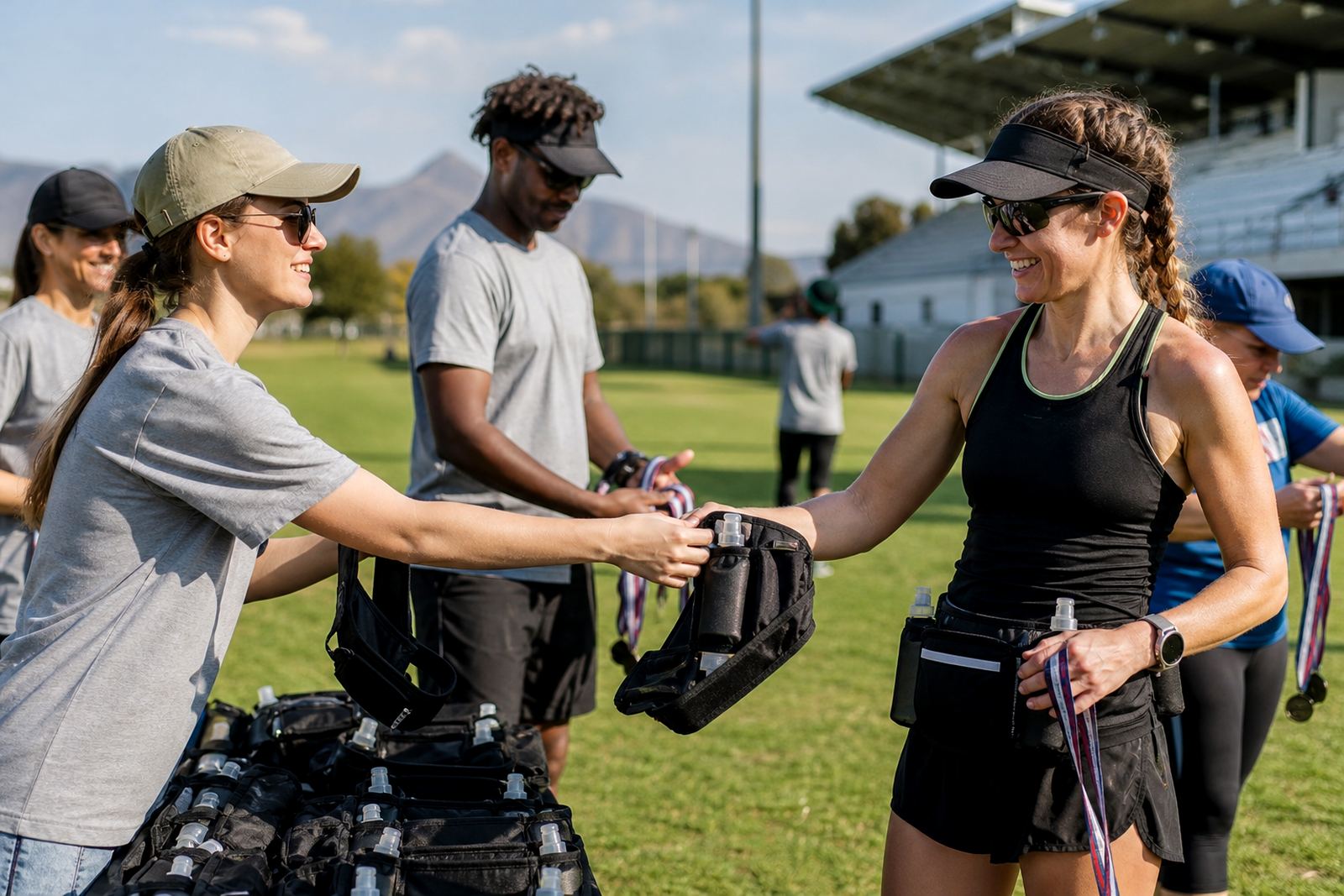
Event walkers often need more than one belt size, especially when the group includes different body shapes, clothing layers and route lengths. Waistbag Run assists with sizing guidance and bulk order planning for clubs, race organisers and charity walks in Stellenbosch, Cape Town, Johannesburg, Durban and George.
When planning for a walk event, think about start times, water stations and the terrain. A flat road route in Bellville or Somerset West has different needs to a trail walk outside Stellenbosch. If the event starts early and temperatures rise later, walkers may want extra water carry at the start and lighter carry after the first checkpoint. For longer community walks, crew belt kits can also help marshals keep radios, hand sanitiser and small supplies close at hand.
- Confirm walker numbers early so the right mix of sizes can be planned
- Set aside extra belts for late entries and replacement needs
- Match hydration carry to route length and water point spacing
- Allow for different clothing layers if the event is in winter
- Brief participants on where to place keys, phones and bottles
Good planning also cuts down on confusion on event morning. If walkers know what to carry and where to store it, registration moves faster and there is less stress at the start line.
Sizing, comfort and fit for long-distance walkers
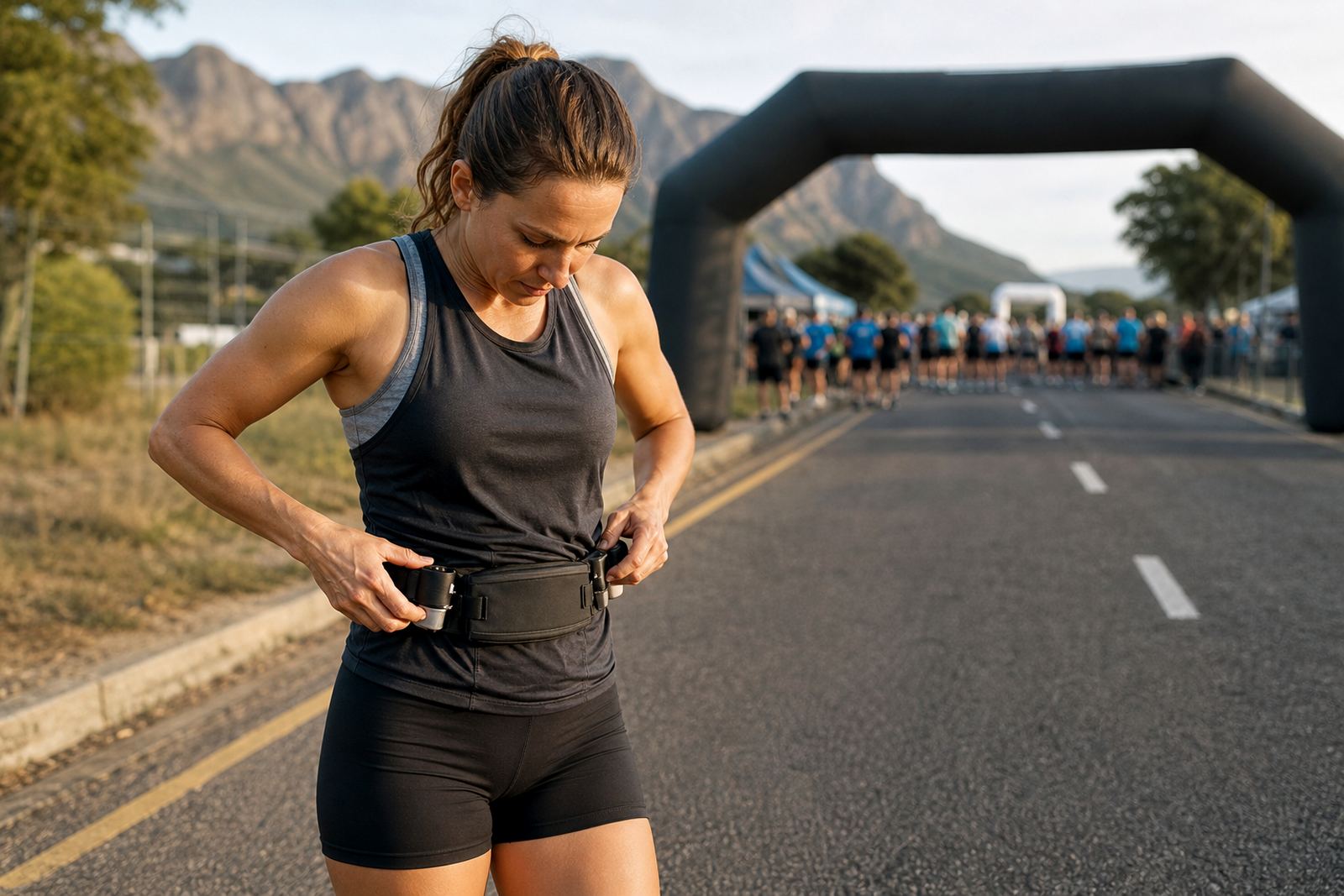
A waist belt only works well if it fits properly. If it sits too high, it can ride up over the stomach. If it is too loose, it will bounce on longer walks and feel irritating by the second or third kilometre. The aim is firm, not tight. You should be able to breathe normally and still feel the belt stays in place.
For walkers who move between road, park and trail routes, comfort becomes even more important. Many people walk in the morning before work or after dark, so a belt that stays stable over a T-shirt, lightweight jacket or running top makes daily use easier. In humid areas like Durban, moisture management matters too. A belt that dries quickly is easier to wear often, and it is less likely to feel sticky on repeated use.
Participant sizing helps reduce returns and last minute swaps. For club orders, it is worth checking waist measurements before bulk ordering rather than guessing sizes by clothing label. One wrong assumption can leave some walkers with belts that are too tight and others with too much slack.
Common mistakes walkers make with storage
Most problems come from overpacking or choosing the wrong carry style. Walkers sometimes try to use a belt like a daypack, filling every pocket and then wondering why it bounces or pulls to one side. The better approach is to keep the load simple and spread it evenly.
Another common mistake is placing the phone in a pocket that is easy to reach but not secure enough. On a long walk, a phone can slide if the zip or closure is not properly shut. Keys are another issue. Loose keys can dig into the hip or scratch the phone, so they should always be clipped or tucked into a separate pocket if possible.
Water planning also gets overlooked. In summer, a walker on a 10 km route may need a different setup to someone doing a 3 km school walk or a morning stroll around the estate. If the route has limited water points, carry enough from the start. Municipal rules at parks and public open spaces may also limit what you can set down or leave unattended, so a belt that keeps everything on you is safer and more practical.
- Do not overload the belt with unnecessary items
- Do not wear it too loose because the bounce will get worse
- Do not assume one size suits every walker in a group
- Do not store keys loose next to a phone
- Do not leave hydration planning until race morning
Budget ranges for walker groups and events
Budget depends on quantity, carry style and whether the order is for individual walkers, a club, or a one-day event. In general, entry level walker belts are suitable for light storage and short routes, while more structured hydration belts suit longer distances and repeat use. For clubs and organised walks, bulk planning usually gives better value per unit than buying small numbers one by one.
As a guide, lighter waist belts for simple storage can suit smaller budgets, while hydration-focused belts for longer routes fall into a higher range because of extra structure and carry features. A practical budget for casual walkers might start around a few hundred Rand per belt, while larger event or club orders can be planned with volume in mind. Exact pricing depends on sizing, quantity and the layout required for the route.
For organisers in Stellenbosch, Paarl, Somerset West and beyond, it helps to decide early whether you need standard walker belts, hydration support, or a mixed order for marshals and participants. That keeps the spend sensible and reduces last minute buying, which usually costs more and leaves less room for fit checks.
Waistbag Run handles repeat order support, dispatch coordination and event day support from its Stellenbosch base, so walkers and organisers can plan ahead instead of scrambling at the end.