What marathon runners need on the road
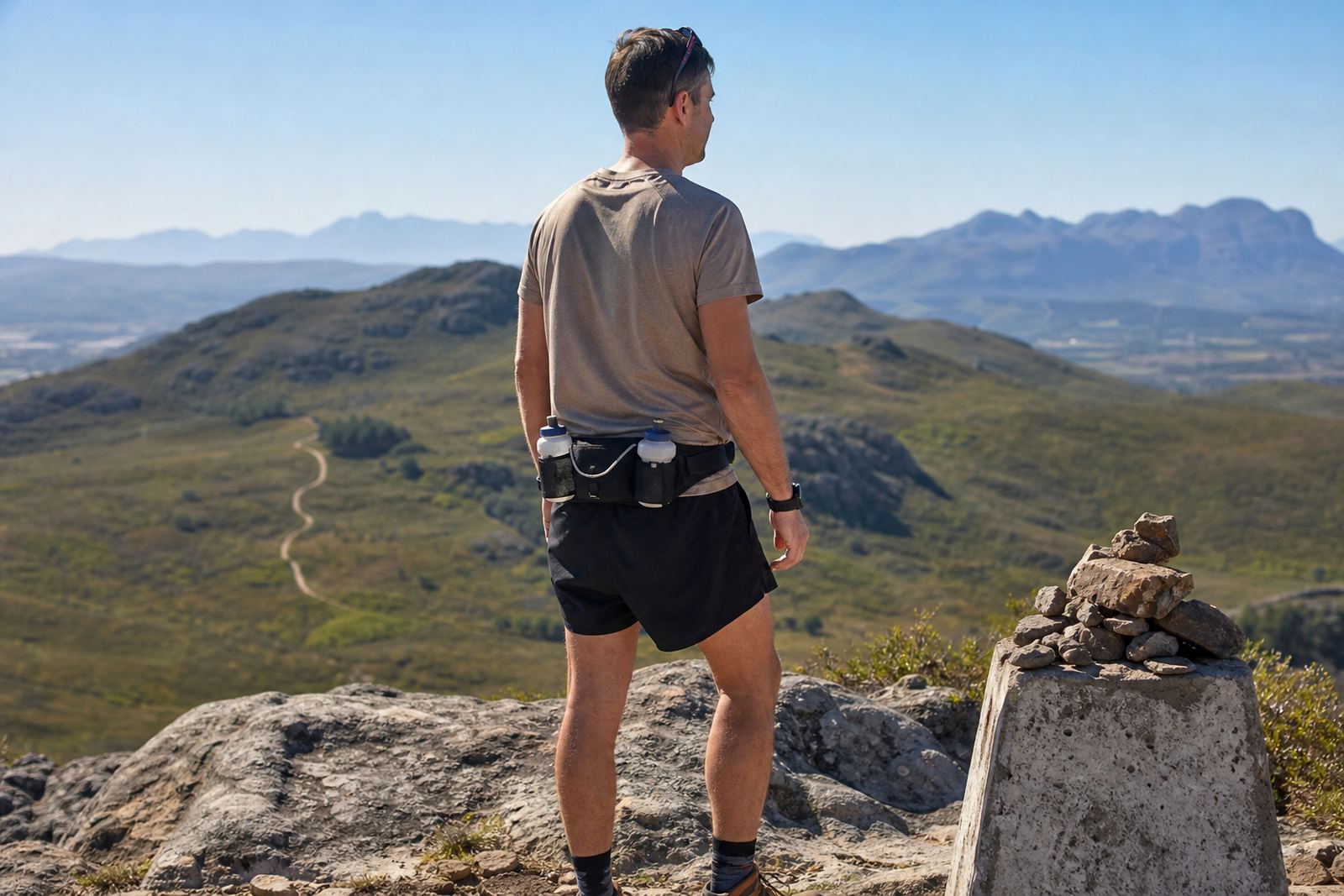
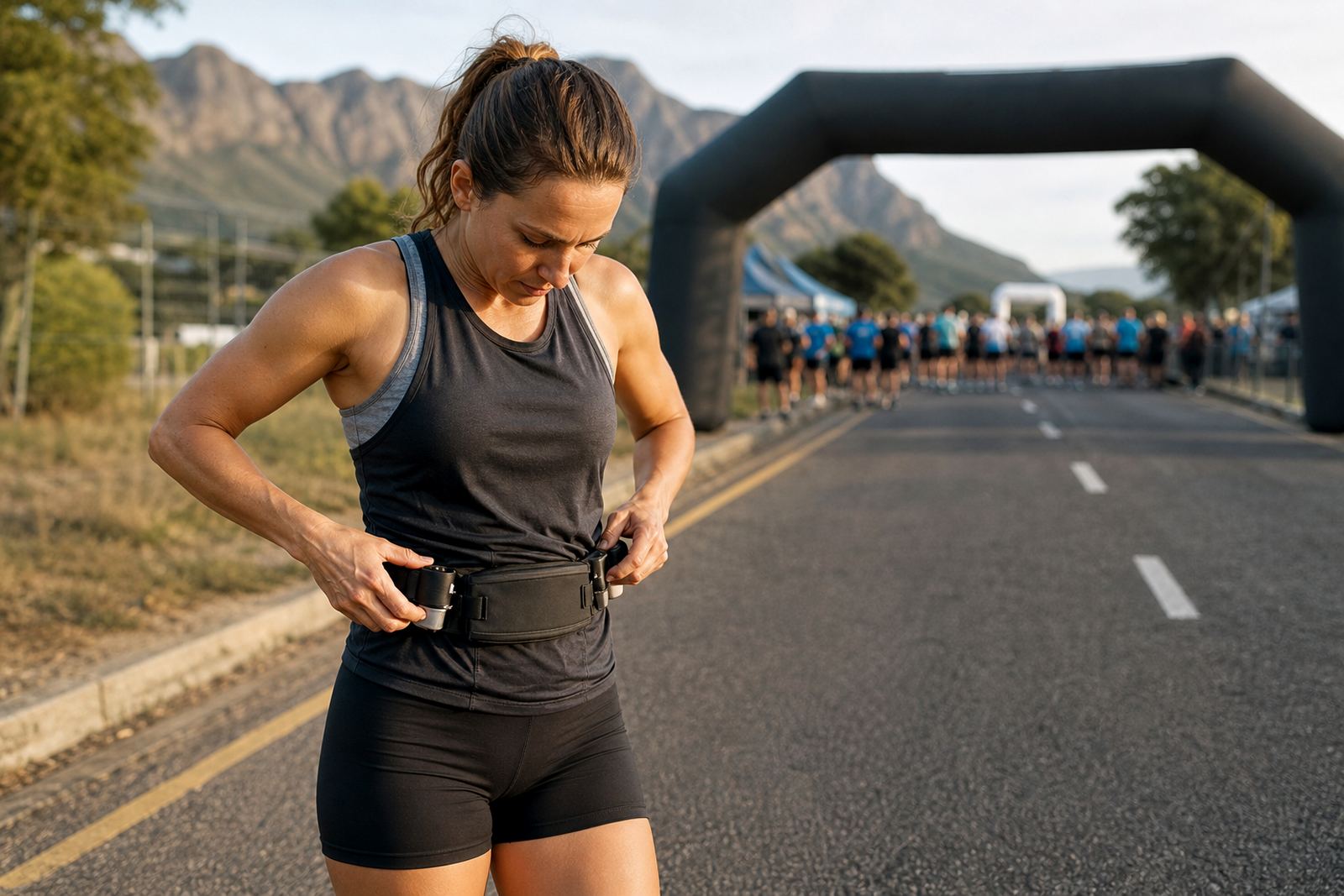
For most marathon runners, the challenge is not just carrying a bottle. It is keeping the essentials close enough to reach at pace, without a vest or belt shifting every time you take a corner or hit a hill. In hot inland races and humid coastal events alike, the kit has to stay put from the first kilometre to the last, even when the body is sweating hard and the roads are busy.
A good marathon belt should carry fuel, a phone, a key and enough water for your plan. Some runners want a slim setup for short long runs, while others need more space for race day, especially if they are pacing, using a live tracking app, or moving between aid stations where the gaps feel long.
Typical belt setup for a marathon block
Most marathon runners choose a simple layout that keeps the heavy items centred and the frequent-use items easy to reach. The goal is less faffing on the move and more steady rhythm through your training block.
- 1 to 3 energy gels or chews for long runs and race day
- A phone in a snug pocket with enough depth to stop bounce
- One soft flask or bottle for 250 ml to 500 ml hydration
- House key or car key in a zipped pocket or clip point
- Small salt tabs, vaseline sachet, or a folded note card if needed
For runners doing early starts in the Cape or evening sessions in Gauteng, reflective details can also help. If you train in wet coastal weather or on dusty gravel roads, a belt with a firmer pocket closure keeps contents cleaner and easier to reach when you are tired.
How we plan for race day and training runs
Marathon planning starts with the runner’s pace, route and refuelling habit. A person doing a 3:30 target in Stellenbosch has different needs from a first-time marathon runner doing long tempo runs in Durban or a club athlete training through winter wind in Cape Town. We look at how much water you want to carry, where you prefer the bottle to sit, and whether you use two hands or one hand when taking fuel on the move.
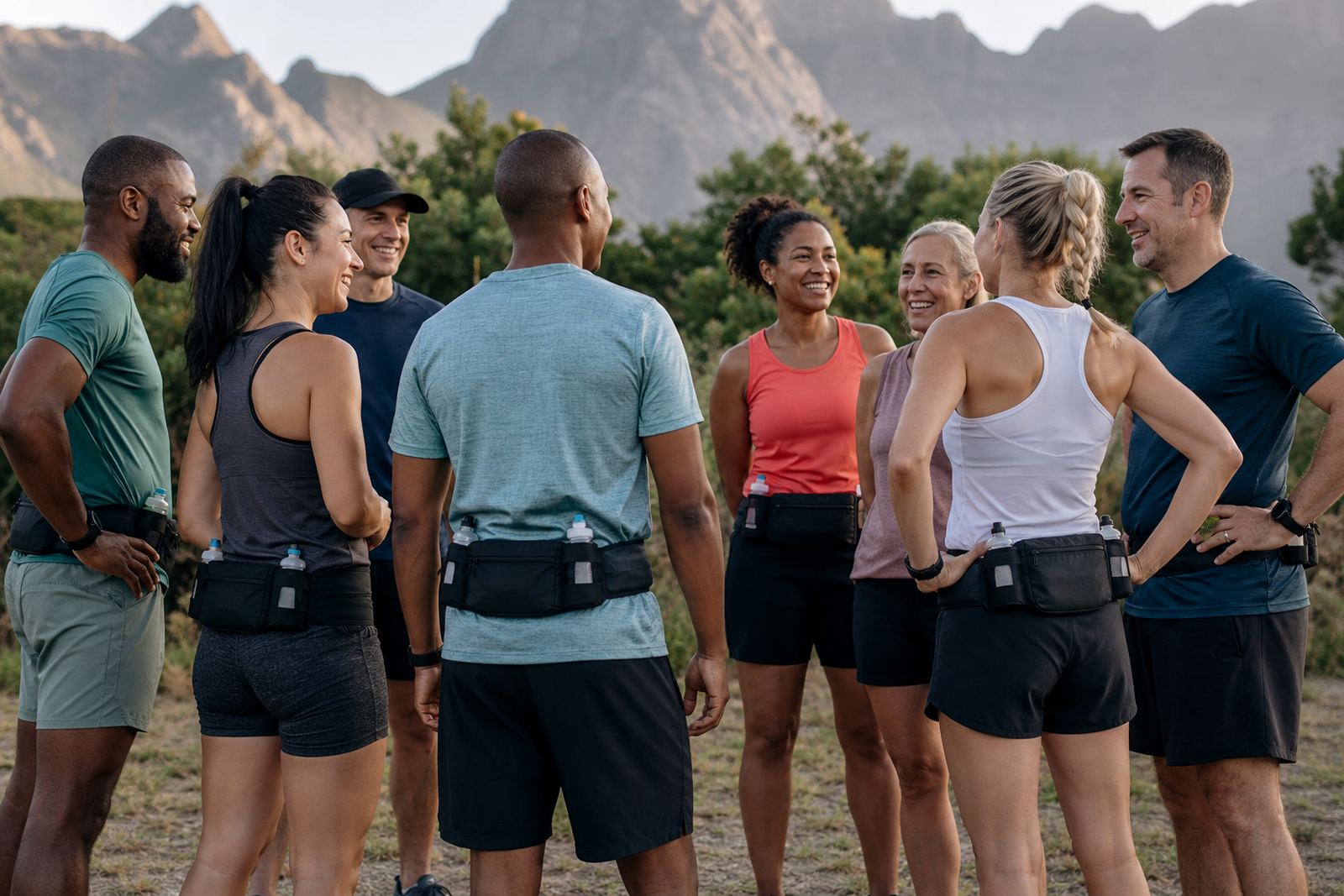
For clubs and events, we also help with participant sizing, bulk order planning and dispatch coordination. If a race needs belts for support crews, or a custom colour run for a team, we can plan quantities around the field size and the pack-out date. If the event is in a municipal area with limited access, or a trail start with tight collection windows, that timing matters just as much as the product spec.
- Measure the runner’s waist where the belt will sit, not over thick clothing
- Check whether the runner prefers front access or side access for hydration
- Match pocket size to the phone and key shape, some phones need deeper storage
- Allow for salt, gels and race-day extras rather than only the shortest training run
Common mistakes marathon runners make
One common mistake is choosing a belt that is too loose because it felt comfortable for a 5 km jog. On marathon distance, looseness becomes bounce and bounce becomes irritation. Another issue is packing too much into one side, which pulls the belt off balance and makes it twist on long descents or into a headwind.
Runners also often forget to test the belt with the same shoes, socks and top they will wear on race day. That sounds small, but a tighter waistband after breakfast, or a pocket that is awkward with gloves, can turn into a real nuisance by halfway. We also see people skip the hydration layout check and then end up stopping too often to drink, which breaks the running rhythm and can cost time.
On hotter South African races, overpacking can trap extra heat around the waist. On wetter days, loose items can pick up grit and sweat, so it helps to keep the load simple and only carry what you truly need.
Budget ranges for runners and clubs
Budget depends on quantity, pocket layout and whether the order is for an individual runner, a club, or a full race field. For a single marathon runner, a practical belt setup generally falls in the R250 to R650 range depending on the storage and hydration requirement. For clubs and event organisers, bulk pricing improves with larger quantities, especially when the same sizing and colourway is repeated across the order.
Where custom colour runs or crew belt kits are needed, costs depend on order volume and the number of fit groups. A race pack insert order may be priced separately from the belts themselves, while repeat order support helps when you need the same setup for a second event in Johannesburg or Durban without starting from scratch. It is best to budget for a sizing round first, then allow for a small contingency if the field is split across several waist sizes.
Ordering from Stellenbosch to the rest of South Africa
Waistbag Run is based in Stellenbosch, Western Cape and supplies marathon runners, clubs and race teams across Cape Town, Johannesburg, Durban, George, Paarl, Somerset West and Bellville. Our team handles product fit briefing, event belt supply, logistics and dispatch, and event day support where required. If you are planning for a marathon cycle, the earlier you confirm your quantities the easier it is to manage sizes, packing and delivery timing.
Clients usually reach us through the enquiry form on our contact page. From there we can discuss the runner profile, the route conditions, and whether the order is for training or race day. If your group trains through load-shedding windows, or you are coordinating from a club office with limited collection time, clear planning makes the whole job simpler and less stressful.