

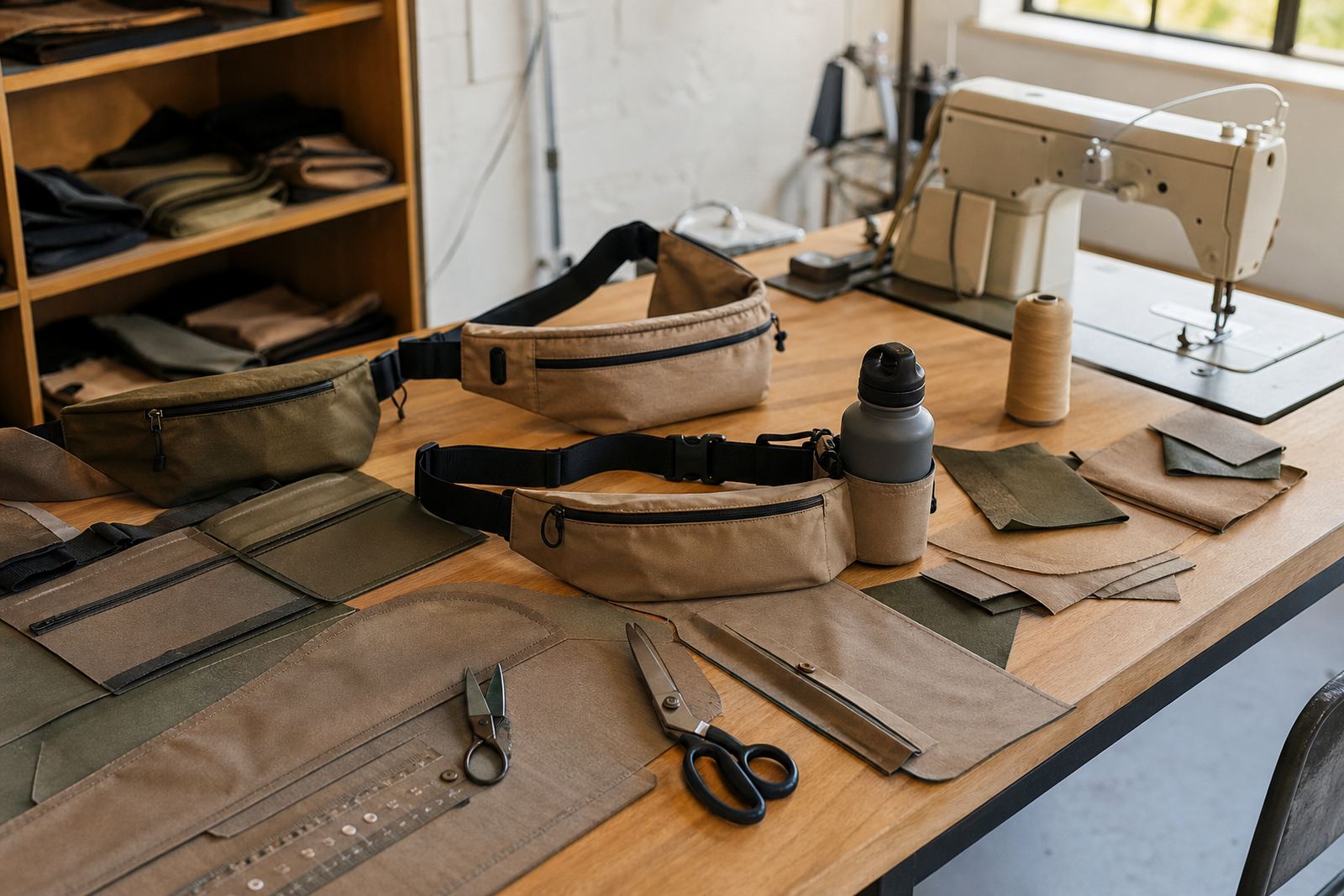
2012: the first belts and the first questions
Waistbag Run began in Stellenbosch in 2012, close to the mountain trails and road routes where many local runners test their kit before sunrise. The early focus was simple: make a waist belt that could handle gels, keys, a phone and hydration without bouncing around on climbs, uneven gravel, or hot summer starts. That first year was shaped by real conversations with trail runners, race organisers and club members who were tired of carrying too much in their hands or packing items into shorts pockets that never quite held up.
From the start, the work was practical. We looked at fit, strap stability and how the belt behaved over distance. Early users wanted something that sat close to the body, could be adjusted quickly, and stayed comfortable once the temperature climbed. In the Western Cape, that mattered from the first cool winter long run to the dry wind that often arrives later in the day.
2013 to 2015: shaping the product around South African running
As the business grew, the product conversation became more detailed. Runners from Cape Town, Paarl, Somerset West and Bellville wanted better sizing options and more reliable storage placement. Event participants asked for belts that could work for 10 km road races one weekend and trail entries the next, without needing a completely different setup. Those requests helped refine the design direction and set the standard for what we would carry forward.
During this period, we built our service around fit and function rather than one-size-fits-all selling. That included layout advice for hydration, more careful sizing guidance, and stronger support for clubs placing repeat orders. The lesson was clear: a belt that looks fine on a shelf can still fail on a steep descent if the fit is wrong or the load sits too low.
- More attention to waist fit and adjustment range
- Better storage balance for hydration and small essentials
- Clearer advice for trail, road and race day use
- Early bulk planning for clubs and event teams
2016 to 2018: moving from local runs to larger events
By 2016, more event organisers were approaching us for participant supply and crew belt kits. That changed the scale of the work. We had to plan around race pack inserts, batch sizing, dispatch timing and event day support, all while keeping the product easy to use for runners with very different needs. A good race belt is not only about carrying water, it must also help people move freely through warm-up, start corrals and the first hard kilometres.
These years also taught us more about South African conditions. Coastal humidity in Durban, winter rain in Cape Town and the hotter inland starts in Johannesburg all affect comfort and grip. We adjusted our recommendations accordingly, because what works at sea level may feel different at altitude or in damp weather. It sounds small, but a belt that rides well in one region can feel off by the second water point elsewhere.
- Event belt supply for organised races and local series
- Participant sizing support for mixed entry fields
- Dispatch coordination for timed event deadlines
- Practical advice for different climates and terrain
2019 to 2020: systems, stock flow and careful growth
As demand increased, the business needed tighter systems. We put more structure around production scheduling, order tracking and logistics so we could keep up with club orders, event requests and repeat customer needs without losing the personal side of the service. This was especially important for organisations that order by size range, team colour or event category, because one missed count can affect an entire race weekend.
The team also became more specialised during this time. Michael van der Merwe continued as Managing Director, with Ayanda Ndlovu leading product development, Leandri Botha coordinating sales and events, Sibusiso Khumalo overseeing production, Zanele Petersen handling customer support, and Jaco Visser managing logistics and dispatch. That structure helped us respond more quickly when orders changed or event timelines shifted at short notice. It also gave clients a single team that knew the details, not just the order number.
2021 to 2022: serving more towns without losing the local touch
By the early 2020s, Waistbag Run was supplying runners and event teams across Stellenbosch, Cape Town, Johannesburg, Durban and George, while still working closely with clubs in surrounding areas like Somerset West and Paarl. That wider reach meant more variety in requests, from custom colour runs to crew belt kits for support teams working on course. It also meant more care with packing, because belts needed to arrive ready to use, not needing extra sorting on the morning of the event.
We also saw more training groups looking for repeat order support. Once a club found a fit and layout that worked, they wanted the same solution for new members and returning runners. That consistency matters. In the middle of race season, nobody wants to guess whether their bottle will move too much, or if the belt will sit differently after a few washes.
- Custom colour runs for club and event identity
- Repeat order support for growing running groups
- Race pack inserts and organised pack-out planning
- Ongoing fit briefing for new participants
2023 to today: a steady service built on practical race-day use
Today, Waistbag Run continues to focus on running and hydration waist belts for trail runners, road runners and race events across South Africa. The work is still grounded in the same basics that mattered in 2012: comfort, stability, access and durability under local conditions. We keep listening to runners who train before work, to event organisers working under municipal rules and road closure deadlines, and to clubs that need dependable supply for a full season.
The history of the business is not a story of sudden change, but of careful progress. Every year brought small improvements, better planning and a clearer understanding of what South African runners actually need. From Stellenbosch to Durban, from coastal humidity to inland heat, the aim has stayed the same: keep essentials close, keep movement free, and make race day simpler for the people using the belt.
That is the thread running through our story from the first year of trading to today. We have grown by paying attention, by staying practical, and by treating each order as part of a longer relationship with the running community.