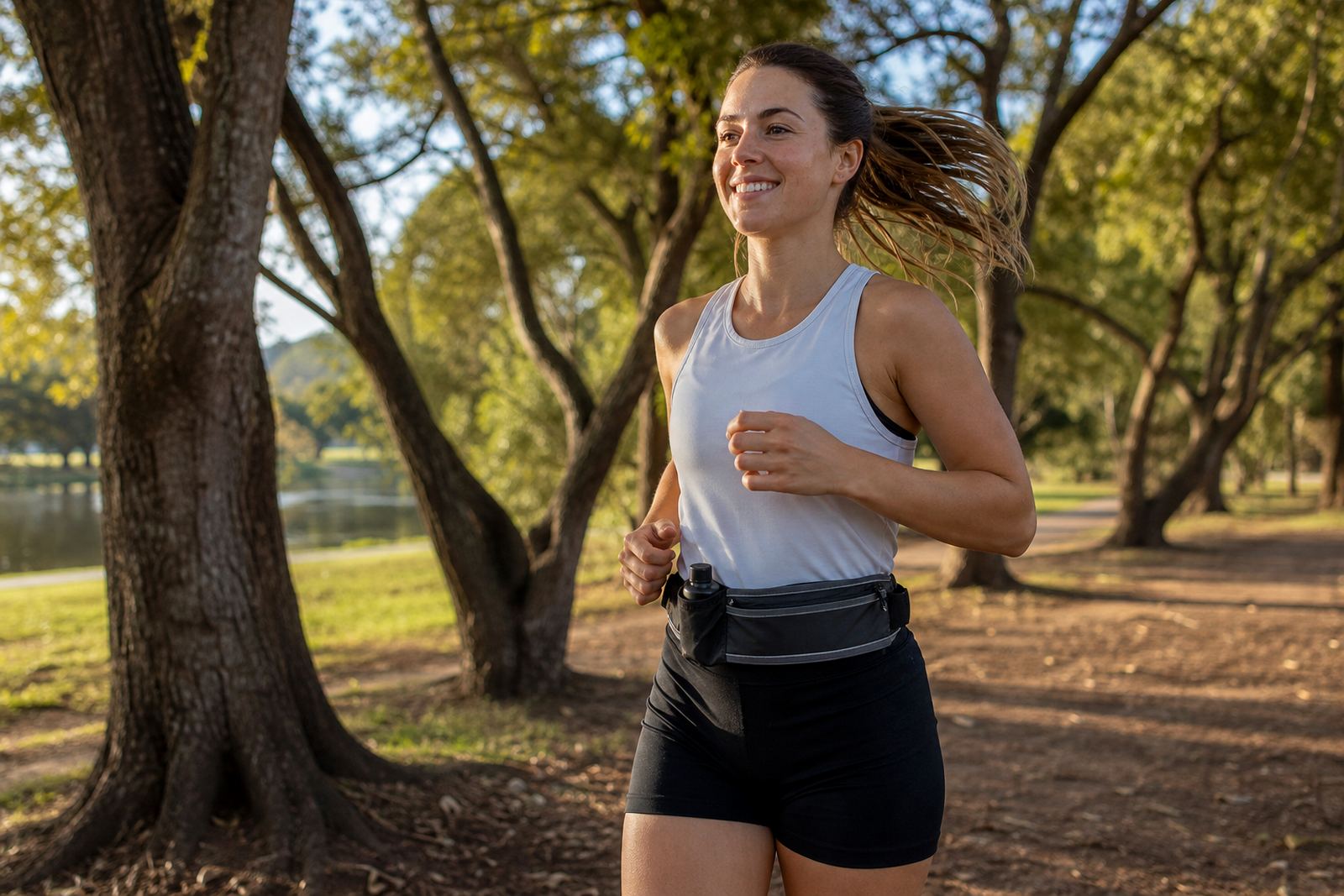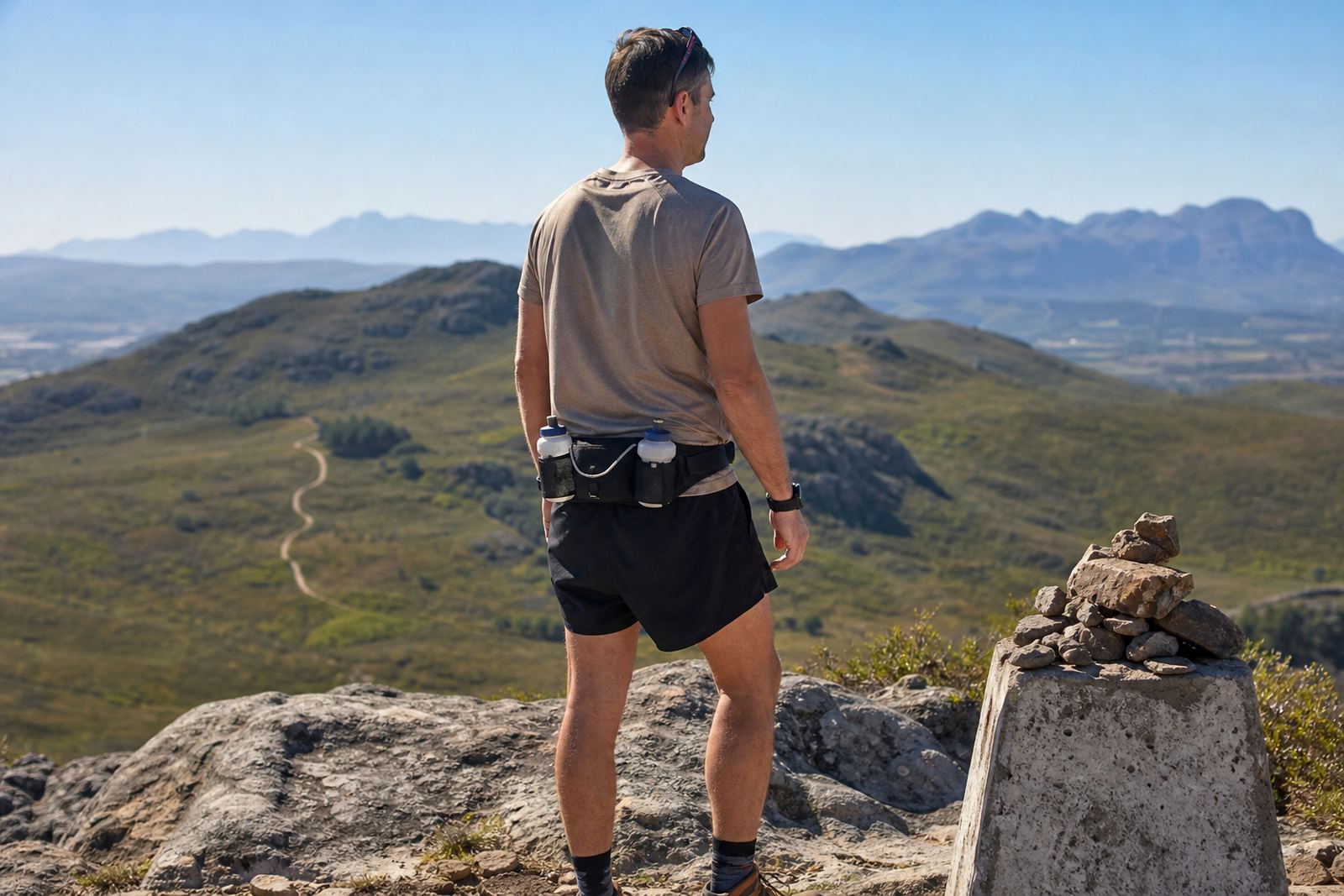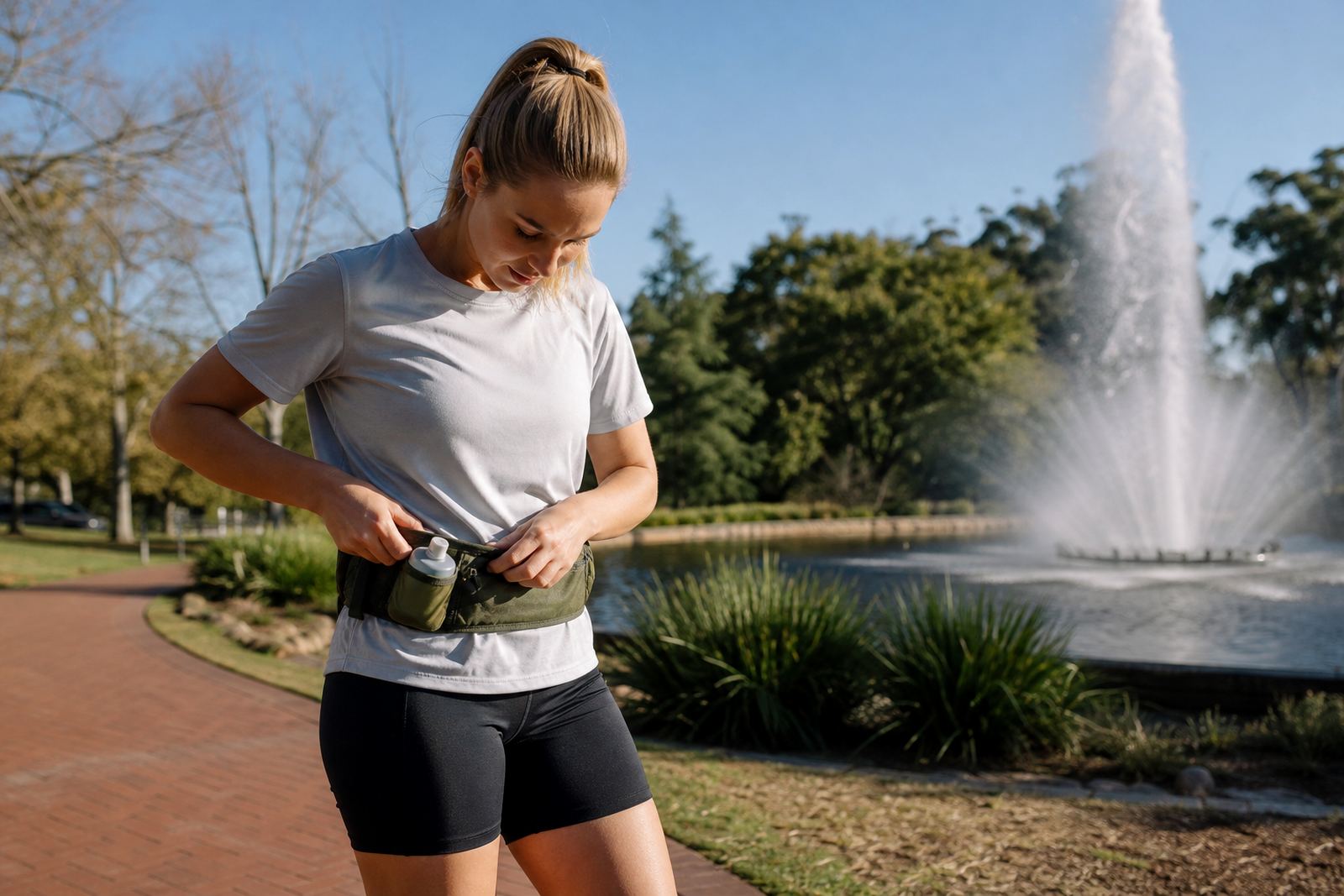

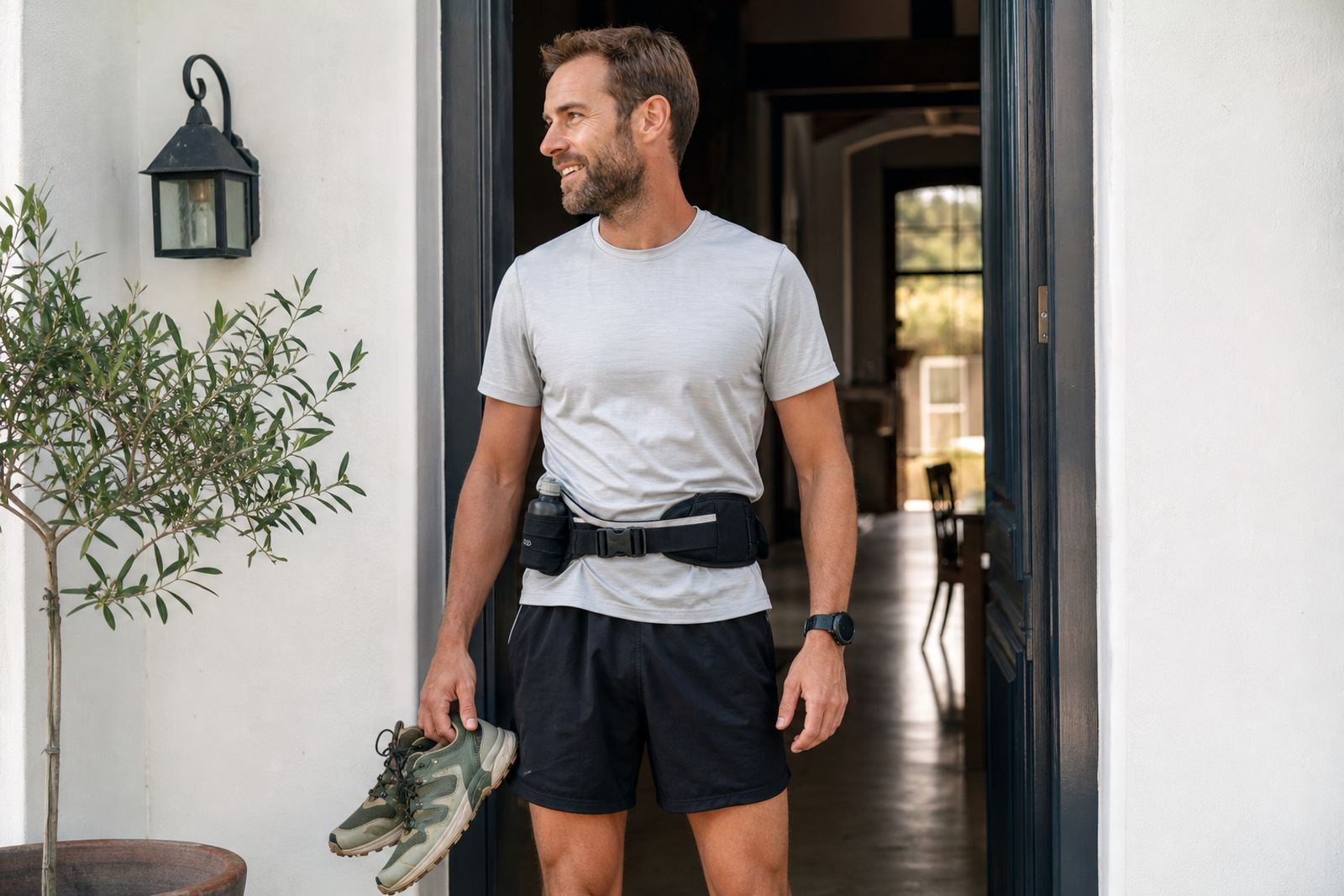
What travelling runners need from a waist belt
When runners are flying to Cape Town for a weekend race, driving up from George for a trail series, or heading through to Johannesburg for a point to point event, luggage space becomes part of the plan. Shoes, gels, socks and a second top already take enough room, so the carry system must be light and flat enough to slip into a kit bag without fuss.
A travel runner usually wants one belt that works before the start line, on the road, and during warm down. That means a snug fit, enough stretch for different waist sizes, and pockets that do not bounce when the body is tired. For runners who train in windy coastal areas like Stellenbosch, Somerset West or Durban, a belt also needs to sit securely when layers are added and removed.
The best choice is often a compact hydration and storage belt with a low profile. It should carry a soft flask or two, a phone, gels, a key and maybe a small card or race tag. Anything more starts to feel bulky, especially on long bus trips or early morning race shuttles.
Typical kit for race travel and trail weekends
For event participants, the waist belt is usually part of a wider kit system. It supports the items that need to stay on the body while the rest of the luggage stays in the car, at the lodge, or with a support crew. If the trip includes a trail run with changeable weather, the layout should be planned around layers and easy access, not just storage size.
- One to two soft flasks for water or hydration mix
- Energy gels or chews for races over 10 km
- Phone in a secure pocket for maps, timing and emergencies
- Car key, room key or a small lockable key pouch
- Folded cash or card for post-race fuel stops
- Light buff, lip balm or salt tabs for hot inland events
For longer race weekends, some runners also carry a small packet of plasters or blister tape. It is a simple addition, but it helps if you are staying in a new town and do not want to search for supplies after a hard run. A good belt keeps these items accessible without forcing the runner to stop and unpack mid route.
Layout advice for stable carry on the move
Layout matters more than most travellers expect. If the heaviest items sit on one side, the belt pulls across the hips and starts to twist. That is why planning the pocket arrangement before the event is worthwhile, especially for runners who are doing back to back races over a long weekend. A balanced set up reduces bounce and saves energy on the climb.
As a rule, place the heaviest item closest to the centre of the body, then spread the smaller items evenly left and right. If the belt has multiple compartments, use the front pocket for quick access items and the side pockets for things that can stay put. In humid coastal weather, it also helps to keep paper items and dry snacks in a sealed pouch so they are not affected by sweat or damp conditions.
For organisers, the same thinking applies to group orders. If a club or event has different distances, the belt specification should match the route length and aid station spacing. A 10 km road runner does not need the same carry layout as a trail participant on a 25 km route. It sounds obvious, but it is often missed when orders are placed late.
Common mistakes before a race weekend
Travel runners usually run into problems when they treat the belt as an afterthought. The biggest issue is sizing. If the fit is too loose, the belt rides up or shifts from side to side. If it is too tight, breathing and posture become awkward after a few kilometres. A proper product fit briefing before a big order helps avoid this, especially for clubs with mixed body shapes and ages.
- Buying too large a belt and hoping the straps will compensate
- Overloading pockets with snacks, keys and a heavy phone
- Choosing a hydration setup without testing it on a training run first
- Ignoring race rules on bottle size, carry points or mandatory kit
- Leaving custom colour or sizing decisions until the last week
Another mistake is assuming all trips are the same. A race in George during dry, cool weather feels very different from a humid Durban morning or a windy Cape Town start. Travel runners need one kit that can cope with changing conditions and still pack neatly into a carry on bag or event backpack.
Budget ranges for individuals, clubs and event packs
Budget depends on the number of runners, the level of carry required and whether the order is for a single athlete or a full race group. For a solo traveller who wants a dependable belt for weekends away, entry level options generally start at around R250 to R450. Mid range carry systems with better fit, extra pockets or dual flask support usually sit between R450 and R850.
For clubs and event organisers, bulk planning makes a clear difference. Orders for 20 to 50 participants often fall into a more efficient price band, particularly where the sizing is standardised and the layout stays the same across the group. Custom colour runs, crew belt kits and race pack inserts can add to the cost, but they also make distribution easier on event day and cut down on last minute confusion.
When planning budget, it is worth allowing for dispatch to multiple areas. A team based in Stellenbosch may need part of the order sent to Cape Town, with another batch going to Johannesburg or Durban for a shared race weekend. That kind of split delivery is easier when the order is planned early and the sizes are confirmed in advance.
How to plan a travel order with less stress
Good planning starts with the trip itself. If runners are travelling by road, the storage need may be slightly bigger because they can carry more kit. If they are flying, the belt should be compact, easy to pack and simple to explain at security if needed. The best results come from matching the belt to the event, not the other way around. Small detail, big difference.
For race events, the process usually works best in this order: confirm distance, list mandatory kit, check participant sizing, then finalise quantities. Once that is done, hydration layout advice and dispatch coordination become much simpler. A repeat order for an annual event can then be handled with minor changes only, which saves time for both the organiser and the athletes.
Travelling runners want gear that disappears into the routine and does its job quietly. That is exactly what a well planned waist belt should do. It should pack easily, stay put, and keep the essentials where they belong, whether the runner is warming up in Paarl, pacing through Bellville, or lining up for a dawn start somewhere along the coast.