Why beginners do better with a simple belt
For many new runners, the first problem is not speed, it is carrying small essentials without feeling weighed down. A good waist belt keeps a phone, keys, gels and a soft flask close to the body, so you can focus on breathing, foot placement and building steady habits. That matters whether you are running in Stellenbosch at sunrise, doing a lunch break jog in Bellville, or lining up for a first 10 km in Cape Town.
Beginners usually do best with a belt that feels familiar after the first kilometre. It should sit flat, not bounce, and not need constant adjusting. In summer heat, and especially in coastal humidity, a belt that shifts around can become a distraction very quickly. A proper fit gives confidence, and confidence helps people keep showing up on weekends and after work.
- Easy access to keys, phone and one or two gels
- Light hydration for 5 km to 21 km training runs
- Stable fit for walkers, joggers and first-time racers
- Less hand carrying, less pocket bulge, less faffing
A starter equipment set that makes sense
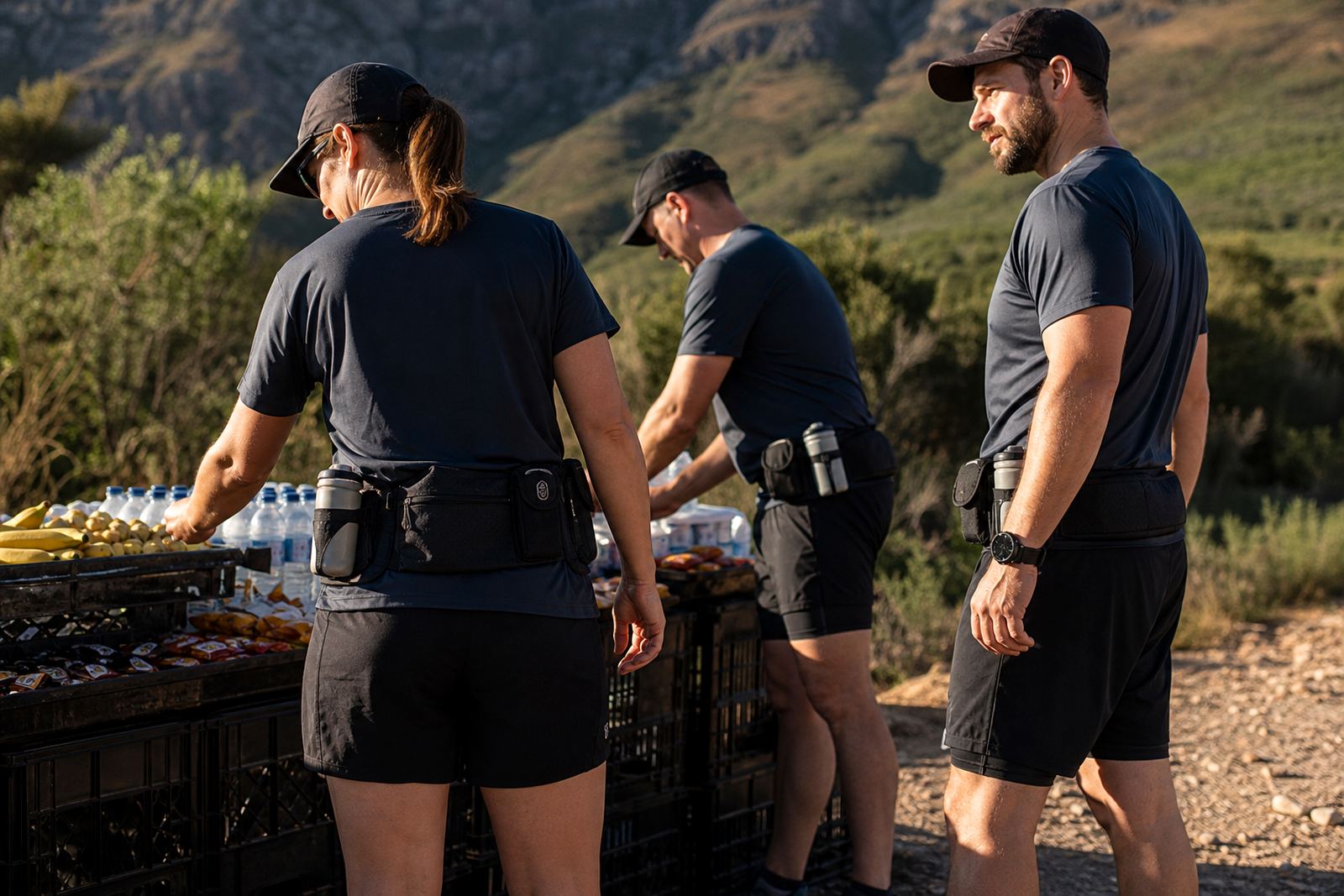
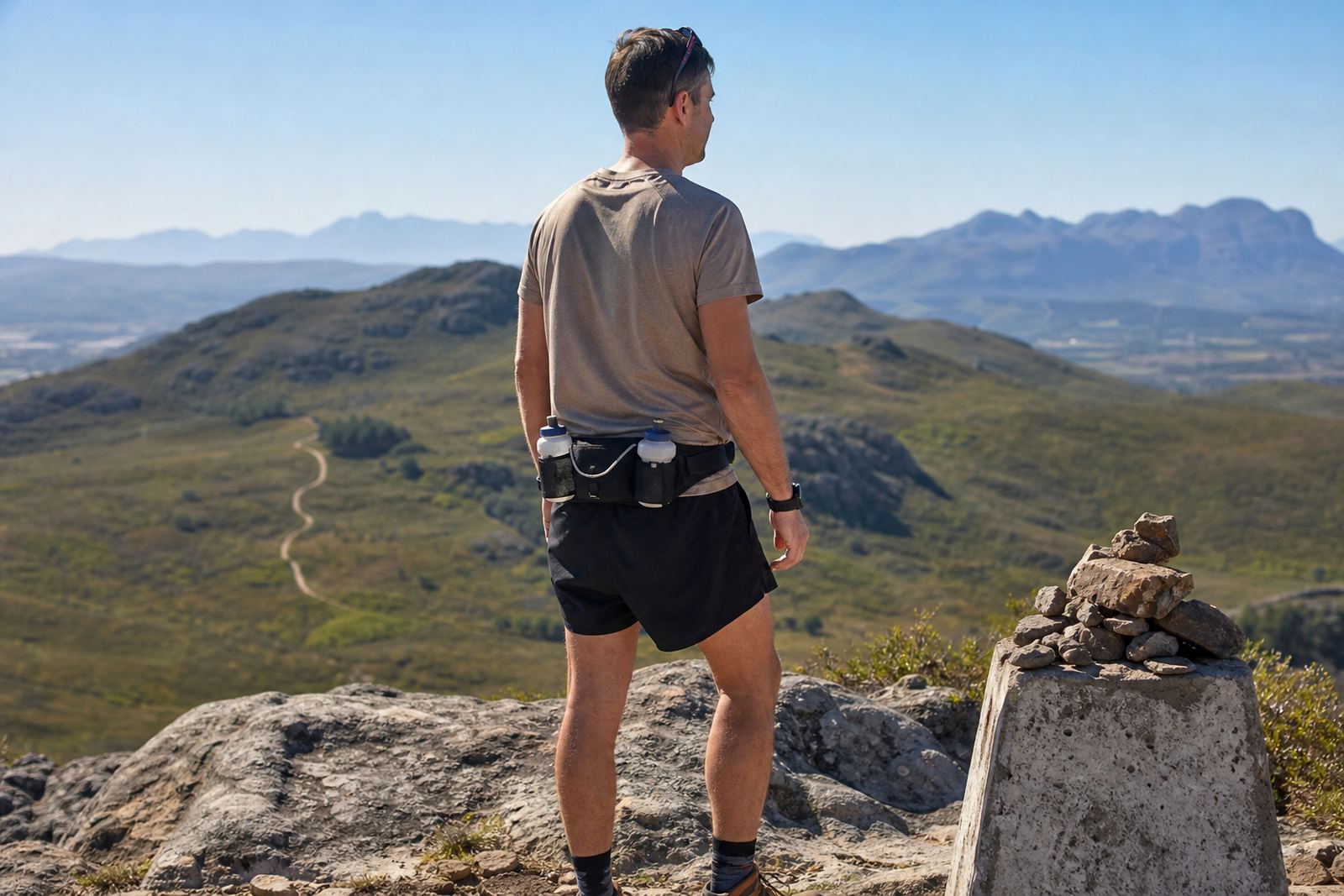
Most beginners do not need a full racing setup from day one. A practical starter belt usually includes one main pocket for a phone, a secure smaller pocket for keys or an ID card, and one or two bottle holders if hydration is needed. For road runs in Durban or George, a simple carry set is often enough. For trail routes outside Stellenbosch or on the edges of Paarl, a little more storage can help with snacks, sunscreen and a small emergency item.
We often suggest keeping the layout as plain as possible at first. The belt should hold what you use on nearly every run, not every item you own. If the beginner is training for a 5 km, a pair of pockets and a snug fit may be enough. If they are building toward a half marathon, or doing longer weekend sessions, then hydration space becomes more useful. Keep it light, and avoid overpacking it from the start.
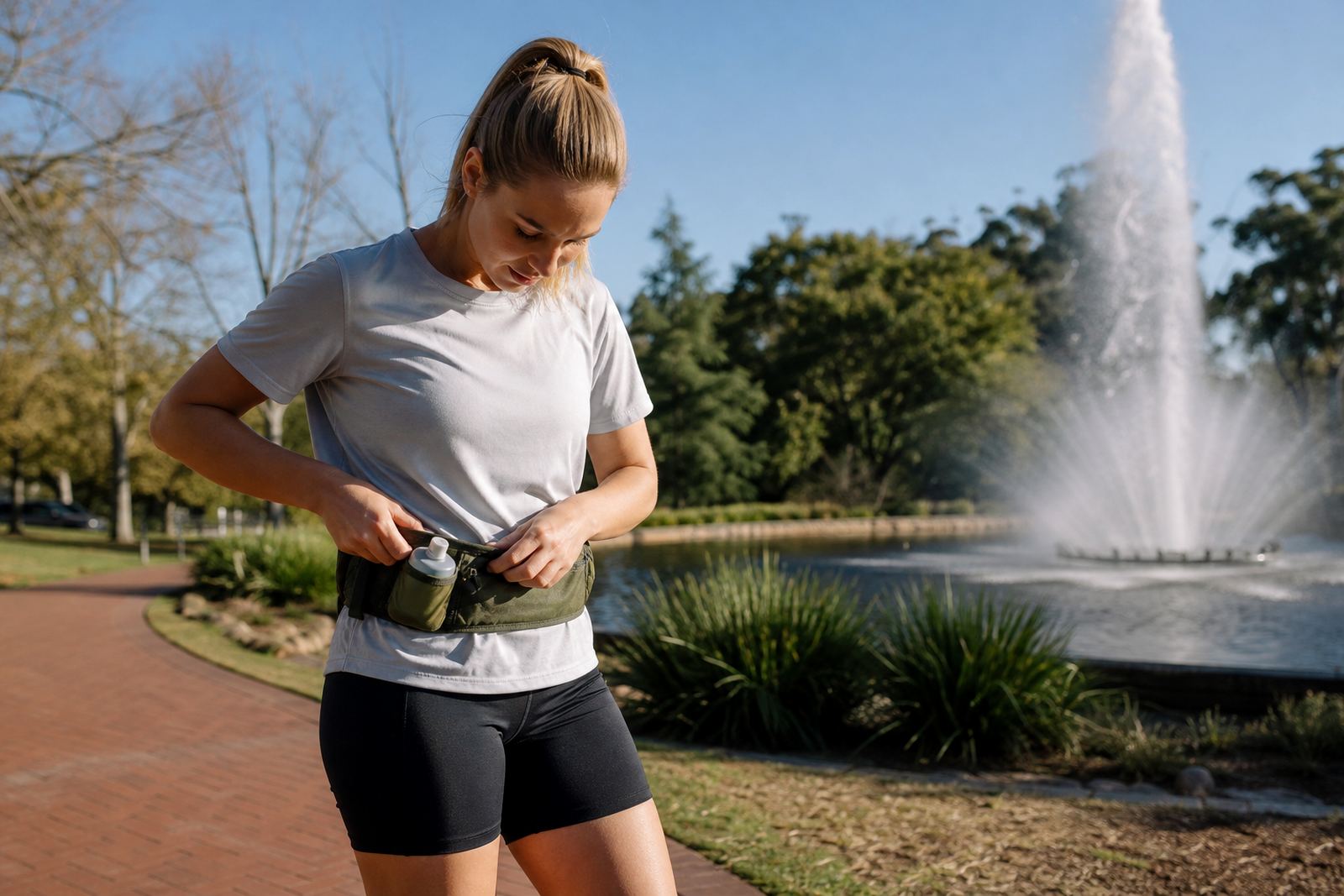
- Phone pocket with easy zip access
- Secure key pocket so nothing rattles
- One soft flask or two smaller bottles for longer outings
- Small gel or snack space for events and training blocks
Fit advice for first-time runners
A belt that is too loose will bounce. A belt that is too tight will feel restrictive and can rub on the waist or hips. For beginners, fit is often the difference between a belt that gets used and one that ends up in a cupboard. The right position is usually close to the body, sitting level, with the load spread evenly across the front and sides.
At Waistbag Run, fit advice is often given with the runner's own routine in mind. If you train on a quiet loop in Somerset West before work, you may carry only a phone and one bottle. If you do community runs in Johannesburg where pace changes often, you may want a belt that stays steady through short accelerations. The aim is simple, make the belt part of the run, not a thing you keep adjusting every few hundred metres.
- Test the belt while walking first, then jogging
- Check bounce with one bottle, then with a full load
- Make sure zips, toggles and closures can be used with tired hands
- Try the fit over a running top, since waist size changes with layers
Planning for training runs and first events
Beginners often start with a few local runs and then move into events once they feel ready. That shift is where planning helps. For a training week, the belt may only need hydration on hotter days or when the route has no water point. For an event, the layout should take into account start times, check points, event rules and whether the route is road or trail. Some races allow very little carried kit, while others expect participants to be self-sufficient for longer stretches.
If you are supporting a club group in Cape Town, or a small event in George, a simple order plan can save a lot of stress. Size ranges should be checked early, and repeat orders should be timed before race week, not during it. That helps avoid last minute substitutions and short supply issues. For beginners, the best planning is practical: what do they need for the distance, the weather, and the route, nothing more.
- Plan for distance, route profile and water point spacing
- Allow for hot weather, wind and early starts
- Confirm sizes before event packs are assembled
- Keep a small reserve for late entries or swaps
Common beginner mistakes to avoid
One of the biggest mistakes is buying for a future runner instead of the runner standing in front of you. A beginner does not need extra pockets just because they look useful. More storage usually means more weight, and more weight can lead to bouncing or a poor fit. Another common issue is choosing a belt that is too large because it feels safer. That usually causes movement and frustration after a few runs.
People also underestimate hydration. In the Western Cape wind or a humid Durban morning, even a short outing can feel tougher than expected. But carrying too much water is just as unhelpful as carrying too little. A balanced load is better. For new runners, consistency matters more than carrying every possible item, and a lighter setup makes it easier to build a habit that lasts. Small choices, made well, add up.
- Do not overpack the belt for short runs
- Do not choose a size with too much slack
- Do not leave hydration planning until race morning
- Do not ignore where gels or keys will sit during movement
Budget ranges for beginner belts in Rand
Beginners often ask what a sensible budget looks like. The answer depends on whether the belt is for short training runs, regular club sessions or event use. A basic carry belt for casual running usually sits in the lower range, while a belt with stronger storage, better stability and hydration space will cost more. If the order is for a club, school, or event group, planning the quantities early can keep the unit price manageable.
As a practical guide, many beginners look at around R250 to R450 for a straightforward belt, and roughly R450 to R850 for a more specialised running and hydration setup. Larger event or club orders may shift the per-unit cost depending on sizing, layout and dispatch destination. Delivery into Cape Town, Johannesburg, Durban, George or surrounding areas should also be planned into the budget, especially when timing is tight. A clear brief upfront usually saves money later.
If you are unsure where to start, it helps to match the belt to the distance first, then the amount of kit second. That simple order keeps the budget sensible and the run more comfortable.