
Why clubs move to coordinated waist belts
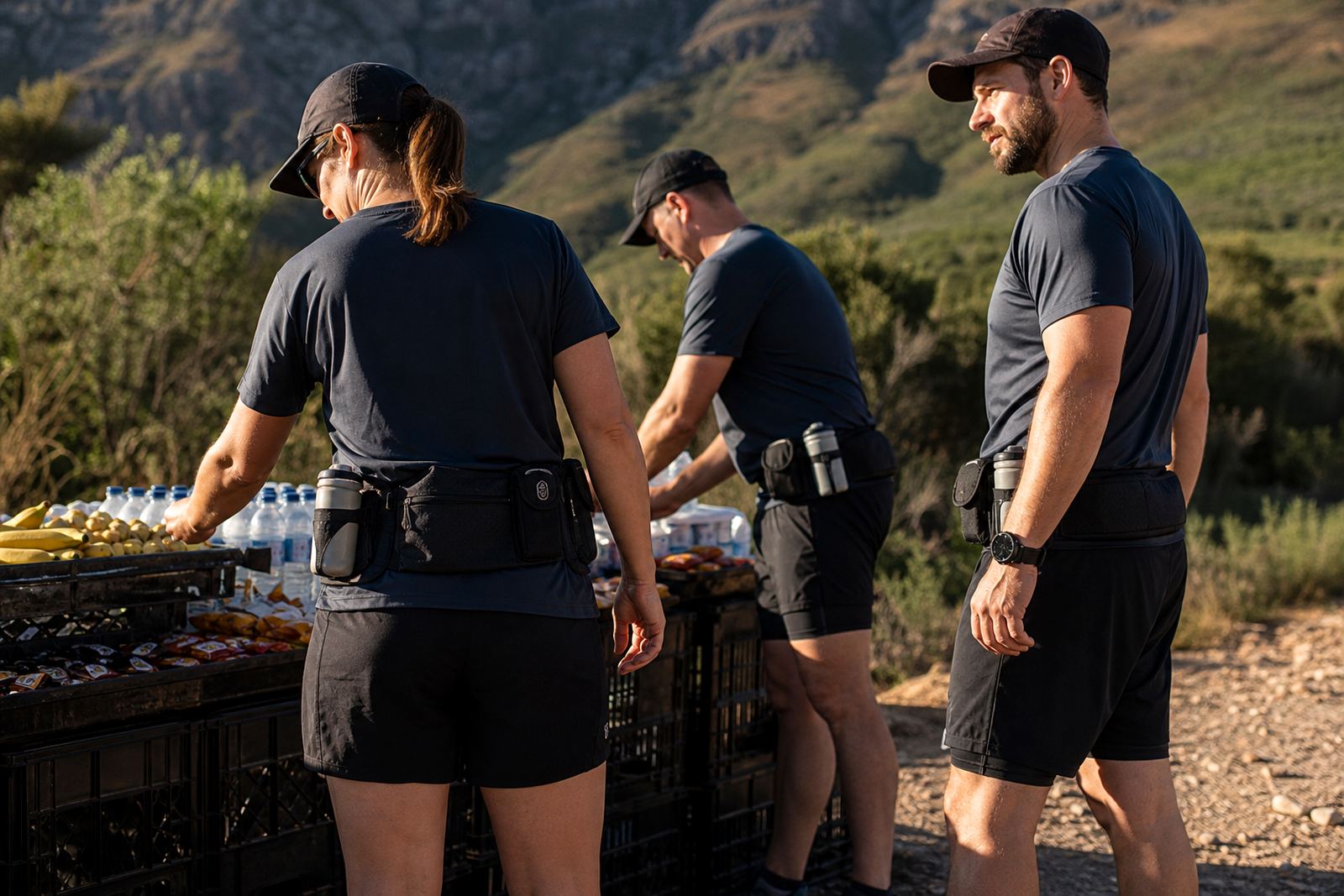
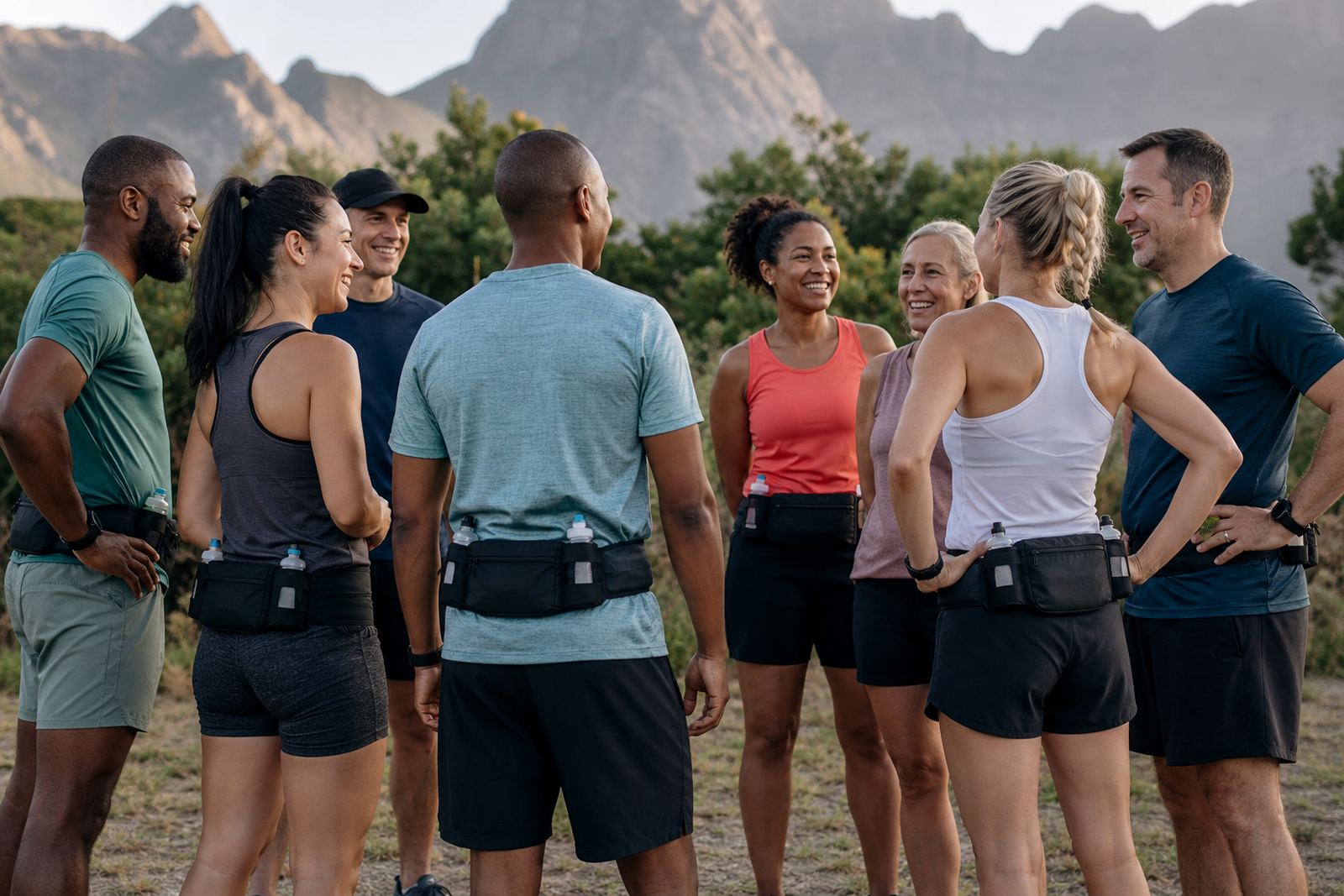
When a club has 20, 40 or 80 runners, loose bottles, bouncing packs and mismatched gear slow everyone down. A coordinated waist belt gives the group a simple, consistent setup for road runs, trail runs and race days. Members know where to carry keys, gels, a phone and a soft flask, and the coach or club captain can spot fit issues early.
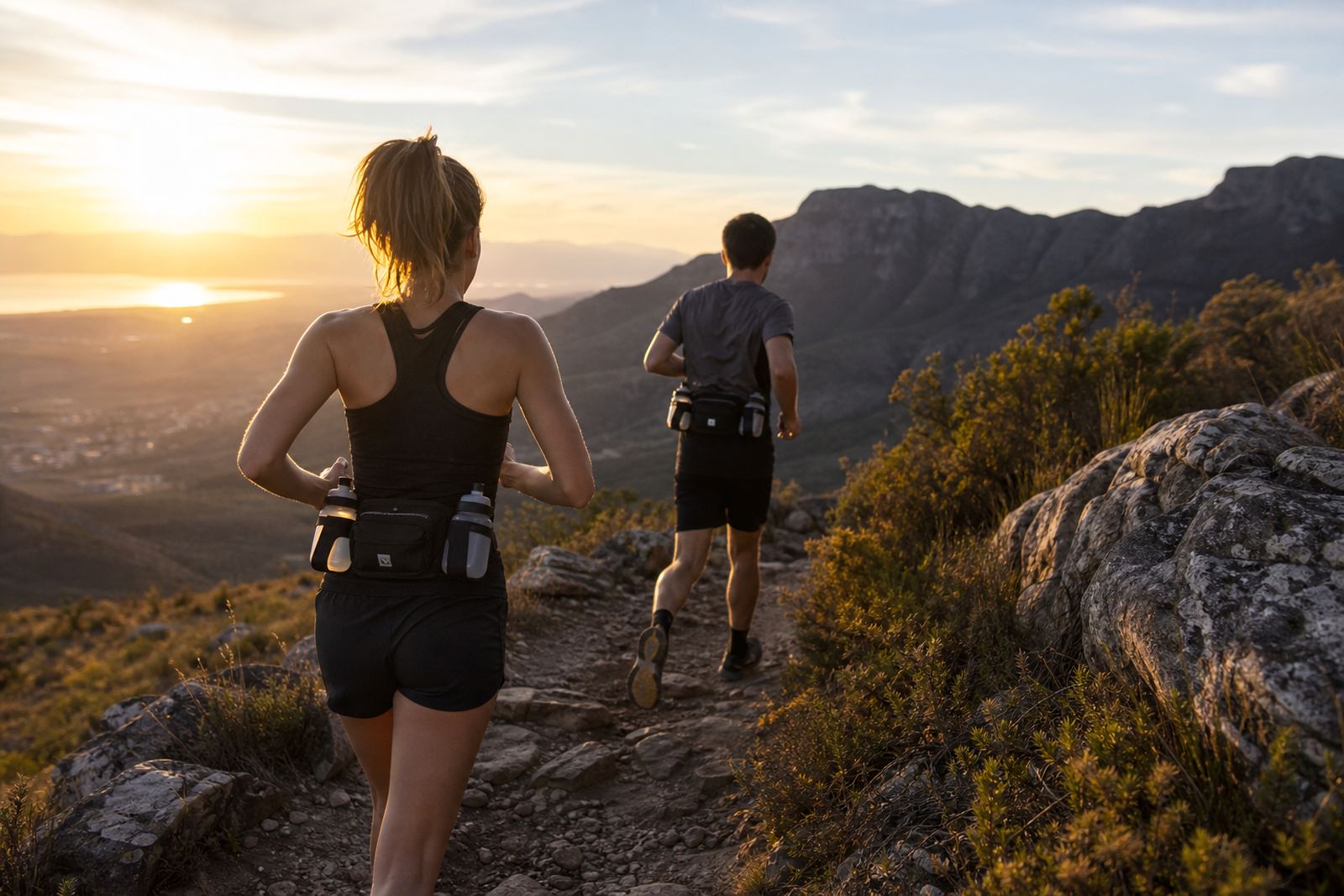
For clubs in Cape Town, Stellenbosch, Johannesburg, Durban and George, the big benefit is not only convenience. It is also consistency. If the belt sits in the same place on the waist, runners waste less time adjusting straps and are less likely to chafe on longer sessions. That matters on windy coastal routes, humid summer evenings and hilly trail routes where small distractions become a problem. A good belt keeps the load steady, even when the pace changes.
Typical club order layouts and carry options
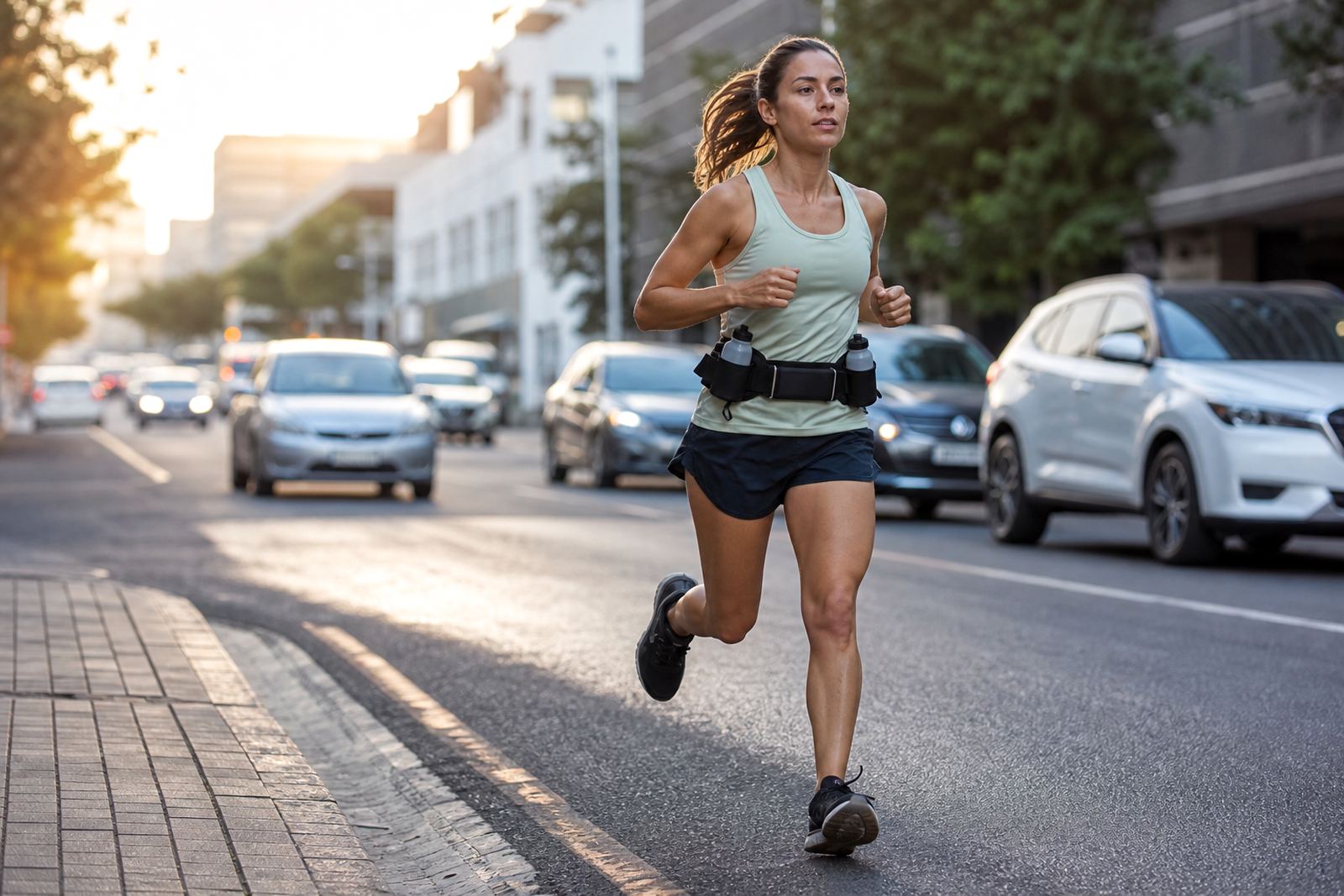
Most clubs start with a standard layout and then adjust for event type. A road training belt is usually lighter, while a trail belt carries more liquid and a bit more storage. We help clubs plan the carry points so the weight stays close to the body and does not swing around at the back. That balance is important for beginners and experienced runners alike.
- Single soft flask carry for shorter road sessions
- Dual flask carry for long runs or warm weather events
- Low-profile pocket space for gels, keys and a small phone
- Number holder or race day insert option where required
- Reflective detail for early starts and late finishes
For clubs that train in the dark during winter or in load-shedding windows, simple visibility and easy access matter. Members do not want to stop and open a pack every few kilometres. A waist belt that sits well from the first kilometre usually stays comfortable all the way to the finish.
Sizing the club before the first bulk order
Participant sizing is the step that saves the most hassle. Clubs often guess sizes based on shirt numbers or old kit orders, and that leads to returns, swapping and unused stock. A better approach is to collect waist measurements and fit notes from members before placing the order. This is especially useful for mixed groups, where some runners prefer a snug fit and others want a little more room over layered winter kit.
We usually suggest a short sizing drive at club training, or a simple fit briefing for the committee to share with members. If the club is ordering for a race weekend or series event, it helps to confirm who needs a hydration belt and who only needs storage. That way the order matches actual use, not just a rough count.
- Measure around the natural waist, not over bulky clothing
- Check fit with bottles or flasks inside the belt
- Allow for small size differences between men’s and women’s fits
- Keep a few spare units for late sign-ups and new members
Planning for training groups, race entries and club events
Club orders often have more than one purpose. The same belt may be used for Saturday long runs, trail festivals, relay teams and race packs. That means planning has to cover both use and timing. If the club has a big event in Cape Town or Durban, dispatch timing matters, especially when members are travelling or collecting kit at a venue with limited storage space.
We support bulk order planning and club order management so the committee does not have to chase every detail. For larger groups, crew belt kits and race pack inserts can be added to the plan. If the club runs charity events or local trail days, custom colour runs are also worth considering, as they make it easier to identify team members on the route. It is practical, not just decorative.
Race day support can also include a quick product fit briefing for marshals, pacers or support runners. That keeps the same setup across the group and cuts down on last-minute changes that usually happen right before gun time.
Common mistakes clubs make with hydration belts
The most common mistake is buying one style for every runner without checking the route. A flat 10 km road race does not need the same carry setup as a trail half marathon in Stellenbosch or a hot summer event in KwaZulu-Natal. Another mistake is overloading the belt. If the pockets are packed too full, the belt rides up and starts bouncing. Members then blame the product when the real problem was layout.
Clubs also often forget the small things: where the bib number sits, how the belt feels over a singlet, and whether the buckle can be used quickly with tired hands. In windy conditions, loose straps become a nuisance. In humid weather, heavy fabrics can trap heat and cause rubbing. A short test session before the bulk order helps avoid all of that.
- Do not pack too much weight into a small belt
- Do not skip a fit test with actual runners
- Do not order without checking the route and distance
- Do not ignore heat, humidity and early-morning visibility
Budget ranges for club orders in Rand
Club budgets vary depending on quantity, layout and whether the order is for training, racing or both. As a guide, smaller club runs for simple storage belts may start in the lower range, while hydration belts with more carry capacity sit higher. The final price depends on how many units are needed, the type of fittings selected and whether the club wants colour coordination across the group. For planning, it is better to think in bands rather than one fixed figure.
As a working range, clubs often budget from around R250 to R650 per belt for standard group use, with more specialised hydration setups costing more. Larger orders can bring better unit pricing, especially when the club confirms sizes early and keeps the order together instead of splitting it into several small runs. That helps with dispatch coordination too, which is useful when runners are spread across Stellenbosch, Bellville, Somerset West and Cape Town.
If your club is ordering for a full season, repeat order support makes it easier to replace worn pieces without starting from scratch. It also helps when new members join after the first batch has already gone out.
How club captains can place a clean order
The smoothest club orders come from one person collecting the basics up front: number of runners, likely use, size spread and delivery timing. Once that is in place, the rest moves faster. We handle enquiries through the contact page, then work through the fit, quantity and dispatch details with the club contact. That keeps the process orderly and avoids confusion when different runners ask for different setups.
For clubs in South Africa, a good order usually includes a mix of fit briefing, sizing confirmation and a small allowance for late additions. That way the club can keep moving without delays when the next group run, trail series or interclub event comes up. It is a straightforward approach and it saves money over time.
Michael van der Merwe and the team in Stellenbosch support clubs across the country with practical planning, dispatch coordination and repeat orders when needed. The aim is simple: belts that fit properly, carry what runners need and stay comfortable from start to finish.