
Why support crews use waist belts on race day
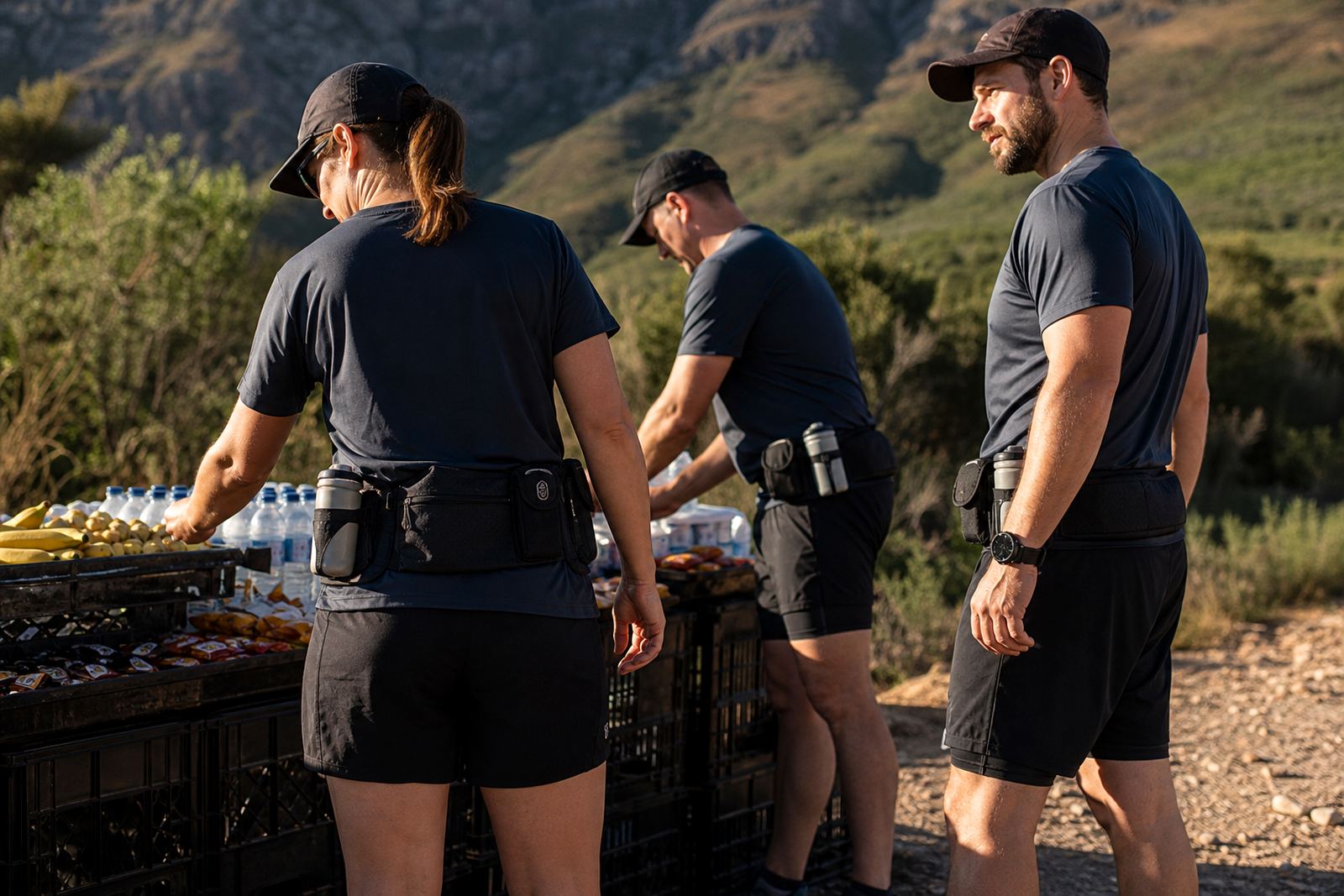
On race morning, support crews move between drop zones, aid points and finish areas with little time to spare. A well planned waist belt keeps small items on hand without needing a backpack, which matters when you are handling a bib number, a phone, sunscreen, anti-chafe cream, keys and a quick snack for the athlete.
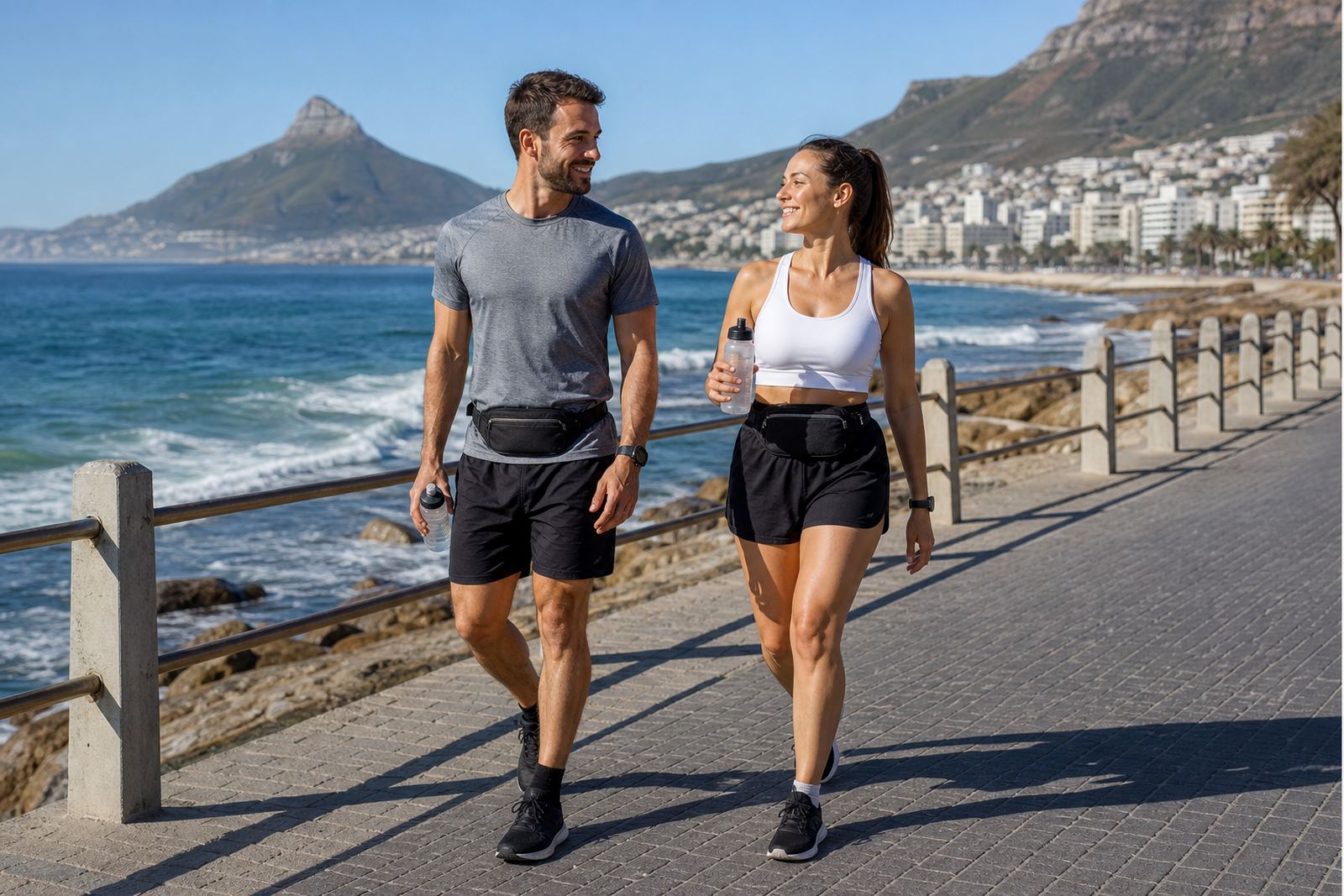
These belts work well for club support teams, family runners and event crews who need compact carry without bulk. In windy Cape Town, humid Durban or on a rocky Stellenbosch trail, a snug fit helps keep the load steady so the belt does not ride up when you jog a short section to catch up.
What a typical support crew belt carries
The right setup depends on the event, but most crew belts carry a mix of personal items and race essentials. The goal is to keep weight low and spread it flat, not to pack the belt full. If the belt is overloaded, it starts pulling to one side and becomes annoying after a few kilometres.
- Phone for race updates and live tracking
- Energy gels, chews or small snack packets
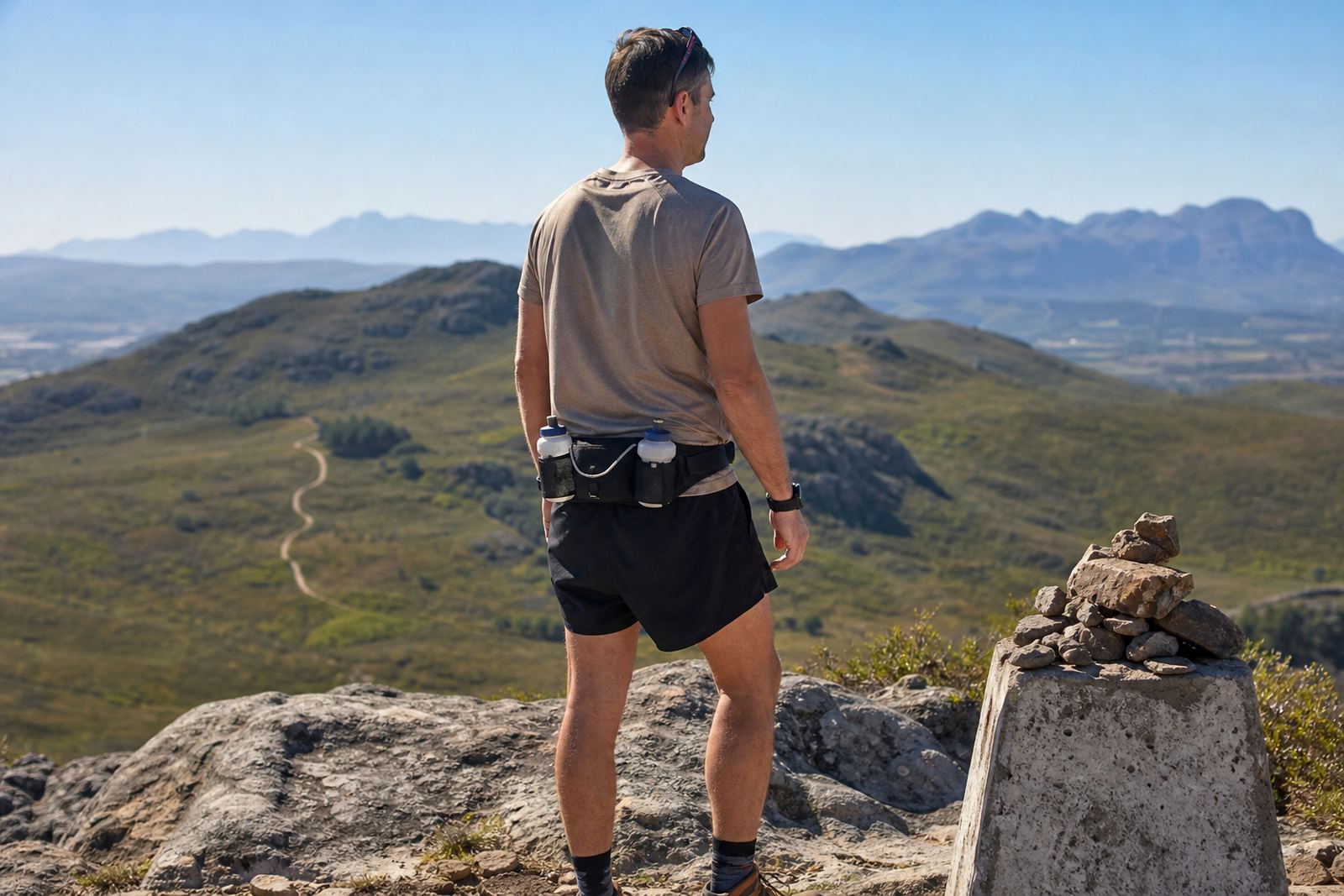
- Soft flask or compact water bottle
- Keys and a small amount of cash or card
- Sunscreen, lip balm and anti-chafe cream
- Plasters, safety pins and a basic first aid pouch
- Whistle or radio for event crew use
For longer support shifts, some teams also add a folded race note, route map or split sheet. It helps to keep anything damp-proof in a small inner pouch, especially at coastal events where humidity can affect paper and soft packaging.
Planning the layout before the event starts
Good belt planning starts with the route and the role. A crew member at a road marathon in Johannesburg may only need light snacks and a phone, while a trail support runner in George could need a bottle, gels and a small kit for changing weather. The belt should match the length of time on foot and how often the wearer will stop and start.
We normally suggest placing the heaviest item closest to the centre of the body and balancing the left and right sides. Put fast access items like gels or a phone in the front or side pockets, and keep less used items tucked away. If the belt has adjustable straps, check the fit over the exact clothing that will be worn on race day, because a thick jacket changes the fit quite a bit.
- Test the belt with full weight before event day
- Check that zips, toggles and clips can be used with tired hands
- Leave space for a folded gel wrapper or empty sachet
- Use clear item grouping so different crew members pack the same way
Common mistakes support crews should avoid
The most common mistake is treating a waist belt like a small backpack. Too many items, or bottles that are too heavy, will make the belt shift and bounce. Another issue is packing loose items without a fixed place, which slows everyone down when someone needs a gel or spare phone at speed.
Another error is not checking sizing across the team. A belt that fits one person well may feel too loose on another, especially if it is worn over a rain jacket or trail top. It is also worth avoiding sharp edged items in open pockets, because they can wear through the fabric over time. On hot days, a poorly fitted belt can rub at the hip and cause discomfort within the first hour.
For event organisers, one missed detail is the handover plan. If crew members collect belts late, there is no time to label sizes, assign colours or explain which pocket holds what. That is where a simple support pack list saves a lot of trouble.
Budget ranges for support crew orders in Rand
Support crew budgets vary depending on quantity, pocket layout and whether the order is for one team or a full event. As a general guide, simple support belts for small groups can start from about R180 to R260 per belt, while more specialised running and hydration waist belts with better storage and fit options can sit in the R280 to R520 range each.
For club or event orders, planning in batches usually brings better value. Larger runs may also need size mixes, label sorting and dispatch coordination, which is useful when teams are spread between Stellenbosch, Paarl, Somerset West or Bellville. For race events and mixed crew groups, a budget of R3 000 to R12 000 is common depending on the quantity and level of custom planning required.
If you are supplying belts for a large race weekend, allow for a small over order so late additions and size swaps can be handled without stress. That extra buffer is usually cheaper than rushing replacements at the last minute.
How Waistbag Run supports crews across South Africa
Waistbag Run works with support crews, race organisers and clubs that need practical waist belts for real event conditions. Based in Stellenbosch, the team handles bulk order planning, participant sizing, club order management, custom colour runs, crew belt kits and dispatch coordination for Cape Town, Johannesburg, Durban, George and nearby areas.
Michael van der Merwe leads the business, with Ayanda Ndlovu on product development, Leandri Botha handling sales and events, Sibusiso Khumalo supervising production, Zanele Petersen on customer support and Jaco Visser managing logistics and dispatch. If your crew needs a clear belt plan, the enquiry form on the contact page is the best place to start and we can help map out the order from there.
- Small team support packs
- Club and event bulk orders
- Repeat order support for annual races
- Race day fit and dispatch planning