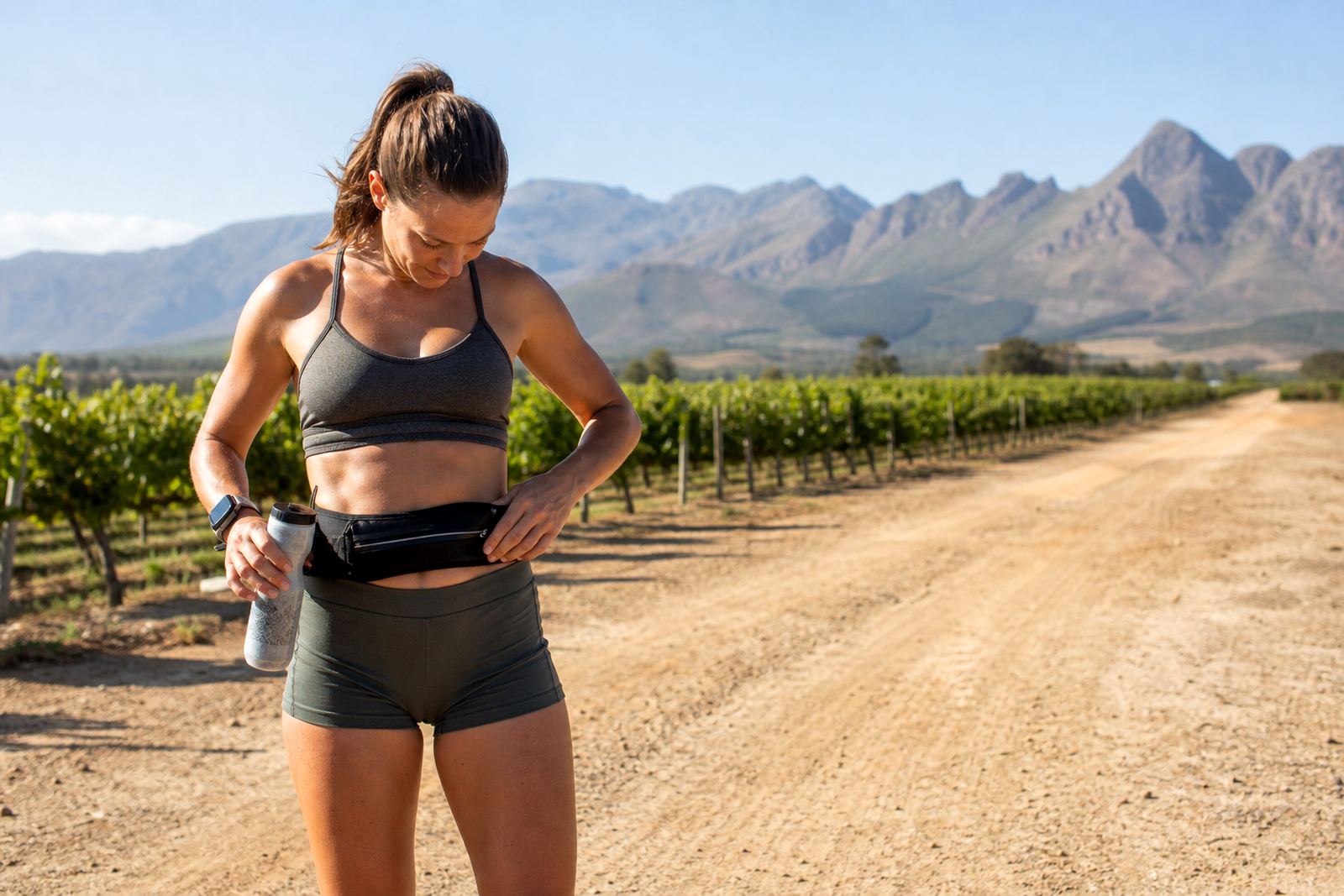
Why belt height matters more than most runners think
A waist belt that sits too low can slide on the hips, especially on longer runs when sweat builds up and fabric softens. If it sits too high it can press into the lower ribs or ride up when you take strides uphill. For many women runners, the sweet spot is just above the hips and below the narrowest part of the waist, where the belt can stay secure without needing to be pulled tight.
That height also affects breathing. On humid Cape Town mornings or during a warm afternoon in George, a belt that crosses the midsection can feel restrictive before your pace even picks up. A lower, firmer position often feels steadier during road races, while trail runners may prefer a slightly higher position when moving over rocks, steps and uneven ground.
- Test the belt before race day, not on the start line.
- Jog first, then add a few strides and turns.
- Check that it stays put when you bend to tie a lace or grab a bottle.
Clothing choices can change comfort by a full race
What you wear under and over the belt matters as much as the belt itself. Smooth technical tops and fitted running shorts usually give a more stable feel than loose waistbands or thick seams. If your clothing bunches up under the belt, the pressure points can become noticeable after 5 or 6 kilometres, and that is when small irritation turns into a distraction.
In cooler Stellenbosch mornings, some runners wear a thin base layer under a long sleeve top, then wonder why the belt feels less secure. The extra fabric can shift and twist. A cleaner fit around the waist is usually better, especially for women with shorter torsos who need the belt to sit neatly without interfering with arm swing. It is a simple detail but it matters alot in practice.
- Avoid very thick waistbands under the belt.
- Choose fabrics that do not trap excess sweat at the contact point.
- If the belt slips, try a different top before tightening it further.
Contour shape and carry balance on the move
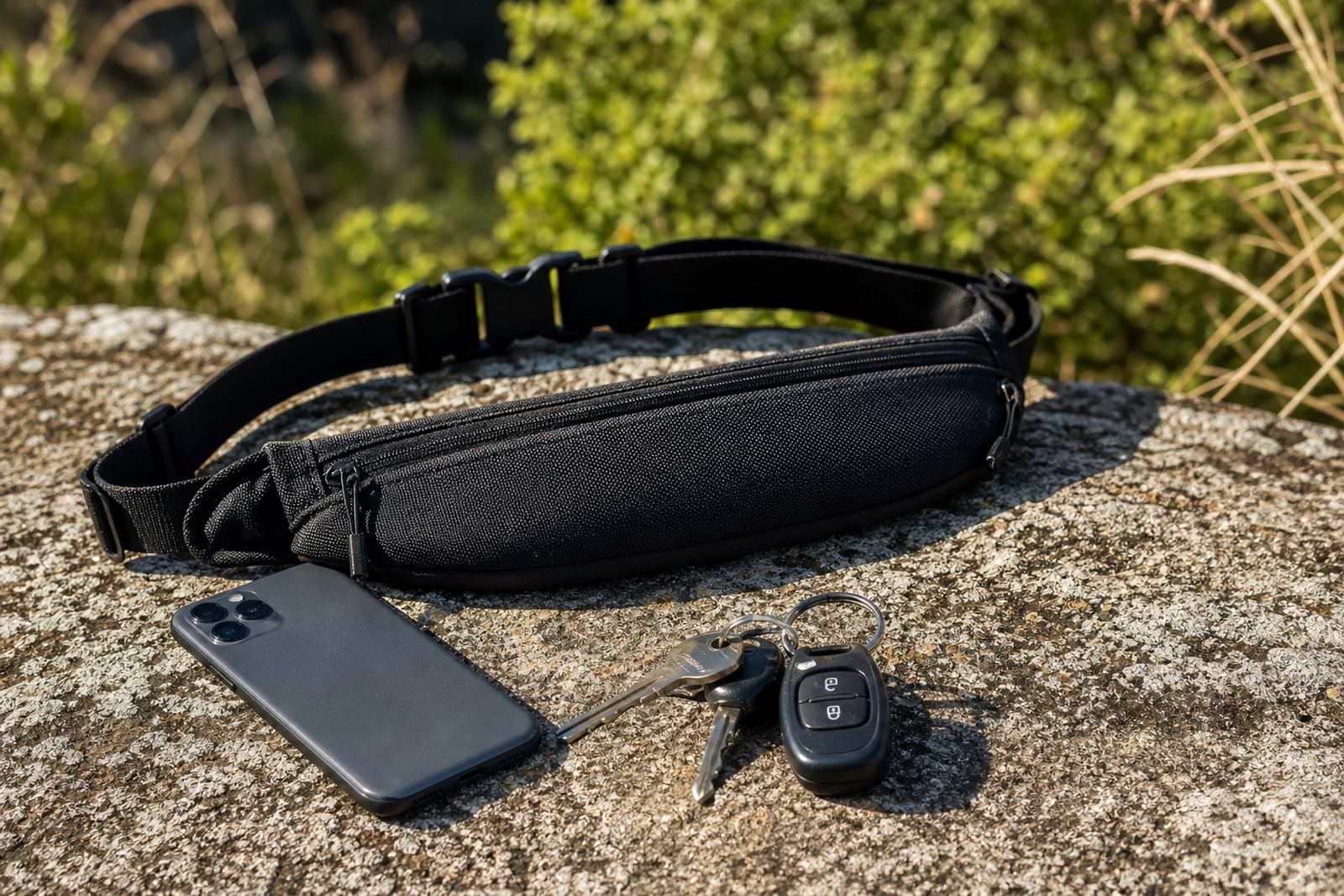
Not all running bodies carry the same shape around the waist and hips, so a belt that feels perfect on one runner may feel awkward on another. A contoured design helps the belt follow the body instead of sitting like a straight strap. That matters when carrying water, keys, a phone and gels, because uneven weight can pull one side down and create bounce.
Women often notice this most when the belt is loaded for a race event. A balanced layout is easier on the body and can reduce small sideways shifts that build up over time. When the bottles or storage pockets are placed too far from the centre, the belt may twist slightly with each step. A better contour helps keep the load closer to the body, which improves comfort on both short jogs and longer trail efforts.
- Put heavier items closer to the centre line.
- Keep only what you need for that distance.
- Check that pockets close firmly so items do not move.
Trail running around Stellenbosch asks for a different fit
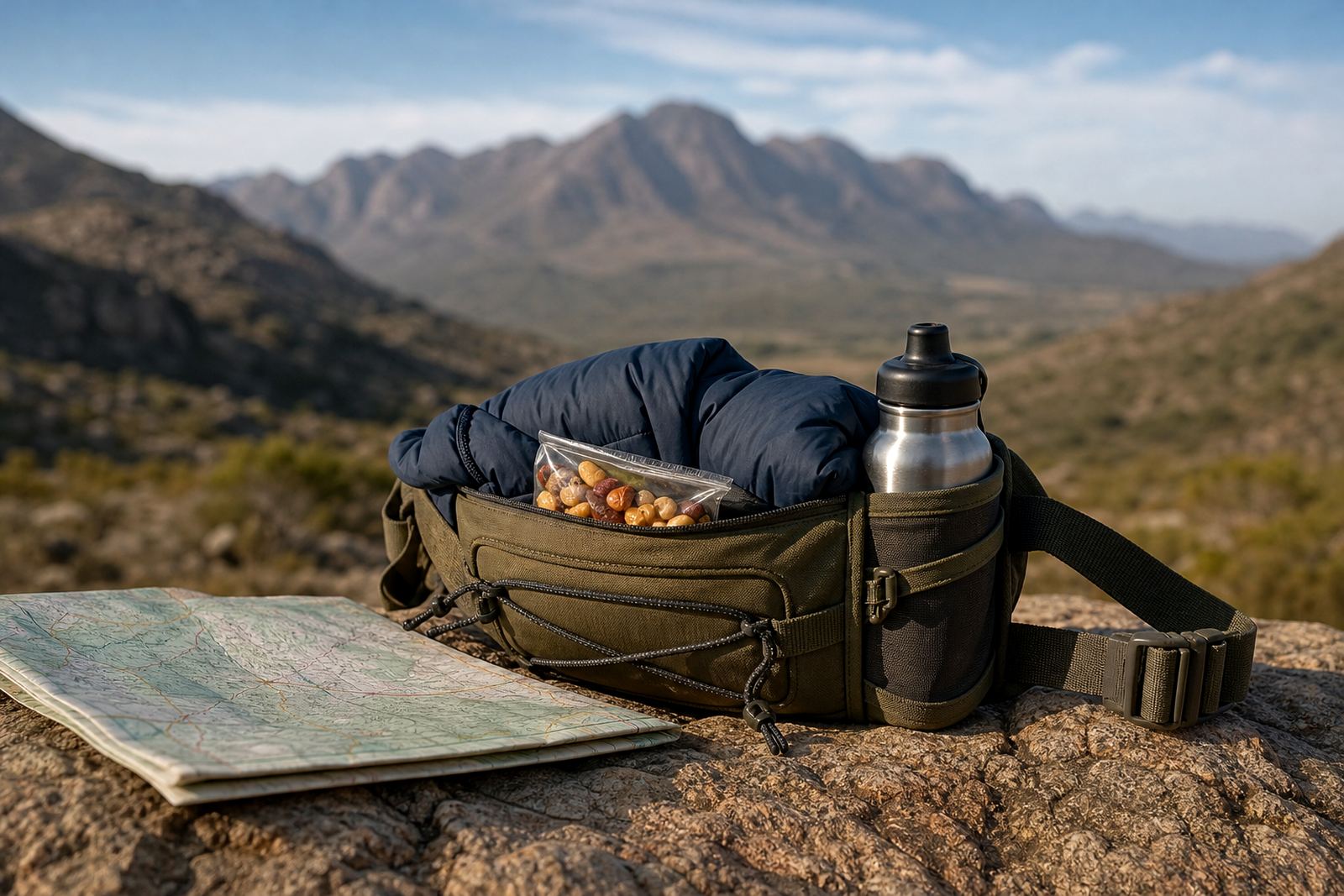
Trail routes near Stellenbosch can include climbs, loose gravel and sections where you lean forward for balance. In that setting, a belt has to stay secure without digging in when the body angle changes. A fit that works on the promenade in Cape Town may feel different on the slopes above Jonkershoek, where breathing, posture and pace change from one section to the next.
For women runners training on mixed terrain, the best comfort usually comes from trying the belt with the same kit you will wear on race day. If you are carrying hydration for a 15 kilometre trail loop, you want the belt to remain steady when you step up rocks or slow on technical ground. A good fit does not need constant adjustment and it should not force you to keep reaching back mid-run.
- Try the belt on climbs as well as flat ground.
- Test it with full bottles, not an empty belt.
- Run with the same top, shorts and socks you plan to race in.
Long-distance comfort for road races and events
On road races, comfort is often about endurance rather than terrain. A belt that feels fine at 3 kilometres can start to irritate by 10 or 12 kilometres if the fit is not right. That is why event participants need a belt that holds position through repetitive movement, sweat and changes in pace, from a steady first half to a harder push near the finish.
For large events in Johannesburg or Durban, runners often need a belt that can carry small essentials without adding bulk. The better the fit, the less often you think about it. If you are running with a club group or pacing a friend, the belt should support your day rather than becoming the thing you keep adjusting. Small fit issues are easy to ignore in the warm-up but hard to ignore once the gun has gone.
Practical comfort cues to watch for:
- No pinching when you sit, stand or stretch before the start.
- No need to overtighten just to stop movement.
- No rubbing on the hip bones after a steady run.
What local teams and event planners usually look for
When clubs and organisers in Paarl, Somerset West, Bellville and beyond order belts for women runners, the brief is usually simple: keep it light, stable and easy to issue in the correct size. For event days, participant sizing helps reduce last-minute swaps and prevents runners from starting in a belt that is either too loose or too tight. It also helps with crew kits and repeat orders when the same race returns the next season.
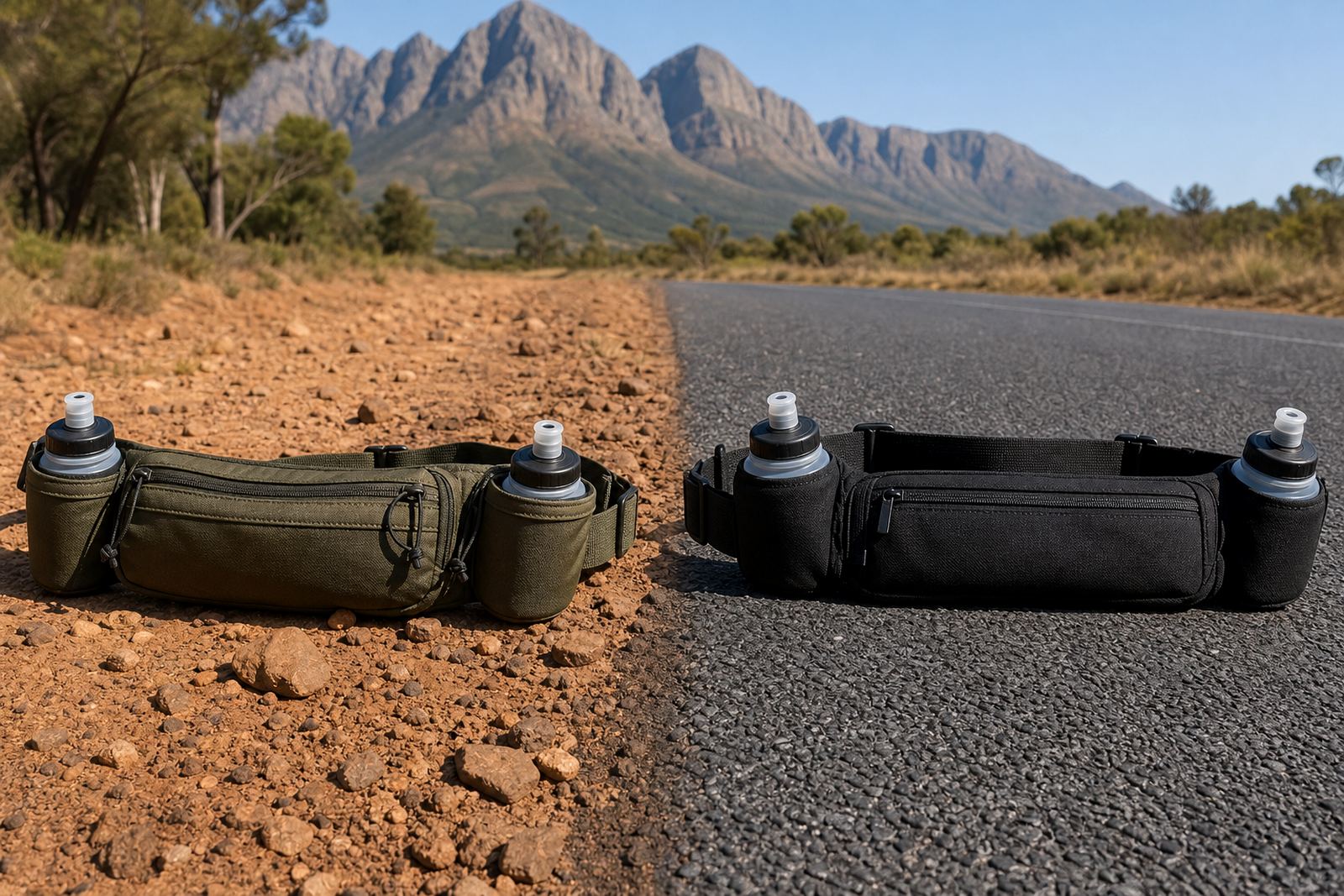
From a practical supply point of view, comfort is easier to manage when the right belt is matched to the right use. Trail runners may want a different carry setup to road runners, while race events may need sizing support and dispatch coordination for multiple start waves. That is where clear fit briefing matters. If the belt is sized properly from the start, runners tend to keep it on for the whole season, not just one event. And that saves a lot of back and forth.
- Use participant sizing for mixed groups.
- Separate trail kits from road race kits.
- Plan repeat orders with the same fit notes, so returning runners get the same comfort profile.