

Winter Run Essentials
Home / Journal / Winter Run Essentials

Journal

Winter Run Essentials

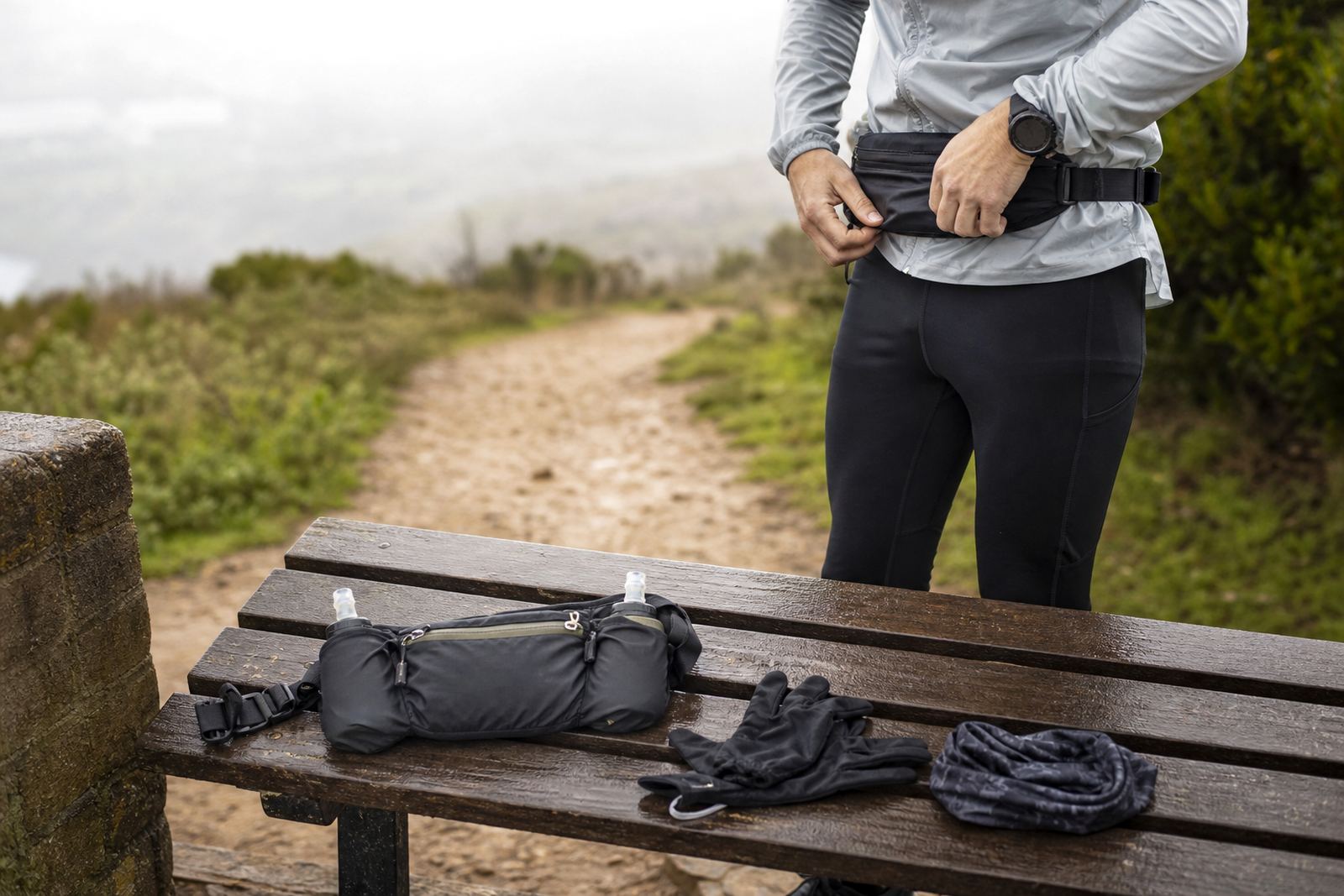
Cold starts change how you carry water, gels and layers, especially when you're out early on a windy morning or heading into a longer event. A well packed waist belt keeps the basics close without bouncing, so you can warm up properly and stay steady from the first kilometre.

Why winter changes what you carry on a run

Winter running in Stellenbosch, Cape Town or George is not just a matter of adding a jacket. Early starts are colder, but once the sun is up you can overheat quickly, especially on the first climb or when the wind drops. That means your kit needs to work in layers and your carrying system has to be simple enough to manage with cold fingers.

A waist belt is useful because it sits low and keeps weight close to your centre of balance. On a trail route above Jonkershoek or a road session along the Promenade, you want essentials that stay put while you are moving. Think of it as part of your winter kit, not just an extra pocket.

  • Carry only what you need for the route and temperature.
  • Keep soft items where you can reach them without stopping.
  • Use storage that does not swing when you take a shorter winter stride.

Start with the layer that sits closest to your body

The belt has to work with your clothing, not fight it. A base layer, light long sleeve top and wind shell can add bulk around the waist, so fit matters. If the belt is too loose over winter layers it can slide down, and if it is too tight it can rub when your body warms up. That small detail matters on a 15 km training loop or during a race where you keep adjusting your pace.

Test the belt with the exact clothes you plan to wear. A morning in Durban will feel different to one in Bellville, and coastal humidity can make a snug fit feel tighter after a few kilometres. In cooler inland towns like Johannesburg, runners often need more room for an extra layer or a thin beanie folded into the pack.

  • Wear the belt over the layer you will use on race day.
  • Check that zips, cords and tabs do not catch on gloves.
  • Make sure the belt still sits flat after you add a bottle or soft flask.

Hydration in winter is still non-negotiable

It is easy to drink less in cold weather because you do not feel as thirsty. That is a mistake, especially on longer trail days, marathon sessions or event mornings where the air is dry and the wind pulls moisture off your skin. Hydration still matters, even when it is cool enough to start in arm warmers.

For winter runs, many runners prefer smaller volumes carried close to the body. That gives you enough water to get through the first section without overloading the belt. If you are racing or doing a supported event, think about how often you can top up and whether your belt needs room for a soft flask, a folded cup or a small reserve bottle.

  • Plan hydration for the whole route, not just the first hour.
  • Use a bottle size that is easy to grip with cold hands.
  • Balance water weight so the belt does not pull to one side.

What to pack for early starts and race mornings

Winter race mornings usually mean more than one extra item. You may want a spare gel, a light glove pair, lip balm, tissue and a small item to keep your hands warm before the gun. The trick is to carry enough to stay comfortable without filling every compartment. If the belt is overpacked, you spend the whole run fiddling with it. Not ideal when you are trying to settle your breathing.

A practical pack list keeps things simple and repeatable. For many South African events, the first few kilometres are the coldest and then the temperature rises fast, so pack with that change in mind.

  • Water or a soft flask for the opening stretch.
  • One or two gels, depending on distance.
  • Light gloves, lip balm and a small tissue pack.
  • Race bib security items if the event allows them to be carried.
  • A thin shell or foldable layer if conditions are windy or wet.

Trail routes need different thinking from road runs

A trail belt setup is not the same as a road belt setup. On rough ground near Stellenbosch or George, the main issue is movement. The belt must stay stable over uneven steps, short climbs and downhill sections where your body shifts more. On the road, the priority is ease of access and a comfortable fit over repetitive motion.

Trail runners often carry a bit more, because distances between water points can be longer and weather can change quickly in the mountains. Road runners usually want faster access to fuel and a lighter load. Both need a belt that stays comfortable when the route gets busy and your cadence changes. A good fit saves energy you would otherwise waste on adjusting gear.

Here is a simple way to choose your winter carry:

  • Short road session: minimal water, one gel, one small pocket for keys.
  • Long road run: extra hydration and fuel, with room for a light layer.
  • Trail training: more secure storage, balanced weight and quick access to snacks.
  • Event day: follow the race rules on what you can carry and where bibs must sit.

A local example: a winter half marathon weekend

Take a winter event in the Western Cape, where runners arrive in cool weather, warm up in the car park and then start the race with stiff legs and cold hands. In that setting, a belt that can hold a bottle, a gel and a thin layer makes the first part of the run much easier. By the halfway mark, you can strip the shell and keep the essentials close without carrying a bulky bag.

For clubs and event teams, this is also where planning matters. If you are managing participant sizing, crew kits or race pack inserts, the belt setup should be practical enough for a range of body shapes and weather conditions. A strong event plan makes life easier for runners and organisers alike, especially when a cold front comes through the week before race day.

Waistbag Run works from Stellenbosch and supplies runners, clubs and event teams across Cape Town, Johannesburg, Durban, George, Paarl, Somerset West and Bellville. If you need help planning winter belt requirements for a group or race, use the enquiry form on our contact page and we will help you map it out properly.

Questions we get asked

How much should I carry on a winter run?

Only what you need for the distance and conditions. In colder weather, many runners carry less water but still keep a gel, a small layer and one safety item close at hand.

Should a waist belt fit differently over winter clothing?

Yes. Test it over the layers you will actually wear. It should stay flat and snug without rubbing once you start to warm up.

Do I still need hydration when it is cold?

Yes. Cold weather can reduce thirst, but you still lose fluid through breathing and sweat. Plan hydration for the full route, not just the first few kilometres.

Planning something? Send the team a message.

Contact form