Cool starts do not mean you can skip water
In Stellenbosch, a winter trail run can begin in mist and end in bright sun by the time you turn back from the contour paths. In Cape Town, a windy road loop can feel cold at the start, then suddenly warm up once you are out of the shade. That change is why cool weather planning is about more than choosing a long sleeve top.
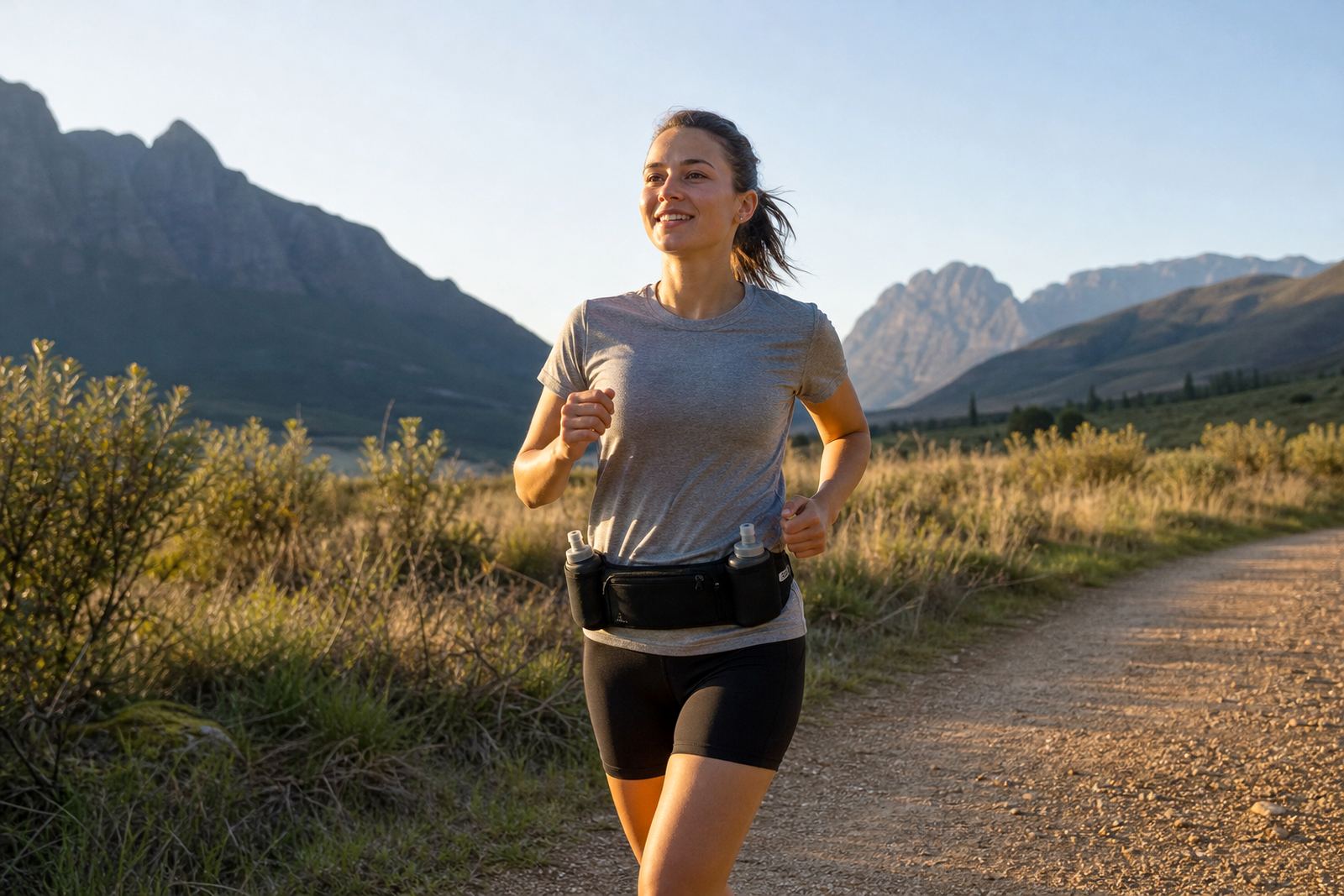
Even when the air feels fresh, you still lose fluid through sweat and breathing. On longer runs, especially when there are hills or race nerves, water intake stays important. A waist belt gives you enough carry capacity for a soft flask, a few gels and a small layer, without forcing you to hold anything in your hands.
- Carry at least one drink option for runs over 60 minutes.
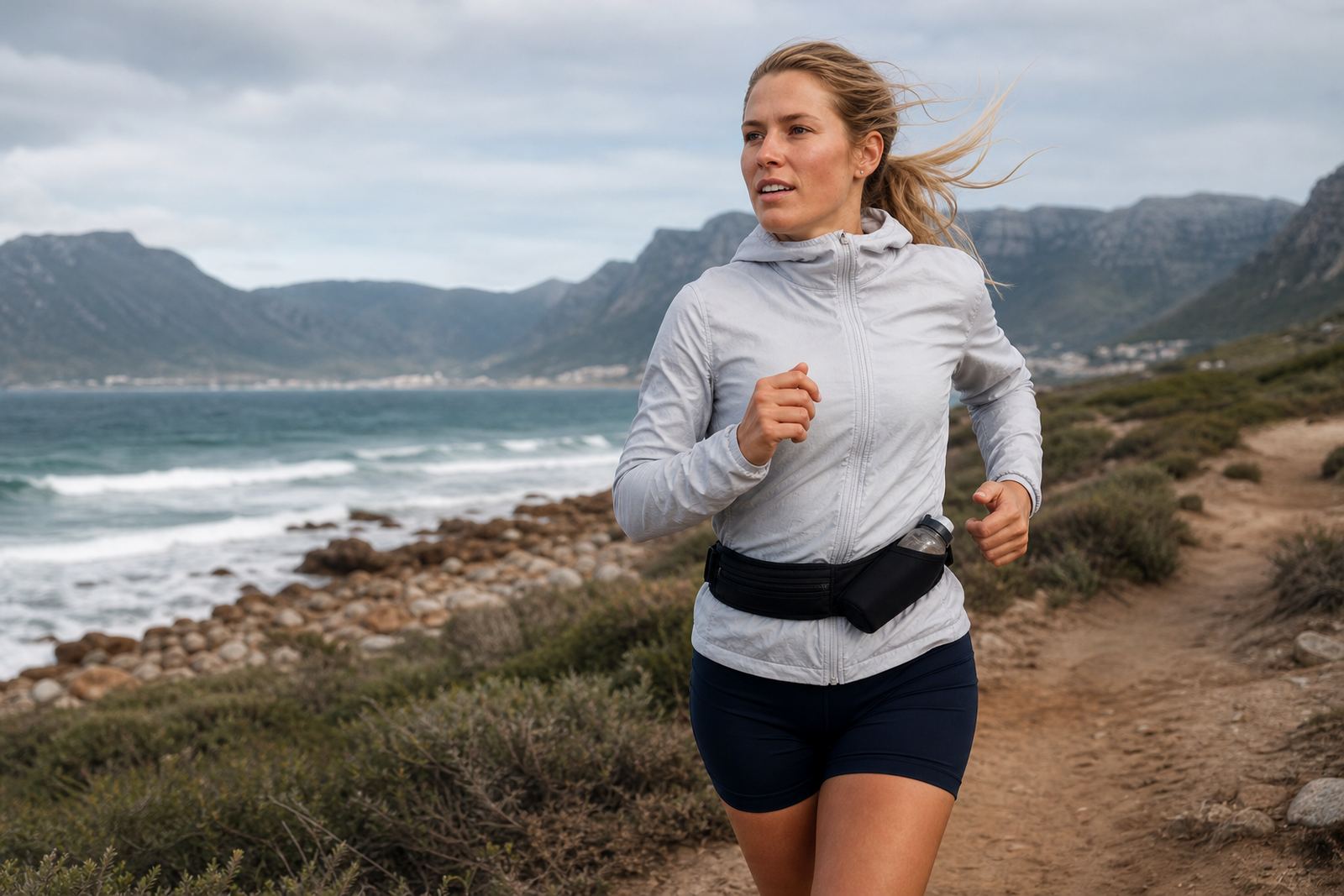
- Plan for sweat under a windbreaker, even when the morning feels cold.
- Choose a belt that keeps bottles steady over gravel, tar and singletrack.
Pack for the second half of the run, not only the start
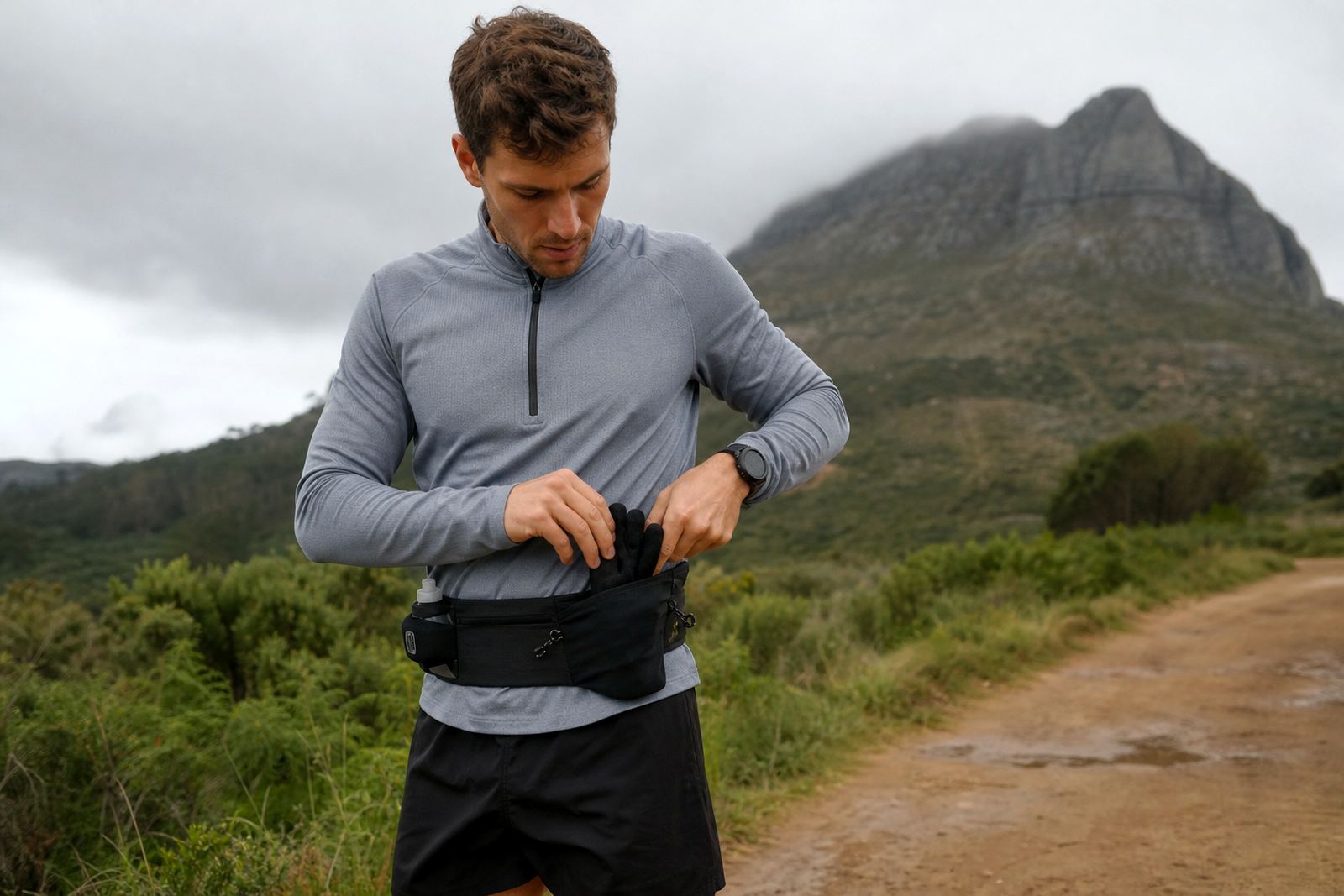
The common mistake in cool weather is dressing for kilometre one. If you only think about the start line, you may end up with no place for a buff, gloves or a light gilet once the sun comes out. A good running waist belt should make room for those small items without forcing the belt to ride up or bounce.
For trail runners in George or Somerset West, the conditions can shift quickly from shaded forest to open, exposed sections. For road runners in Johannesburg, a cold start can turn into a warm, dry finish after the first few climbs. A belt with separate carry zones helps you organise layers so you are not digging around mid-run.
- Use one section for hydration, one for food and one for a foldable layer.
- Keep zip pockets for keys, race tags and anti-chafe items.
- Check that the belt still fits snugly over a base layer.
Fit matters more when you wear more clothing
Cool weather often means more clothing, and that extra fabric changes how a waist belt sits. If the belt is too loose it will shift when you change pace or climb stairs at an event venue. If it is too tight it can press on your stomach and become irritating after an hour or two.
For clubs and event organisers, participant sizing is worth doing properly before race day. A belt that fits over a thermal top in Durban on a cold morning may need to be adjusted for a thinner vest later in the day. The right fit helps the bottle stay put, the load stay balanced and the runner stay comfortable. Small details matter, because a few millimetres can change the whole feel.
- Measure over the clothes runners are most likely to wear.
- Allow room for breathing on climbs and hard efforts.
- Test the fit while jogging, not only while standing still.
Hydration layout for trail and road races
Not every event needs the same setup. A 10 km road race in Paarl will ask for a different hydration plan than a trail series on the outskirts of Stellenbosch. On the road, a compact belt with one flask and easy access to a gel can be enough. On longer trail sections, runners may need more carry space for water, nutrition and a small windproof layer.
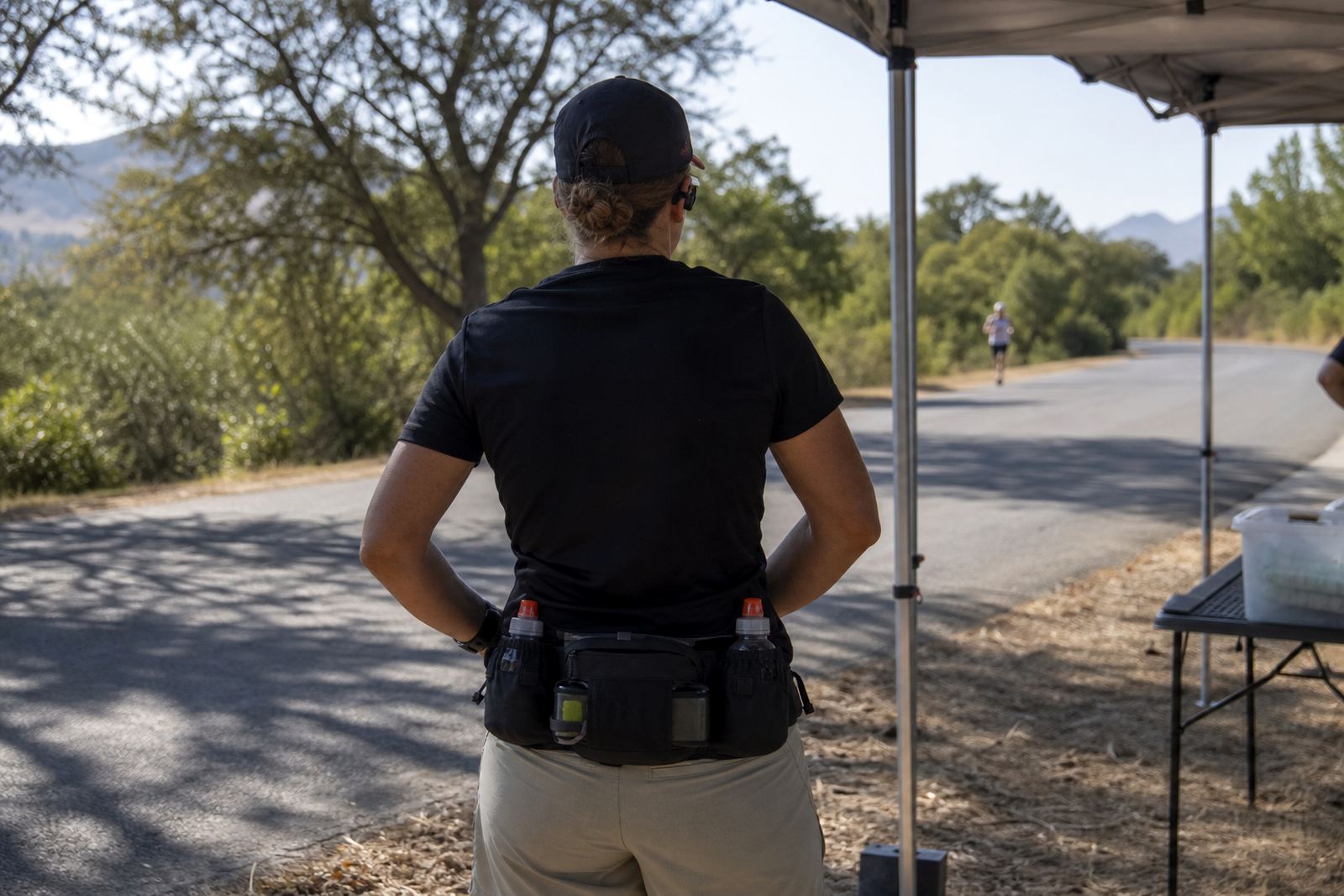
Event day planning should also consider support points and cut-offs. If marshals are spread out, runners may need to carry more from the start. That is where hydration layout advice becomes useful, because the belt can be arranged to match the course rather than the other way around.
- Short road events: light carry, quick access, minimal bulk.
- Long trail events: balanced load, secure storage and room for a layer.
- Race packs: include simple guidance on how to load the belt before the gun goes.
Why event organisers should plan for the weather swing
Cool weather can create a false sense of ease for organisers too. If the forecast shows a low temperature at 6 am, it is easy to ignore hydration planning. By 9 am, that same event may be warmer, windier or more humid than expected. For race events across Cape Town, Johannesburg, Durban and George, conditions vary enough that one standard approach does not always work.
Bulk order planning helps avoid last minute scrambling. If a club or race team knows how many runners will want a belt that holds both water and a layer, they can place the right order, sort sizing early and keep dispatch on track. It also helps with race pack inserts, since a simple note on how to adjust the belt can reduce queue delays and support requests on the day.
- Match belt capacity to expected finish times and course length.
- Plan crew belt kits for support teams handing out hydration on course.
- Use repeat order support when the same event returns each season.
A Stellenbosch example from a winter trail morning
Picture a Saturday morning in Stellenbosch. The sun is still low, the air is cold and runners leave the start in light gloves and long sleeves. By the time they reach the open sections above the vineyards, the breeze drops away and the effort rises. A runner who started with nothing but a phone and keys may find themselves needing water, a gel and a place to stash a wind layer.
That is where a well planned waist belt helps. It keeps the essentials close, keeps hands free and avoids the awkward stop-start routine of stuffing a jacket into a pocket. For local club runs, this kind of practical setup is often the difference between a comfortable session and a frustrating one. It is a small piece of kit, but it supports the full run, not just the first few kilometres.
If your group is planning a winter series, it makes sense to talk through load, sizing and fit before the first event. That way the belt works for casual joggers and serious athletes alike, with enough space for hydration and the layers that cool weather can still demand.