
Why storage matters more than most runners think
A waist belt looks simple, but it works hard. It takes sweat, sun, dust, salt air and the pull of bottles, snacks and keys. Leave it crumpled in the boot or stuffed into a gym bag and the elastic can lose tension, the fabric can start to smell, and the closure can pick up grit that wears it down over time.
Good storage is not about being fussy. It is about keeping the belt stable so it still sits flat around the hips on a 10 km road run, a trail outing in Jonkershoek or a race weekend in Cape Town. If the belt is kept dry and clean between sessions, it is easier to fit and more comfortable when you next pull it on.
Dry it properly before you put it away
Moisture is the biggest enemy of any fabric gear. After a run, empty the pockets, remove bottles and shake out sand, leaves and crumbs. If the belt is damp with sweat or rain, let it air dry fully before storage. Never pack it away wet in a closed bag or laundry basket, especially in coastal areas where humidity can sit in the air for most of the day.
In summer, a shaded indoor spot works best. Direct sun can weaken elastic and fade colour over time. If you rinse the belt after a muddy trail run near Stellenbosch or after a wet race in Durban, press out the water with a towel first. Do not wring it hard, because that can twist the shape and stress the stitching.
- Hang it over a rail or chair back in a cool room
- Keep it open so air can move through the pouch area
- Avoid heaters, tumble dryers and car boots in hot weather
- Make sure bottle sleeves and pockets are dry inside as well as outside
Choose a storage spot that keeps its shape
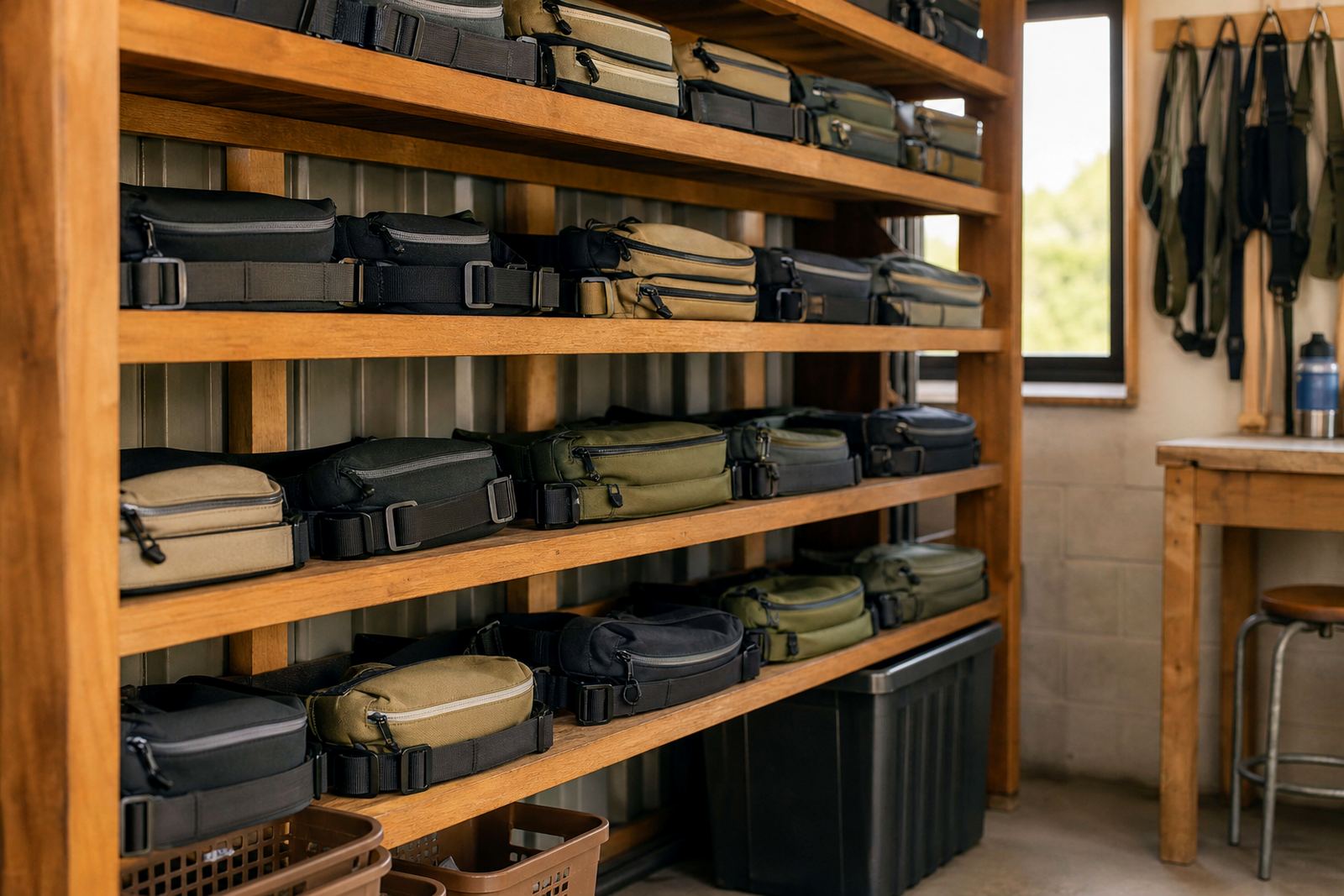
The best storage spot is simple: dry, clean and out of direct sun. A shelf, hook or drawer works well if the belt lies flat instead of being folded sharply. Repeated tight folding can leave permanent creases, and on some belts it can make the elastic sit unevenly around the waist.
If you keep several belts for club use or event day support, store each one on its own hook or in a separate breathable bag. That helps prevent straps from tangling and stops dirt from one item rubbing onto another. It also makes sizing checks quicker before a large event in Johannesburg or a trail series in George.
- Use a hook for quick access after training
- Store away from metal tools, oils and cleaning chemicals
- Keep it off the floor where dust and damp collect
- Do not squash it under shoes, helmets or bags
How to handle bottles, gels and race-day kit after use
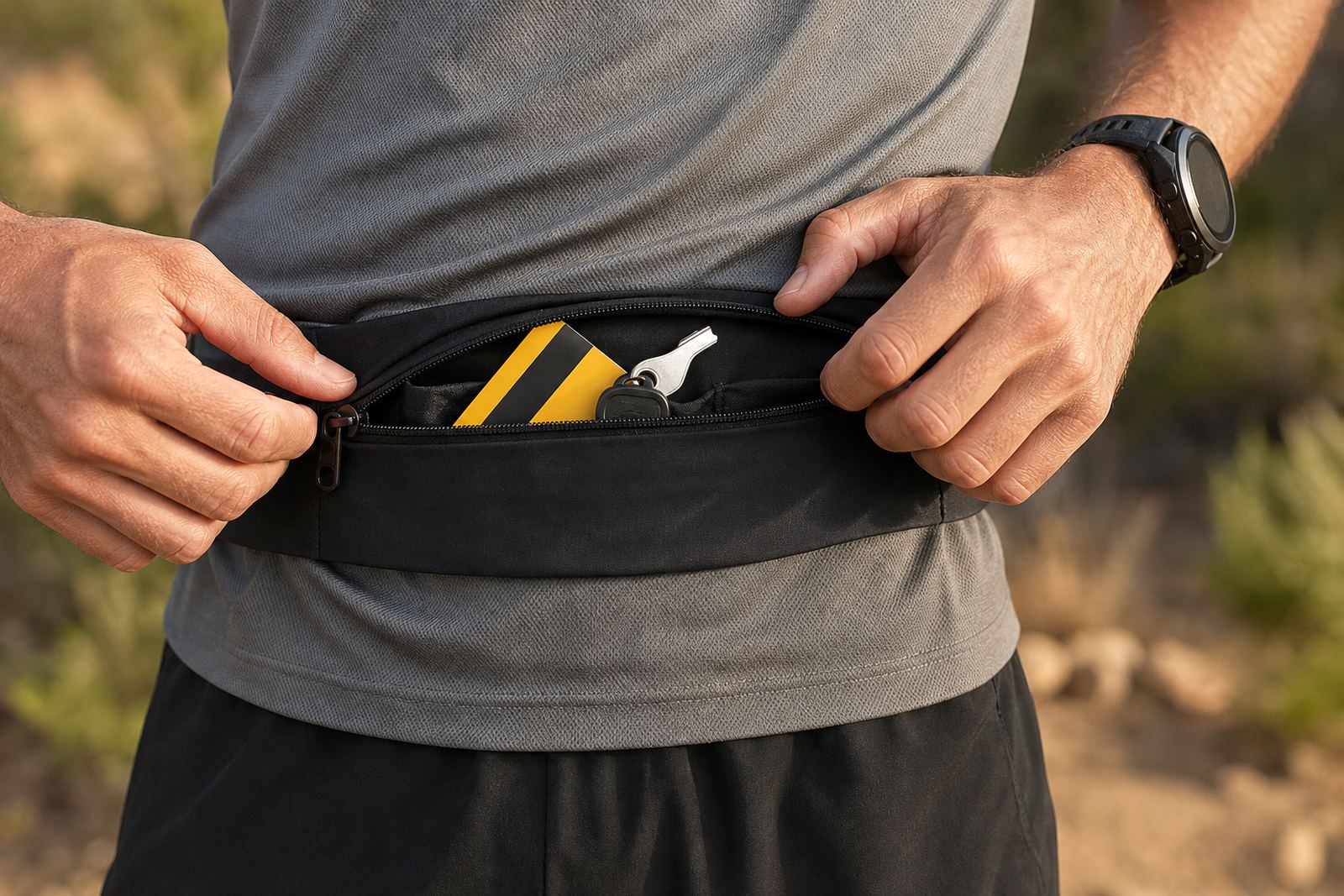
Many storage problems start with what stays inside the belt. Empty every pocket after use. Old gel packets, sweet wrappers and sticky crumbs can attract dirt and insects, and they can also stain the lining if left in place for days. Small bits of grit from a trail can work their way into zips, clips or elastic seams and cause wear.
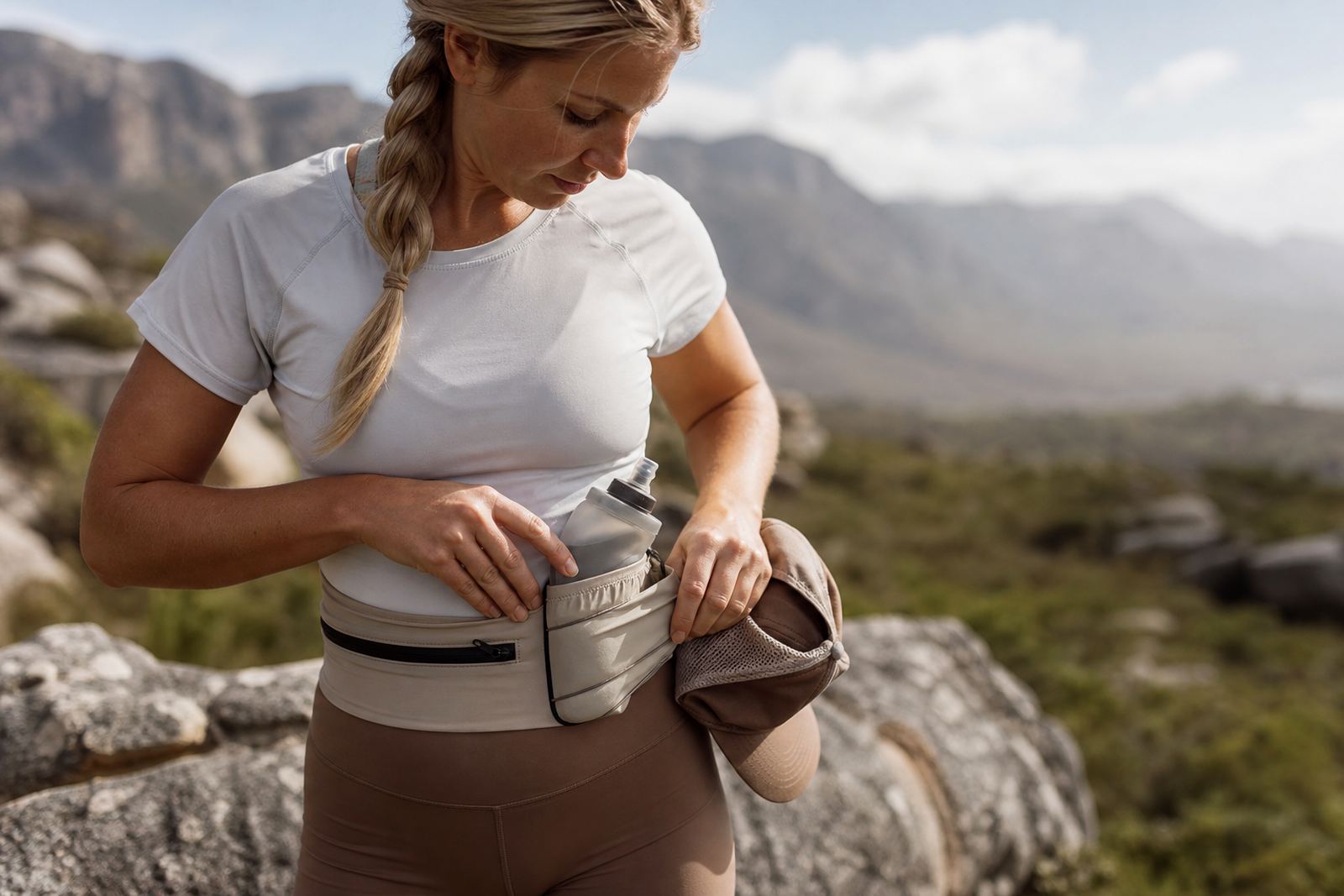
If your belt carries soft flasks or bottles, rinse them and the pockets soon after the run. Let the parts dry separately before reassembly. This matters even more if you train often, because dried sports drink can harden and make the pockets less flexible. A clean interior also helps the belt sit better against the body, without that stiff feel some runners get after a few missed washes.
- Remove all food, wrappers and bottle caps before storage
- Check pockets for sand, pine needles and tiny stones
- Leave zips and closures open until fully dry
- Store bottles and belt separately if they trap moisture
Storing belts between race seasons and club orders
If you only use a belt for races or long events, give it a proper check before putting it away for weeks. Look at the elastic stretch, the stitching, the closure and the bottle hold. A small fault caught now is cheaper than replacing a belt a week before race day. This is especially useful for clubs, event teams and runners who rotate kit through the year.
For organised groups in Paarl, Somerset West or Bellville, it helps to label belts by size or run group before storing them. That saves time when orders are opened again for the next race cycle. In one Stellenbosch club, belts were kept in separate breathable bags after a winter trail season, and the next batch of training starts was far easier because nobody had to sort through a mixed pile of damp, dusty kit.
A simple monthly check keeps the belt ready
You do not need to inspect your belt every day, but a quick monthly check is worth doing if you train regularly. Look for frayed edges, loose stitching, fading elastic and closures that no longer grip properly. If the belt has started to sag or twist, it may be time to retire it from race use and keep it for lighter sessions.
A useful habit is to set the belt aside with your other training gear on the same day each week. That keeps it from being left in the back of a car or buried under wet towels. For runners dealing with load-shedding, it also helps to avoid rushing kit care at odd hours. Clean it when you can, dry it fully and store it properly, and it will be ready for the next early start.
Good storage does not take much time, but it can add a lot of life to the belt. Keep it dry, keep it clean and keep it flat, and it will do its job properly when the next run calls.