
Why trail training needs a different carry setup
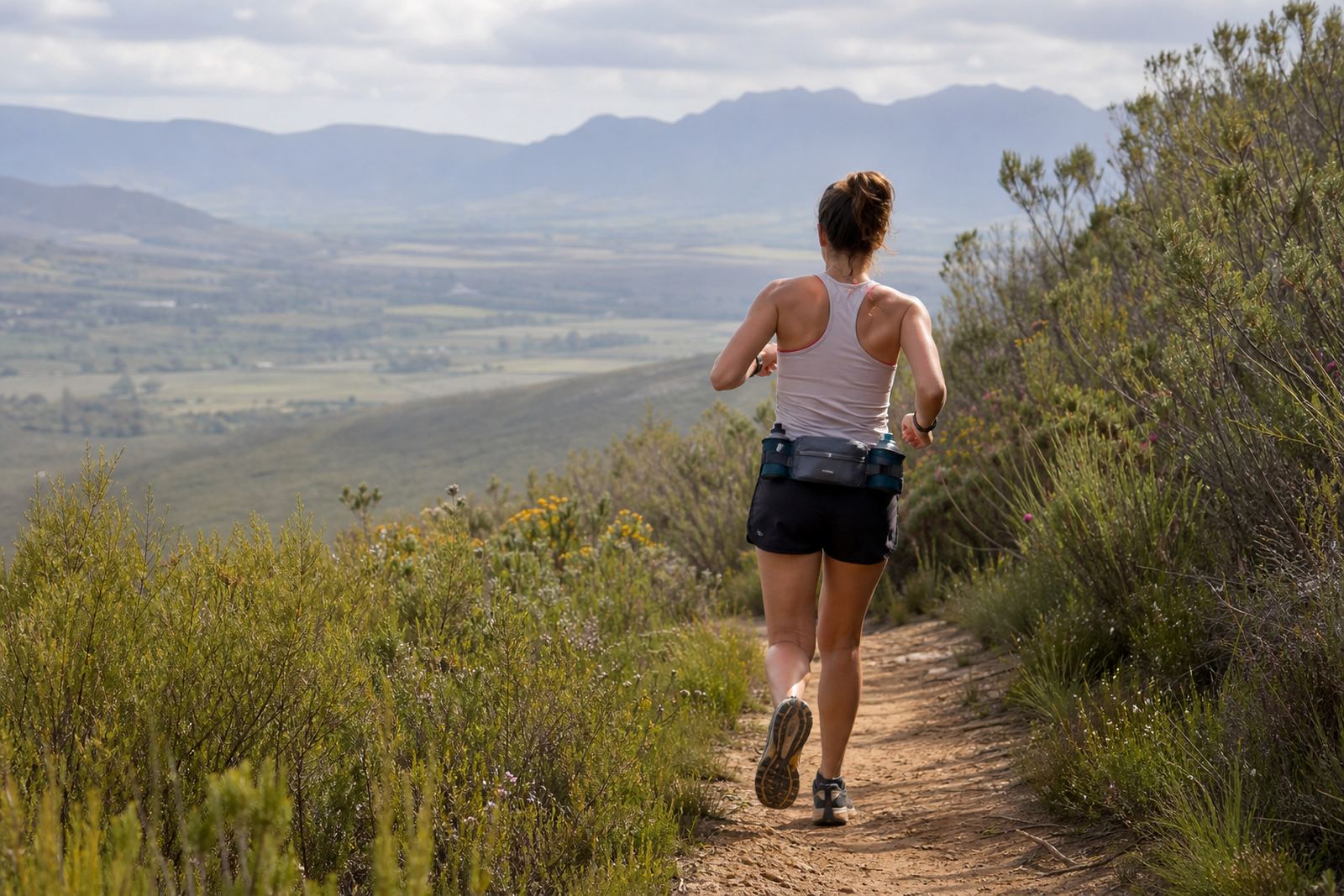
Road training can hide a lot of small problems. On a flat route through Stellenbosch or a steady loop in Cape Town, a bottle that shifts a little may not matter much. Once you move onto uneven ground, climb a jeep track, or take corners on loose gravel, every bit of movement in your kit gets noticed.
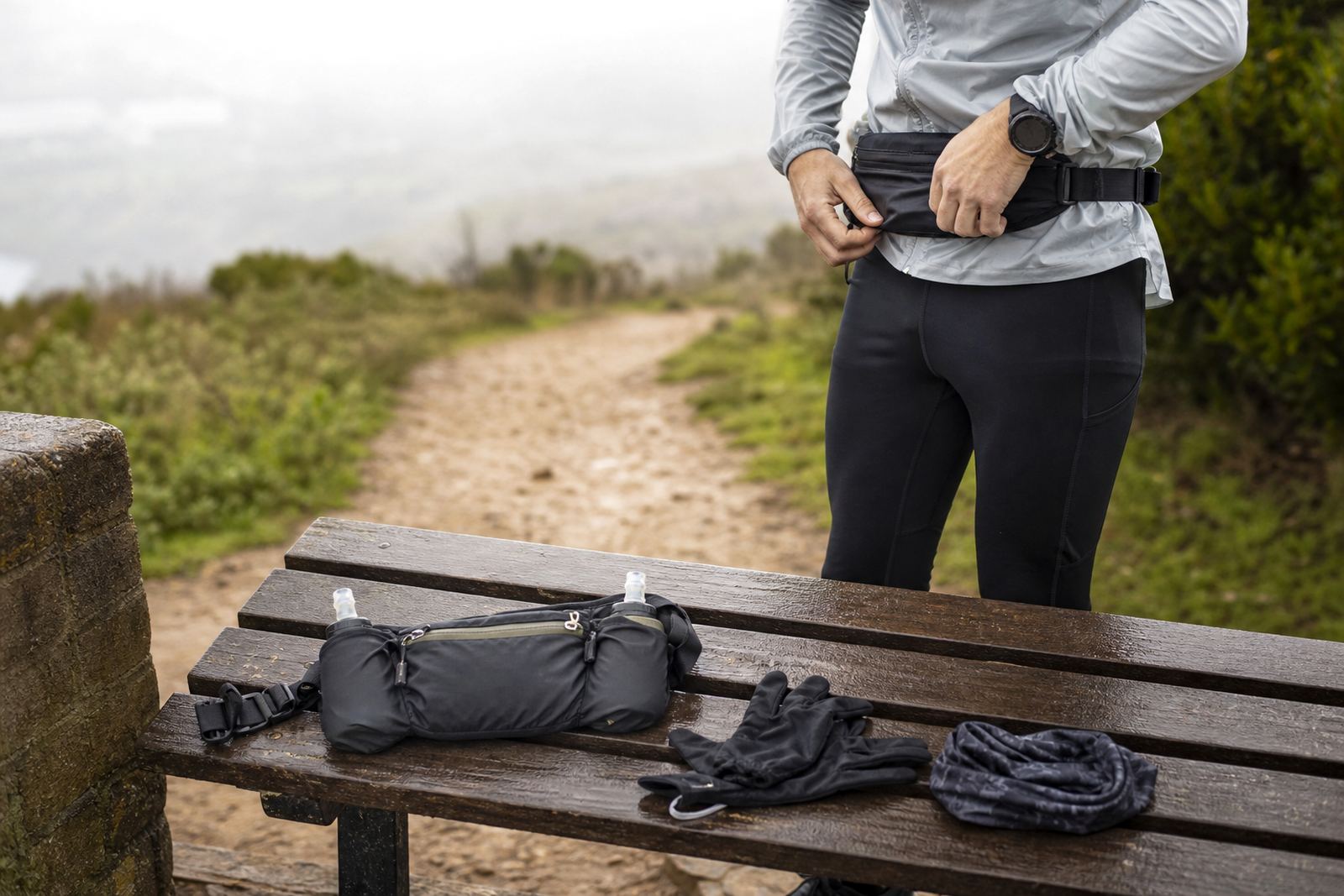
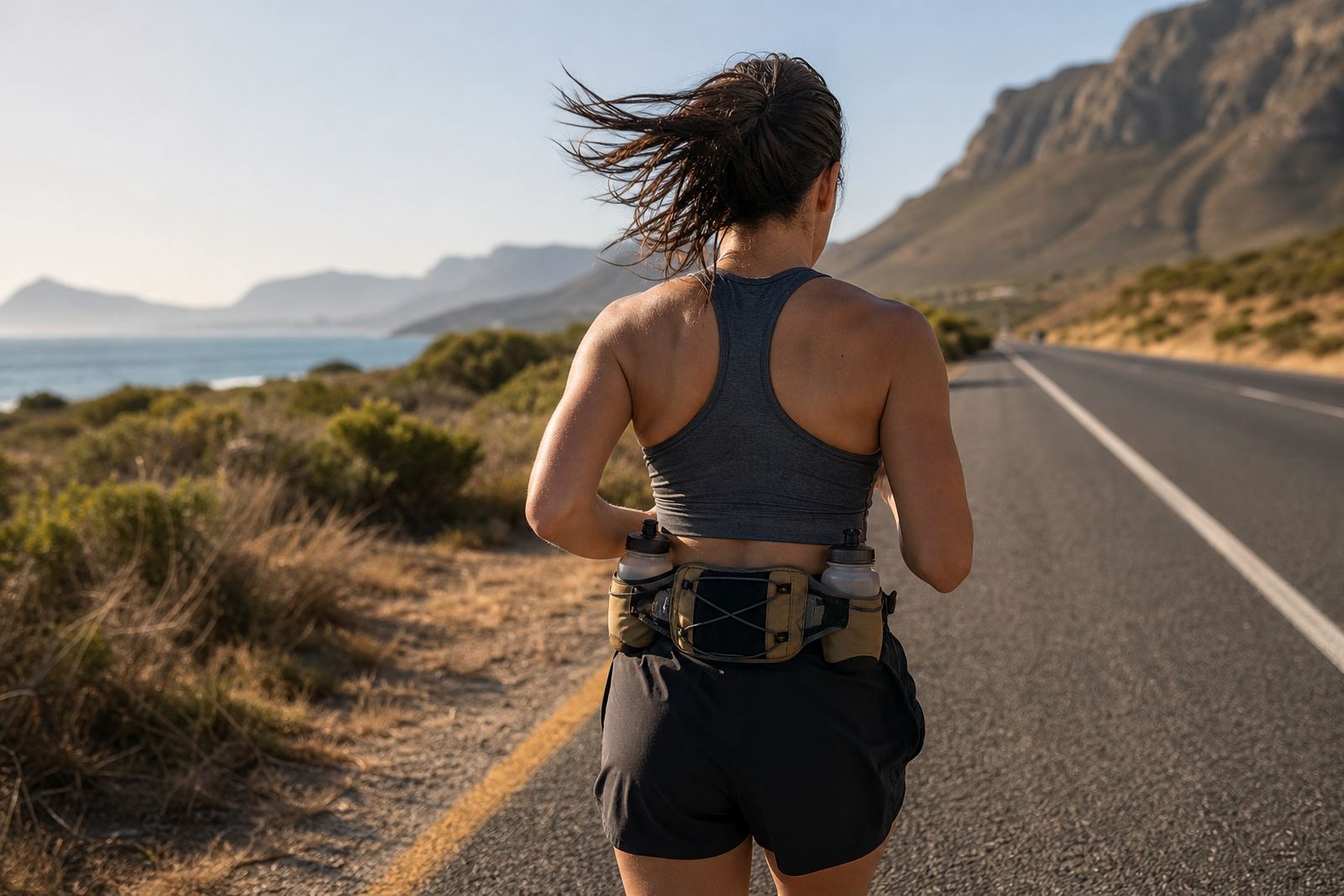
A waist belt is useful because it sits low and keeps weight close to your centre. That matters on trails where balance is always changing. If your bottles, soft flasks, phone and nutrition are packed badly, you waste energy adjusting them instead of settling into your rhythm. In hot weather, that frustration builds quickly, and on long sessions it can start to affect your pace and focus.
For runners training around Jonkershoek, Paarl mountain paths or the Helderberg, the aim is not just to carry more. It is to carry the right items in a way that stays comfortable for the full session.
Fit comes first, especially on rough ground
Trail runners often blame the trail when the real issue is fit. A belt that rides up, twists, or digs into the hips will become a problem within the first few kilometres. Before a longer outing, test the belt on a short loop with a few small rises and some faster running. If it moves too much on the first climb, it will only get worse later.
The best fit is close but not tight. You want the belt stable when you walk, jog and turn, but still comfortable when you breathe hard on a climb. A proper fit also helps when the weather changes. In the Western Cape, a cool morning can turn warm fast, and if you layer too much the belt can start to pinch or feel sweaty against the body.
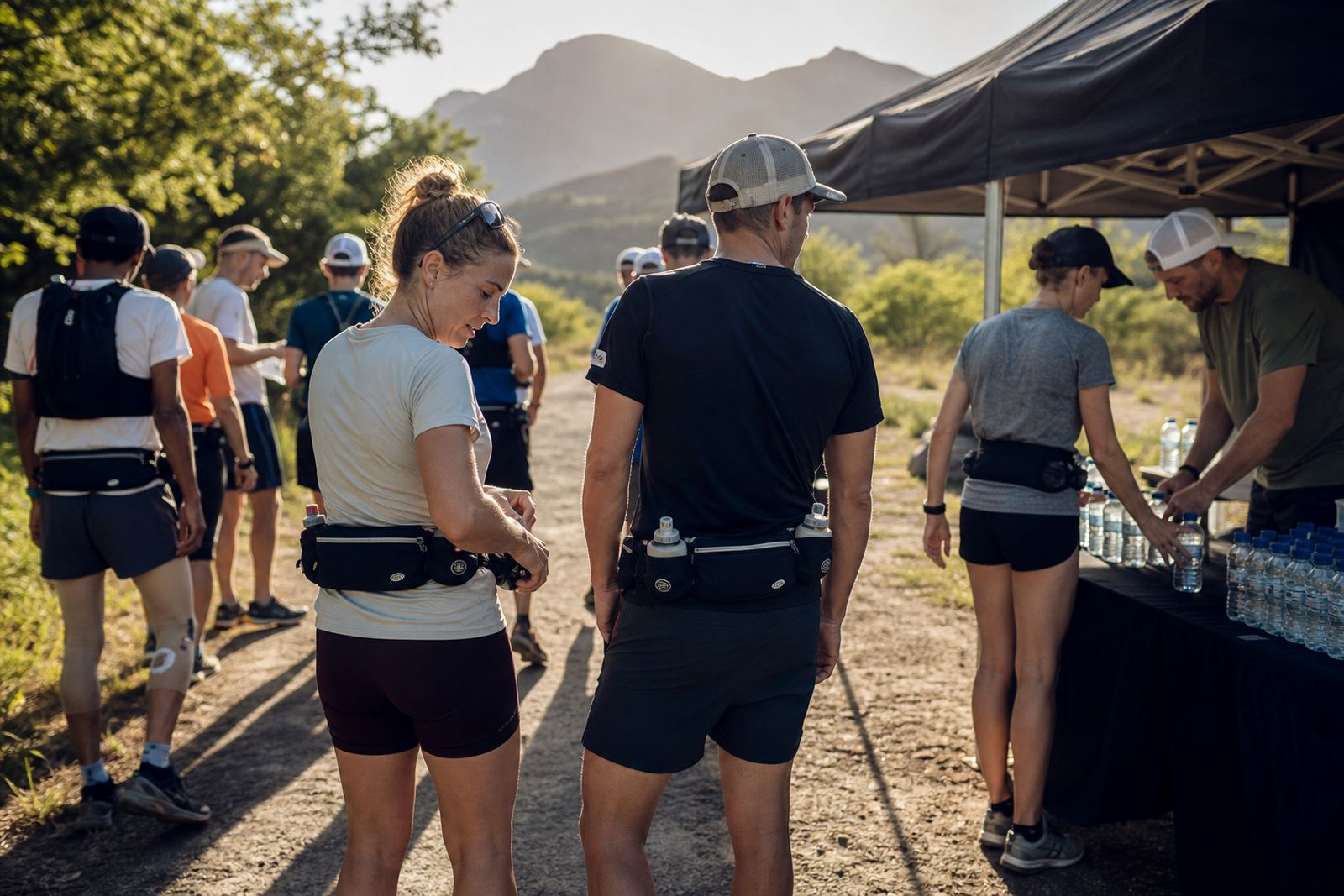
Good sizing also matters for group training and club members. A belt that works for one runner may be wrong for another, even if they are training for the same race. That is why participant sizing and product fit checks save time later, especially when a club is placing repeat orders for a race season.
What to carry on a local trail session
Training runs do not need the same load as race day, but they do need enough to cover the conditions. On shorter trail sessions near Stellenbosch or Somerset West, many runners carry just the basics. On longer mountain routes or mixed road and trail workouts, it makes sense to add a little more structure to the loadout.
For most local trail sessions, keep the carry simple. Too much gear creates noise and movement, while too little leaves you underprepared if the heat builds or the session runs long. The right balance depends on the route, time of day and how far you are from water points or safe exits.
- Water or a hydration flask sized for the route
- One or two gels, chews or a small snack
- Keys and a phone in a secure pocket
- Basic ID or emergency details
- Light layer for early starts or windy ridges
On longer runs near George or Durban, humidity changes the way you carry water and salt. You may need more liquid than you do on a cooler inland route, and the belt should still sit steady even once it starts to get damp. That is where a well laid out pocket system helps a lot.
Trail surfaces in South Africa change your pack strategy
South African trails are not all the same, and your gear should reflect that. A vineyard path in Stellenbosch is very different from a rocky line above Cape Town, a forested section in George, or a warm inland route near Johannesburg. Some routes are smooth enough for a fast tempo session. Others ask for slower foot placement, more attention and a tighter carry setup.
On loose shale, a belt that swings can throw off your rhythm. On sandy or dusty sections, pockets that do not close properly can fill with grit. In coastal towns, moisture and humidity can make straps feel heavier over time. If you train in places where the weather changes quickly, it is worth checking that the belt dries fast and still holds its shape after a wet session.
For event preparation, think beyond one training route. If you are building towards a trail race or a mixed-terrain event, practise with the same carry arrangement you plan to use on race day. That includes the same bottle position, the same nutrition placement and the same fit around the waist.
How clubs and event teams can plan waist belt use
Club managers and race organisers often wait too long before sorting carry options. By the time numbers are confirmed, the sizing conversation becomes rushed. A better plan is to map likely needs early, especially if you are supporting runners across multiple towns such as Bellville, Paarl, Somerset West and Cape Town.
For group orders, the practical steps are simple. Work out how many participants need the same setup, which sizes are likely to move fastest, and whether the same belt will be used for training sessions and event day support. If a crew needs belts for water carrying, marshals or support staff, separate the kit from the runner packs so nothing gets mixed up during dispatch.
When an event is busy, clear label systems help. So does having a repeat order plan in place after the first race season. That way, you are not starting from scratch every time a new batch of runners signs up. It saves time, and it keeps the fit more consistent across the group.
A Stellenbosch example: getting ready for a mixed trail session
Picture a Tuesday morning in Stellenbosch. A runner starts on a shaded road, moves into a vineyard track, then finishes on a steeper trail section with loose stones and a bit of wind. The route is not extreme, but it still asks a lot from the kit. A belt that feels fine on the first kilometre may become irritating by the second climb if the bottles are shifting or the pockets are poorly placed.
In that setting, a useful setup is one that carries just enough liquid, keeps nutrition secure and stays quiet when the runner picks up pace. The belt should also allow quick access without slowing the session. If the runner is doing repeats, the last thing they want is to stop and reset the fit at every turn.
That is the real value of training with the right waist belt. It is not about carrying more than everyone else. It is about making the route feel manageable so the runner can focus on footwork, breathing and pace control. A small adjustment in carry setup can make a big difference over time, especially on local terrain where conditions change from one section to the next.