When a bottle carry makes sense
Running with a bottle is not only for ultra-distance athletes. It can suit a 10 km training run, a trail outing on Table Mountain, or a busy race in Stellenbosch where the start line gets crowded and water tables are not always where you want them. The key is placement. If the bottle sits awkwardly it will bounce, twist your stride, and become a problem before the halfway mark.
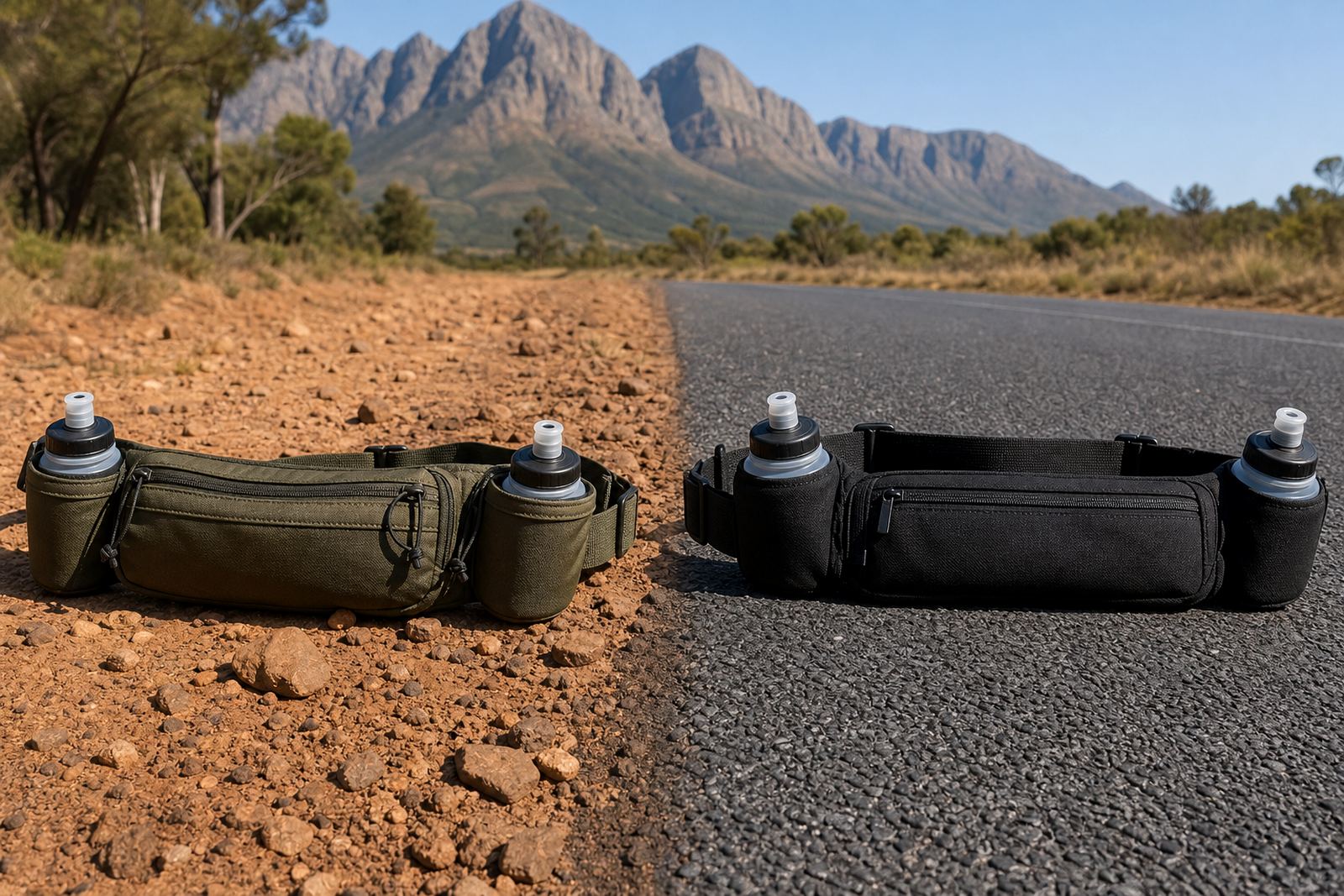
For most runners, a bottle carry works best when you need frequent small sips rather than stopping every few kilometres. That is useful in warm Western Cape weather, on humid Durban mornings, or on long routes where wind and sun dry you out faster than expected. It also helps when you want to keep gels, keys, a card, or a race number pin close by without stuffing pockets full.
- Best for runs where you want quick access to water
- Useful when water tables are spaced out or busy
- Handy for trail routes with steep sections and heat
- Practical for runners who prefer light, simple carry options
Not every run needs a bottle, but when you do carry one, the setup should feel almost invisible after the first few minutes.
Balance matters more than bottle size
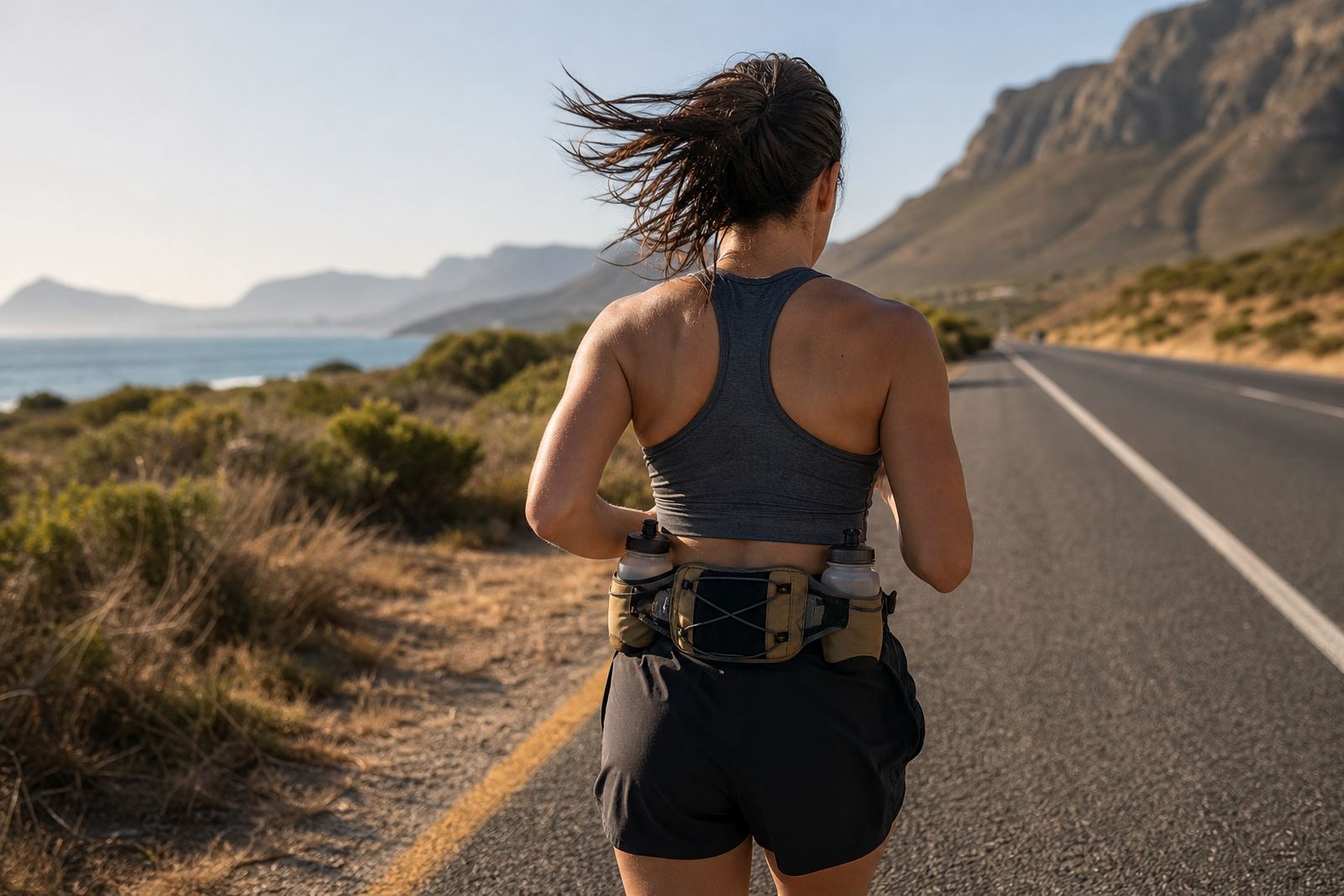
The first mistake runners make is choosing a bottle that is too large for the run, or placing it where it pulls to one side. If the bottle shifts with every stride, your hips and lower back start working harder than they should. A good carry spreads the weight close to the centre of your body and keeps the bottle from swinging when you change pace.
On flatter road runs around Paarl or Bellville, a neat carry can feel very different from the same bottle on a rugged trail near George. On technical ground, a lower and tighter position usually helps more than a loose setup. On road runs, quick reach and easy breathing matter most. That is why many runners test placement on a short loop before taking it to a longer event.
- Keep the bottle close to the body to reduce bounce
- Choose a size that matches the run, not just the distance
- Test the carry on both flat and hilly ground
- Check that the belt stays put when you lift pace
A stable setup is often better than a bigger bottle. If it sits well, you are far more likely to actually use it.
Trail, road and race day have different needs
Trail runners often need a bottle carry that leaves the hands free for balance on loose gravel, roots, and steep climbs. Road runners usually want something lighter, slimmer, and easy to reach without breaking stride. Race participants may need a carry that does not get in the way of timing chips, bibs, or the fit of a club vest.
For a trail event in Stellenbosch, a runner may want a bottle that sits snugly for the first climb, then stays steady on the descent back into the valley. For a half marathon in Cape Town, the same runner may prefer a slimmer setup because the route is more predictable and the water stations are closer together. In Durban, where humidity can be high even early in the morning, bottle access becomes more important because you may drink sooner than you expect.
- Trail routes call for a firmer, more secure carry
- Road routes can suit a slimmer, lighter setup
- Race day needs easy access without fuss at the start
- Weather and humidity change how often you need to drink
Local route choice should guide bottle choice. The carry that works on a flat loop from Somerset West may not be the right one for a windy climb above the vineyards.
What to pack with the bottle
Most runners do not need to overload a waist belt, and that is where good planning helps. The bottle is only one part of the system. A small amount of storage for fuel, a key, or a soft flask cap can make the carry much more useful. Keep heavier items close to the centre and avoid loose objects that can rub or rattle.
For race events, it helps to pack in a simple order. Place what you need most often where you can reach it fast. Put items you will only use later in the run in the more secure pockets. That way you do not have to stop and shuffle things around while trying to keep pace through a crowded field.
- One bottle for short to mid-distance runs
- Small fuel items that fit without bulging the belt
- Keys secured so they do not tap against the bottle
- Race essentials packed in the order you will use them
If you are preparing for a club run or event in Johannesburg, where start times can be early but the pace often lifts quickly, a tidy load helps more than a full one. Less clutter means less irritation after the first few kilometres.
How to test fit before race day
Do not wait until the morning of the event to find out if your bottle carry works. Put it on for a short training run and check three things: bounce, reach, and breathing. If the belt moves when you climb stairs, jog around the block, or bend to tie a lace, it will probably bother you later in the run.
Try the setup on different routes. A smooth 5 km in Stellenbosch town is one test, but a windy open stretch outside George is another. In cooler weather, runners sometimes tighten the belt more than needed and end up uncomfortable once the body warms up. In hot weather, some leave too much room and the bottle starts shifting as they sweat. The right fit should feel firm but not tight.
- Run a short loop before using the bottle in an event
- Check for rub at the waist, hips, and lower ribs
- Test the setup with the shoes and clothing you will wear
- Adjust after the first kilometre, not after the tenth
A small fit issue can become a big irritation over time, so a quick trial saves trouble later.
A Stellenbosch example that makes the point
Picture a Saturday morning trail group leaving Stellenbosch before sunrise. The route climbs early, drops into a shaded section, then opens onto a warmer stretch along the slopes. One runner carries a bottle in a belt that sits too low and bounces at every step. Another runner has the same amount of water but a better placement close to the body. The second runner keeps an easier rhythm, takes smaller sips, and reaches the finish with less fuss.
That difference is not about fitness alone. It is about how the bottle is carried. On South African routes, where weather and terrain can change quickly, the carry should help the run rather than distract from it. For club runners, event crews, and race organisers, that matters because the wrong setup can slow people down and make a simple bottle feel like extra baggage.
Good bottle carry is practical. It supports balance, keeps hydration close, and lets the runner focus on pace and footing. When the placement is right, the bottle does its job and stays out of the way.