
Why summer racing changes the carry plan
When the mercury climbs, the small things become important. A bottle that bounces, a gel that is hard to reach, or a belt that shifts on a downhill can waste energy and make a race feel longer than it should.
For trail runners and road runners alike, hot weather means you need to think about two things at the same time: how much you will carry and how easily you can get to it. On a warm Stellenbosch morning, a 10 km road race might be manageable with a light carry. On a long trail route outside Paarl or in the Elgin hills, you may need more water, more fuel and a belt that sits snugly from the first kilometre to the last.
Build your belt around distance, not guesswork
A common mistake is packing for fear rather than for the route. Start with the distance, the aid stations and the weather forecast. If water points are close together, a smaller bottle setup may be enough. If the race is exposed, windy or goes out into the heat after 9 am, carry more from the start.
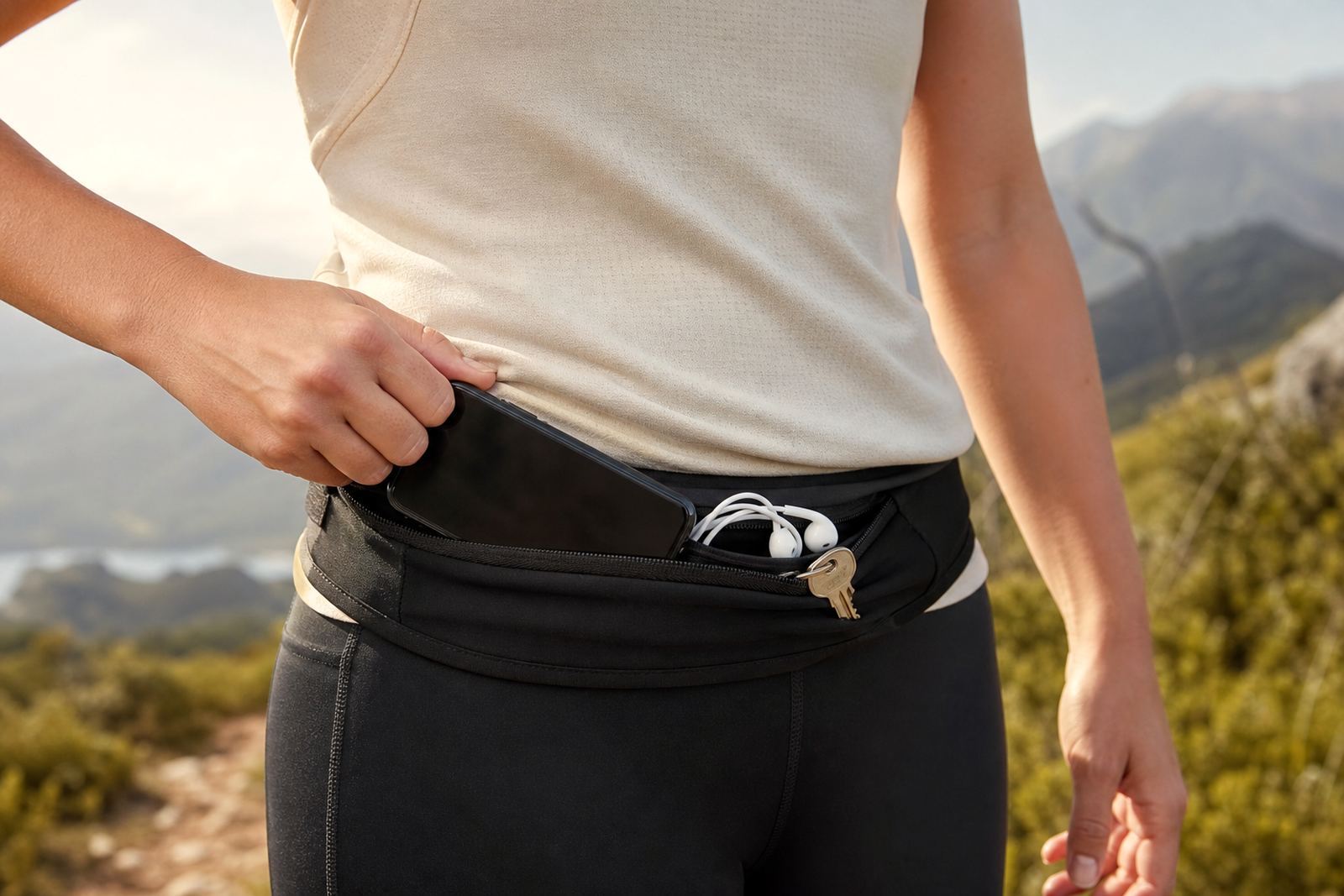
- Short road race, cool start: a slim belt with keys, one gel and a soft flask may be enough.
- 10 km to half marathon in summer: plan for water plus one or two fuel items.
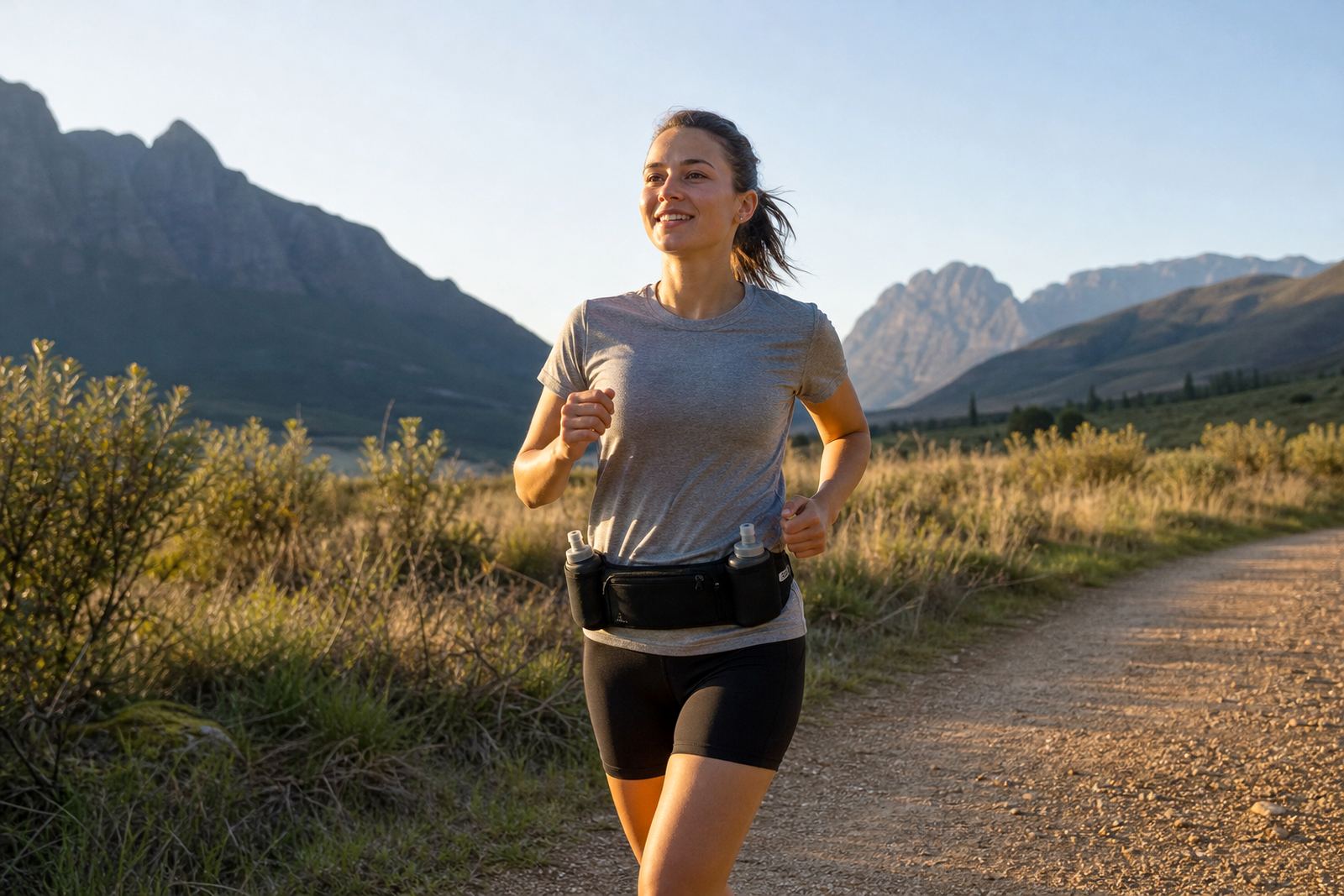
- Trail event over several hours: choose a belt with stable hydration and room for nutrition, a cap or light layer.
- Club training run: keep the carry simple so you do not overpack for a routine session.
The right load is the one you can forget about while running. If you notice it every few minutes, it is probably too heavy or sitting too high.
Hydration in heat is about steady sipping
In warm conditions, waiting until you feel dry is too late. Small sips over time are easier on the body than trying to catch up later. That is especially true on routes with open sections, tar heat or long climbs where breathing already feels harder.
Waist belts are useful because they keep water close to hand without forcing you to reach for a pack on every drink. On a hot day in Durban or along the Cape coast, a stable belt can make it easier to stay on a simple rhythm: sip, settle, keep moving.
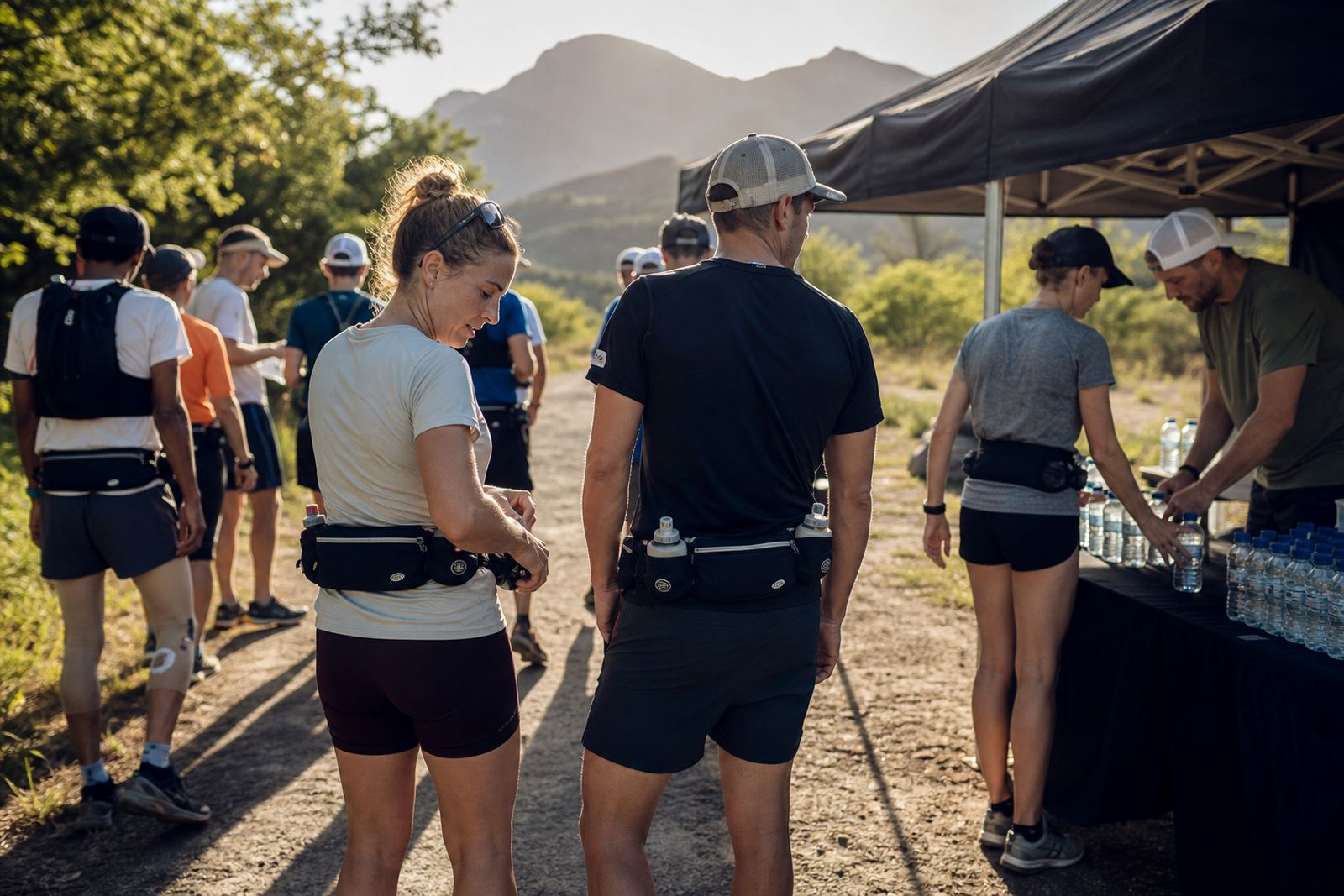
Look for a carry layout that lets you reach your bottle with one hand, and make sure the bottle does not pull the belt sideways. If you are racing with a group, practise taking a sip while running in a pack so you are not fumbling at an aid station.
What to pack when the sun is doing the work
A hot weather carry list should be practical and limited. The goal is to cover the next stretch of the route, not to take your whole kit with you. Think about what could help if the day turns warmer than expected, or if the race takes longer than planned.
- Water or hydration mix in a stable bottle or soft flask.
- Gels, chews or a small snack that you can open easily with sweaty hands.
- Car key, ID and any event tag or timing item required by the race.
- Salt tabs or electrolytes if you use them in training.
- Light cap, sunscreen sachet or a thin layer for early starts.
For trail events, some runners also carry a small bandage or blister plaster. It takes up very little space but can save a lot of hassle if a sock rub starts halfway through.
Fit matters more when the temperature rises
Heat changes how gear feels. A belt that sits fine in a cool morning can start to irritate once sweat builds up and your stride changes. That is why fit should be tested before race day, not on the morning of the event.
Check that the belt sits flat across the hips and does not ride up when you pick up pace. If you are moving over rocky sections near Jonkershoek or taking corners through a city race in Johannesburg, the belt should stay put on both the climb and the descent. A small slip can become a big distraction after 90 minutes on the road.
Try it with the exact clothing you plan to wear on race day. A singlet, a long-sleeve top or a light wind layer can all change how snug the belt feels. Test it on the same type of run too, not just a short jog around the block.
Race-day planning for South African summer conditions
Local conditions vary a lot between Cape Town, George, Durban and the Highveld, so one carry setup will not suit every event. Coastal humidity can make grip and sweat management a bigger issue, while inland heat can feel sharp and dry by late morning.
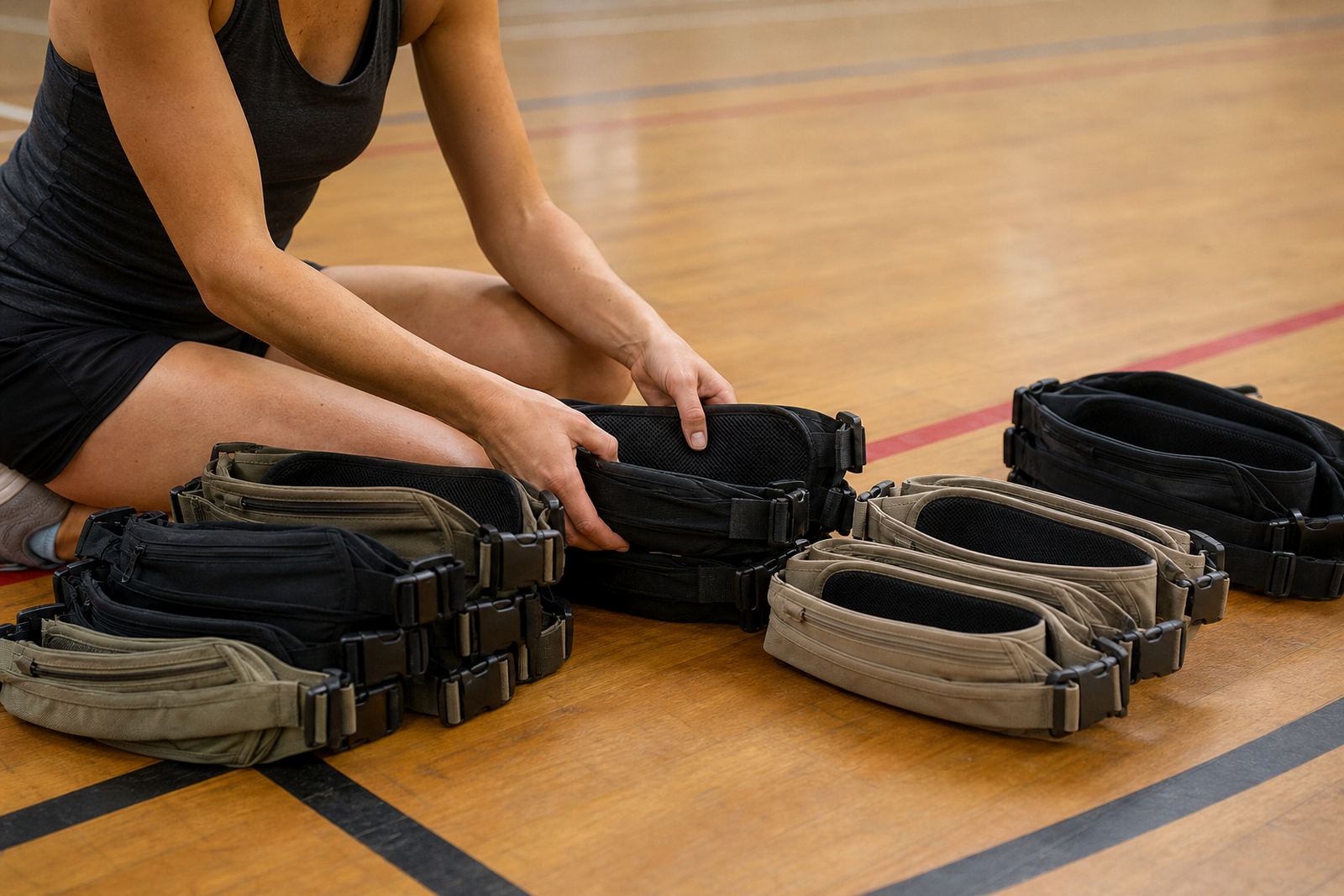
For event organisers and clubs, planning the carry setup early helps with participant briefing and sizing. It also makes pack prep easier when you need belts for a mixed field of road runners and trail runners. A clear plan before the race reduces last minute issues, and it keeps the focus on the event not the kit.
- Confirm the start time and likely temperature at the finish, not just the start.
- Match the belt size to participant measurements and clothing layers.
- Decide whether runners need one bottle, two small bottles or a bottle plus storage.
- Brief participants on where aid stations sit relative to the carry plan.
- Keep a few spare belts and sizing options for late entries and crew support.
In hot conditions, the best kit is the kit that disappears once the whistle goes. If runners can settle into their pace without adjusting the belt every few minutes, the planning has done its job.