Why summer hydration starts before you lace up
In the Western Cape and much of inland South Africa, summer runs can turn warm fast, especially once the sun is up. By the time you feel thirsty, you are already behind on fluid. That is why smart runners plan hydration before they leave home, not halfway through the route.
For an early run in Stellenbosch, for example, the air may feel cool at 6am but the temperature can climb sharply by 8am. On the same day, a road runner in Johannesburg may start in dry heat while a trail runner near Durban deals with higher humidity, which makes sweat loss harder to judge. Different conditions, same rule: drink early, then keep sipping in small amounts.
A good starting point is to have a glass of water when you wake up, then another 15 to 20 minutes before you begin. If your run is over 60 minutes, or you are doing hills, intervals, or a long trail outing, it helps to carry fluids with you rather than relying on a tap or a vehicle support point.
How much fluid to carry for short runs and long routes
The right amount depends on the heat, your pace, and how much you sweat. A 5 km city jog in Cape Town on a cool morning may need very little. A 15 km trail route outside George in full sun is a different matter altogether.
As a practical guide, many runners do well with 250 ml to 500 ml for shorter sessions in mild weather, and 500 ml to 1 litre for longer or hotter runs. If you are racing or doing back to back training days, it is worth testing your own needs in training instead of waiting for race day. One runner might finish with a nearly full bottle, while another is light-headed without a refill plan.
- Carry less if the route has frequent water points and the weather is mild.
- Carry more if you sweat heavily, run on exposed gravel roads, or train in midday heat.
- Use a layout that lets you drink without stopping and fumbling with caps.
- For events, confirm where the water points are and how far apart they sit.
On longer race days, some runners also take a second bottle or a small refill plan with a crew member. That keeps you from pushing too hard between aid stations, especially on rolling terrain.
Why easy bottle access matters on trails and race days
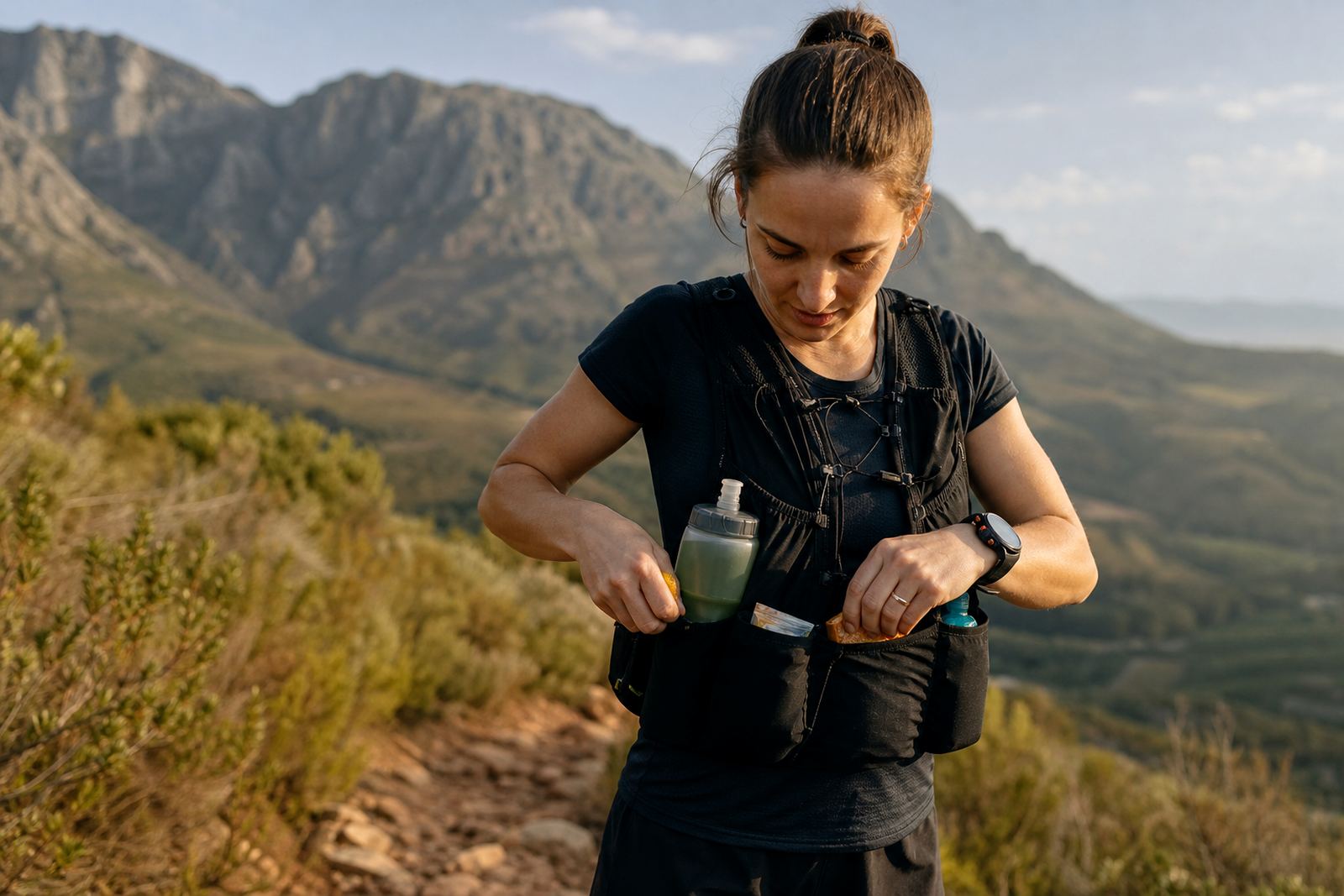
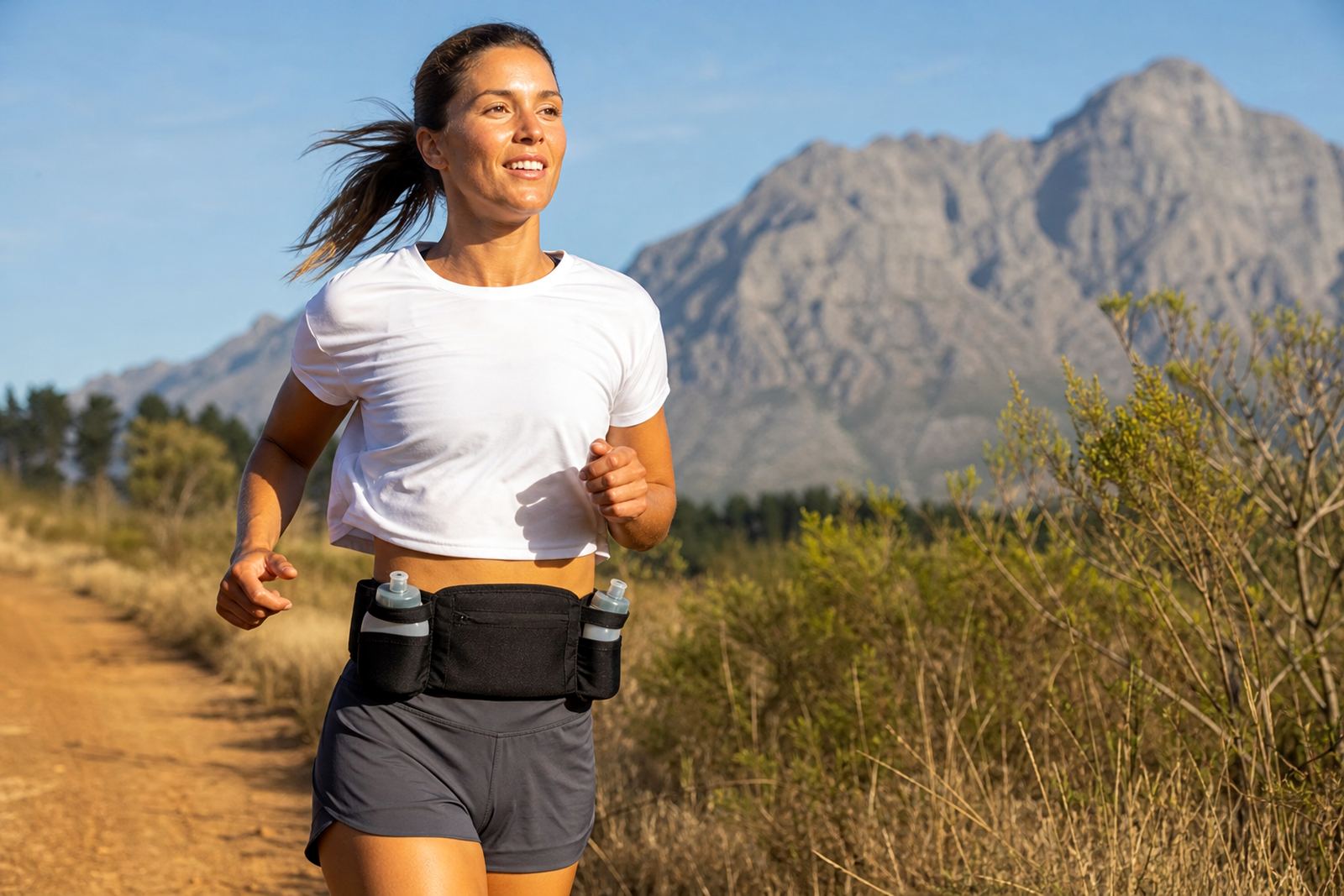
If you need to stop, unzip, and dig around for a bottle every time you want a sip, you are less likely to drink enough. That becomes a problem on hot days when even a few minutes of heat exposure can make you feel flat. A waist belt with secure bottle access keeps the bottle close to the body and easy to reach without breaking stride.
Trail runners often need their hands free for uneven paths, gates, rocks, and occasional scrambling. Road runners may want the same freedom when turning through busy sections or moving through event start areas. A stable belt also matters when you are descending or running at a steady pace, because bounce can become annoying quickly. The fit should feel snug but not tight, and it should stay put once you start moving.
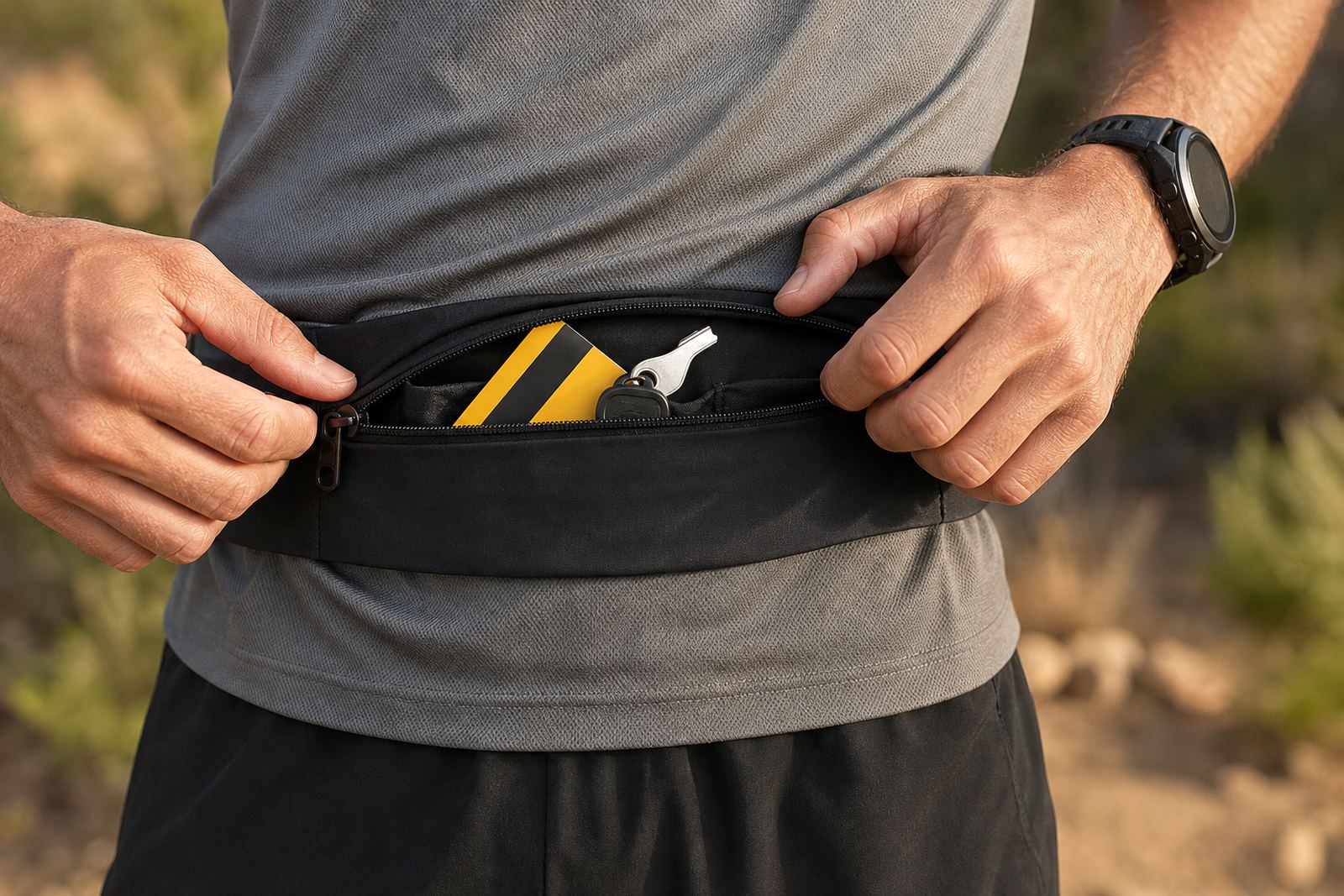
For event participants, ease of access can make the difference between sipping regularly and forgetting until the second half of the course. If you are running with gels, keys, and a soft flask, each item should have its place. That way you are not carrying more than you need, or losing time with every grab.
What to do when the heat rises mid-run
Some runs start comfortably and then the weather shifts. On a still morning in Paarl or a humid afternoon near Durban, the effort can climb without much warning. Once that happens, slow down before you feel overcooked. It is better to back off for five minutes than to spend the rest of the session fighting dehydration.
Look out for early signs that your body needs attention, such as a dry mouth, heavier breathing than expected, dizziness, or a sudden drop in pace. If you notice cramps, do not try to push through as if nothing is wrong. Find shade, take small sips, and walk if needed. Some runners also underestimate salt loss in hot weather, especially on longer efforts. Water helps, but if you are out for a while, you may need a more considered fluid plan.
- Start easier than usual on hot days, then build pace if you still feel strong.
- Use shade, tree cover, or quieter roads where possible.
- Sip small amounts often instead of waiting for a large drink break.
- If your run feels unusually hard by 30 minutes, reassess your pace and fluid intake.
For organised races, it helps to know where the route opens into exposed sections. A long stretch on tar with no cover can feel much hotter than the same distance through a shaded vineyard path or suburban route.
Preparing for race events and club runs in South Africa
For club runs and race events, hydration planning should happen well before the start line. Event teams usually need enough belts for different participant sizes, clear packing instructions, and a simple way to keep the right units with the right runners. When that is organised early, the morning runs smoother for everyone.
Race organisers in places like Cape Town, Johannesburg, Stellenbosch, Durban, and George often deal with different start times, crowd sizes, and temperature patterns. That means hydration layouts are never quite the same from one event to the next. A good plan takes into account the route profile, the distance between aid stations, and the type of participants taking part, from first time 10 km runners to seasoned trail athletes.
For clubs, repeat order planning can save time before big events or training camps. It also helps to brief runners on fit, bottle placement, and what to carry in the belt on the day. A simple fit check before the event can prevent sore hips, bounce, and missing bottles later on.
A local summer running habit that actually works
One of the easiest habits to build is a pre-run check: weather, route, water, and fit. If you are training around Stellenbosch on a warm Saturday, it makes sense to leave earlier, take a route with shade where possible, and carry enough fluid to get you home without stress. That same habit works on road runs through Bellville, long training loops in Somerset West, or trail sessions outside George. Small decisions made before the run usually matter more than panic during it.
Summer hydration is not only about drinking more. It is about making drinking possible while you move. If your bottle is stable, your belt fits well, and your route is planned with water in mind, you will finish with more energy and less risk of a rough afternoon afterwards.
That is the practical part of running in the heat: plan early, carry what you need, and keep it easy to reach. Your body will thank you for it later, even if the run itself feels a bit tougher at the time.