
Why Rain Changes The Way A Waist Belt Should Work
On a dry morning, many runners barely think about what they are carrying. In wet weather that changes quickly. A phone, gels, keys and cards can slide around more, get soaked through, or become awkward to reach when your hands are cold and your clothing is clinging to you. A good running waist belt should keep the load close to the body, with enough hold that the belt does not bounce on climbs, headwinds or muddy sections.
In South Africa, rain is not always a gentle drizzle. A winter front in Cape Town can bring cold wind and steady rain, while a summer storm around Durban can be hot, heavy and sudden. In both cases, runners need easy access without stopping to unzip a jacket, untangle a plastic bag or fish around in a pocket that has filled with water. That is where a proper waist belt earns its place. It keeps the day-to-day items sorted and lets you keep moving.
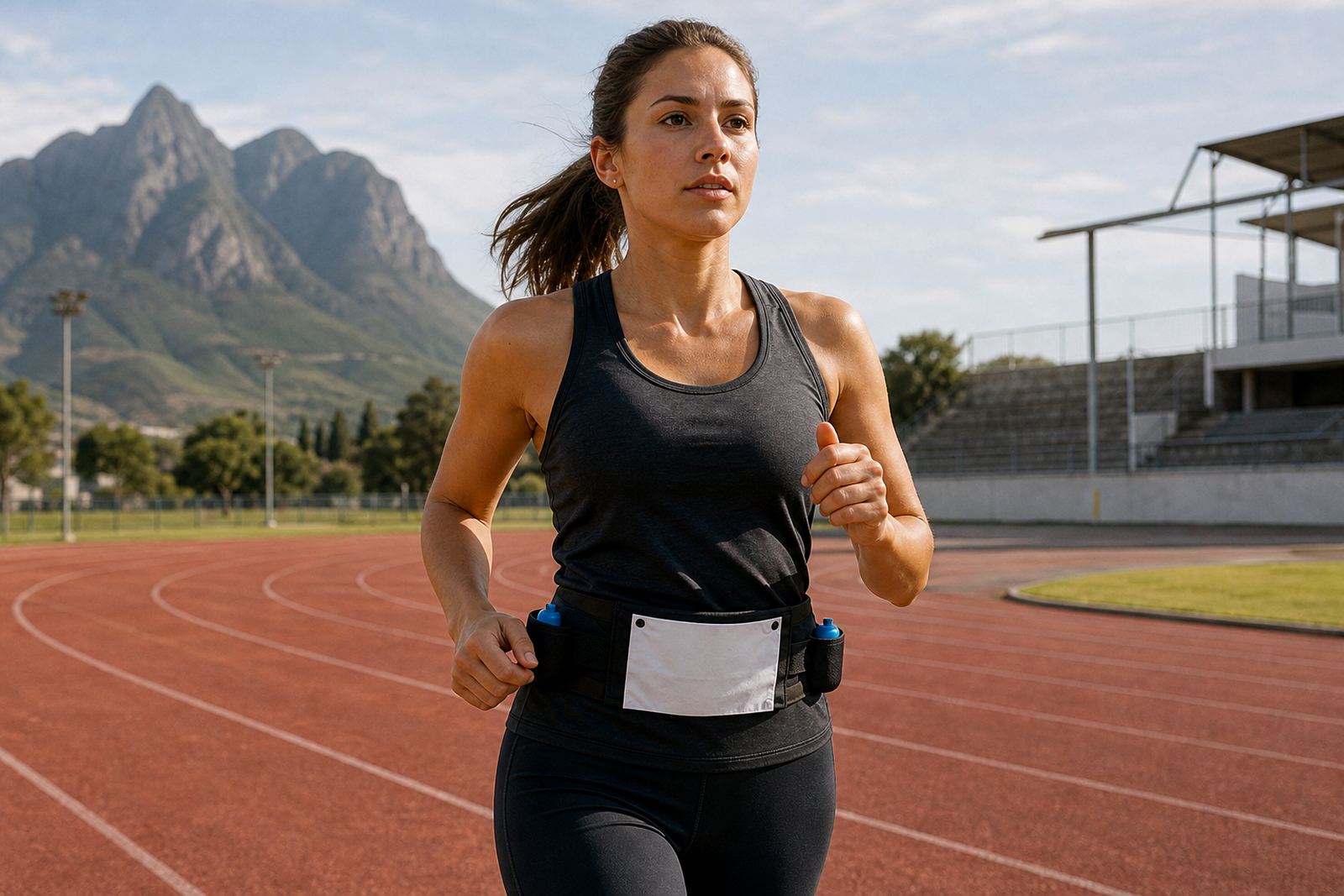
The best setup starts with the right fit. If a belt sits too loose, it shifts on every stride. If it sits too tight, it can dig in once your top layer gets wet or you start sweating under rain gear. A well-fitted belt should stay in place when you pick up the pace, but still let you breathe naturally on longer efforts.
What To Keep Dry First When The Weather Turns
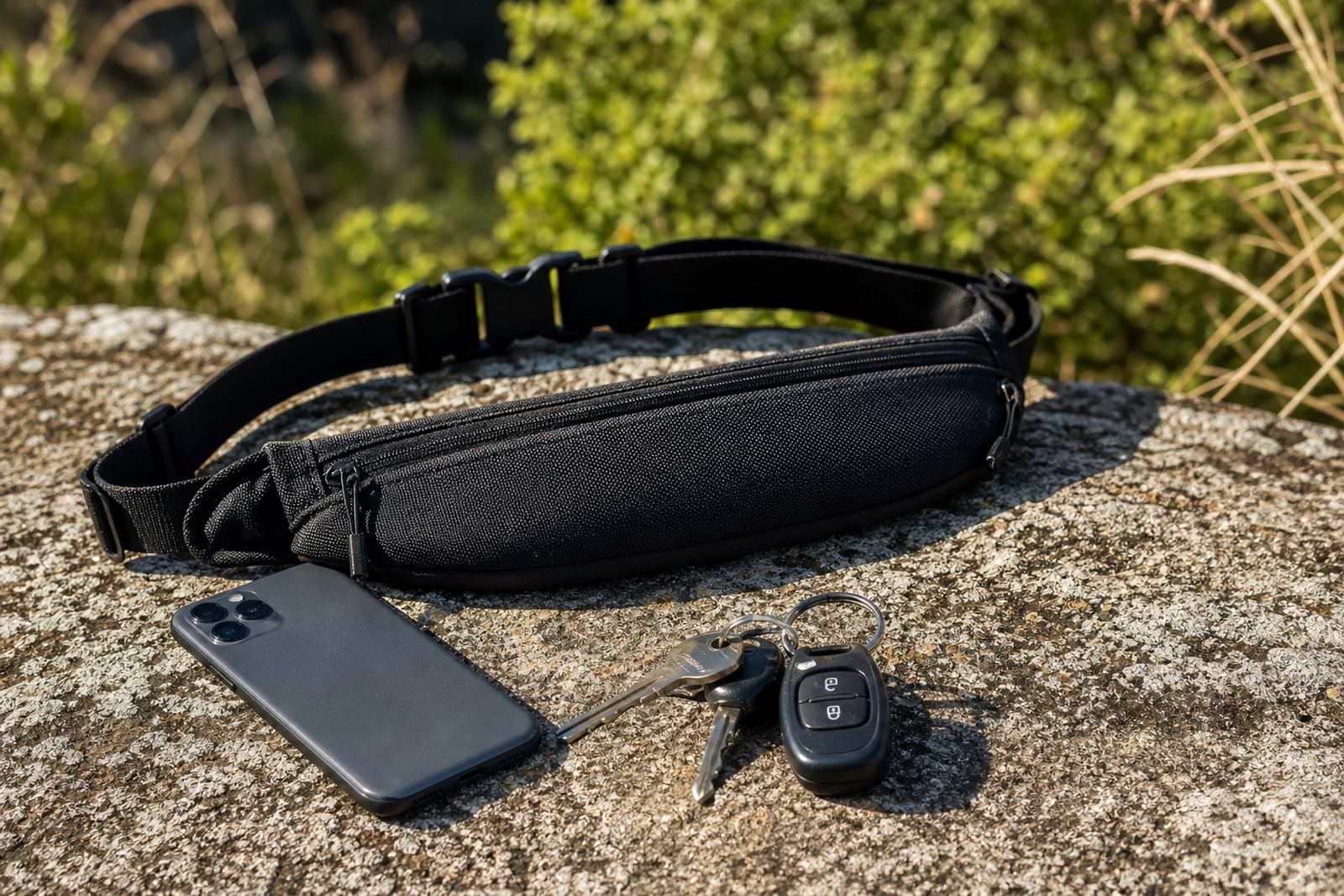
Not everything in your kit needs the same level of protection. Start with the items that matter most if you get caught out. A phone usually comes first, followed by a small amount of cash, car keys, race number clips and nutrition. If you are doing a longer trail run, you may also want a compact soft flask or hydration item that stays upright and does not leak into the rest of the belt.
- Phone in a snug pocket with a secure closure
- Keys in a separate pouch so they do not scratch screens or tear fabric
- Gels or chews kept flat and easy to grab with cold fingers
- Race card, gate pass or parking slip stored where it will not crumple
- Small tissue or wipe packet for muddy hands and wet noses
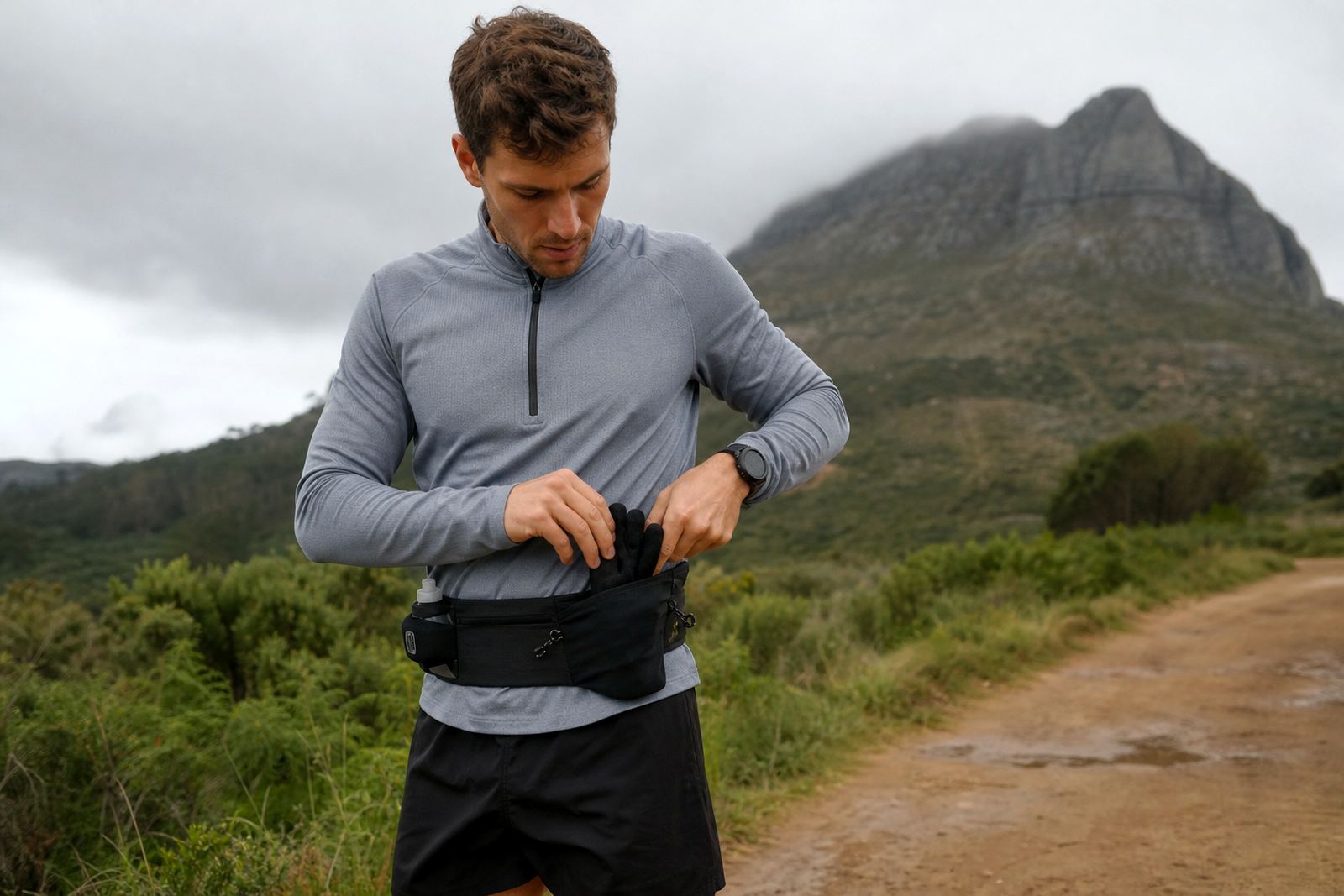
It helps to think about access in layers. The things you need most often should be at the front or side of the belt. Items you only touch once or twice should sit deeper in the storage area. That simple layout saves time during an event, especially when your hands are wet and you do not want to stop under a tree just to open every pocket one by one.
Rain, Mud And Coastal Humidity: The Real South African Test
Running in rain is not the same everywhere. In Stellenbosch and Somerset West, a wet trail can mean slick single-track, loose stones and vineyard paths that hold water in low spots. In George, you can get damp conditions that hang around all morning. Near the coast, humidity can leave your gear feeling clammy even after the rain stops. Inland, a storm can cool down quickly and you may not notice how much water has collected on your clothing until you stop at the finish line.
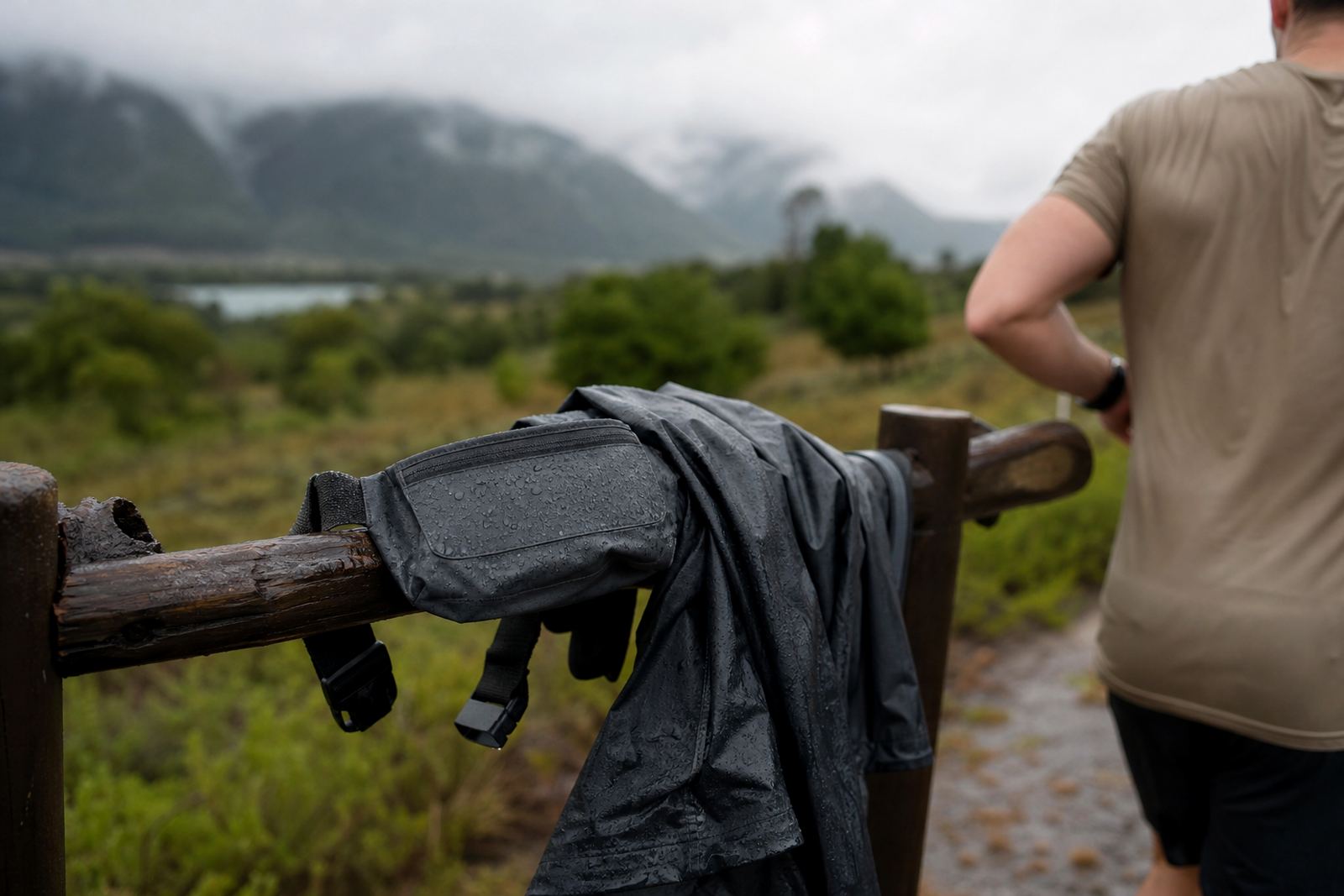
That is why runners should look at both storage and stability. A belt that works on dry tar may behave differently once it is wet. Fabric can stretch, pockets can feel heavier, and a smooth finish can become slippery under a rain jacket or technical top. If the belt has enough grip and the pockets are shaped well, it keeps the load from swinging from side to side. That matters on rocky descents and during fast turns through race funnels.
On event day, organisers also need to think about how the belt fits into race logistics. When runners collect packs, move through a start pen or line up for a relay handover, they need gear that is quick to check and simple to explain. Wet weather tends to expose weak kit choices, so it pays to plan the layout before the first runner arrives.
A Simple Rain Day Packing Checklist For Runners
Before you head out, keep the belt light and intentional. Too much gear can make the belt move around, and extra weight only becomes more of a problem once it is wet. Use the checklist below as a base and adjust it for your route, distance and weather forecast.
- One phone or one small device only, not loose extras
- Two to four gels for shorter road runs, more for long trail efforts
- Car key or access fob in a sealed pocket
- One folded bank card or a little cash for emergency use
- A compact hydration item if your route has no water points
- Basic anti-chafe protection for longer runs in wet fabric
If you are running a club route or a race event, issue the same guidance to the whole group so nobody arrives overpacked. In our experience, wet weather exposes overpacking quickly. Once people carry less, they move better and complain less about the belt shifting mid-run. Small note, the lighter setup is often the one that finishes best, especially when the route includes tar, gravel and a few muddy corners.
How Trail Runners And Road Runners Use The Belt Differently
Road runners usually want a low profile belt with fast access to nutrition and a secure spot for a phone. Trail runners often want a bit more structure, because the route may include water stops, uneven ground and longer time between checkpoints. That means the same style of belt can be used in different ways, but the pocket layout should match the run.
For road events in Cape Town or Johannesburg, runners often carry less and want a clean fit under light rain gear. For trail runs around Stellenbosch or George, it is common to carry extra gels, a small flask and sometimes a packet of salt or emergency items. Durban runners may also need to think about heat and rain together, which means the belt must stay comfortable even when the air is humid and the body is working hard.
For club runs and event groups, a simple sizing briefing saves a lot of back-and-forth later. Once runners know how the belt should sit, where the main pocket should be positioned and how tight it should feel on the day, they are far less likely to adjust it halfway through the race.
Local Event Planning When The Forecast Looks Wet
Wet weather affects more than the individual runner. It changes how race packs are sorted, how stock is packed for dispatch and how crews brief participants on the day. A belt that is ready for rain should be easy to hand out in bulk, easy to label by size and easy to explain at registration. That is especially important for race events where hundreds of runners collect gear in a short window.
For organisers in Paarl, Bellville or Somerset West, the aim is to reduce delays at the start and avoid confusion once the rain begins. For organisers in larger centres such as Cape Town and Johannesburg, the same logic applies but on a bigger scale. If the belt fits right first time, there is less need for swaps, and that keeps the queue moving.
Rain will always test the system. The runners who cope best are the ones who pack light, keep their essentials close and choose a waist belt that stays steady when the ground gets wet. That is true on a long trail, a short training loop or a race morning when the sky opens just before the gun goes off.