
Start With the Route, Not the Gear
Before you decide what goes into the belt, look at the route itself. A short jog on the Stellenbosch trails calls for a lighter pack than a long loop on Table Mountain or a race morning from Durban’s coastal paths, where humidity can make every extra gram feel heavier. Trail runners usually do better when they pack for the terrain, the climb and the time between aid points, not for every possible situation.
Think in practical terms. How far is the next water point? Will there be shade? Is the route exposed to wind, or likely to turn muddy after early rain? In the Western Cape, a cold start can become a hot finish by mid morning, while a summer race in Johannesburg may need more sun protection and less insulation. The goal is to carry only what you will actually use, so your waist belt stays steady and your stride stays natural.
What Goes in the Belt for a Typical Trail Run
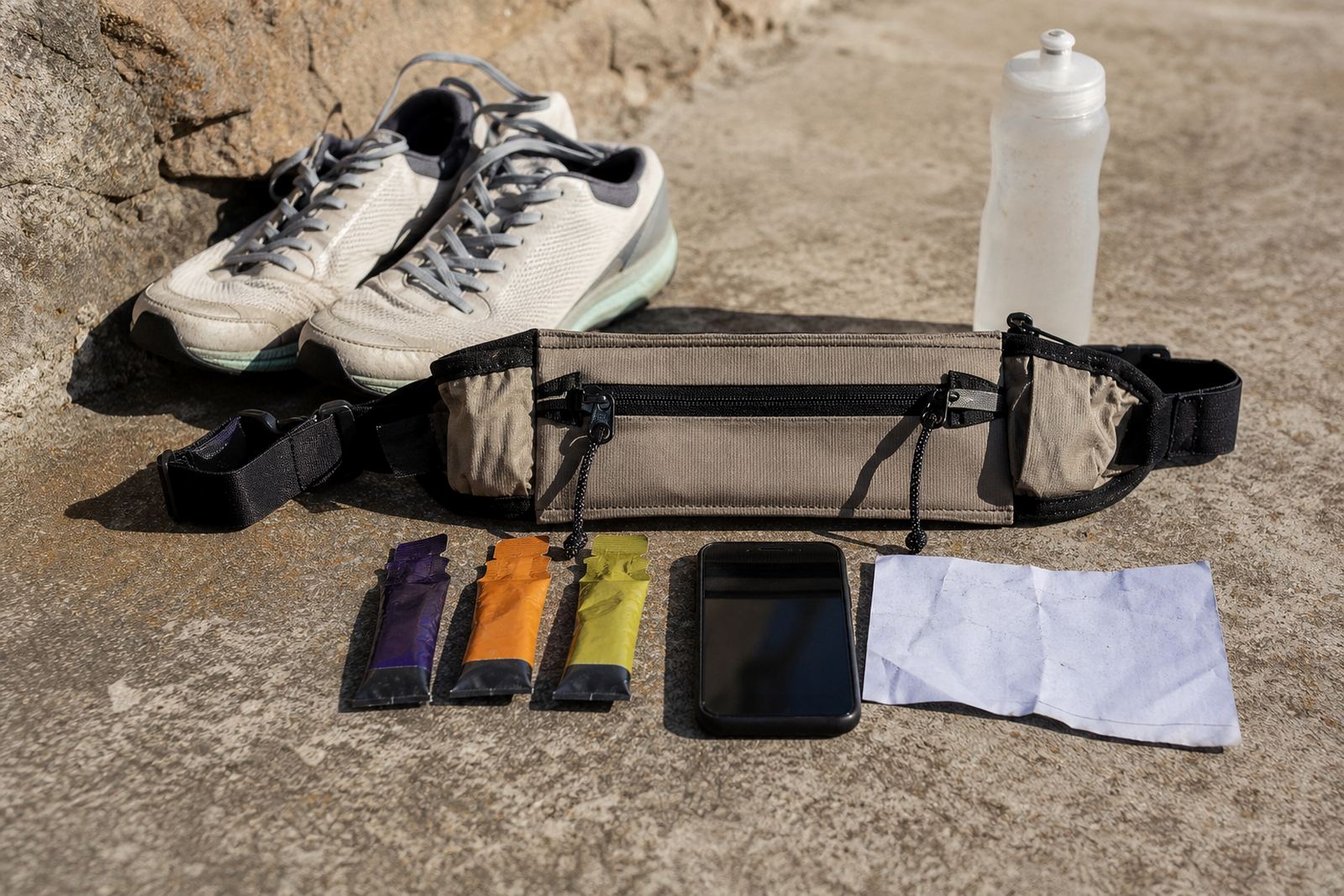
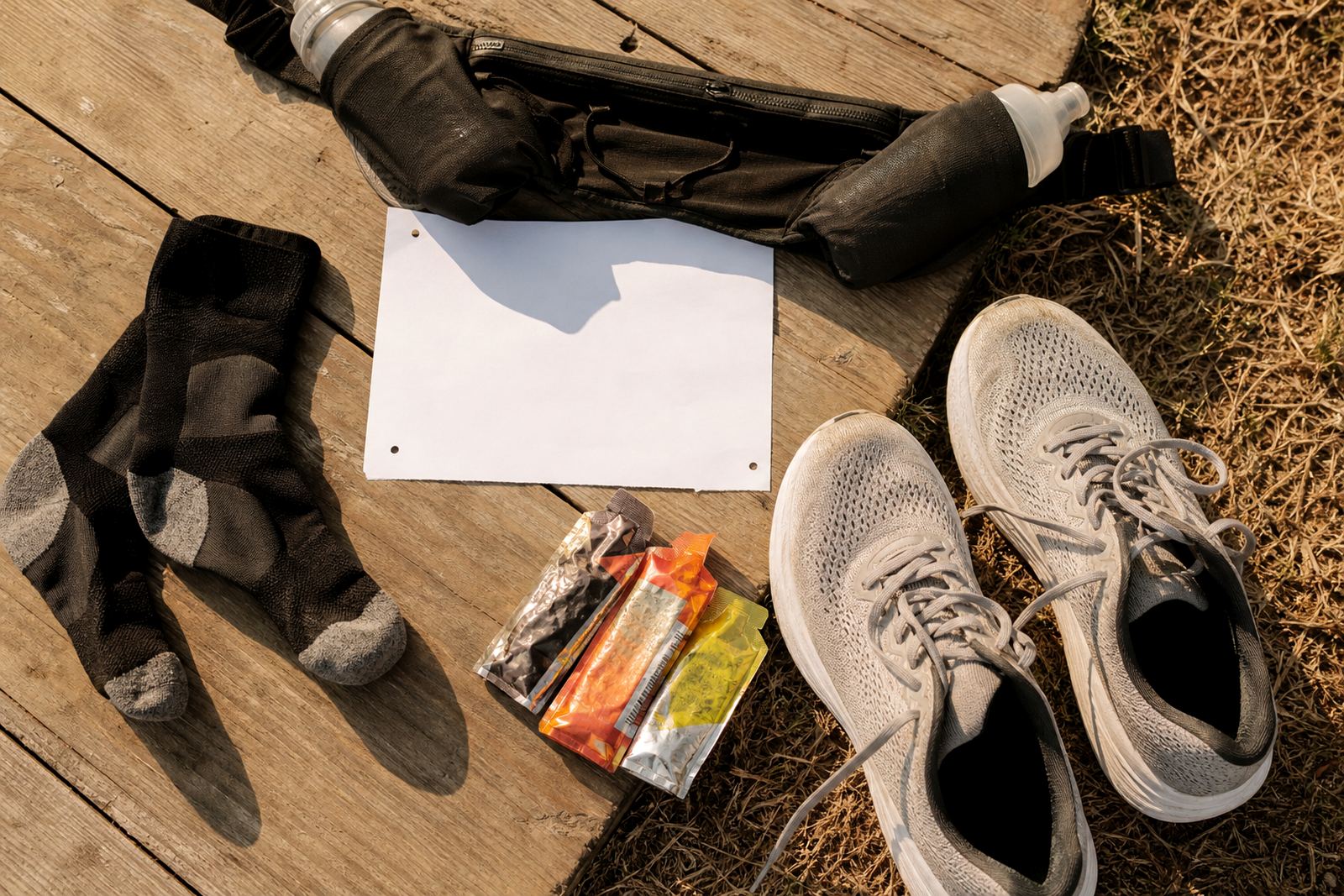
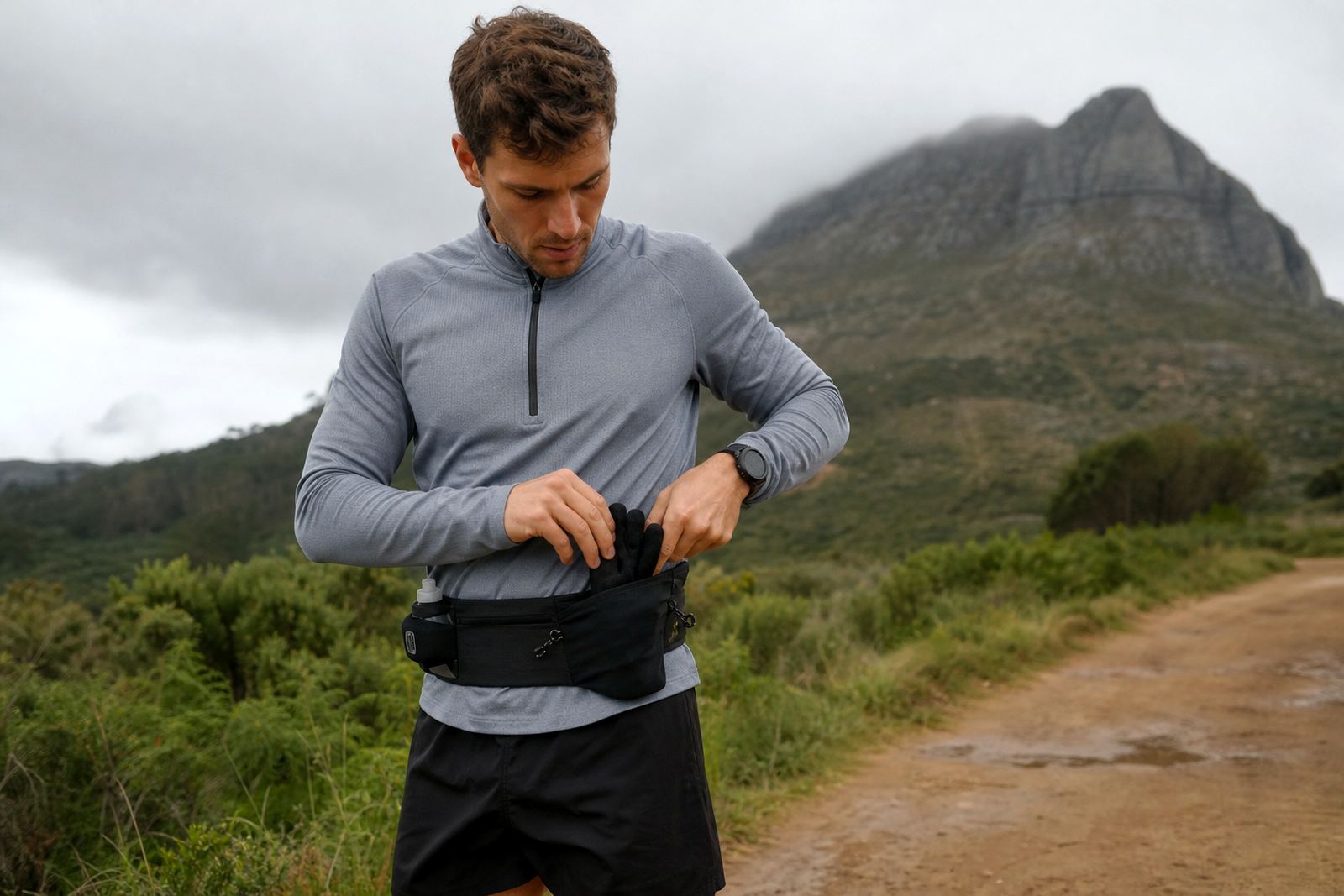
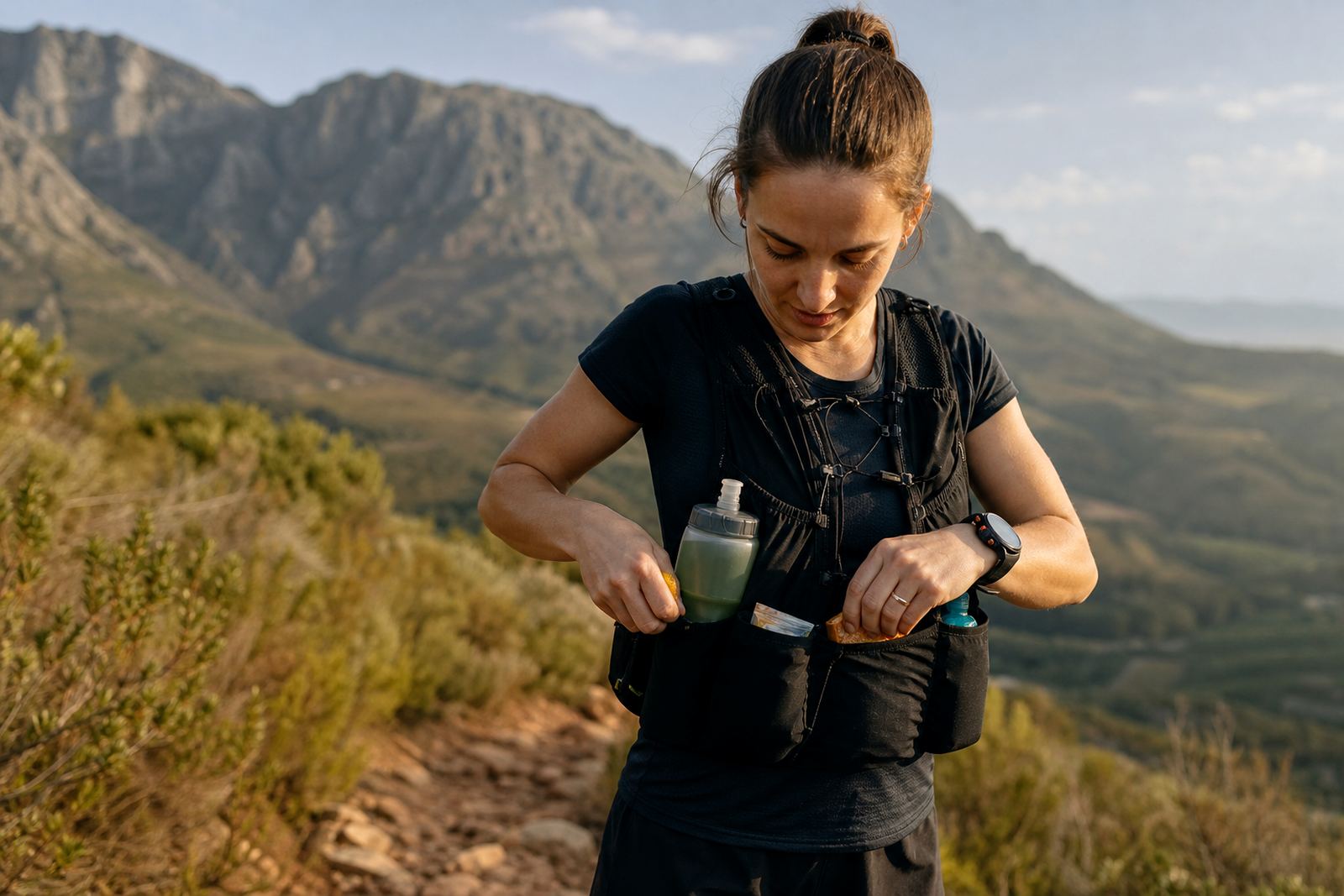
Most trail runners need a few core items, then one or two extras depending on the session. If your belt is arranged well, you should be able to reach fuel or water without taking it off. That matters on climbs, technical sections and during races where every second counts.
- Water or a soft flask sized for the distance and heat
- Energy gels, chews, or other quick fuel in small packets
- Phone or timing device in a secure pocket
- House key or race registration item if required
- Light wind layer for early starts or coastal wind
- Small sunscreen sachet or lip protection for long outings
Keep bulky items out unless the event rules require them. A belt that is overloaded will bounce, twist and rub, especially when the route has loose rock or fast downhills. If you are doing a race in George after a wet week, a compact rain shell may be worth the space. On a dry summer morning near Paarl, you may prefer more water and less clothing.
Balance the Load So the Belt Sits Still
The best packing method is the one that keeps weight close to your body and spread evenly. If all the weight sits on one side, the belt will pull and rotate with each step. That becomes annoying after 5 km, and painful after 20 km. Place heavier items near the centre or split them evenly left and right. Soft items can fill gaps and stop movement.
When packing, start with the heaviest bottle or flask first, then add fuel, then smaller items. If your belt has separate pockets, use one side for water and the other for food or a phone. A little trial and error helps, but once you find the right layout you should keep it the same for training and race day. It saves time and reduces stress when you are lining up at a local event. The more familiar your setup is, the faster you can move without thinking about it.
Many runners make the mistake of packing everything too tightly. That can cause pressure points around the hips, especially if the belt is worn over thin shorts or a singlet. Leave enough give for breathing and movement. A snug fit is important, but if you cannot take a deep breath on a hill then the belt is too tight.
Fuel Access Should Be Fast Enough for Race Pace
Trail runners often eat and drink in smaller amounts, more often. That means the packing layout should make fuel easy to grab with one hand. If you have to stop and dig around, the belt is working against you. During a marathon build-up, runners often test their nutrison and hydration timing on long training runs, then keep that same order on race day.
For race events across Cape Town, Stellenbosch, Johannesburg, Durban and George, the most practical systems are the ones that support repeat movement. Open pocket, grab gel, close pocket, carry on. The same applies to water. If your flask is hard to remove while moving, it will cost you time and concentration. A useful rule is to pack the items you need most often in the easiest pocket, then keep the less urgent bits further back or lower down.
- Put first-use fuel in the front or top pocket
- Keep the phone secured, but easy to reach for emergency use
- Store spare fuel in a separate section so it does not shift around
- Use simple wrapping or small bags for gels to avoid crumbs and sticky pockets
- Check that zips or closures can be opened with sweaty hands
Weather Changes Need a Small Buffer
South African trail conditions change fast. A Stellenbosch morning can start cool and end hot. A summer breeze in Durban can turn into heavy humidity, while a winter run in the Cape may need a windproof layer before sunrise. That is why trail runners usually pack for a small buffer, not a full kit bag in belt form.
One light layer, a compact cap, or a folded buff can make a big difference when the weather shifts. If you are racing near the coast, think about salt air and moisture too. Wet items and sweat can affect how the belt feels after an hour on the move, so choose materials that dry quickly and do not hold too much dampness. In colder months, a small pair of gloves can fit into a pocket more easily than many runners expect. Just remember to test the fit before event day, because extra layers can change the way the belt sits on your hips.
If you train early in the morning, also think about visibility. A small reflective detail or light can help when you are running alongside roads or crossing open paths before sunrise. It is a simple extra, but it matters when municipal routes are shared with cyclists, walkers and early commuters.
A Local Example: Packing for a Stellenbosch Trail Morning
Take a runner leaving from Stellenbosch for a two hour trail session before work. The weather is cool at 6 am, there is a long climb in the first 30 minutes, and the route loops back only once. In that case, the belt should carry one full flask, two gels, a phone, a light wind layer and a key. Nothing more. That is enough to cover the distance without adding unnecessary bounce.
If the same runner is entered for a local race with aid stations every 8 km, the setup changes slightly. They may carry less water and more fuel, or add a second small flask if the forecast is hot. The point is not to copy another runner’s setup. It is to build a layout that fits your pace, your route and your body. When the belt is packed properly, it should feel almost invisible after the first kilometre.
For trail runners and event participants alike, a good waist belt is less about carrying more and more about carrying better. That is the difference between moving freely and constantly adjusting your kit.