
Why small items need a fixed place
Keys, bank cards, a gate remote or a small ID tag can become a nuisance if they are loose in a pocket or wrapped in your hand. They bounce, they scrape, and they can leave a sore patch by the time you reach the 5 km mark. In a well designed running belt, those items sit where you expect them, so your stride stays smooth and your focus stays on the route.
For runners in Stellenbosch, where a morning loop can move from pavements to gravel paths and back again, the difference is easy to feel. The belt must hold firm when you turn sharply, climb a hill or squeeze through a race start line, because once items shift around they start to rub and can get in the way of your breathing too.
Place keys where they do not bounce
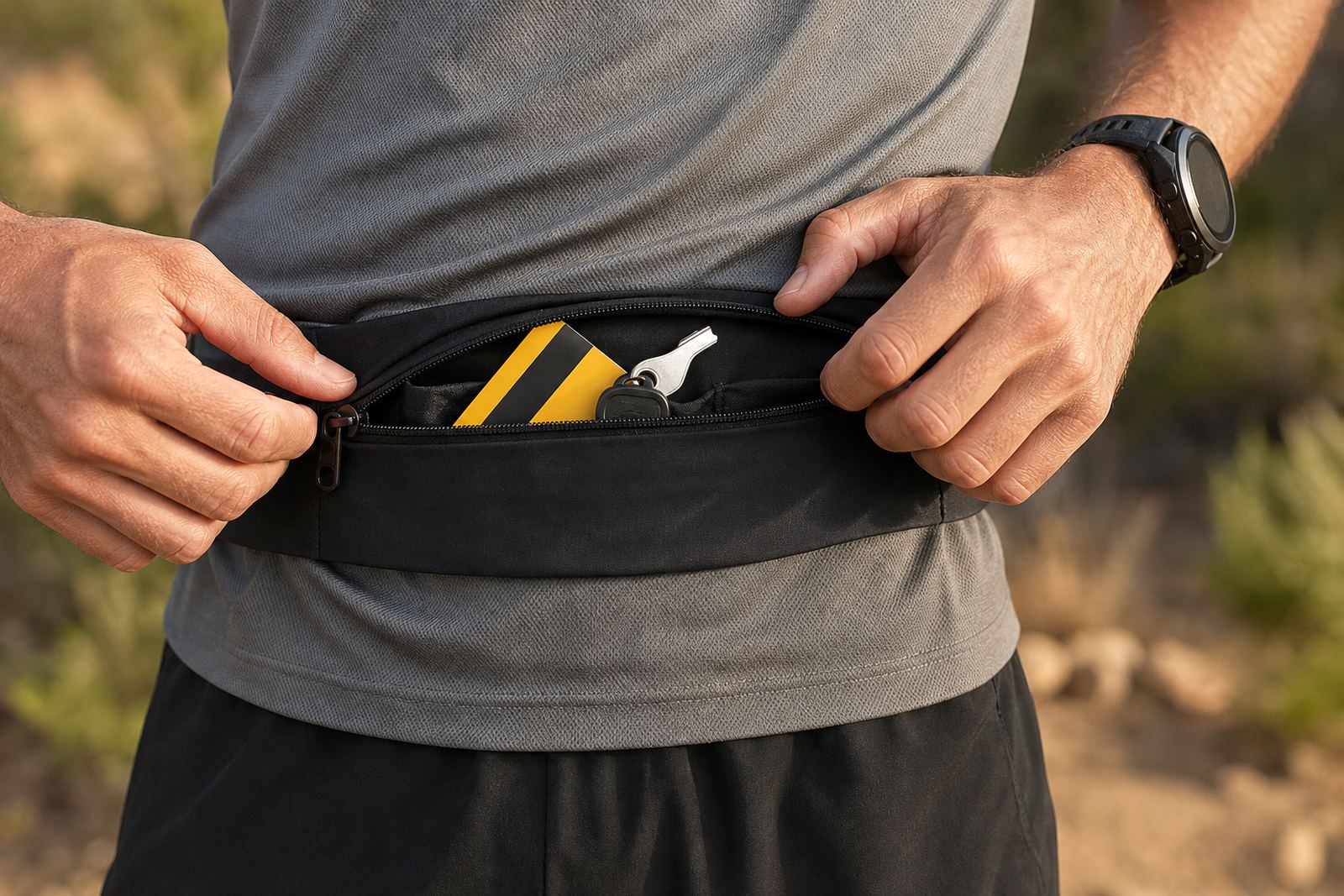
Keys are the main troublemaker for many runners. Metal on metal creates noise, and an unprotected key can dig into the lower back or hip. The best setup is to keep keys in a zipped compartment or in a small enclosed section away from the body. If you carry a single house key, place it flat rather than letting it stand upright on its teeth.
For extra security, use a lightweight key clip or a short keeper loop so the key cannot swing around inside the belt. That matters on longer outings, especially when the belt is carrying both hydration and snack items. One small item moving around can make the whole belt feel off, even when the fit is otherwise good.
- Keep only the keys you need for the run
- Use a flat position to reduce pressure points
- Separate metal items from cards and soft items
- Check that the zip closes fully before you set off
Cards and cash without the bulk
Card storage should be simple. A bank card, a medical aid card and a small amount of cash are usually enough for most runs and event days. The aim is not to carry everything, but to carry the right few things in a clean, dry section that does not fold against your body. Too much bulk makes the belt sit unevenly and can also trap sweat.
If you are running a road race in Durban or a trail event outside George, you may need a card for travel, refreshments or post-race parking. Keep it in a sleeve or a separate pocket, because a card bent against a hard object can become difficult to use later. In humid coastal conditions, it also helps to keep paper notes sealed in a small pouch so they do not soften or tear.
- Use one pocket for cards and another for keys
- Keep cash folded flat and sealed if possible
- Avoid overstuffing the belt before race day
- Test access with one hand while standing still
Safety items that stay reachable
Safety items only help if you can reach them quickly. A small ID tag, an emergency contact note, a whistle or a few plasters should sit in a space you can open without removing the belt. If you are training alone before sunrise in winter, that simple access matters. Load shedding often means early starts and darker streets, so being organised is not just about convenience, it is about staying prepared.
Some runners like to keep a tiny torch, a hair tie or a salt sachet close by as well. That is fine, but do not pack too many loose items together. The more items you stack in one section, the more they press against one another and the greater the chance of a sore patch around the waist. A tidy layout is safer and comfier, which is exactly what you want on race morning.
- Keep an ID note where it can be found fast
- Store plasters or tablets in a sealed pouch
- Check that any small item can be opened with one hand
- Use reflective detail if you run near traffic at dawn or dusk
A local example from race prep in Stellenbosch
Think of a club runner preparing for a long Saturday session from Stellenbosch to Jonkershoek and back. The route may start cool, then heat up quickly as the sun comes over the vineyards. If keys are bouncing, cards are loose and a safety note is wedged under a water flask, the belt will soon feel irritating. But when each item has its own place, the runner can move through the whole session without stopping to adjust gear every few minutes.
That same approach helps at local events across Cape Town, Paarl, Somerset West and Bellville too. Race pack check-in is easier when your essentials are already sorted, and post-race travel is less stressful when your card and keys are not buried under gels and wrappers. Small order creates less faff on the day.
How to pack for comfort on the day
Before a run or event, lay the items out first and decide what really needs to come with you. Put the heaviest item closest to the centre line of the belt if the design allows it, then keep the smaller safety items in the easiest pocket to reach. Do a short test walk or jog around the block before your main session. If anything shifts, you will feel it straight away and can fix it before you head out.
For club orders, race organisers and individual runners alike, the rule is the same: fewer loose items means fewer distractions. A belt that is packed properly will sit more quietly, feel lighter and make it easier to keep your hands free. That matters whether you are doing tempo work, guiding a group or lining up for a marathon in Johannesburg.