Why night visibility matters on South African routes
In Stellenbosch, Cape Town, Johannesburg and Durban, a night run can mean anything from a quick loop around suburb streets to a longer training run on quiet park roads or trail edges. Once the sun drops, your judgement changes too. Potholes, loose gravel, uneven curbs and low branches are harder to spot, and drivers often have less time to react.
Good visibility is not about looking flashy. It is about making sure other road users can see your movement, and that you can read what is coming ahead. That matters even more on routes with cycle traffic, shared footpaths or sections where street lighting is patchy after load-shedding. A runner who can be seen from a distance has more time to adjust, cross safely or step off the edge if needed.
Reflective details also help marshals and event crew during evening races. In a race pack pick-up area, at a water point or on a dark section of route, small reflective touches can be the difference between a confident stride and a hesitant one.
Start with reflective placement, not only bright colours
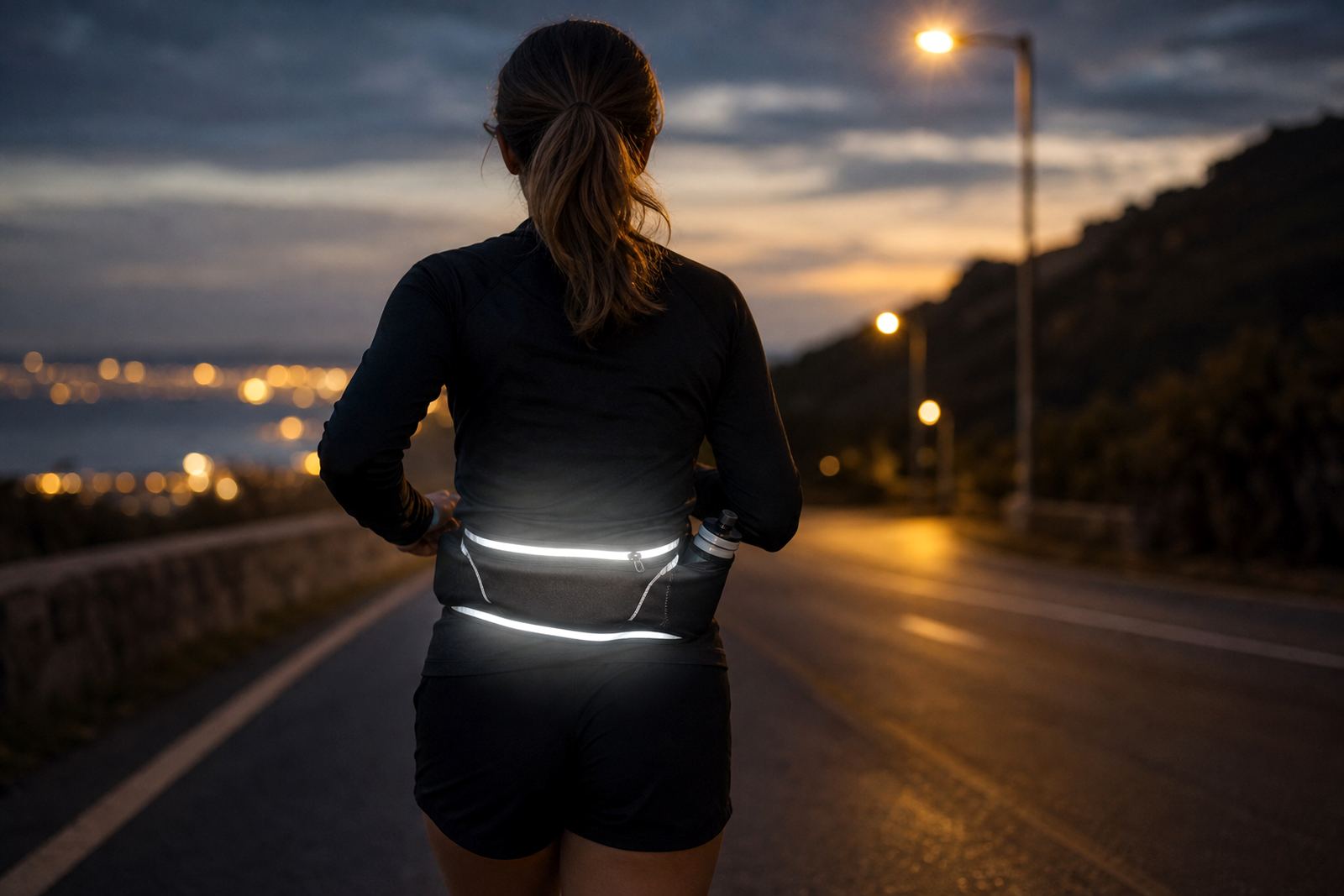
Bright colours help in daylight, but after sunset reflective material does the real work. The best approach is to place reflection where movement shows up naturally. That means the front of the waist belt, the sides, and any straps that bounce slightly when you run. When your arms and hips move, reflective points catch headlights and torch beams in short flashes.
- Use reflective strips on the front and sides of your waist belt.
- Keep a small reflective patch on any rear pocket or pouch flap.
- Choose light coloured or high contrast clothing where possible.
- Pair reflective details with a headlamp so you can see the ground in front of you.
- Avoid covering reflective sections with bulky layers or loose jackets.
For trail runners around Jonkershoek, Idas Valley or the outskirts of George, a visible waist setup matters because runners often turn side on when climbing or descending. On road loops in Bellville or Somerset West, the same belt helps cars notice your lower body movement sooner, which is useful at intersections and roundabouts.
Choose a route that gives you time to react
Visibility starts before you lace up. If a route has poor lighting, blind corners or frequent vehicle access, it is not a good night route no matter how fit you feel. In practical terms, the safest option is usually a familiar loop with clear exit points, wide verges and places where you can stop without being hidden by bushes, walls or parked cars.
For a road runner in Johannesburg, that might mean a well-used suburban loop with steady traffic flow and working streetlights, rather than a shortcut through quiet side streets. In Cape Town, the safer choice may be a park edge or promenade section with regular foot traffic instead of a dark shortcut between buildings. In Stellenbosch, runners often prefer routes they know well because tree cover and changing light can make the same street feel different after sunset.
If you are running in a group, agree on a route before you start and stick to it. Mixing pace, traffic and navigation at night can cause bunching, which makes it harder for drivers and cyclists to judge the group. A steady route also helps if one runner needs to stop, refill or adjust a belt pouch.
Use your waist belt to keep essentials close and stable
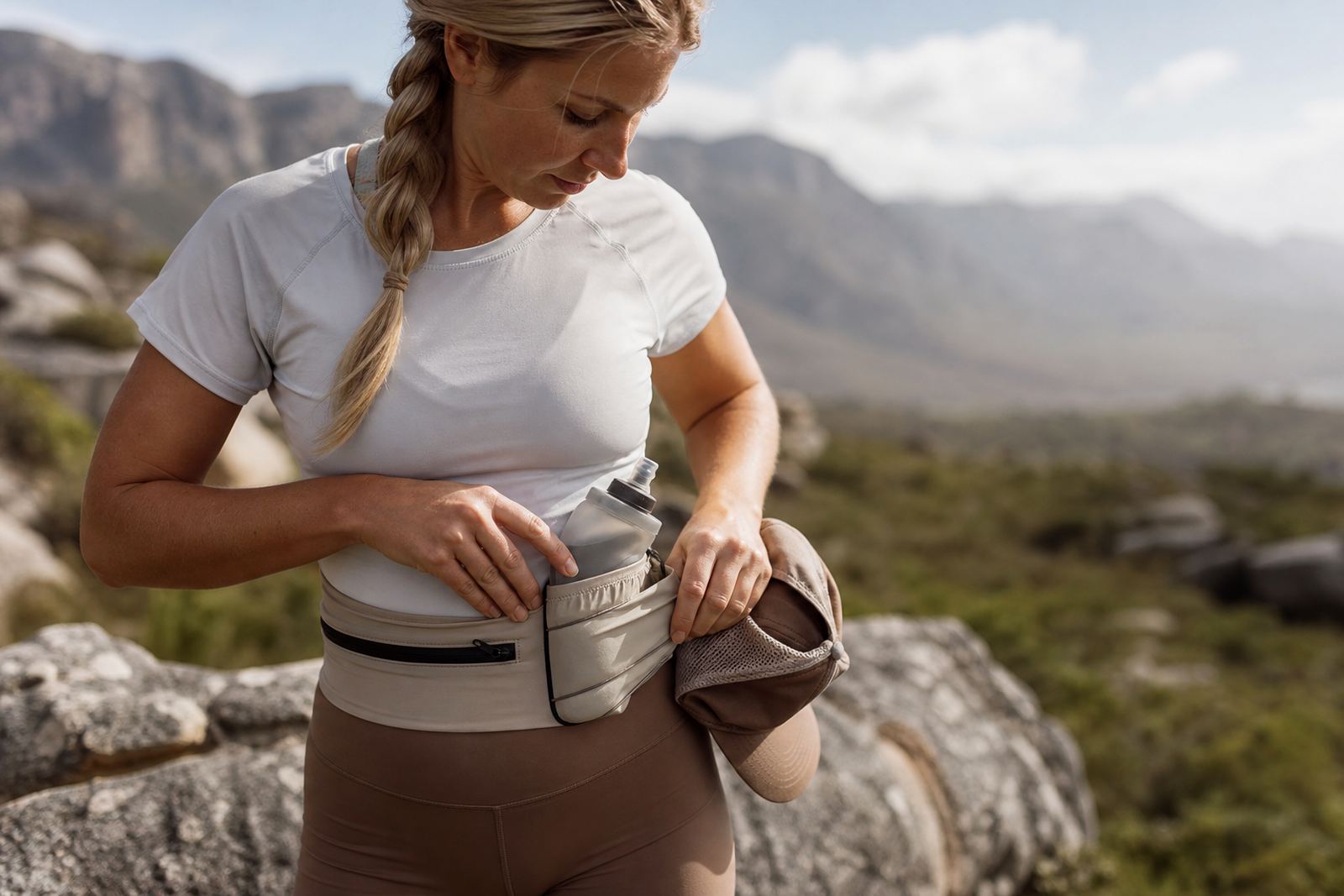
A night run should not mean carrying loose items in your hand or stuffing pockets until they bounce. A well-fitted running or hydration waist belt keeps the essentials close, which is especially useful when you are checking your torch, phone or a small drink bottle during the run. Stability matters because if the belt rides up or twists, you lose focus and your pace gets broken.
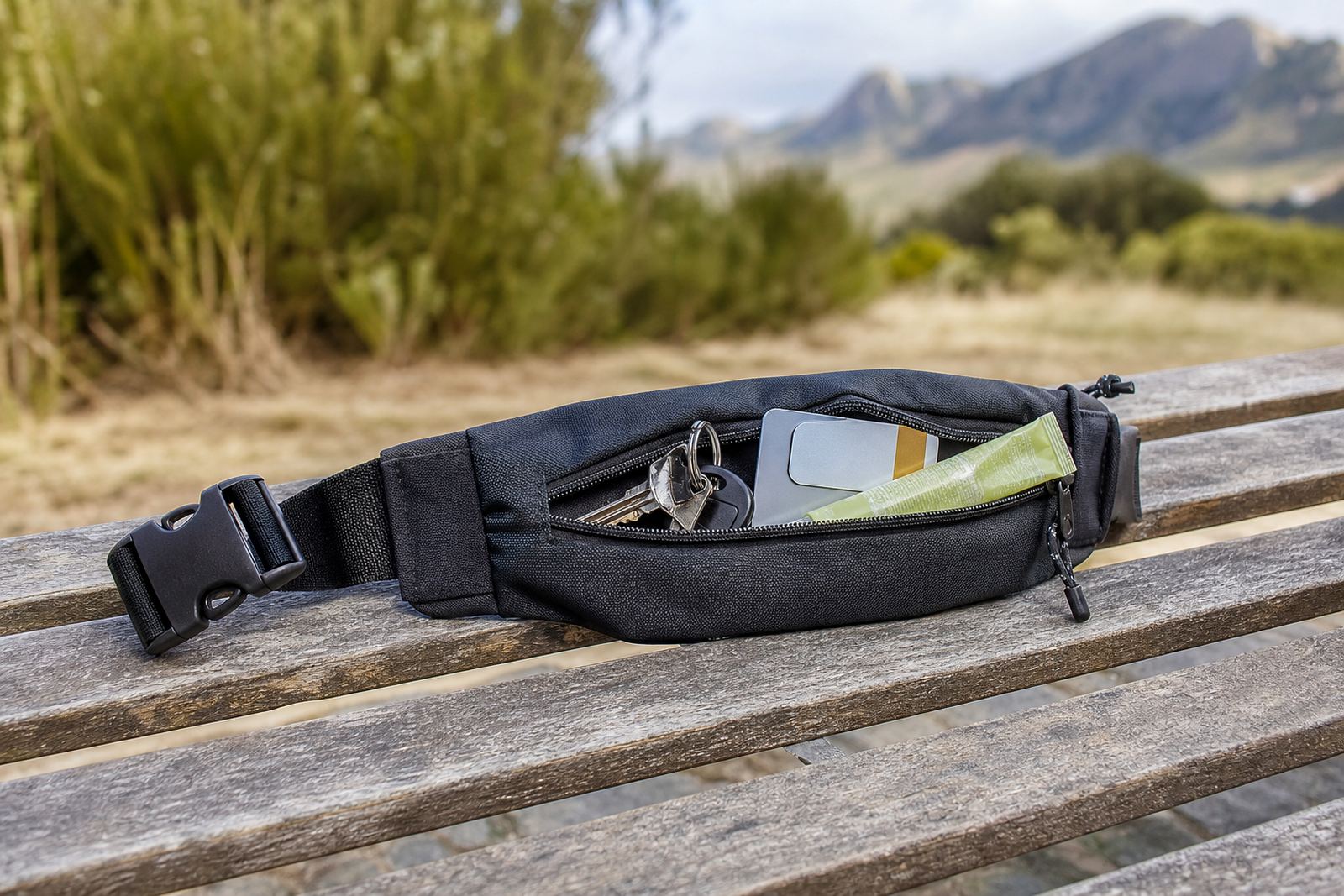
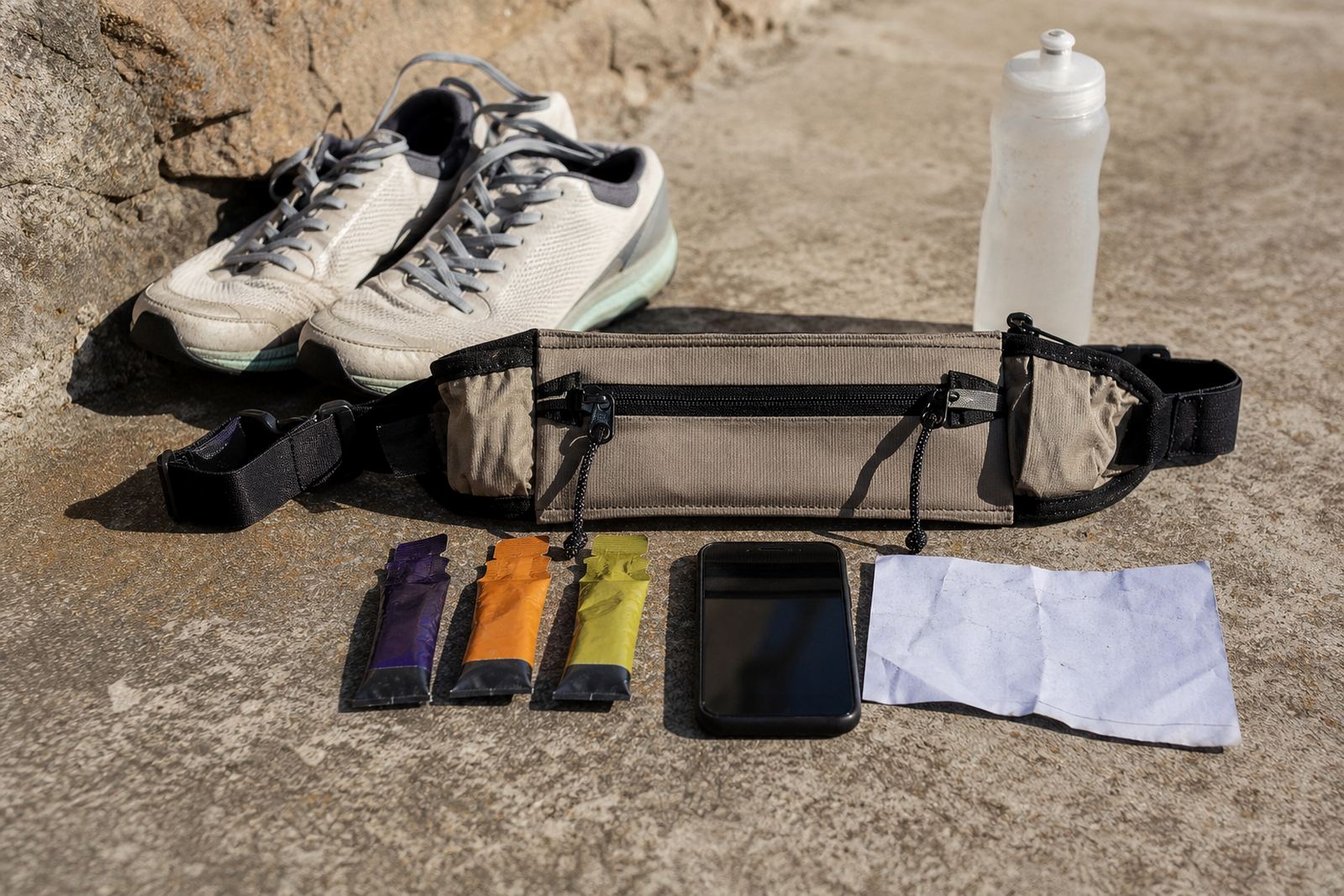
For darker training runs, a waist belt is useful for more than storage. It can hold a phone for route tracking, a small soft-flask or bottle, keys, a gel and a contact card. If you are running on coastal routes in Durban or George where humidity is high, keeping those items in one secure place also reduces the chance of moisture damage or slipping gear.
- Check that the belt sits flat at the hips, not bouncing on the stomach.
- Load heavier items evenly on both sides.
- Keep emergency items easy to reach without stopping.
- Test the belt on a short evening run before race day.
- Adjust after 10 minutes if it shifts with sweat or layered clothing.
Hydration and visibility go together on longer evening sessions
Even on cooler winter nights, dehydration can creep in when you are running hard. If you are heading out for 60 minutes or more, or doing intervals after work, keep enough fluid with you so you do not need to depend on open shops or fountains. A compact hydration belt is practical on mixed road and trail routes, especially where you want both hands free and a clean running line.
Longer routes around Paarl, Somerset West and the winelands often include quiet stretches between settlements. That is where planning matters. Carrying a small amount of water and a few basics lets you keep moving if a planned stop is closed, or if you need to slow down because of strong wind, uneven ground or poor lighting. It also means fewer interruptions on routes where municipal lighting can be unreliable.
When the route is dark, it helps to keep your drink setup simple. One or two easy-reach bottles are usually better than overloading the belt with gear you will not use. Keep your load balanced and make sure the bottle caps are secure before you start.
Trail runners need a different kind of caution after dark
Night trail running brings extra risk because the ground changes quickly. Loose stones, roots, erosion channels and narrow singletrack are much harder to read in dim light. A reflective belt helps others spot you, but your own ability to see the terrain is just as important. If you cannot clearly judge your next three steps, slow down.
In Stellenbosch and the surrounding trails, runners often deal with sections where the light drops suddenly under trees, then opens out again on exposed slopes. That change can be unsettling if you are moving too fast. Rather run at a controlled pace and keep your line clean than push pace and risk a stumble. On event evenings, briefings should include turnaround points, marshals and the areas where runners need to keep to the marked route.
- Carry a reliable light source and test the beam before you leave.
- Slow on descents and scan ahead for loose rock.
- Stay on marked paths and avoid shortcuts in the dark.
- Let someone know your route and expected finish time.
- Stop if the light drops too much or visibility becomes unsafe.
A local example: an evening training loop in Stellenbosch
A common evening route in Stellenbosch starts just after work, when the light is fading but the streets are still busy enough to feel active. A runner may begin on a familiar loop through a residential area, then move onto a wider road section before finishing near a lit sports ground. That mix of lighting can work well if the gear is right and the route has been checked in daylight first.
In that setting, a reflective waist belt gives useful visibility from the side as cars turn into streets. If the runner is carrying water, the belt keeps the bottle steady while crossing uneven paving or speed humps. That small bit of order matters when you are tired and the road surface changes without warning. It is not about going faster, just moving with less fuss.
For clubs and event organisers, the same thinking applies to evening runs and night races. Clear route markings, reflective crew gear and practical participant guidance all reduce confusion. A runner who knows where to go and how to stay visible is more likely to finish strong, and less likely to cut the session short because the setup feels awkward or unsafe.