
Why Wind Changes More Than Your Pace
Wind is not just a comfort issue. It affects body temperature, breathing rhythm and how quickly you lose moisture, especially when you are running hard on exposed roads or mountain paths. A headwind can make a 10 km effort feel like a much longer day and a tailwind can hide the fact that you are still drying out under the sun.
In the Western Cape, a south-easter can meet cool morning air in Cape Town while inland runners in Stellenbosch or Paarl deal with dry gusts that pull sweat off the skin fast. Even in Durban or George, sudden changes in wind direction can turn a steady run into something more demanding. That is why hydration and carry comfort matter so much on windy days.
The main thing to remember is simple: when the air is moving, your body is working harder to stay balanced. If your kit is bouncing or your bottle is hard to reach, you will notice it sooner than on a calm day.
How To Hydrate When The Air Is Dry And Moving
Wind can make you underestimate fluid loss. You may not feel as sweaty because the breeze cools you down, but you are still losing water through effort and evaporation. On long training runs, or during event days with a late start and bright sun, plan your drink schedule before you leave the house.
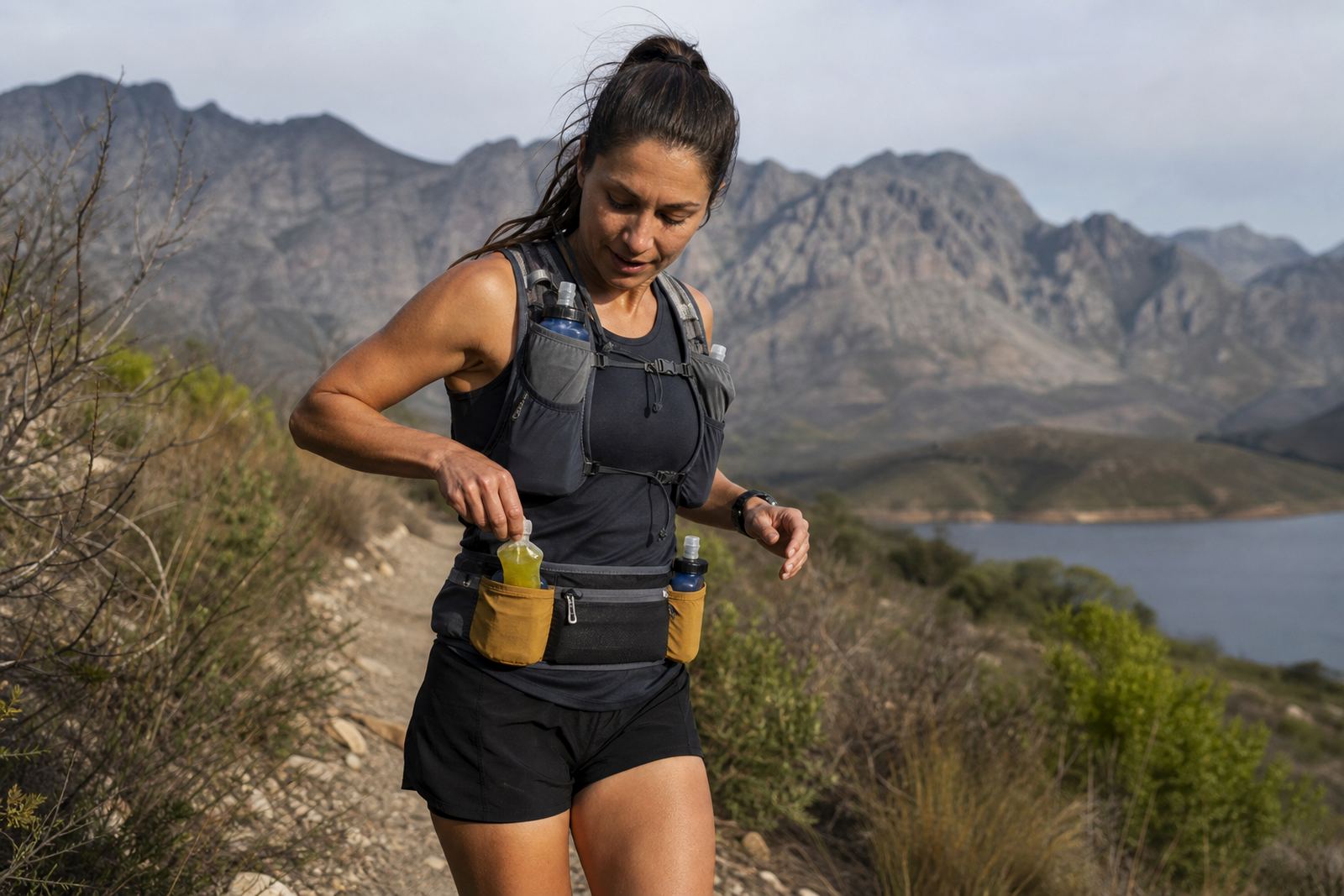
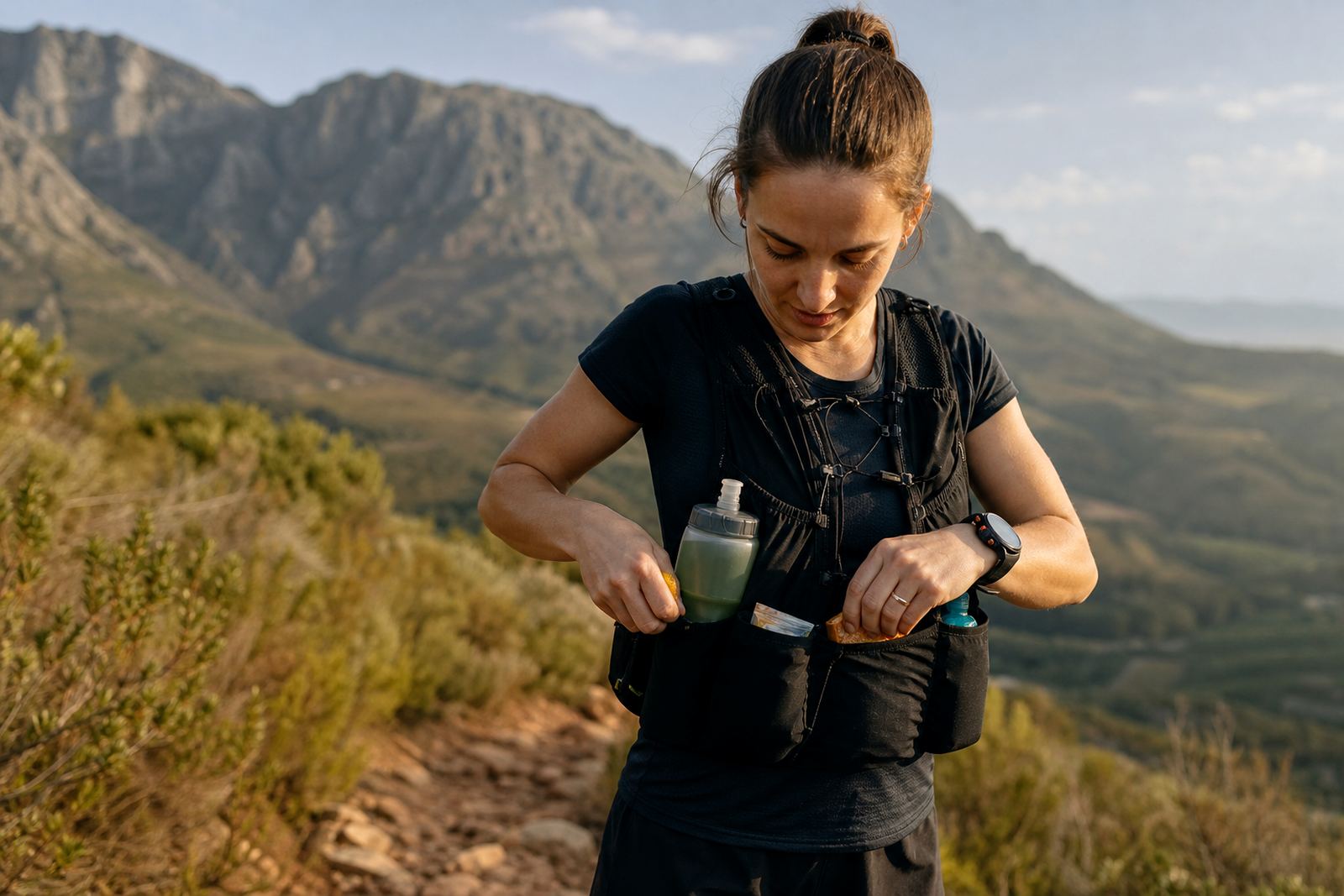
For shorter runs, a compact hydration waist belt keeps water close without needing a handheld bottle. For longer trail sessions, use the belt to carry enough fluid for the first section and add refill points where possible. If the route includes aid stations, know which ones you will use and how far apart they are.
- Start well hydrated, not just after you feel thirsty.
- Take smaller sips often instead of waiting too long.
- Choose a belt that lets you reach the bottle without twisting your body.
- Check that any soft flask or bottle stays snug when emptying and refilling.
Choosing Clothing That Helps Instead Of Fighting The Wind
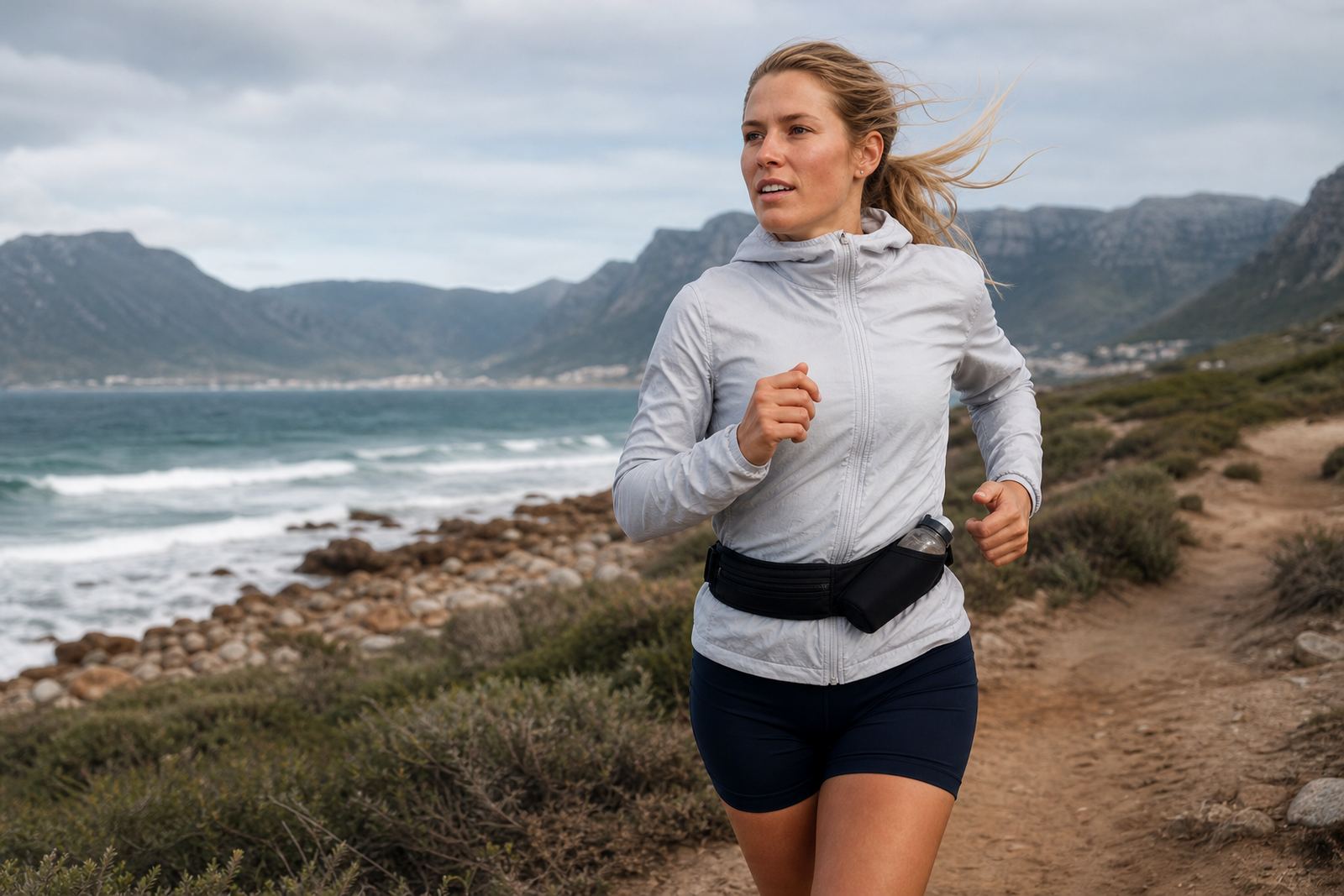
Loose clothing can flap, snag and distract you on a gusty route. Tight does not mean uncomfortable though, it means controlled. A well fitted top and shorts or tights reduce drag and keep your focus on the run. In colder wind, add a light layer that blocks the chill without trapping too much heat.
Think about the route as well as the weather. A run through open vineyards near Stellenbosch is different from a sheltered section in town or a sea-facing road in Cape Town. On the coastal side, wind often arrives with damp air, so materials that dry quickly are worth choosing. In hotter inland conditions, breathable fabrics and a secure waist belt help keep the day manageable.
Small details count too. A cap can help with blowing dust or sun glare, and sunglasses can stop grit from getting into your eyes. If the wind is strong enough to push you off line, make sure your laces are tied properly and your gear does not need constant adjustment.
Why A Secure Belt Matters On Gusty Trails And Roads
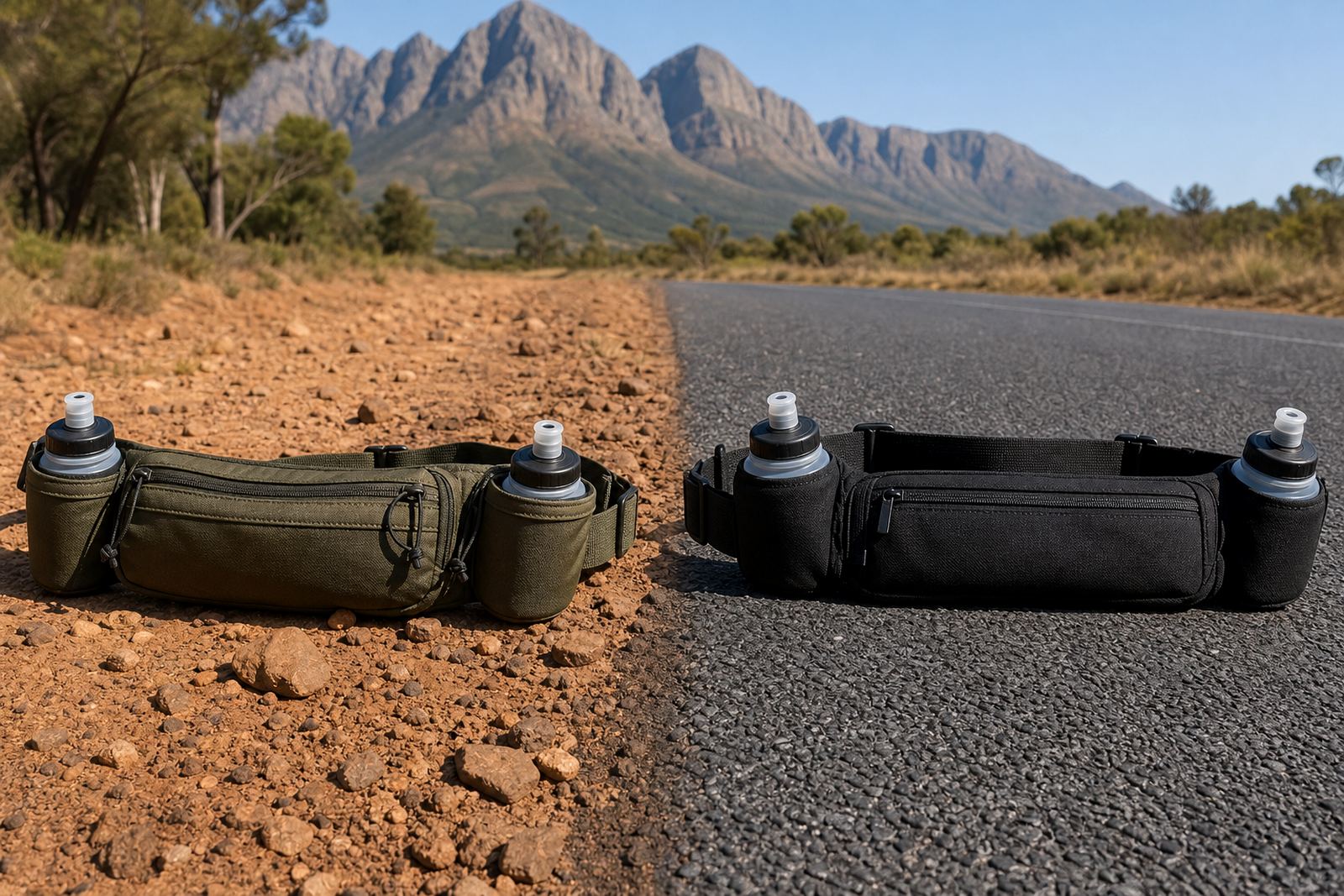
A running waist belt should stay put when the wind picks up. If it slides, bounces or twists, it becomes more than an irritation because it can alter your stride. On technical trail sections, that can affect footing. On road runs, it can break rhythm and make you overreach to steady it.
Good fit is about more than size. The belt should sit flat against the hips, hold essentials firmly and still allow breathing room. If you are carrying a bottle, phone, keys and a gel or two, the layout must spread the load evenly. That matters for runners doing tempo work as much as it does for walkers at race events.
- Test the belt on a 3 km or 5 km run before race day.
- Check that pockets close well and items do not shift when you turn.
- Use the correct sizing for the person, not a rough guess.
- For event teams, fit-check belts before dispatch so no one is scrambling on the morning.
Local Wind Conditions Runners In South Africa Know Well
Every region has its own wind habits. In Stellenbosch, runners often deal with open stretches that can feel calm one minute and rough the next. In Cape Town, the wind can move quickly across exposed roads and trail sections, especially in summer. Johannesburg may not have coastal gusts, but dry winter wind can still make hydration planning important. Durban brings warm air and sudden weather shifts, while George can give you mixed conditions in the same outing.
For clubs and event organisers, this means hydration layouts and belt planning should never be one-size-fits-all. A race route with long open sections needs different advice from a suburban loop with regular water points. That is why participant sizing, event belt supply and hydration layout advice are worth sorting early, before the packets are packed and the crew is already under pressure.
A practical example: a trail event near Stellenbosch in late summer may start in still air, then turn windy by mid-morning. Runners who kept their bottle secure and started hydrated usually cope better than runners who relied on the next aid station being close enough.
What To Check Before A Windy Training Session Or Race
Before you head out, give your kit a quick check. Wind tends to expose weak points fast, so the small things matter. If you are training alone or sending a team out for an event, make sure the belt, hydration and storage layout are sorted before anyone gets to the start line.
- Confirm the waist belt is adjusted correctly around the hips.
- Fill the bottle to the amount you actually need, not more than the belt can carry safely.
- Pack only the essentials so the belt does not swing side to side.
- Keep a spare plan for wet weather, dust or a colder finish than expected.
- For event days, set aside time for fit briefing and repeat-order checks if the same runners are coming back each month.
Wind is not something you can control, but you can control how your gear behaves in it. That is the part runners and event teams can get right every time.
Making Wind Part Of The Plan, Not The Problem
The best runs in windy weather usually come from simple preparation. Hydrate earlier, dress for the route, and use a belt that stays steady while you move. When your gear is fitted properly, you waste less energy fixing it and more energy on the run itself.
For trail runners, road runners and race events across South Africa, that preparation often starts with the right waist belt setup. If the fit is right and the hydration layout makes sense, windy conditions become something you work with instead of something that unsettles the whole session.
And if the weather shifts halfway through, which it often does, you will be glad you planned for a bit of extra movement in the air.