Why men’s fit starts with the waist, not the waistline
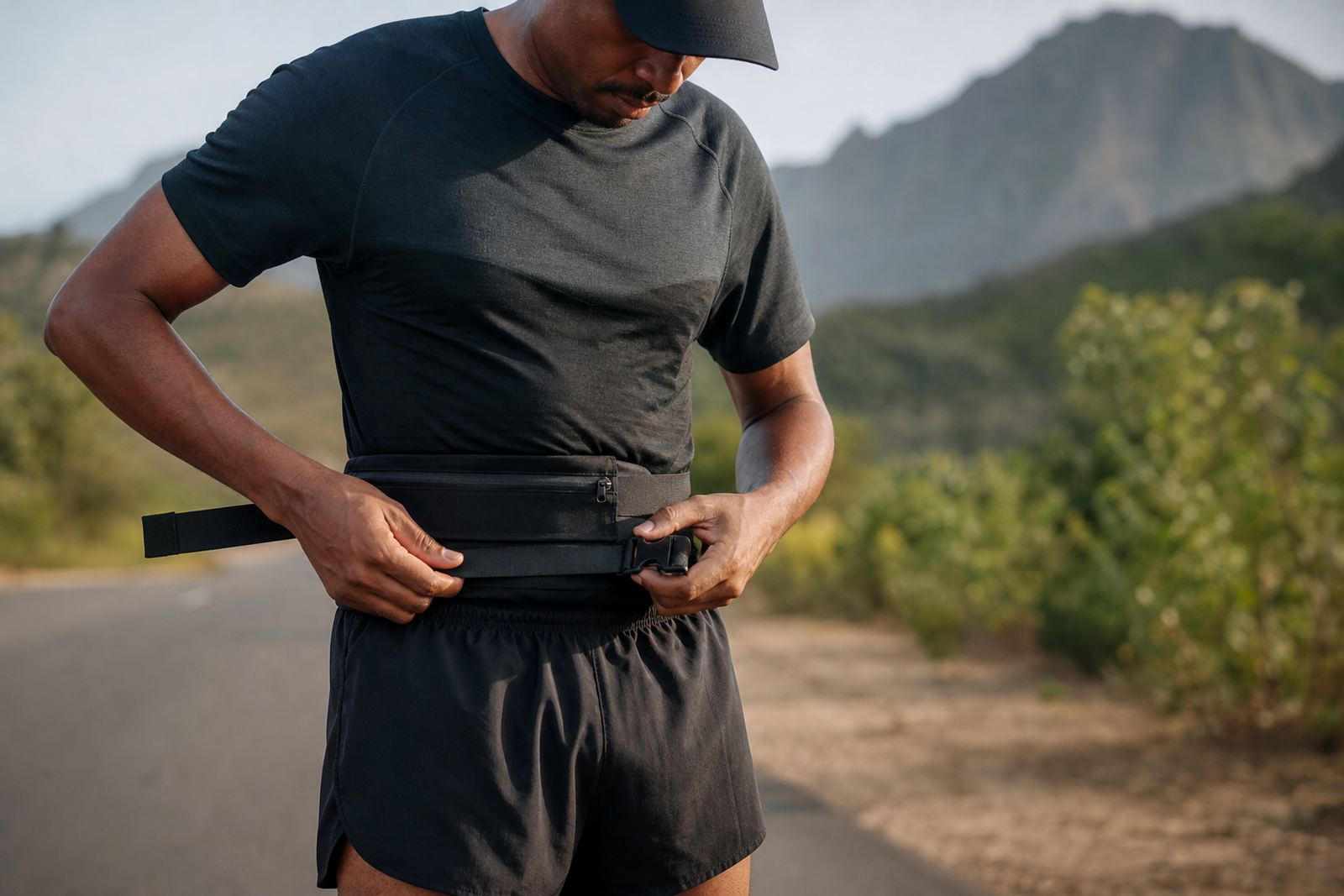
Men often buy a running belt by trouser size and then wonder why it rides up, bounces or pinches after 5 km. A running belt sits best where the body is widest and most stable, usually just above the hip bones. That gives the belt something to hold onto without forcing it to sit on the softest part of the stomach.
The aim is not to clamp the belt tight. It should feel close and secure, with enough compression to stop movement but still enough room to breathe properly on a hot Stellenbosch afternoon or a humid Durban morning. If you cannot take a full breath or twist your torso comfortably, the fit is too tight. If the belt shifts when you walk, it is too loose.
Men with broader shoulders or a straighter torso often need a slightly higher position than they expect. Start at the hips, then move the belt a little higher or lower until it stops sliding. That small change can make the difference between a belt that stays put and one that keeps creeping up your back.
How to adjust the strap so the belt stays stable
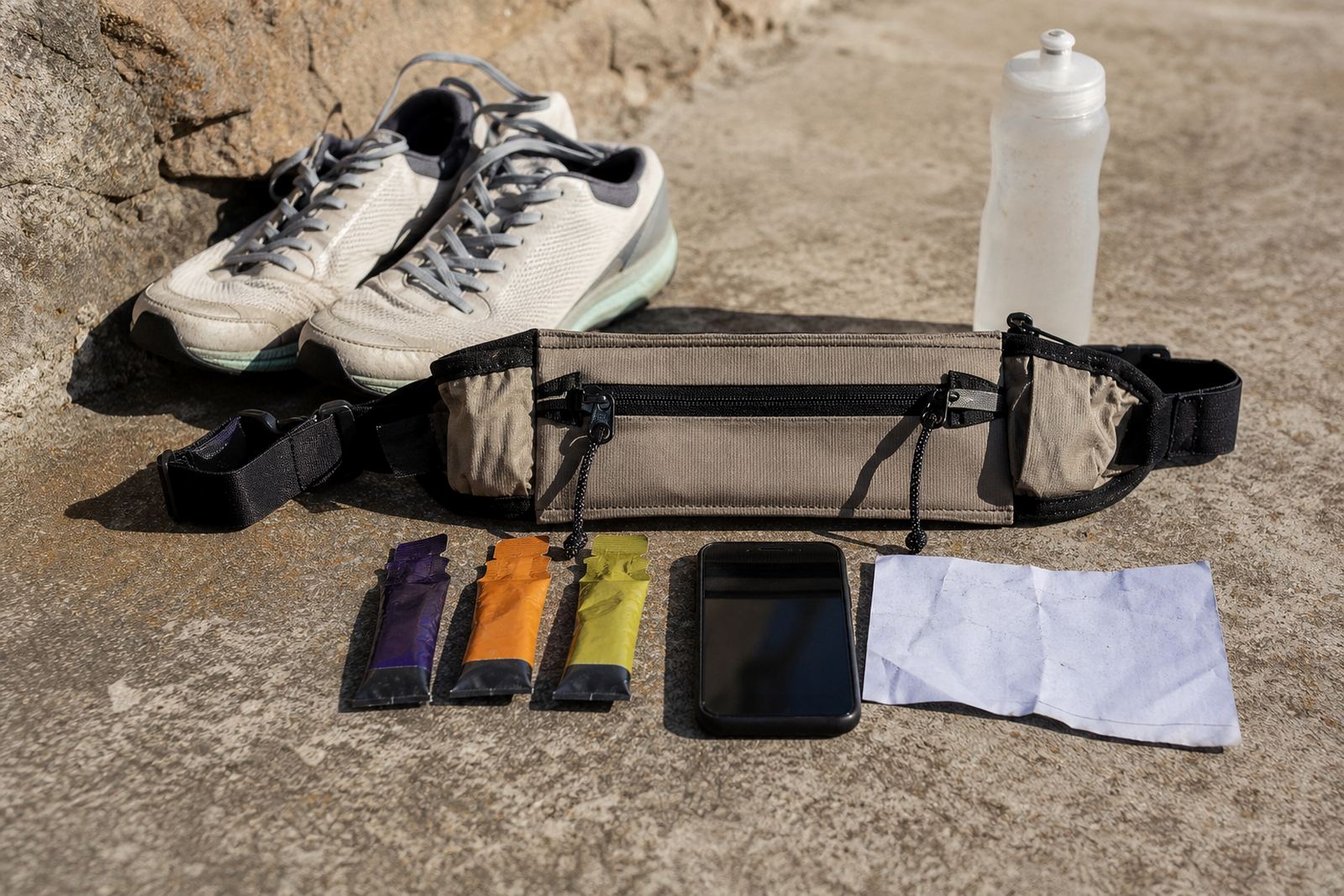
The main strap should be snug before you add water, gels, keys or a phone. Many runners adjust the belt while it is already loaded, which makes the fit misleading. Set the empty belt first, then add weight in the order you plan to carry it on the run.
For men, the most common mistake is over-tightening the front and leaving the sides loose. That pulls the belt forward and creates bounce at the back. A better approach is to tighten evenly all around so the belt sits flat against the body. If the belt has multiple adjustment points, use them to spread pressure instead of relying on one central pull.
- Put the belt on over your running shorts or tights, not over a thick hoodie unless you plan to run in winter layers.
- Fasten it while standing upright, then bend, jog in place and take a few steps.
- Check that you can slide one finger under the strap, but not two or three.
- Readjust after 2 to 3 minutes of movement, since some straps settle once the body starts warming up.
If you are training through load-shedding and doing early evening runs after work, test the fit in the same clothing you will actually wear. A belt that feels right on a cool morning can feel very different once your shirt is damp and your core is warm.
Pocket balance matters more than most runners think
Even a well-adjusted belt will feel off if the load is uneven. Men often place the phone, keys and hydration in one pocket because it is easiest. That creates drag on one side and causes the belt to rotate. The fix is simple: balance the contents across the belt.
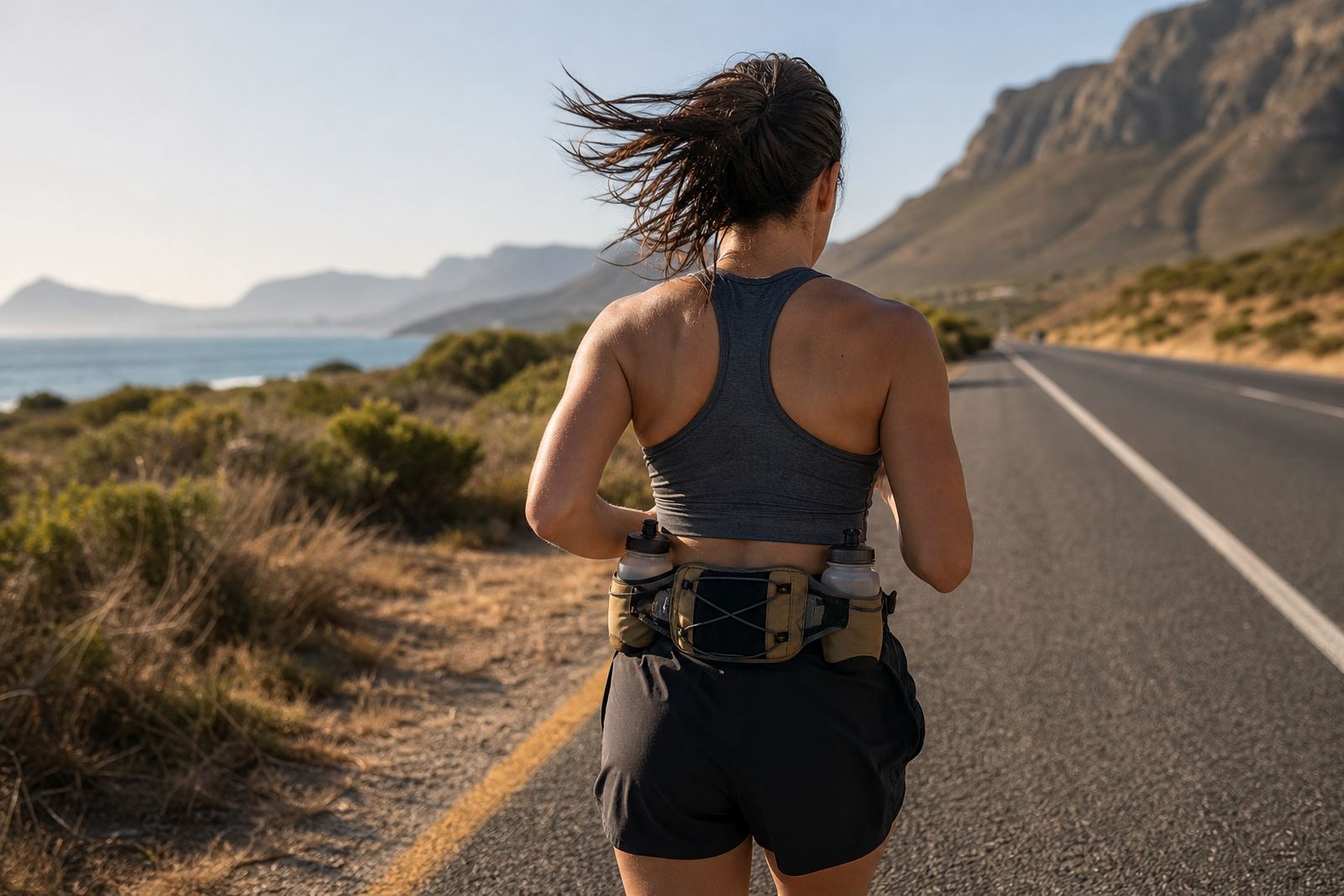
Heavy items should sit close to the centreline of the body, with lighter items spread to the sides. If you are carrying a soft flask or small bottle, keep it in the pocket designed for it rather than forcing it into a flat pouch. That helps the belt keep its shape and reduces slapping against the lower back.
For trail runners in the Jonkershoek area, or road runners doing longer weekend miles in Cape Town, pocket balance becomes more important when you add food, a phone and a wind shell. The belt should stay settled when you climb, descend and turn sharply. If the load keeps pulling to one side, re-pack before every long run.
- Keep the heaviest item in the most stable centre pocket.
- Use the side pockets for gels, small wrappers and lighter items.
- Do not overfill one pocket and leave another empty.
- Test the belt with the full race load before race week.
Clothing choice changes the way a men’s belt feels
What you wear under the belt makes a bigger difference than many runners expect. Thin, smooth fabrics usually work best because they reduce friction and help the belt stay in place. Cotton tees can absorb sweat and become sticky, which encourages rubbing and makes the belt feel tighter after a few kilometres.
Shorts with a very loose waistband can also affect fit. If the shorts move around, the belt may follow them instead of staying locked on the waist. Fitted tights or shorts with a firm waistband often give a more reliable base, especially for longer road races or trail events where the belt needs to stay put for an hour or more.
In the Western Cape, cool mornings can tempt runners to layer up, but bulky layers under a belt usually create pressure points. If you need extra warmth, choose a light top and place the belt over it only if the top is smooth and not too thick. For winter training in George or Paarl, that small choice can stop the belt from sliding every time the pace changes.
Trail, road and race day fit are not exactly the same
A belt that works on a flat road run may need a different set-up for trail running. On climbs, the torso leans slightly forward, which can make a low-sitting belt creep upward. On descents, impact increases and loose pockets start bouncing. For trail runners, a firmer fit and tighter pocket layout usually work better.
Race day adds another layer. Many men pack a belt more heavily than usual because they want to carry hydration, nutrition and a phone without using a vest. That is fine, but the fit must be checked with race pace movement, not just walking around at home. A good fit should stay steady when you accelerate, corner and reach for a gel.
At a road race in Stellenbosch or a trail event near Cape Town, try this simple test before the start:
- Jog for 30 seconds at easy pace.
- Lift each knee a few times to check for bounce.
- Twist left and right to see if the belt shifts.
- Reach into every pocket while moving.
If the belt passes that short test, it is much more likely to stay comfortable over the full distance.
What a proper fit feels like on the run
A correct men’s fit should feel almost forgettable after the first kilometre. You may notice the belt when you first put it on, but once you settle into rhythm it should stop drawing attention. There should be no repeated tugging, no rising at the back and no hard pressure across the stomach.
Watch for these warning signs during a training run:
- The belt moves up your back when you start to sweat.
- One side sags lower than the other.
- Pressure builds across the front after 10 to 15 minutes.
- You keep adjusting it with one hand while running.
If any of those happen, change the strap setting, rebalance the contents or move to a different shirt or shorts. Small changes usually solve the problem. Most men do not need a different body shape, they need a better set-up.
For clubs, event organisers and runners around South Africa, the best fit is the one that works in real conditions, not just in the mirror. A belt that stays steady through heat, hills and a crowded start pen saves energy and keeps the focus on the run itself.