
What a road runner actually needs on the run
On the road, most runners pack for function first. A light setup keeps the body moving naturally, especially on longer training runs, warm days and race mornings when you want to stay focused on pace rather than gear. In Stellenbosch and Cape Town, where many routes mix tar with hard shoulder sections, a snug waist belt often works better than carrying items in hand or stuffing pockets until they sag.
The best pack list is usually smaller than people expect. If you are running 10 km, you may only need a key, a gel, and a little water. For 21 km or marathon prep, the list grows, but it should still stay simple. The trick is to pack only what supports the run, not what makes you feel prepared in theory.
- One or two gels or chews for longer runs
- A small soft flask or short hydration option if needed
- Keys, ID and a bit of cash or card
- Salt tabs if you sweat heavily in summer
- Bodyglide or plasters for longer events
How to arrange weight so the belt stays steady
Weight distribution matters more than volume. A road runner wants items to sit close to the body and not shift with each step. If the load pulls to one side, the hips and lower back end up doing extra work. That becomes obvious on faster efforts and even more so on windy stretches along the Atlantic seaboard or on rolling roads outside Durban where the pace changes often.
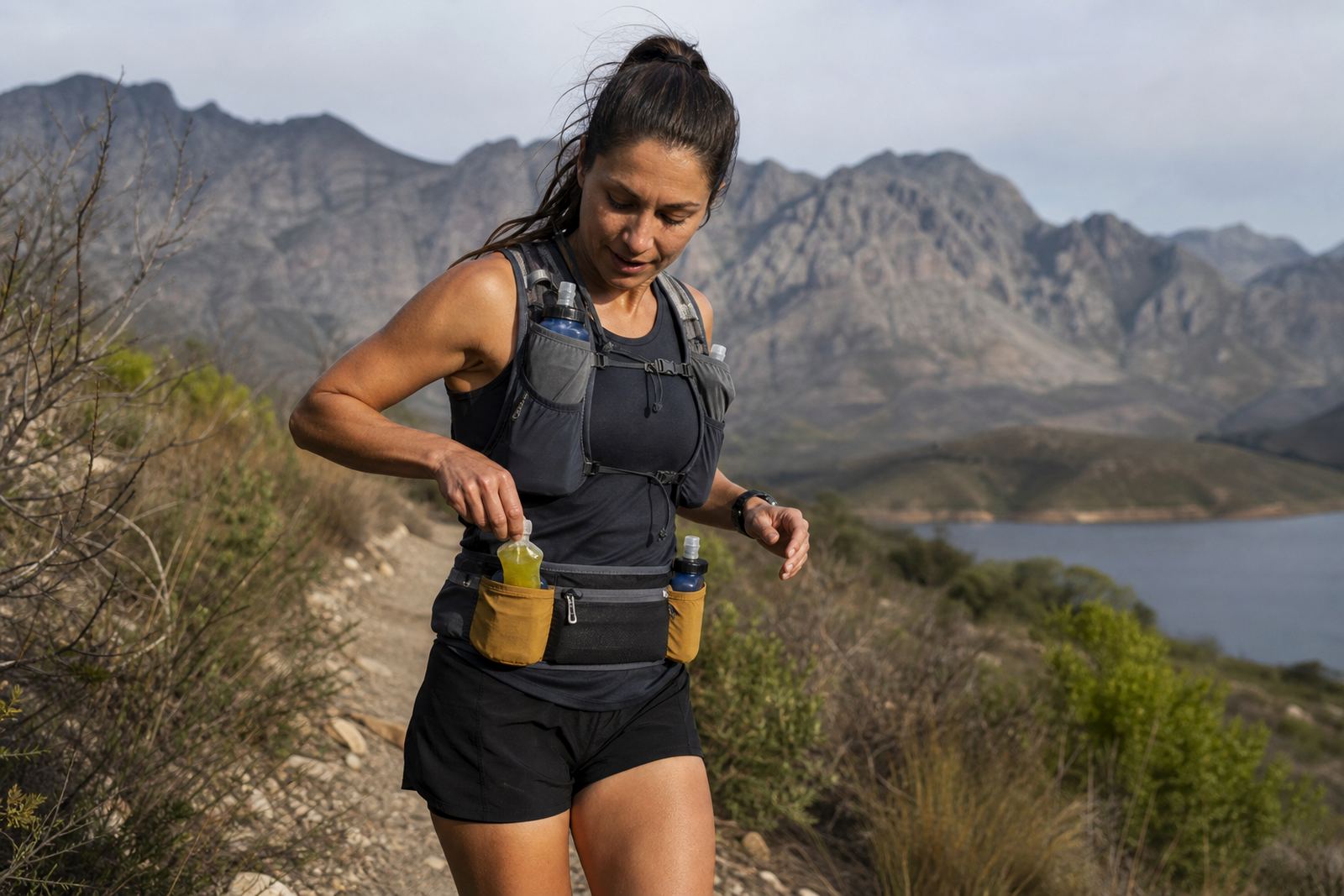
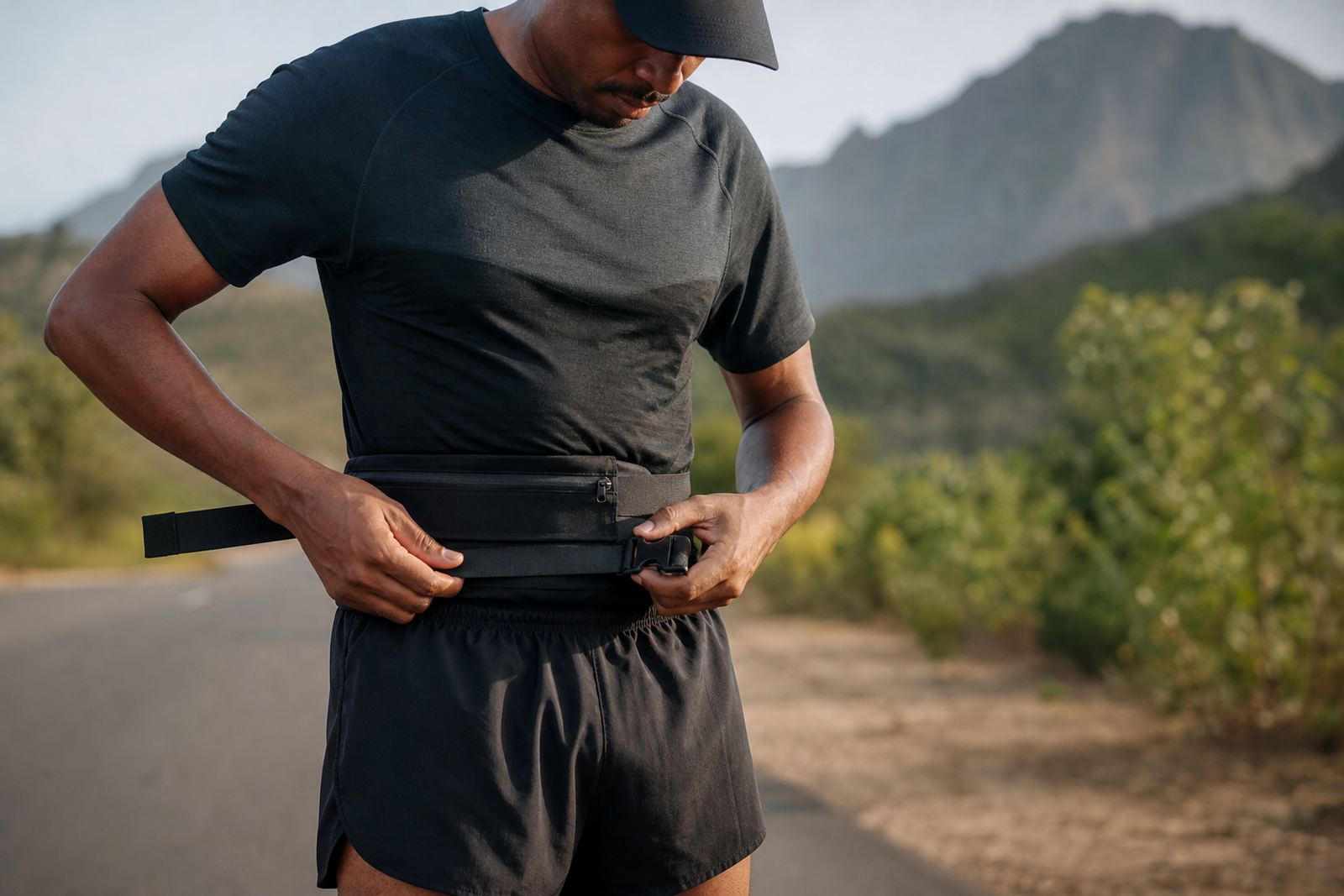
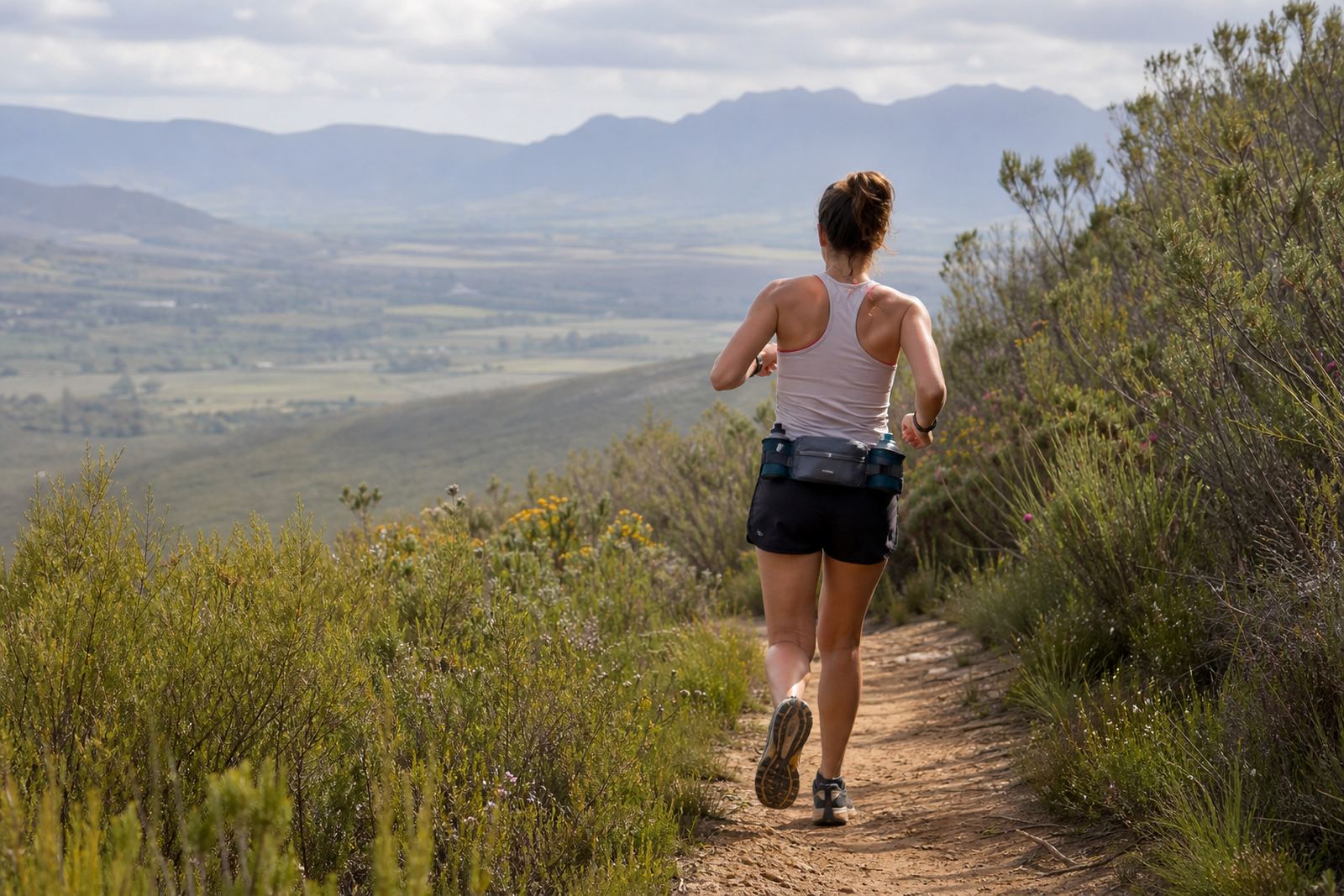
Start with the heaviest item closest to the centre of the belt. Put small, frequently used items where you can reach them quickly. If you carry water, keep it balanced on both sides or in a pocket that holds the flask firmly. A good fit should feel snug at the start without cutting into the waist when you breathe harder later in the run. That is the balance road runners look for, comfort without loose movement.
- Centre the heaviest item first
- Keep gels and salt tabs in easy reach
- Balance water across both sides where possible
- Test the belt at jogging pace before a hard session
- Adjust after five minutes, not after the whole run
Packing for short weekday runs versus long Sunday mileage
Weekday road runs often call for the lightest possible carry. A 5 km or 8 km loop around Somerset West or Bellville may only need a key and a phone if you want emergency contact. By contrast, a long Sunday run in Johannesburg or George might need hydration, fuel and a small backup layer if the weather turns. The key is to match the pack to the purpose of the session.
For easy runs, avoid overpacking just because the belt has space. Extra weight changes posture and can make a recovery run feel harder than it should. For marathon training, think in segments. Pack fuel for the next hour first, then add only what is necessary for the route and conditions. In the Western Cape winter, that may include a lightweight shell. In the humid Durban summer, hydration and anti-chafe planning matter more than bulk.
- Short run: keys, phone, one gel if needed
- Tempo session: small flask, one gel, ID
- Long run: two to four gels, hydration, salt and basic first aid
- Race day: only what fits the event rules and your proven routine
Race rules, aid stations and what not to overpack
Road races across South Africa often have clear rules about outside support, littering and on-course assistance. Before race day, check what the event allows so you do not carry extra items you will never use. Some runners pack too much because they fear missing an aid station. That usually leads to a belt that bounces, rubs and becomes a distraction by halfway.
A better approach is to study the route. If aid stations are every few kilometres, you may only need one flask and a backup gel. If the event starts early in the cool air of Stellenbosch, your pack can stay even lighter. If it finishes under a hot sun in Gauteng, a bit more water makes sense. Also remember that race pack inserts, club orders and crew belt kits can help event teams keep gear organised without handing every runner the same setup.
Before a race, check these points:
- Are there official water tables and how far apart are they?
- Does the event allow personal hydration packs or only small waist belts?
- Will you need your own fuel, or is there a supplied plan?
- Are keys, timing chips or medical details required to stay on body?
- Will load-shedding or early starts affect your prep routine at home
How to test a belt before race week
A belt should never be used for the first time on race day. Road runners need repeatable feel, so test it on two or three training runs first. Start with a steady 5 km, then a faster effort, then a longer run with the full packing load. That tells you whether the belt is sitting properly, whether the pockets are too tight and whether the flask moves when you pick up pace.
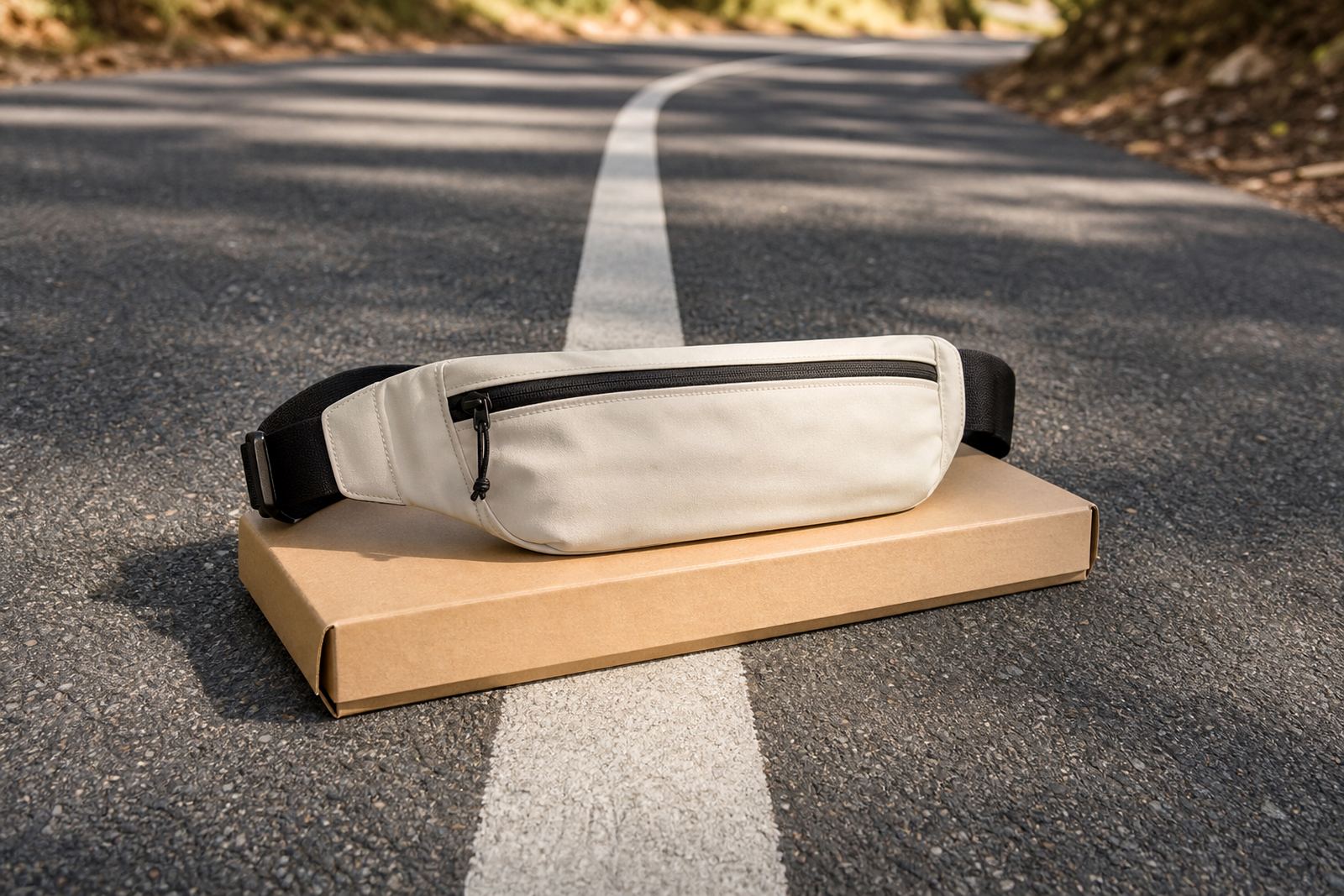
At Waistbag Run, fit matters because runners are different. Some want a very low profile setup for club road runs. Others want space for hydration, nutrition and a few extras during event days. A brief product fit briefing can save a lot of trial and error, especially for clubs ordering for mixed sizes or organisers handling participant sizing for a race weekend. If the belt feels right in training, you stop thinking about it and start focusing on cadence, breathing and the next kilometre.
Simple test checklist before you commit to a belt:
- Does it stay still on a hill and on a downhill?
- Can you reach the flask or gel without stopping?
- Does it stay comfortable after 40 minutes?
- Does it fit over a light running top and still feel secure?
- Can you wash it and dry it before the next session?
A local example from Stellenbosch to Cape Town
A runner training between Stellenbosch and Cape Town might start with cool morning conditions, then face warmer temperatures once the sun comes up. In that case, the belt has to carry enough water for the middle of the run, but not so much that it pulls the hips down on the early climb. A compact, well packed waist belt lets the runner keep a smooth rhythm through the opening kilometres and stay prepared if the route stretches longer than expected.
This is where practical planning helps. A road runner does not need trail-level storage for every session, but they do need a reliable place for the essentials. For clubs, events and individual runners across Cape Town, Johannesburg, Durban, George and surrounding areas like Paarl and Somerset West, the best setup is usually the one that disappears once the run starts. That is the point. Pack light, pack steady and let the run do the talking.