
Why bounce happens on South African routes
Belt bounce usually starts when the load sits too high, too loose, or too far from your body. On flat road work you might barely notice it, but once you move onto gravel paths, vineyard tracks or rocky trail sections the movement becomes more obvious. Every step gives the belt a small lift and if the fit is off, that lift turns into a repeated hop around the waist.
Heat and humidity also matter. In Durban or along the Cape coast, sweat can loosen fabric and make a belt slide a bit more over time. On long summer runs in Stellenbosch or Paarl, a belt that felt fine at the start can begin to shift after 30 minutes if it was not adjusted snugly enough from the beginning.
The aim is not to clamp the belt down so tightly that it becomes uncomfortable. It is to keep the load close and balanced, with just enough tension so the belt follows your body instead of moving against it.
Set the belt high and snug, not low and loose
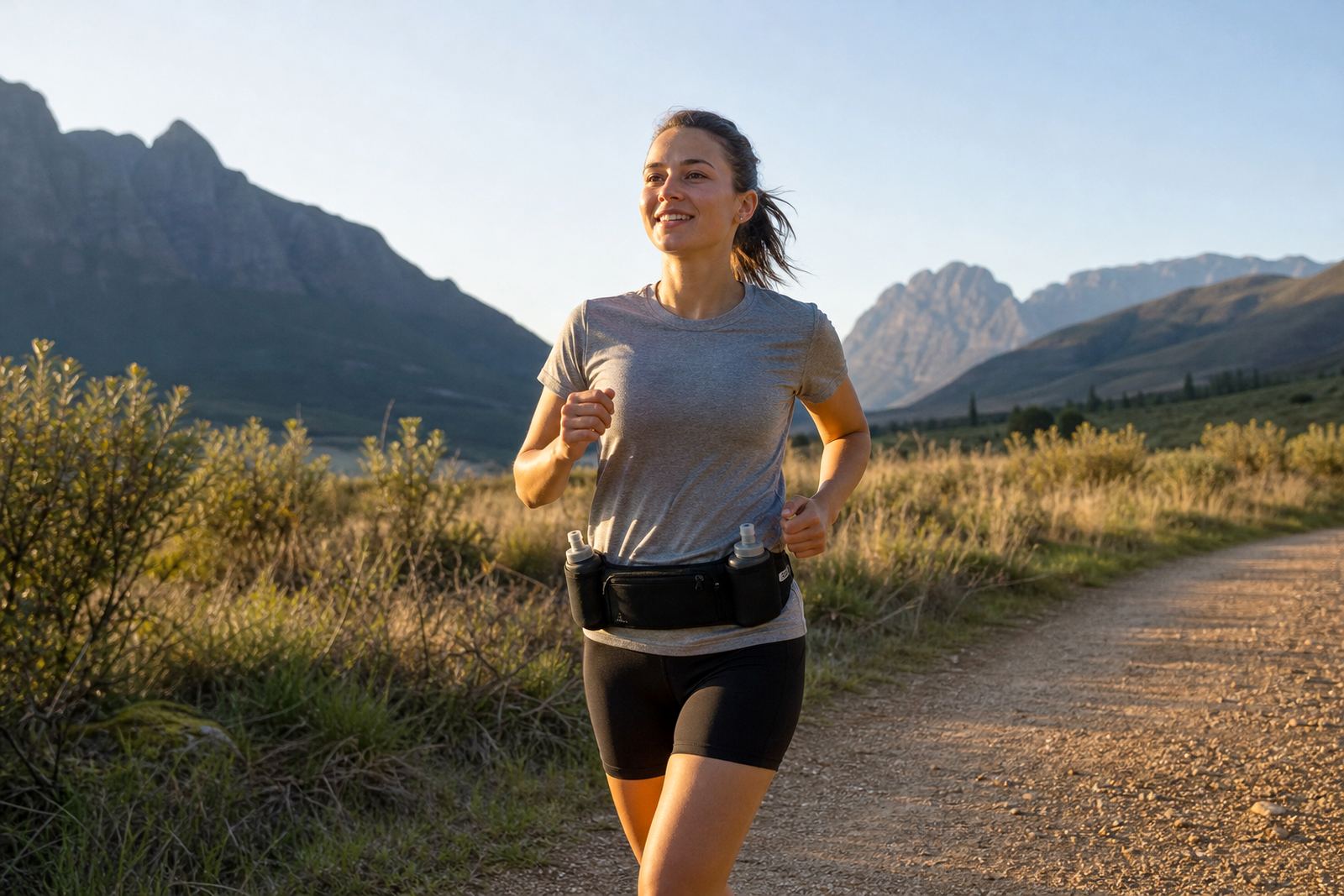
A common mistake is wearing the belt too low on the hips. That position gives the pack more room to swing. A better placement is usually around the upper hips or just above the hip bones, where the belt has a firmer point of contact and less chance of rolling down.
Before you head out, do a short walk and a few light jog steps. If the belt shifts when you lift your knees or turn quickly, tighten it a little and test again. The belt should feel secure when standing still and still comfortable when you breathe deeply. If you need to keep pulling it down during the first kilometre, it is not set right.
- Start with the belt centred on the waist, then nudge it to the most stable point on your body.
- Fasten it so you can slide one hand under the edge, but not much more.
- Check the fit after the first 5 minutes, before you settle into pace.
Runners often find that a small adjustment at the start saves a lot of fiddling later. That is especially true for race mornings, when you want to get moving and not stop to rework your gear halfway through the pack.
Pack the load where your body can carry it best
Even a well-fitted belt will bounce if the weight is badly placed. Heavier items should sit close to the centre of the lower back or split evenly across the sides, rather than being stuffed into one pocket. If the bottle is hanging to one side, the belt will naturally swing that way with every stride.
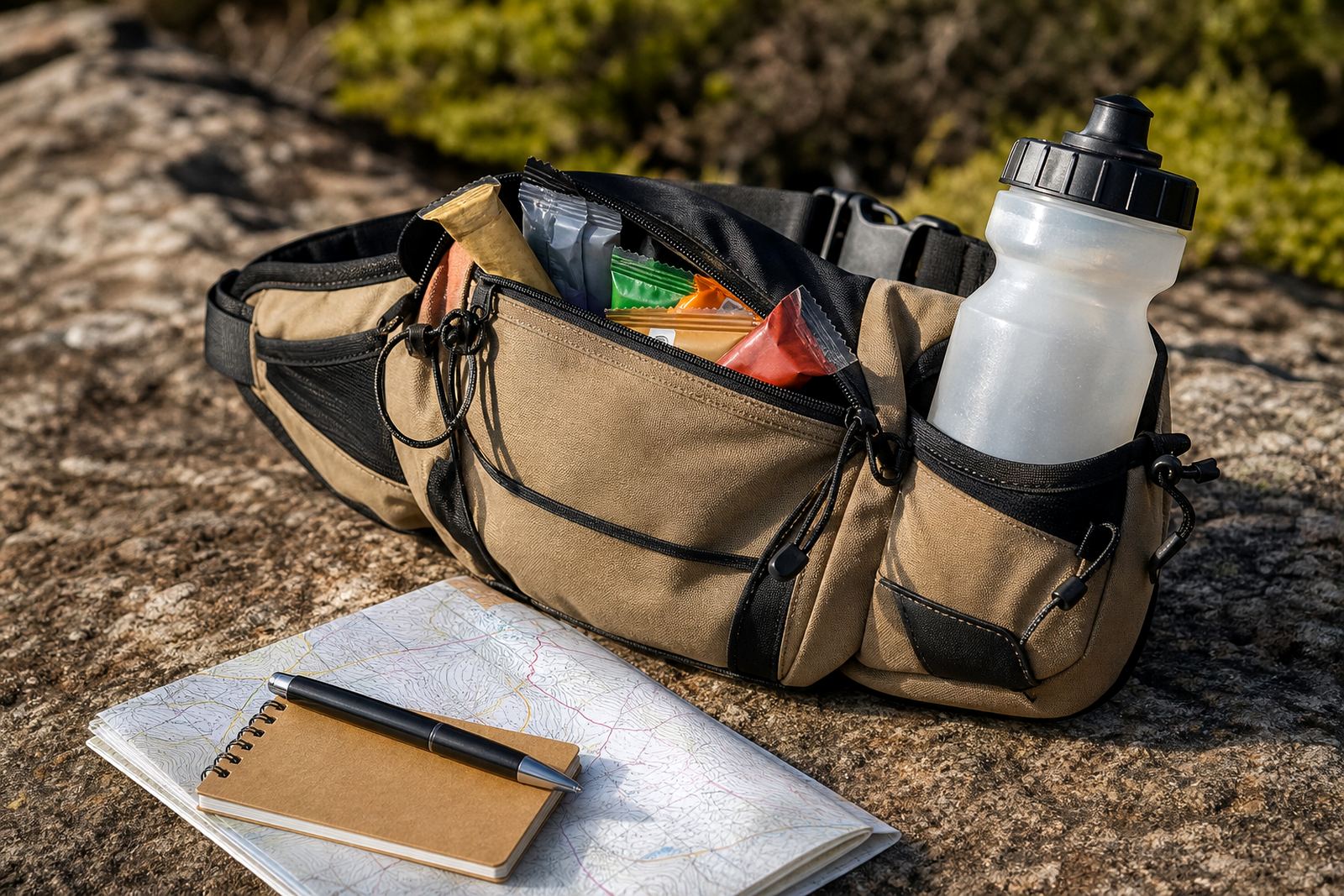
Think about what you really need to carry. Keys, a soft flask, a gel or two and a thin wind layer are manageable. A bulky set of items, loose metal bits or hard objects create movement and noise. Soft packing helps the belt settle, while hard edges tend to knock against the body. On longer trail runs near Jonkershoek or out toward the Helderberg, this difference becomes very clear after a few kilometres.
- Put the heaviest item closest to the centre of your body.
- Keep small items in separate pockets so they do not clump together.
- Use the same packing order every time so the belt feels familiar.
If you carry hydration, make sure the bottle or flask is seated fully and clipped in correctly. A partly secured bottle can start to rise and fall with each step, which adds extra bounce and wastes energy.
Choose a route and pace that matches the gear
Some bounce is caused by the route itself. Fast downhills, loose gravel, steep turns and uneven field edges all create more movement in the body. If your belt is already close to the limit, a technical section can expose every weak point. That does not mean you must avoid trail runs, only that the setup needs to suit the terrain.
For road runners in Cape Town or Johannesburg, the belt may feel steady at moderate pace but start moving once the runner begins sprinting for a finish line or pushing hill repeats. For trail runners in George or the mountain routes around Stellenbosch, the same belt might need a firmer fit because the ground keeps changing underfoot.
In practice, a good match between pace and gear is part of good planning. If you know you will be running hard or over rough ground, keep the carry lighter and the layout simpler. That way the belt does its job without demanding attention every few minutes.
Race day checks that save time and irritation
Before an event, do a full fit check while wearing the same top and shorts you plan to race in. Small differences in fabric can affect grip, especially if your kit is smooth or already damp. It is worth taking two minutes at home rather than discovering a bad fit in the race village when the queue is moving and the start corral is filling up.
Race organisers also appreciate runners who arrive ready. If you are part of a club, crew or local event team, decide in advance who is carrying what, then keep that layout consistent across the group. It makes kit checks faster and reduces last minute changes.
- Test the belt with filled flasks, not only when it is empty.
- Jiggle test: jump once, jog ten steps, then tighten if needed.
- Check that nothing rattles or shifts when you swing your arms.
At bigger events in Durban or Cape Town, a quick pre-start check can stop a small packing mistake from becoming a 21 km nuisance. The best setup is the one you forget about after the first kilometre.
A local example from a Stellenbosch trail morning
A runner heading out from Stellenbosch on a warm Saturday morning might start with a belt that feels fine in the car park. The route begins on smooth path, then moves onto vine rows, hard pack and a short rocky climb. If the bottle is sitting to one side and the belt is worn too low, the runner soon feels it shift with each uphill step. By the time they reach the turn, they are distracted by the constant movement.
Now change two things. First, move the belt a little higher so it sits firmly over the hips. Second, shift the load so the bottle is centred and the smaller items are tucked close to the body. The same runner usually feels a clear difference within the first kilometre. The belt sits steadier, the stride feels more natural and the water is easier to reach without the whole setup bouncing around.
That is the real point of a well-set running belt. It should support the run, not become part of the problem. With a few adjustments, you can keep your essentials close and your movement clean, whether you are on a local trail, a club run in Bellville, or a race weekend anywhere in South Africa.