
Why group runs get messy so quickly
Social runs and club sessions usually start well, then the usual clutter appears. One person is holding car keys, another has a phone in a back pocket, somebody else is carrying gels by hand and the first bottle gets passed around twice before the group leaves the gate.
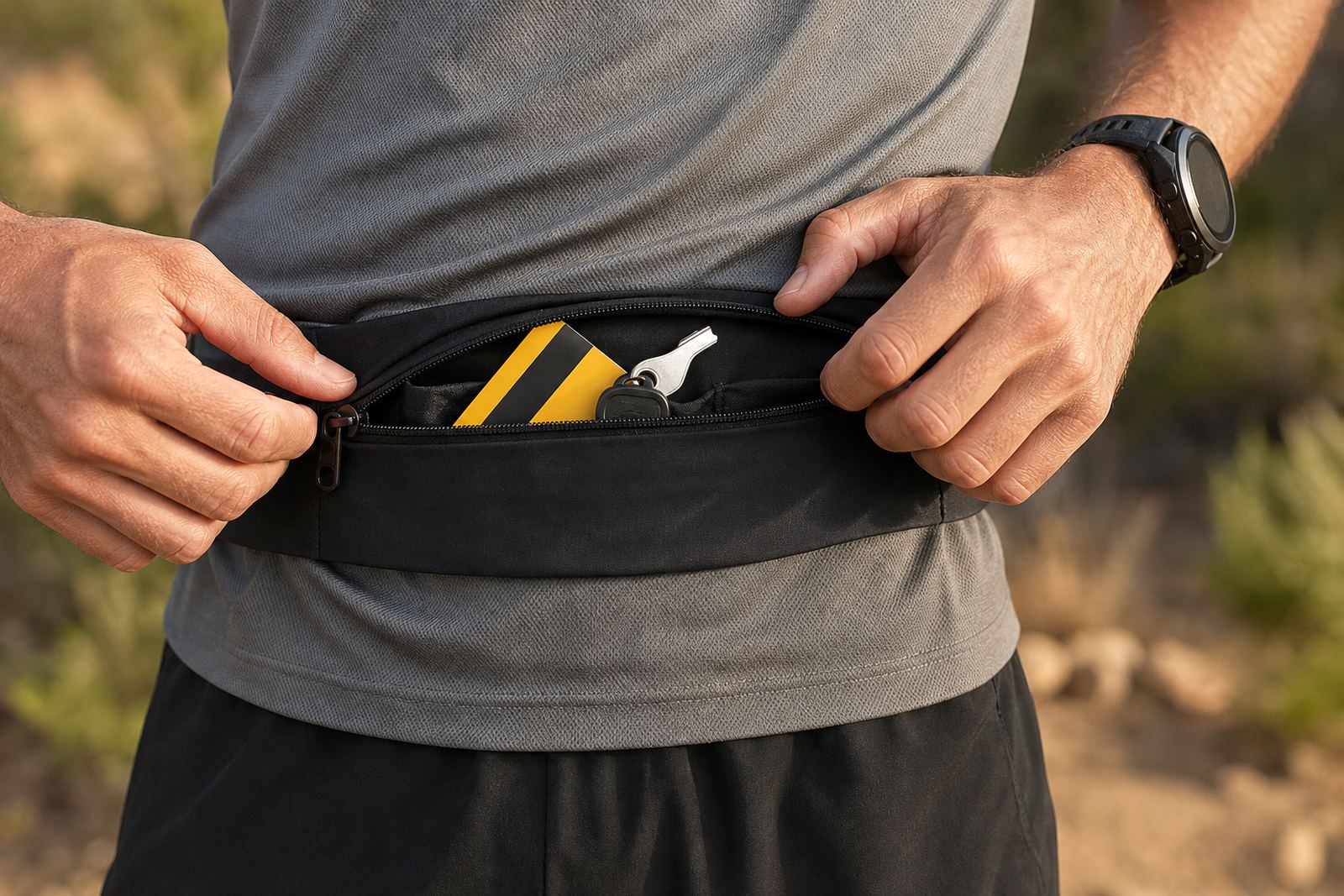
That is where a proper waist belt helps. It gives each runner a fixed place for the basics, which cuts down on stopping, swapping and asking who has the route note. For trail runners in Stellenbosch and road runners heading out from Bellville or Somerset West, that small bit of order makes the whole session feel calmer.
What a good waist belt does during a social run
A good running and hydration waist belt is not about carrying everything. It is about carrying the right few items close to the body so hands stay free and movement stays natural. On a 10 km club run or a longer Sunday route, that can make a real difference.
- Holds water or soft flasks without bouncing around
- Keeps gels, keys and a phone in one place
- Reduces hand carry and pocket clutter
- Stays stable on road sections and uneven trail ground
- Makes pre-run checks quicker for the whole group
For runners who train through load-shedding or before sunrise, there is also the simple benefit of getting ready faster. No hunting for lost items in the dark, no last-minute unpacking of several bags, and less chance of leaving a car key behind.
How clubs can choose the right setup
For club orders, the best choice depends on the distance, the route and how many runners need water. A short recovery jog in Cape Town does not call for the same belt layout as a hilly trail session outside George. The aim is fit, comfort and enough carrying space, not extra bulk.
When planning for a group, it helps to look at the following points:
- Expected distance and time on feet
- Whether runners need water only or water plus snacks
- How much bounce control is needed on trail sections
- Whether the group wants the same colour or mixed sizes
- How many belts are needed for club stock or event hire
A good briefing before an order saves time later. It also helps with participant sizing, which matters when the belts need to be shared across men and women in the same club, or packed for a race crew.
A practical example from a Stellenbosch trail morning
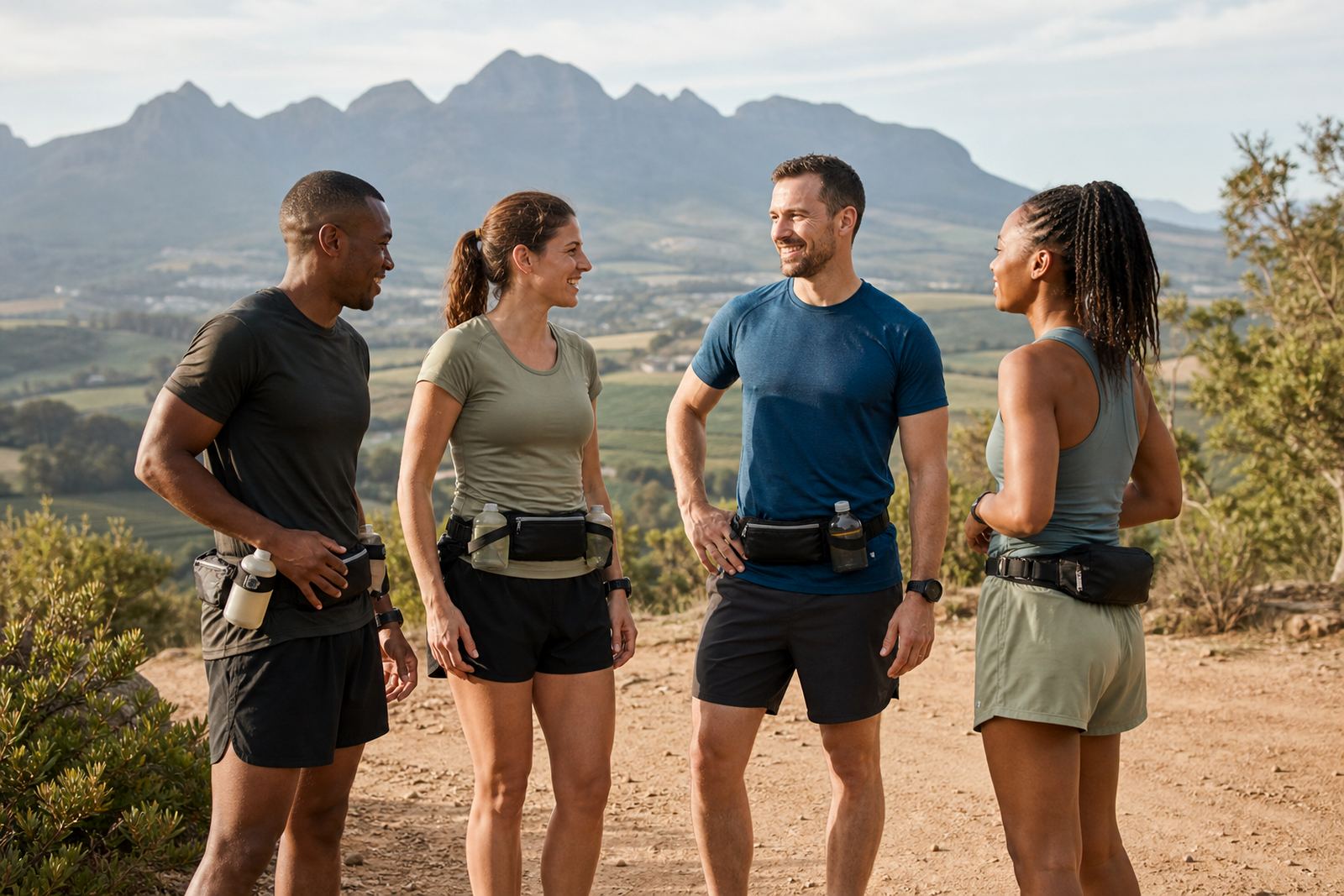
Picture a Saturday morning in Stellenbosch. A club meets early near the vineyards, the wind is still cool and the route starts with a few open kilometres before it turns rocky. Some runners are carrying phones in hand, others have water bottles clamped awkwardly under one arm. By the time the group reaches the first climb, the pace has already changed twice.
With waist belts in use, the group leaves with water secured, gels tucked away and phones kept close. The runners can settle into a steady rhythm sooner, and the back markers are not distracted by loose items shifting around. It sounds small, but on a 15 km trail day the difference is noticeable.
For organisers, it also makes check-in easier. There is less sorting at the start line and less confusion when participants arrive in batches. That matters for events in Paarl, Durban, Johannesburg and elsewhere where the same club may be managing multiple pace groups at once.
What event teams should plan before race day
Race mornings move fast. If the belts are part of a group order, the packing should be simple and clearly labelled. That is especially useful for club entries, charity runs and trail events where runners collect their gear in a hurry before warm-up.
Useful planning points include:
- Final participant numbers with a small buffer for late add-ons
- Size split for small, medium and large belts
- Colour choice if the group wants a shared look
- Dispatch timing to match event registration or club collection
- Where the belts will be handed out, stored or fitted
Hydration layout advice is also useful here. Some runners need a bottle set-up for a hotter coastal event in Durban, while others need a lighter carry for cooler inland conditions. The right layout saves effort and reduces waste, which is useful when a club is ordering for repeat events through the season.
Keeping comfort and stability in the mix
Comfort is what keeps runners using the belt after the first outing. If it shifts, rubs or feels awkward at the waist, it ends up in the boot of the car. That is why fit briefing matters as much as storage space.
Well-set belts should sit snugly without digging in, and the contents should stay balanced on both sides. On mixed-terrain routes around Cape Town or on flatter road loops in George, the same rule applies: less movement means less distraction. In humid conditions along the coast, a breathable feel matters too because nobody wants extra sweat trapped around the middle.
For clubs that order regularly, repeat order support makes life easier. Once the sizing and layout have been sorted, the next batch can follow the same pattern with less admin and fewer surprises.
Why group convenience matters beyond the run
When runners are organised, the whole session feels better. People arrive on time, they know where their kit is, and they spend less energy faffing with loose items before the start. That is good for club culture, good for events and good for the runners themselves.
For organisers in Stellenbosch, Cape Town, Johannesburg, Durban, George, Paarl, Somerset West and Bellville, a practical waist belt order can cut down on small frustrations that add up over time. It is one of those items that seems minor until the first group run without it, and then everyone notices the difference.
For enquiries, clients can use the form on the contact page to discuss event belt supply, bulk order planning, participant sizing or crew belt kits. The focus is straightforward: make group running easier, tidier and more comfortable from the first kilometre to the last.