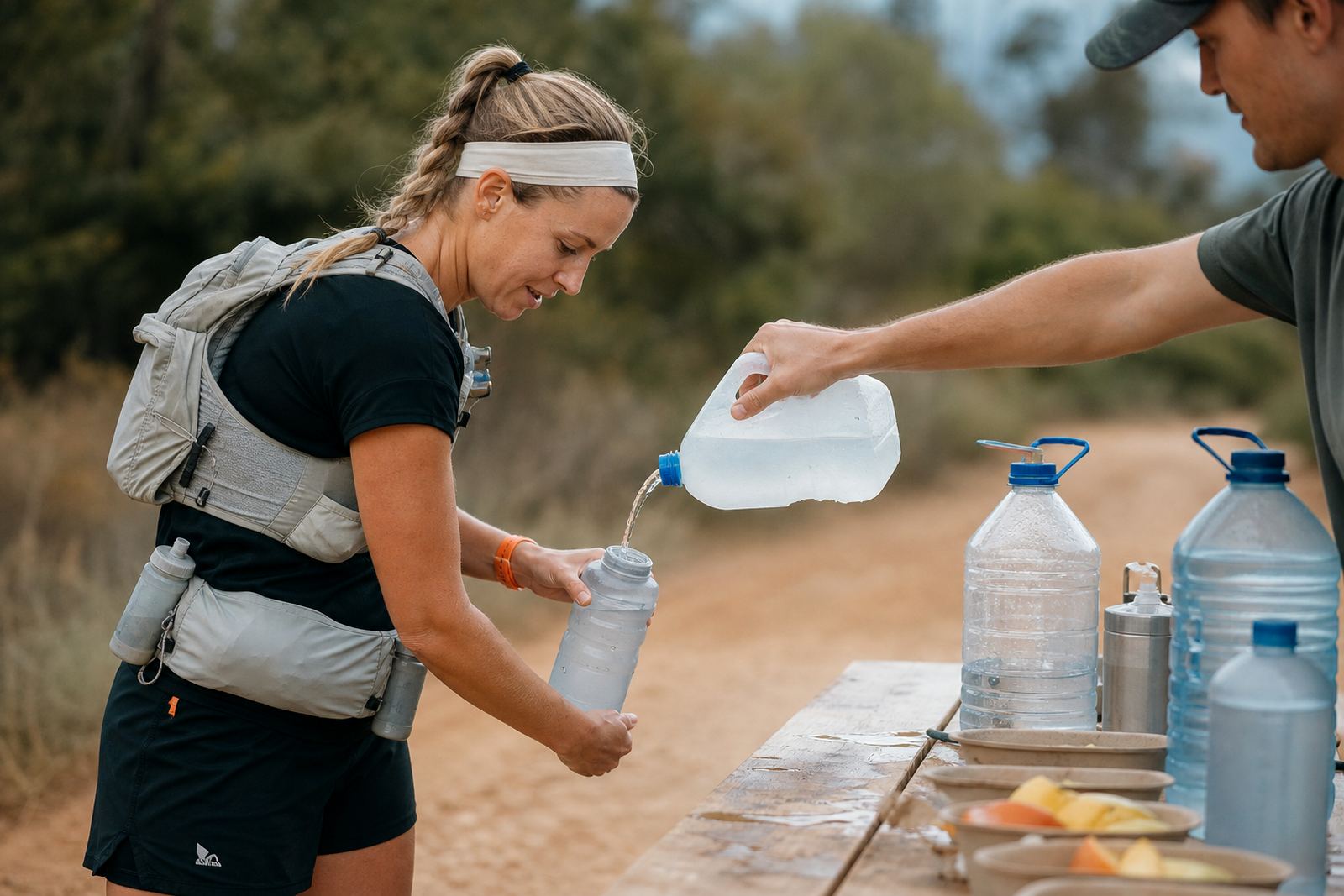
Why aid station speed matters on South African routes
At a 10 km road race in Cape Town or an early trail start near Stellenbosch, the aid station can either support your run or break your flow. When runners stop too long, they lose rhythm, get crowded by other participants, and sometimes grab the wrong item in a hurry. A well planned waist belt keeps your essentials close, so you can slow down for only a few seconds and move on with purpose.
On longer events, that matters even more. In the Western Cape heat, or on exposed sections near George and Durban, a runner who can sip, take in fuel, and carry on without fumbling is usually in better shape for the next climb or the next checkpoint.
Build your belt around the course, not just your preference
The best setup depends on the route, the distance, and the spacing between aid stations. A flat city race in Johannesburg needs a different carry plan from a technical trail event outside Paarl. Before race day, study the course notes and ask how far the water points are apart, what products are offered, and whether cups, bottles or sachets are provided.
Use that information to decide what your belt should hold. If aid stations are close together, you may only need a small hydration load and a few calories. If the gaps are longer, your belt should carry enough fluid and fuel to bridge the distance without overpacking.
- Short road races: light carry, simple access, minimal bounce.
- Trail races: more stable storage, extra fluid, room for gels or salt.
- Hot days: plan for more fluid and easier reach while moving.
- Windy or dusty conditions: seal small items so they do not spill or get contaminated.
What to place where for a faster handover
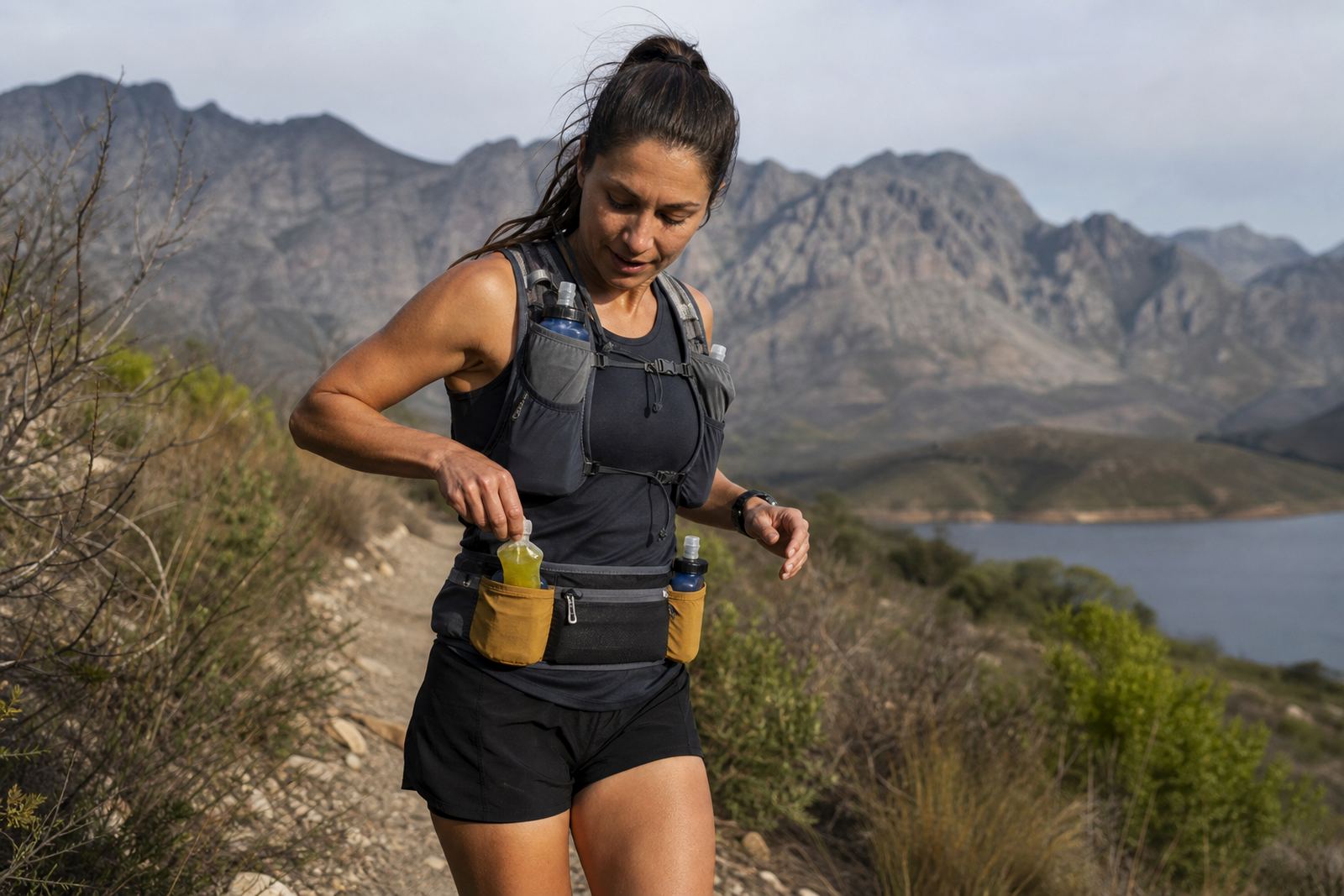
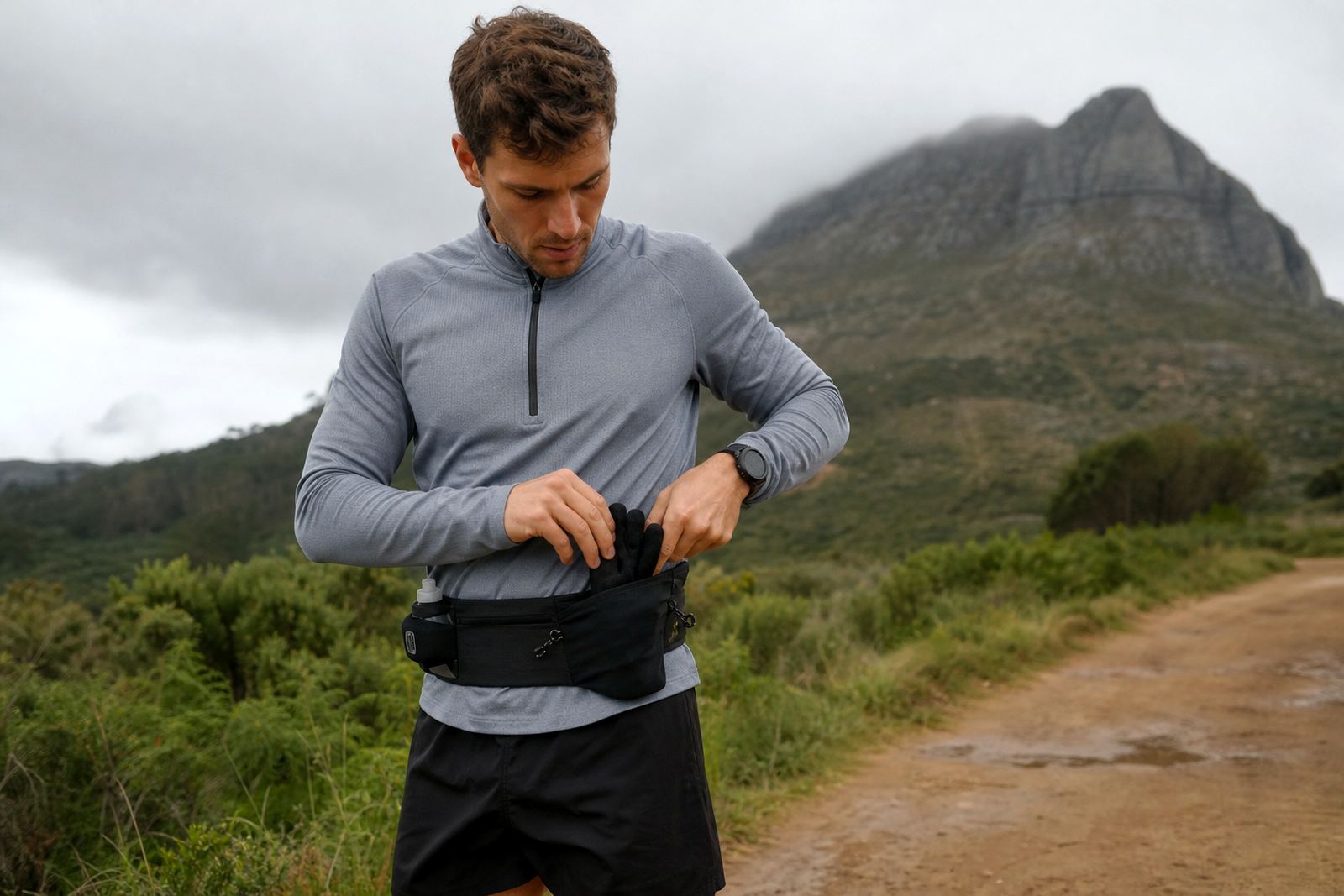
Good belt layout is about muscle memory. If you know exactly where your bottle, gels, soft flask or sachet is, you can reach for it without looking down. That saves time and reduces the chance of dropping something just as you enter the station area. A neat layout also helps when you are breathing hard and your hands are tired.
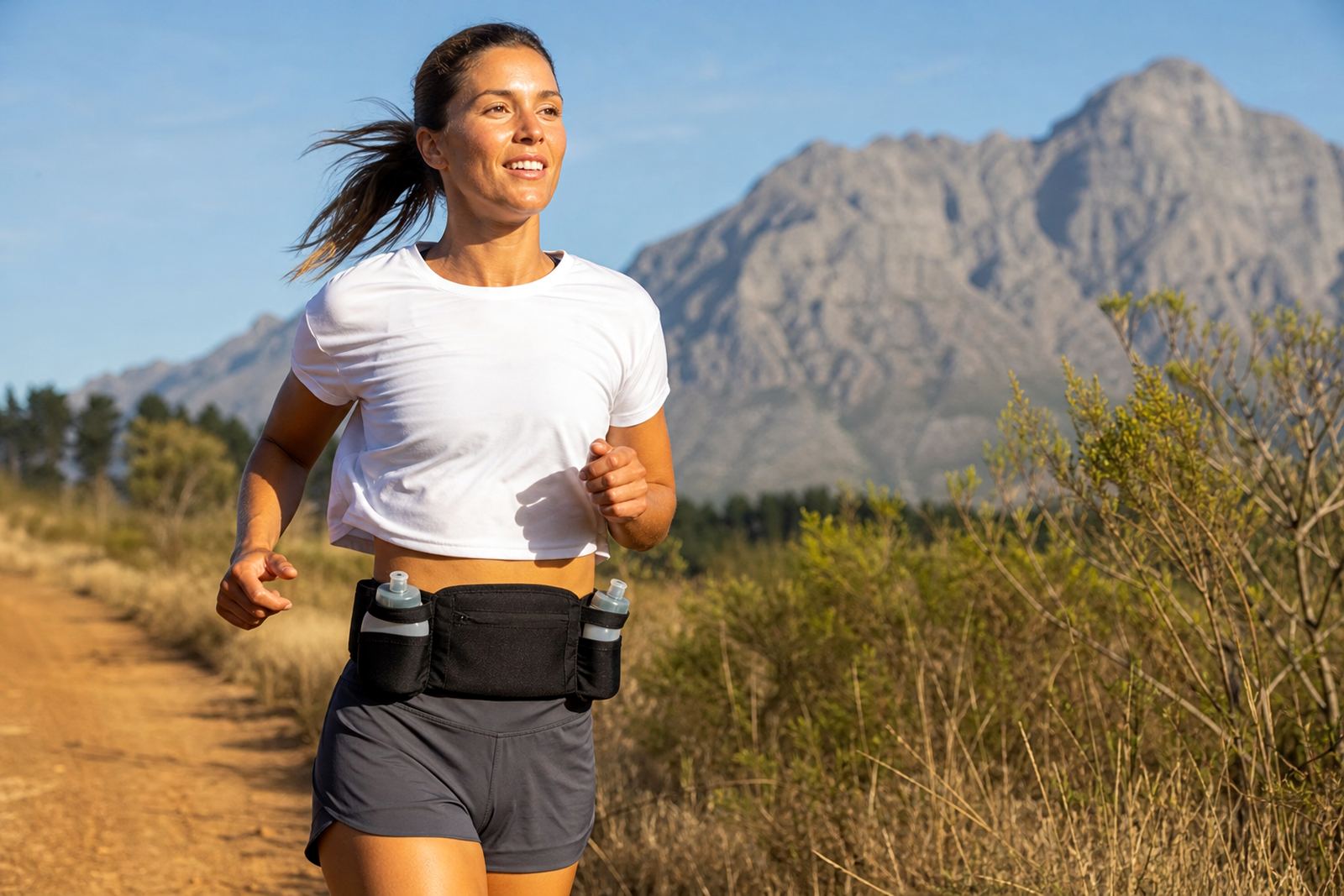
Keep the items you use most often at the front or on your dominant side. Put backup items behind or to the side. If you carry hydration, make sure the balance feels even enough to stop the belt from twisting as you run. On trail sections, a stable fit matters as much as the item count.
- Front pocket: quick fuel, salt, race number clip or small tissues.
- Side pocket: soft flask or bottle for easy drinking on the move.
- Rear pocket: spare gel, blister tape or a compact emergency item.
- Zip pocket: ID, keys and anything that must stay dry and secure.
Train your hands before race day
Many runners practise their pace but never practise their aid station routine. That is where time gets lost. If you want smooth race day handling, rehearse the sequence in training: slow slightly, reach, grab, drink, stow, and accelerate again. Do it while tired, because that is when mistakes happen.
For club runners in Stellenbosch or Somerset West, this can be built into long runs. Have one runner simulate an aid station with cups or bottles, then repeat the drill several times. You will quickly see whether your belt bounces, whether the pocket opening is too tight, or whether your grip is awkward with sweaty hands.
Avoid the common mistakes that slow runners down
Most problems at aid stations come from overpacking or poor placement. A belt that is too full can swing from side to side, especially on downhills or when you move through a crowded checkpoint. Another common issue is carrying items you do not actually need, which only adds weight and makes every stop more complicated.
Watch out for the following:
- Loose bottles that bounce or work themselves free.
- Gels packed too deep to reach quickly.
- Heavy load on one side that pulls the belt off centre.
- Items packed in the wrong order for the route profile.
- Chafing caused by a belt that sits too low on the hips.
If you are racing in coastal humidity or in the rain, check that pockets close properly and that labels or wrappers do not turn slippery. A small setup change can make a big difference over 21 km or 42 km.
Local example: from Stellenbosch trails to a busy finish line
Picture a trail runner starting outside Stellenbosch on a warm Saturday morning. The first aid point is not far away, but the route includes rough ground, narrow single track and a few climbs. In that case, the runner benefits from a belt with secure hydration, one or two quick fuel items, and a simple layout that can be reached without stopping.
Now compare that with a road event in Cape Town where aid stations are well stocked but busy. The runner may only need a lighter carry, because the goal is to take a quick sip, pick up a gel if needed, and move on before the crowd thickens. Different route, different rhythm. That is why aid station strategy should always start with the course map and end with a belt that feels natural at speed.
A simple pre-race check that saves time on the day
Before leaving home, run through a short checklist. This takes less than a minute and can prevent unnecessary delay at the first aid station. If your belt fits properly and your items are packed in the right order, you are already ahead of many runners who only think about this after the gun goes off.
- Fill only the fluid you need for the first section.
- Place fuel where you can reach it with one hand.
- Test the belt fit after a short jog and a few strides.
- Check that nothing rattles, rubs or hangs loose.
- Confirm the course notes for water points and support rules.
A good aid station strategy is not about carrying more. It is about carrying smarter, so you stay calm, save time and keep moving with confidence.