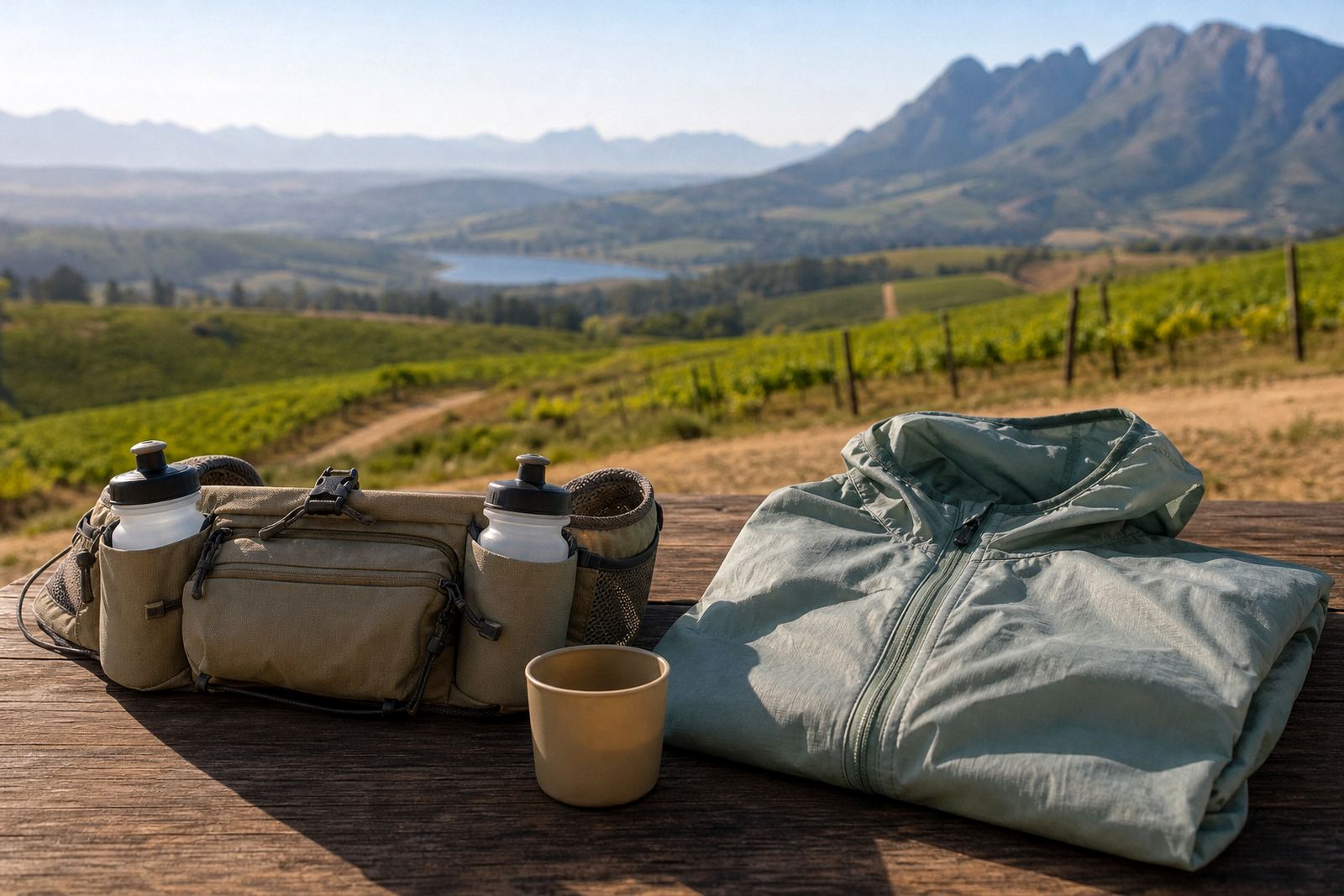
Start With Stability, Not Storage
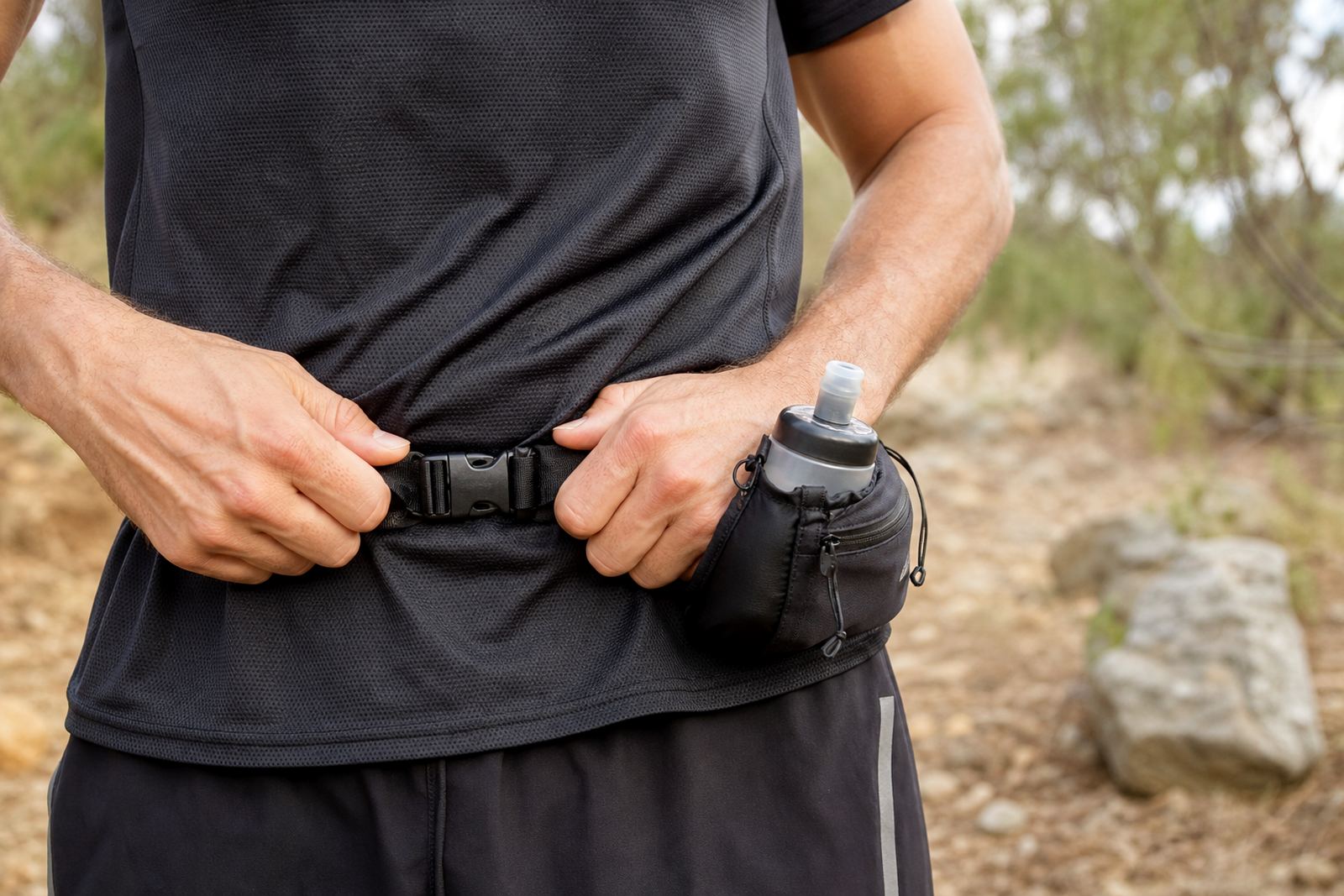
New trail runners often overpack because they want to be ready for anything. In reality, a first race usually goes better when you keep the load simple. A good waist belt should sit close to the body, stay put on climbs and descents, and not bounce when you pick up the pace over rocky sections or fire roads.
If you are running in Stellenbosch, Jonkershoek or the Tygerberg hills, you will notice how much movement a loose belt can create on uneven ground. That extra bounce is tiring and distracting. Choose a belt that fits snugly over a vest or technical shirt and make sure you can breathe properly when it is fastened. If you are between sizes, test it with a filled bottle or soft flask before race day, not the morning of the event.
A stable belt also helps on race starts where runners bunch up. You can get into your rhythm quicker if your gear is not shifting around every few steps. For a first race, comfort and control matter more than carrying every possible item.
What To Carry On Your First Trail Race
The best first setup is usually lighter than people expect. Trail events in South Africa can range from short morning races to longer mountain routes, so think in terms of essential items only. If the race organiser provides aid stations, do not duplicate everything in your own pack. Carry enough to cover the gaps between points, plus a small safety margin.
A simple carry list for most newcomers would be:
- 1 to 2 soft flasks or a small hydration bottle, depending on distance and heat
- Energy gels, chews or a small snack you already know works for you
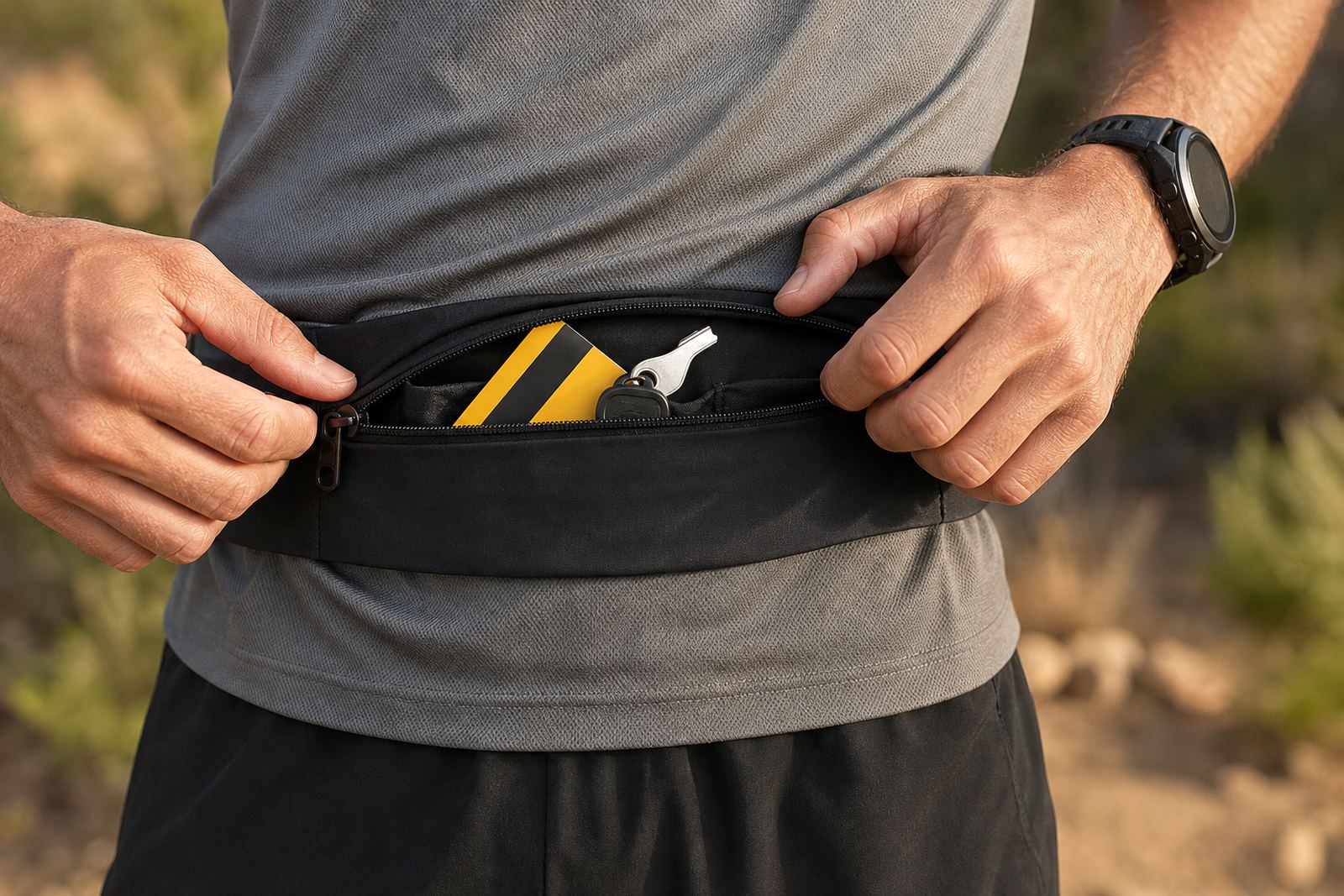
- One ID document or race number card if required
- A small bank card or cash for emergencies
- A lip balm or a small salt tab if you are prone to cramping
- A folded emergency note with a contact name and any medical details
Keep it basic. If the route is short and cool, you may only need water and one gel. If you are running in Durban humidity or on a hot day in Paarl, a little more hydration becomes important. The belt should make these items easy to reach without stopping for long.
Hydration Without Overthinking It
Many first-time trail runners worry about carrying too much water or not enough. The answer depends on the route, the weather and the time of day. For a short event, you may only need enough to get to the next station. For a longer race, you should plan around the gaps between stops rather than guessing on the morning.
In summer conditions around Cape Town, George or Somerset West, heat and wind can change quickly. Coastal humidity can make a shorter run feel harder than expected, while inland routes can dry you out faster than you notice. That is why a waist belt with accessible hydration is useful. You can sip often instead of waiting until you feel thirsty, which usually means you are already behind.
Keep the layout simple. If your belt has two bottle slots, put water in one and an energy drink in the other only if you already know you tolerate it well. For a first race, do not test new products on race day. Stick to what you have used on training runs and make sure the bottles do not move or rub at the hips.
- Test your hydration setup on at least two training runs
- Run 5 to 8 km with the belt before your event if possible
- Check that bottle caps are easy to open with sweaty hands
- Make sure the belt still fits once you add gels and a phone
Fit Matters More Than Fancy Features
A first trail race gear choice should be based on how it feels after 20 minutes, not how it looks on the peg. A good fit keeps the belt from sliding up toward your ribs or dropping low on your hips. It should not dig in when you climb, and it should not shift every time you reach for a flask.
Try the belt on with the same top you plan to wear on race day. If you are running in a club singlet, a long-sleeve layer or a light rain shell, the fit changes a little. South African weather can shift from cool and misty to warm and dry in the same morning, especially in the Western Cape. A belt that works in training should still be comfortable when you add one extra layer.
If you are buying for a group or a trail event, it helps to check participant sizes early. That saves awkward last-minute swaps and keeps the kit consistent. For smaller runners, avoid an oversized belt with empty pockets flapping around. For broader builds, make sure the adjustment range is generous enough to sit firmly without pinching.
Race Day Packing for South African Conditions
Race day in South Africa can bring heat, wind, dust and long transport to the start line. If you are heading to a trail event outside Stellenbosch or driving up to a race in Johannesburg, pack the belt the evening before and leave only the final fill for the morning. That keeps the routine calm and reduces mistakes.
Use the race briefing to confirm what is allowed. Some events have strict rules about compulsory kit, number tags or timing chips, and certain routes require extra safety items. Even a short event may ask for specific gear if the weather looks uncertain. If there is a safety check, keep the required items easy to reach so you are not holding up the queue.
A practical pack list for the morning:
- Belt fitted and loaded before you leave home
- Flasks filled to the level you planned in training
- Gels placed where you can reach them without looking down too much
- Race number pinned or attached as instructed
- Sun protection if the route is exposed
- A spare hair tie or small tissue, because these little things matter
A Local Example From Stellenbosch Trails
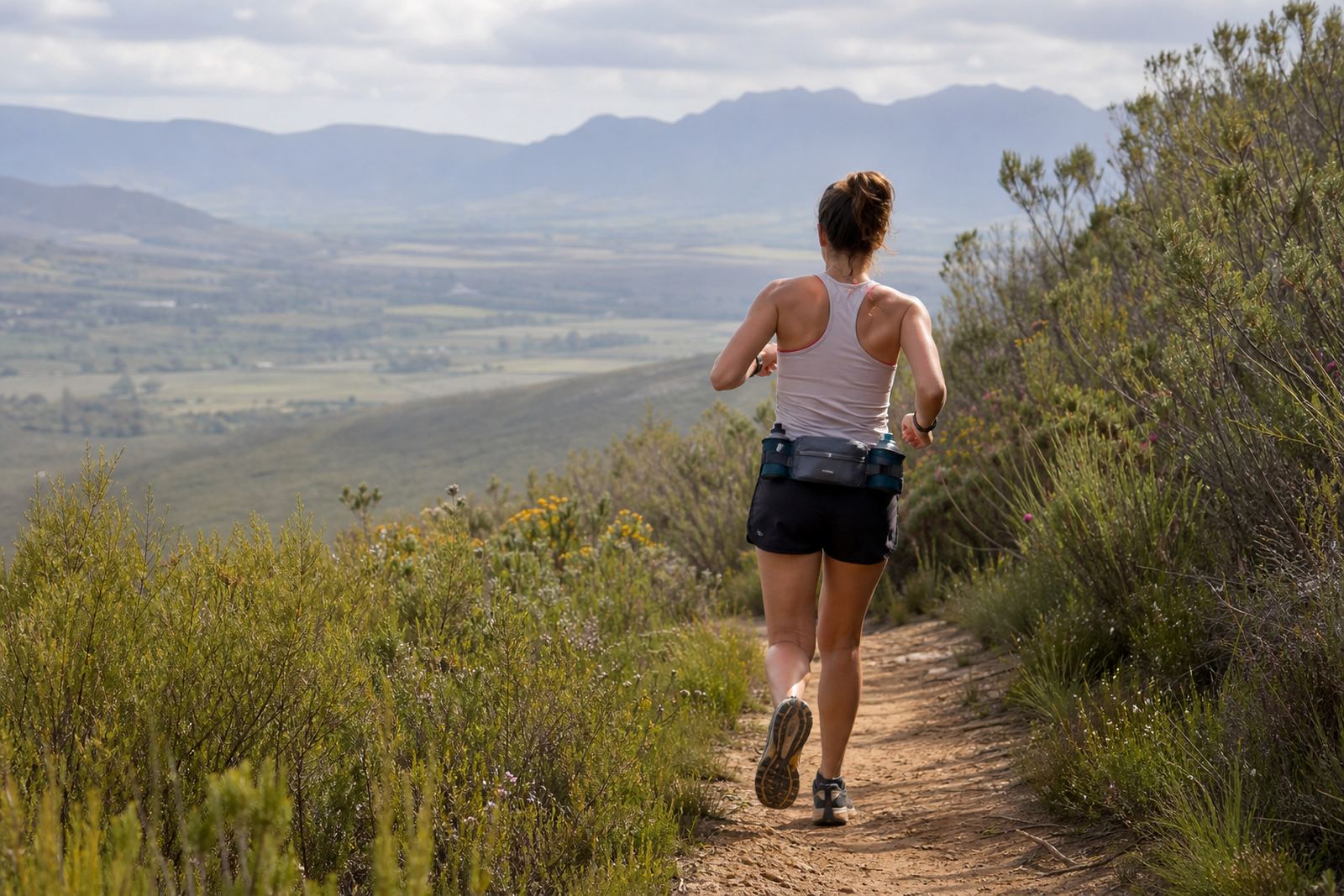
Take a first-time runner doing a 12 km trail event in Stellenbosch. The route may start cool, then warm up quickly once the sun gets onto the slopes. There may be a climb early on, a faster section through open ground, and then a technical descent where loose gear becomes obvious. In that setting, a simple waist belt with one small bottle, one gel and a bit of personal kit is often enough.
That runner does not need a complicated setup. What helps is a belt that stays centred, does not bounce on the descent and lets them drink without breaking stride. If they can stay focused on foot placement and breathing, they are already ahead of many first-timers. The same approach works just as well in Cape Town city races, Durban coastal events or a club trail morning in George.
Keep the first race about finishing comfortably and learning what suits you. Once you know your pace, hydration needs and the way your body moves on trail, you can adjust the kit for longer distances or hotter days.
Keep The First One Simple, Then Improve It
There is no prize for carrying too much. For your first trail race, the goal is to stay comfortable, hydrated and focused enough to enjoy the route. A stable belt with essential items gives you that balance without adding bulk. Once you have one or two races behind you, you can fine-tune your hydration, pocket layout and carry setup.
At Waistbag Run, we work with trail runners, road runners and race organisers across Stellenbosch, Cape Town, Johannesburg, Durban and George. For first-time participants, the simplest advice is still the best: test your belt in training, pack only what you need, and make sure everything sits securely before the start. That small bit of preparation can make the whole race feel easier, and a lot more enjoyable.