Why crew support matters once the race starts to stretch
On shorter runs, a support person can manage with pockets and a handheld bag. On a marathon, ultra or trail event, that starts to fall apart. Crew move between aid points, change clothing layers, keep an eye on the runner’s condition and pass over the right item at the right time. If the belt rides up, bounces or sits awkwardly under a jacket, every stop takes longer and the whole rhythm gets broken.
For South African events, that can mean handling early starts in Stellenbosch winter, heat in Durban, dust on inland courses and damp coastal air in Cape Town. A proper crew belt should sit flat, stay put on a walking pace and still allow quick access when hands are cold or wet. It is small kit, but it carries real responsibility.
That is why support crew belts are planned differently from a casual running pouch. They need enough storage for the basics, but not so much bulk that they become a problem on climbs, stairs or crowded race corridors.
What to keep in a crew belt for long race support
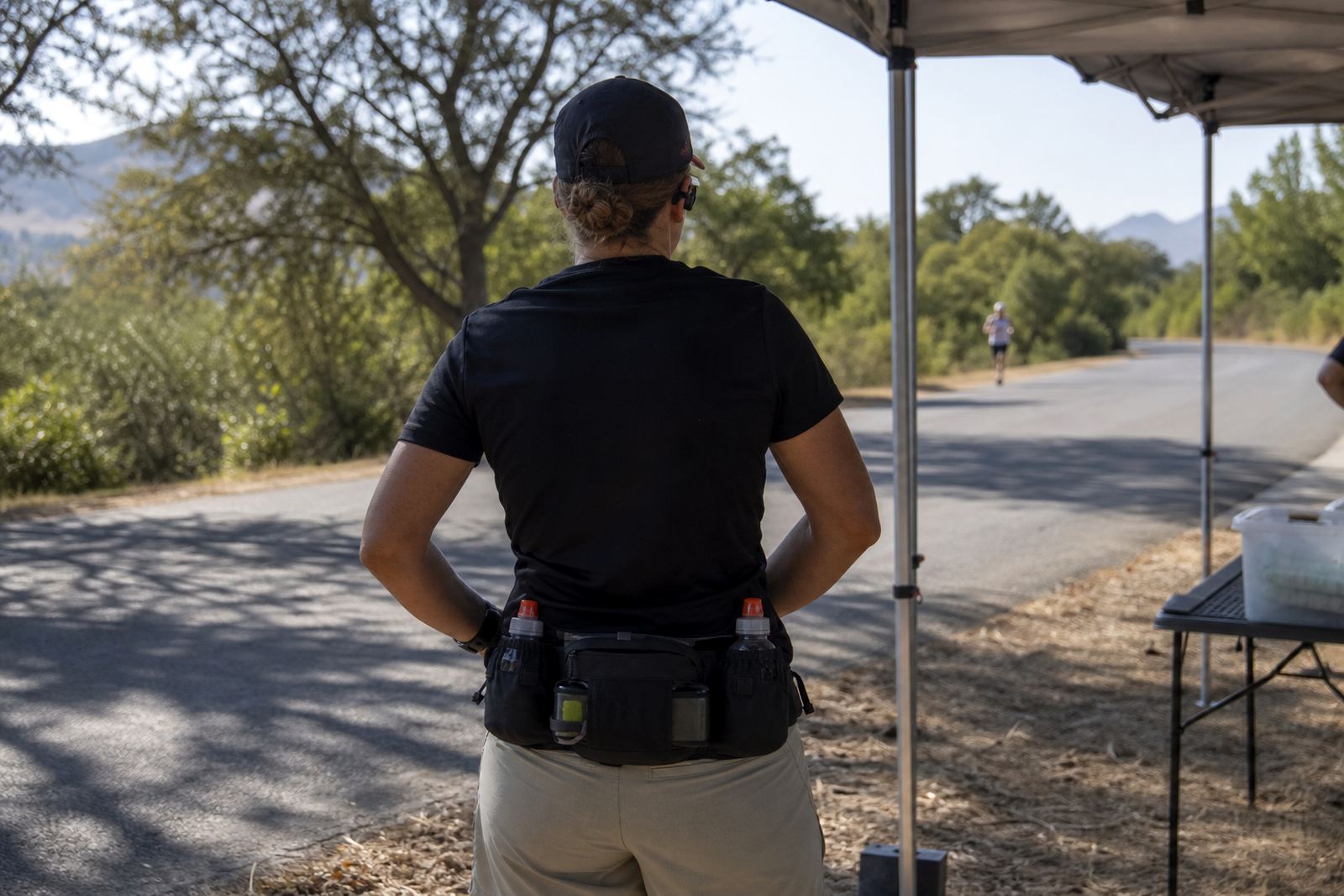
The best loading plan is simple. Keep the items that are used often at the front and the heavier or less urgent items closer to the body. That helps balance the belt and stops it from twisting when the crew member bends down or jogs a short section beside the athlete.
- Energy chews, gels or small snack portions
- Salt tablets or electrolytes in sealed packets
- Wet wipes, tissues and a small towel
- Race number pins, tape and a few plasters
- Phone, emergency contacts and event notes
- Small sunscreen tube or lip balm
- Soft flask or compact hydration option if required
Do not overpack. A belt stuffed full of loose items becomes noisy and hard to manage. Use small sealed packets where possible and keep anything sharp or messy in a separate pocket. If the crew belt is part of a larger support plan, sort the kit by checkpoint so nobody has to hunt for the one item needed at 6 am on race morning.
Fit and stability when crew are moving with the field
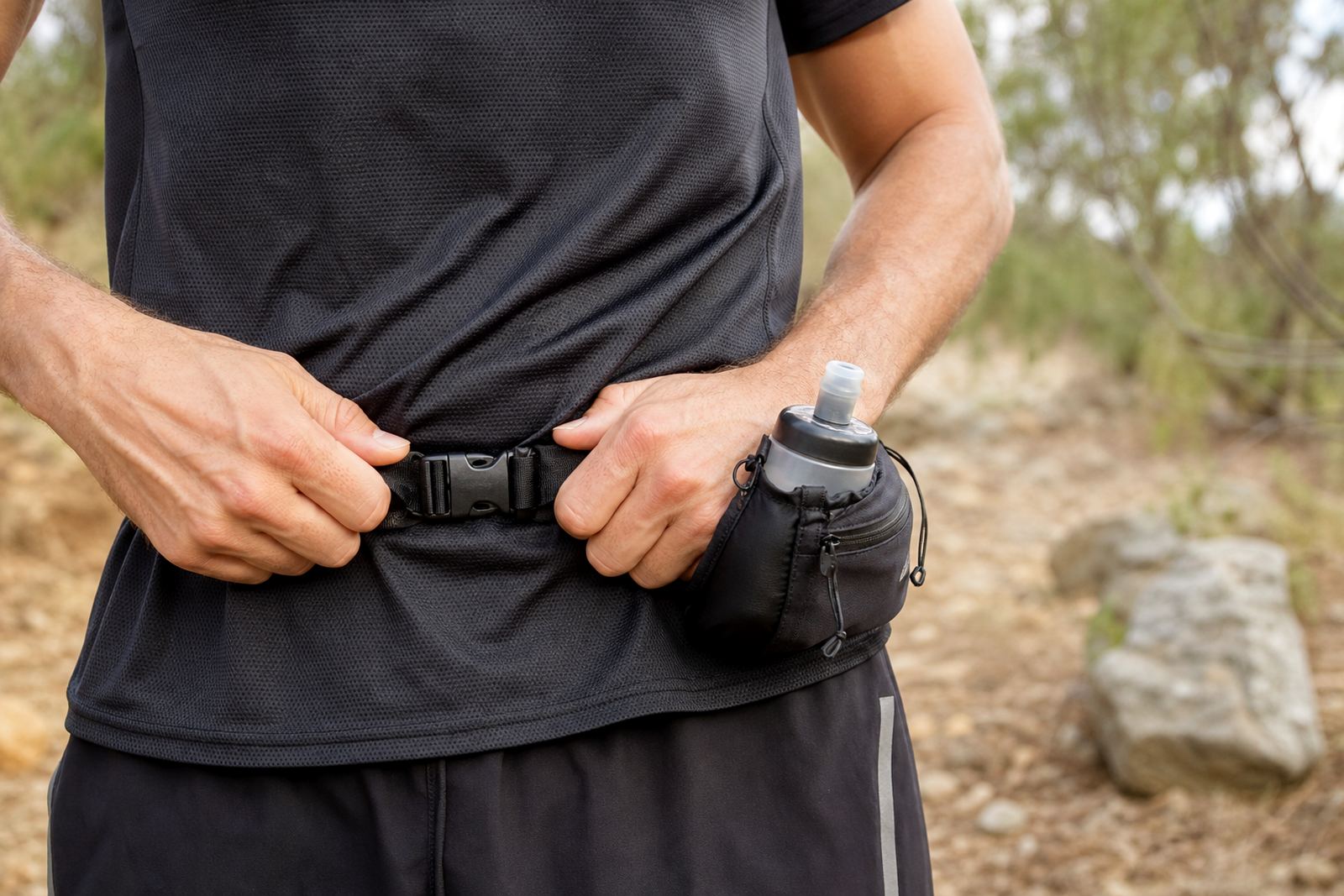
Support crew are not standing still. They are walking, jogging, crouching and loading items while watching the runner and the route. A belt that shifts on the hips becomes a nuisance quickly. Fit should be snug but not tight, with enough give for a jacket or layer underneath. The belt must sit where it will not ride up when the wearer reaches forward or leans down.
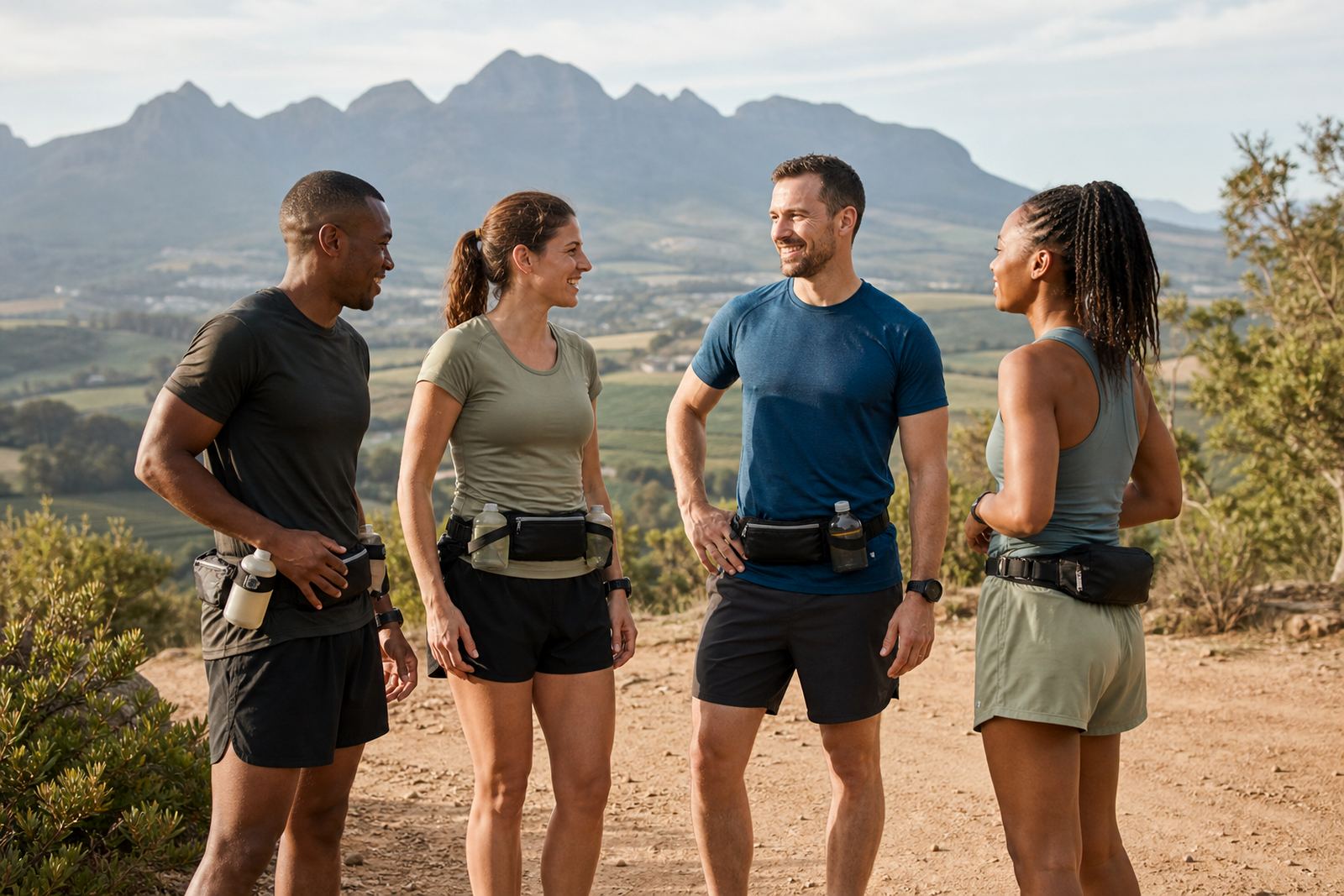
For mixed teams, sizing matters more than people expect. One crew member might need a firmer closure for a slim fit, while another needs extra range for a rain shell or mid layer. When the fit is right, the belt feels almost unnoticed. That is what you want on a long day.
Check the fit before race day, not at the start line. Walk a few hundred metres, bend, jog and sit into a low stance. If the belt bounces or twists, it will do the same on course. A proper fit briefing saves time and avoids last minute stress.
Trail races, road races and the local conditions that change the brief
Trail support in the Western Cape is not the same as supporting a road event in Johannesburg or Durban. On trail, crew may be moving over uneven ground, stepping off camber paths and dealing with sudden weather shifts. In road races, the challenge is speed, crowd flow and quick handovers in tighter spaces. Both call for a belt that is easy to access and stable under movement.
In Stellenbosch, for example, race support often means early start temperatures, vineyard dust and long climbs where every stop should be efficient. A crew belt with a clean layout can hold a snack, a flask and wipes without making the wearer feel overloaded. In Durban, humidity can soften packaging and make metal clips or loose items more awkward, so closed pockets help keep things tidy. In George, cooler weather and wet mornings mean the belt should work well under light rain and still be easy to open with cold hands.
The local lesson is simple. Plan for the route, the weather and the pace of support, not just the contents list.
How event teams can plan crew belts before race day
For clubs, race organisers and support crews, the planning starts early. If belts are issued in bulk, check who needs what size, which pockets are needed and whether there will be different roles on course. A lead crew member might carry more communication items, while another handles nutrition and wipes. The better the split, the smoother the day.
- Match belt size to each crew member before packing
- Decide what must be reachable with one hand
- Separate nutrition, first aid and communication items
- Label kit by runner, checkpoint or support role
- Do a short walk test before the event briefing
This kind of planning also helps when race packs are being prepared. If crew belts are going into participant packs or team issue kits, the order and labelling should be clear. Nobody wants to sort out sizing at the venue entrance while the gun is close to going off.
A Stellenbosch example from a busy race weekend
On a busy Stellenbosch race weekend, a small support team may have to cover a trail start, a road finish and a later checkpoint run in between. One crew member keeps snacks and wipes for the mid section, another carries phone notes and a small hydration flask for the finish stretch. If the belts are fitted properly, both can move quickly between points without juggling loose items in their hands.
That kind of setup works because the belt is doing one job well. It gives the crew enough space for the essentials, keeps items secure and lets them focus on the runner rather than on their own kit. For events that move across Cape Town, Paarl, Somerset West, Bellville, Johannesburg or Durban, the same idea applies. Good support gear reduces small delays that add up over hours.
Support crew are part of the race outcome, especially in longer events. When their kit is organised, stable and easy to use, the runner gets better help at every point.
When support belts need repeat use across a season
Many clubs and event teams use the same support belts again and again through a season. That means the gear has to cope with packing, unpacking, travel and different conditions. Belts used for road races one month might head into trail events the next, so the layout should stay simple and practical. Crew should be able to repack the same items quickly without needing a fresh setup every time.
Repeat use also puts pressure on the closure, stitching and pocket shape. If a belt loses its hold or pockets start to sag, the weight distribution changes and the comfort drops. That is why a steady fit and clear storage layout matter just as much as the first impression. For frequent event teams, the right belt saves time all season long, not just on race day.
When your crew knows exactly where everything sits, support becomes calmer, quicker and easier to manage even when the course is busy and the weather is not playing along.