

Why Post-Run Care Matters More Than Most Runners Think
After a hard run, your belt often carries more than water. Sweat, dust, salt from the coast, sunscreen, trail grit and even race-day snacks all end up in the fabric, zip pulls and bottle holders. If that build-up is left in place, the belt can start to smell, the elastic can lose life, and small bits of wear become bigger problems over time.
In Stellenbosch, runners often come back from the mountain with fine dust and sweat mixed into the stitching. In Durban, the air is damp and that means wet fabric can stay wet for longer, which is not ideal for any storage pocket or padded section. A belt does not need complicated care, just consistent care after every run. That habit will help keep the fit steady and the support comfortable.
It also saves money. Replacing a belt because the buckle is damaged or the material has gone stiff is never great, especially when a basic rinse and proper dry could have prevented it. Treat it well and it will keep doing its job race after race.
The First Ten Minutes After You Finish
The best time to care for your belt is before you put your feet up. As soon as you finish, empty all gels, wrappers, keys and bottles. Check the pockets properly, because small bits of paper and sand tend to hide in seams. If you leave a sticky gel wrapper inside, it can stain the lining and attract more dirt next time.
For a quick clean after a normal road run, follow these steps:
- Shake out loose sand, grass and trail dust.
- Open every pocket and remove all contents.
- Wipe the outside with a damp cloth or sponge.
- Rinse sweat-heavy sections under cool water.
- Hang it up before it gets folded into a gym bag.
Do not leave the belt balled up in the car boot after a Saturday run. In warm weather, trapped moisture and heat can make the smell worse and may weaken the materials faster. A small routine here makes a big difference later, and it only takes a few minutes.
How to Wash Without Damaging the Fit
Most running belts do best with gentle hand washing. Use cool or lukewarm water and a mild detergent. Avoid strong bleach or harsh stain removers, because they can strip colour and make elastic parts brittle. If the belt has firm bottle sleeves or structured panels, do not twist them hard when rinsing. That can change how the belt sits on the hips.
If the belt has adjustable straps, loosen them before washing so the stitching is under less stress. Pay attention to these areas:
- Buckle sections where sweat often collects.
- Elastic loops that hold bottles or poles.
- Zip edges and pull cords.
- Any foam or padded contact points.
A light scrub with your fingers is usually enough. There is no need for a long soak unless the belt is very dirty. If you have been on a muddy trail near Jonkershoek or on a wet winter route in George, rinse the mud off first before washing it properly. That keeps grit from rubbing into the fabric more than necessary.
Drying Done Right in Coastal and Inland Conditions
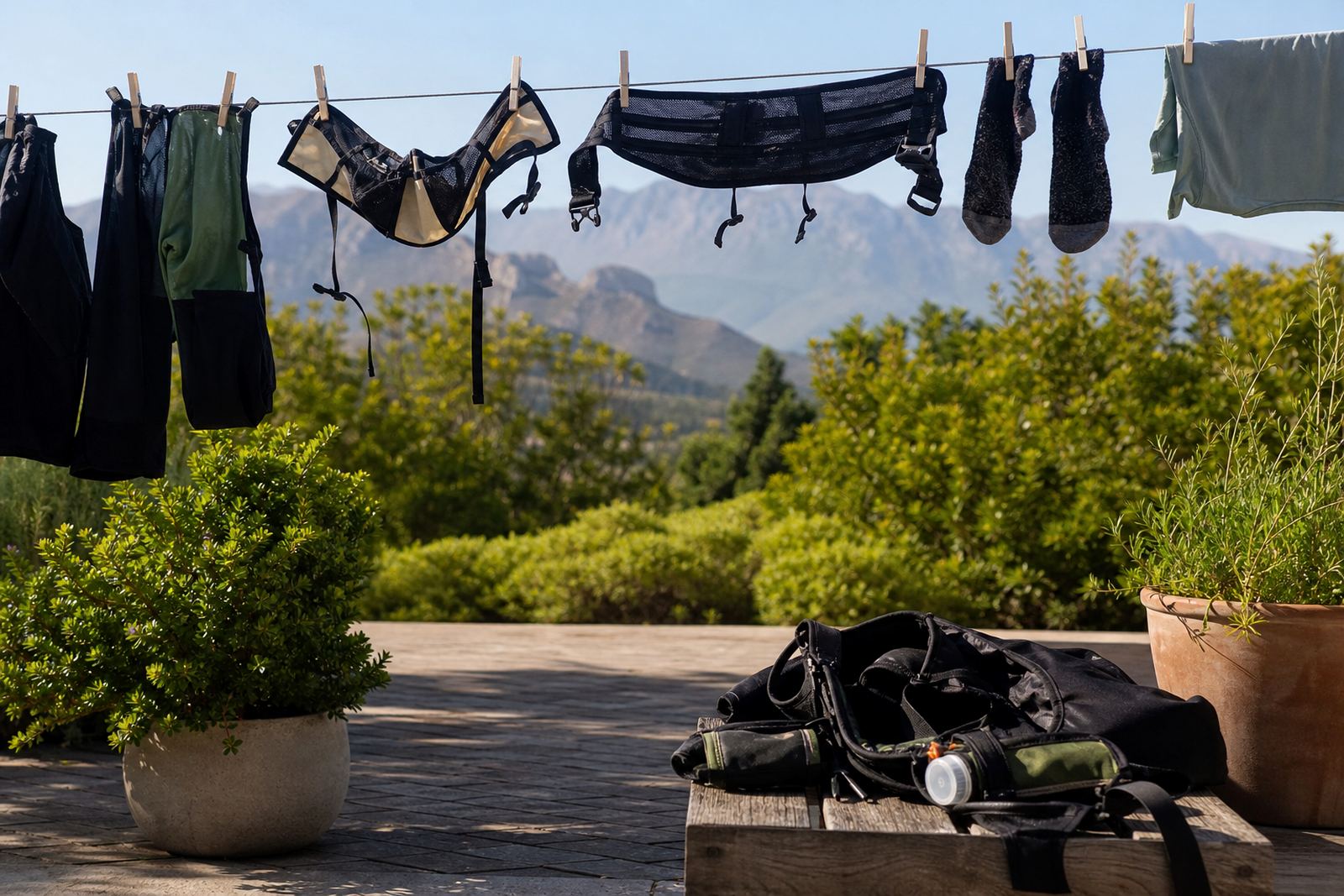
Drying is just as important as washing. Hang the belt in a shaded, airy spot and let it dry naturally. Direct sun can fade some materials and make elastic parts age quicker, especially in the Western Cape summer. Indoors, a place with moving air works well. Near a fan is fine, but do not place it on a heater or in a tumble dryer.
In coastal towns like Durban or Cape Town, humidity can slow drying, so give the belt more time before packing it away. In dry inland weather, it may seem dry on the outside while the inside still holds moisture. Check the seams and pockets with your hand before storing it. If it feels cool or damp, it needs more time.
Never store a belt damp in a closed drawer or kit bag. That is where smells start and where mould can develop. If the belt has removable bottles or inserts, dry those separately and make sure every part is fully dry first.
What to Check Before the Next Race
Once the belt is clean and dry, give it a short inspection. This takes less than a minute and can stop race-day issues. Look at the buckle, seams, pocket openings and any elastic tension. If anything feels loose or frayed, sort it out before your next long run.
Use this simple check list:
- Is the buckle closing firmly?
- Are the straps still holding their length?
- Do the pockets grip bottles and gels properly?
- Are there any loose threads or rubbed spots?
- Does the belt still sit flat against the body?
A belt that rides up or bounces usually needs a fit adjustment, not just more tightening. If you use one belt for both training and events, it helps to test the fit after cleaning because fabric can sit slightly different when dry. A quick fit check before a long run around Paarl or Somerset West can save a lot of faffing on the road.
Storage Between Training Blocks and Event Weekends
When you are not using the belt every day, store it properly. Keep it flat or lightly rolled, not stuffed under other kit. That helps the shape stay even and keeps pressure off the elastic. If you are packing for a race series, make sure the belt is fully dry before it goes into the race bag, especially if you are travelling between towns for events.
For runners and clubs managing a busy programme, a few extra habits help a lot:
- Keep spare belts in a dry cupboard, not a garage with damp air.
- Separate clean belts from muddy trail kit.
- Label event belts if different sizes are used for a team.
- Check belts a week before race day, not the night before.
After a long event weekend, let the belt rest before the next session. That gives the elastic time to return to shape and helps the material settle properly. If you train several times a week, rotating between two belts can also reduce wear on your main race setup.
A Simple Local Habit That Pays Off Over Time
Picture a trail runner coming back from a weekend event in Stellenbosch after a hot, dusty climb. The belt is wet with sweat, carrying a bit of sand in the pockets and a sticky wrapper tucked near the bottle sleeve. If it gets rinsed that evening, hung up to dry and checked before the next session, it can easily be ready for the next race. If not, the smell builds up, the fit changes and the life of the belt shortens.
That is the real value of regular care. It is not about making a big job out of something small. It is about keeping a working piece of kit in good order so it can do its job on road runs, trail days and race events across South Africa. Clean it, dry it, check it, and your belt will keep carrying the load without giving trouble. A little attention now saves a lot of hassle later.