

Stellenbosch Marathon Training
Home / Race Stories / Stellenbosch Marathon Training

Race Stories

Stellenbosch Marathon Training

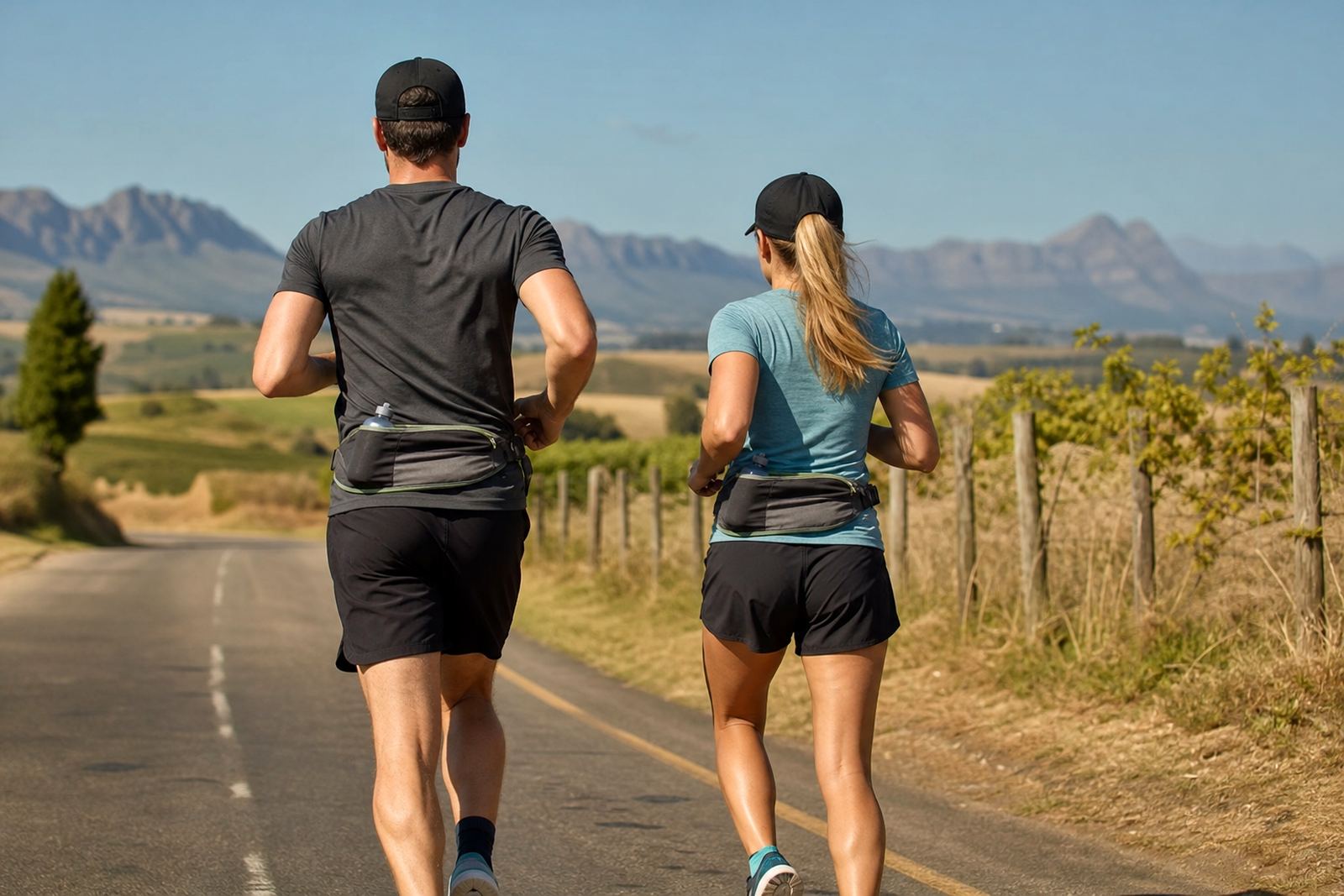
A Stellenbosch marathon build-up group needed waist belts that would carry fuel, keys and soft flasks without bouncing on long road sessions. We supplied fit-checked belts and participant support that kept runners organised through the full training block.

Marathon build-up in Stellenbosch

This project came from a marathon training group based in Stellenbosch, with runners also joining sessions from Somerset West and Paarl. The group was made up of road runners doing structured long runs on weekends and weekday tempo work, so the kit had to stay stable from the first kilometre to the last. They wanted a simple carrying solution for gels, soft flasks, a phone and an ID card, with no hard bottles knocking against the lower back.

The brief was practical. The belts needed to suit mixed body shapes, allow quick access to fuel, and sit comfortably under a singlet or over a light running top. Because the group trained in the Western Cape winter and into warmer spring mornings, the material also had to handle sweat, light rain and repeated washing without losing shape.

  • Client type: marathon training group
  • Town: Stellenbosch, Western Cape
  • Use case: long road sessions and event prep
  • Main need: fuel carry with low bounce

What the training group asked us to solve

The biggest concern was movement. On long runs, a belt that shifts even a few centimetres becomes irritating very quickly. The runners also wanted to avoid stuffing pockets or carrying bottles in their hands, especially on out-and-back routes through Devon Valley and the R44 side roads where pacing matters more than faffing with gear.

We reviewed the group’s training structure and planned for different carry loads on short speed days and longer endurance runs. That meant the belt layout needed to work for gels only, or for gels plus a 250 ml soft flask and a phone. We also had to keep the fit simple enough for a mixed group, since not everyone arrived with the same waist measurement or preferred tightness.

  • Constraint 1: low bounce over 20 km plus runs
  • Constraint 2: quick access to nutrition on the move
  • Constraint 3: comfort in warm and wet conditions
  • Constraint 4: easy sizing across a mixed group

Belts supplied and fit setup

We supplied fuel-friendly running and hydration waist belts with a snug profile and stretch hold. Each belt had secure compartments for small essentials, plus a front-access section for gels and a rear pocket for a soft flask or compact phone. The waist strap was adjustable, so runners could set the tension for breathability on easier runs or a firmer hold during faster efforts.

Key specs included lightweight construction, a low-profile shape, breathable contact points and stretch pockets that recovered well after loading. The belts were suitable for repeated use on road and trail, and they dried quickly after wet sessions. The group appreciated that the load sat close to the body, which helped with stability on downhill sections and during acceleration drills.

  • Fit range: adjustable for a wide waist spread
  • Carry options: gels, keys, phone, soft flask
  • Ride height: low, close to the hips
  • Care: quick dry after washing and sweat exposure

Sizing session and participant support

We managed the sizing process in a simple two-step way. First, we briefed the group leaders on how the belts should sit and how much tension was needed for road running. Then we matched runners to the correct size range and showed them how to load the belt so the heavier item sat centred. That small detail makes a big difference on longer sessions.

The team also wanted a short fit briefing they could repeat before group runs. We supplied that, along with notes on how to check for rubbing, how to adjust the waist strap after warm-up, and when to use a softer load for recovery runs. The runners in the group picked it up quickly, and the fit changes were minimal after the first two sessions, which is exactly what you want.

  • Fit briefing for group leaders
  • Load placement guidance for stable carry
  • Simple checks for bounce and rubbing
  • Repeatable setup for future training blocks

Timeline from brief to race-ready use

The project ran over three weeks from first enquiry to full use in training. Week one covered the brief, sizing plan and final belt selection. Week two was for group issue and initial fit checks. Week three was the live training period, where runners used the belts on long road runs and provided feedback on comfort, access and load stability.

Because the group was preparing for a marathon, timing mattered. We kept the process tight so the runners could spend the bulk of the build-up testing pacing and fuel strategy instead of worrying about equipment. The short turnaround also helped the organisers line up their weekly long run support, so every runner had the right belt before the key mileage block.

  • Week 1: brief and sizing plan
  • Week 2: issue and fit check
  • Week 3: live use on long runs

Results on the long runs

The group reported less bounce, faster access to fuel and less stop-start behaviour on the road. That matters when runners are practising marathon pacing, because every extra pause breaks rhythm. Several runners said the belts felt better than holding items in a hand or shoving them into shorts pockets, especially during the later kilometres when fatigue starts to show.

For the organisers, the belts made group management easier too. Participants arrived with a clear place for keys, nutrition and a phone, which cut down on last-minute swapping before each session. The belts also held up well in the wet and humid conditions that can happen in Stellenbosch and along the coastal side of the Western Cape. No one wants gear that gets soggy and loses shape halfway through a build-up block.

  • Better fuel access on the move
  • Less bounce on steady and tempo runs
  • Cleaner group organisation before training
  • Good performance in warm and wet weather

What we would repeat for the next build-up

If we were doing the same project again, we would keep the fit session early and give the runners one full long run to test their load setup before the toughest mileage week. That gives enough time to fine-tune strap tension, pocket use and flask placement. We would also keep the brief for group leaders simple, because the best training kit is the kind that needs very little explaining.

For a future marathon block, we would use the same approach for road runners in Cape Town, Johannesburg, Durban or George, just adjusted for local climate and route type. If the group has more hill work or more trail, the carry setup can be tweaked slightly, but the main principle stays the same: stable, easy to reach, and comfortable enough to forget about. That is what runners need when the session gets long and the pace starts to bite.

  • Start fit testing before the hardest mileage week
  • Keep the load setup simple and repeatable
  • Match the belt layout to the run type
  • Use the same briefing for future groups

Key facts

Project typeMarathon training support for a Stellenbosch road running group
LocationStellenbosch, Western Cape
Timeline3 weeks from brief to live use
Kit suppliedRunning and hydration waist belts with stretch pockets
Carry loadGels, phone, keys and a soft flask
Key outcomeLess bounce and quicker fuel access on long runs

What our Running Waist Belt customers say

Verified Google reviews

Questions we get asked

Who was this project for?

A marathon build-up group in Stellenbosch, with runners doing long road sessions and pacing work ahead of race day.

What made the belts suitable for training runs?

They sat close to the body, held fuel and essentials securely, and stayed comfortable over longer distances with low bounce.

Could this setup work for other towns?

Yes. We can supply the same type of belt support for groups and events in Cape Town, Johannesburg, Durban, George, Paarl, Somerset West and Bellville.

Planning something? Send the team a message.

Contact form