Relay event brief from Centurion organisers
The request came from a relay event team in Centurion that needed a simple way to keep runner kit organised across multiple legs. The organising group wanted matching belts for participants, with enough space for hydration, gels, a phone and small race essentials, but without bulky storage that would bounce on the run.
The brief was practical from the start. The belts needed to be comfortable for mixed abilities, from experienced club runners to first-time relay participants, and they had to work for a start area with fast turnover. The event team also wanted a neat visual standard so all runners on the day looked part of the same programme, rather than each person arriving with whatever they had at home.
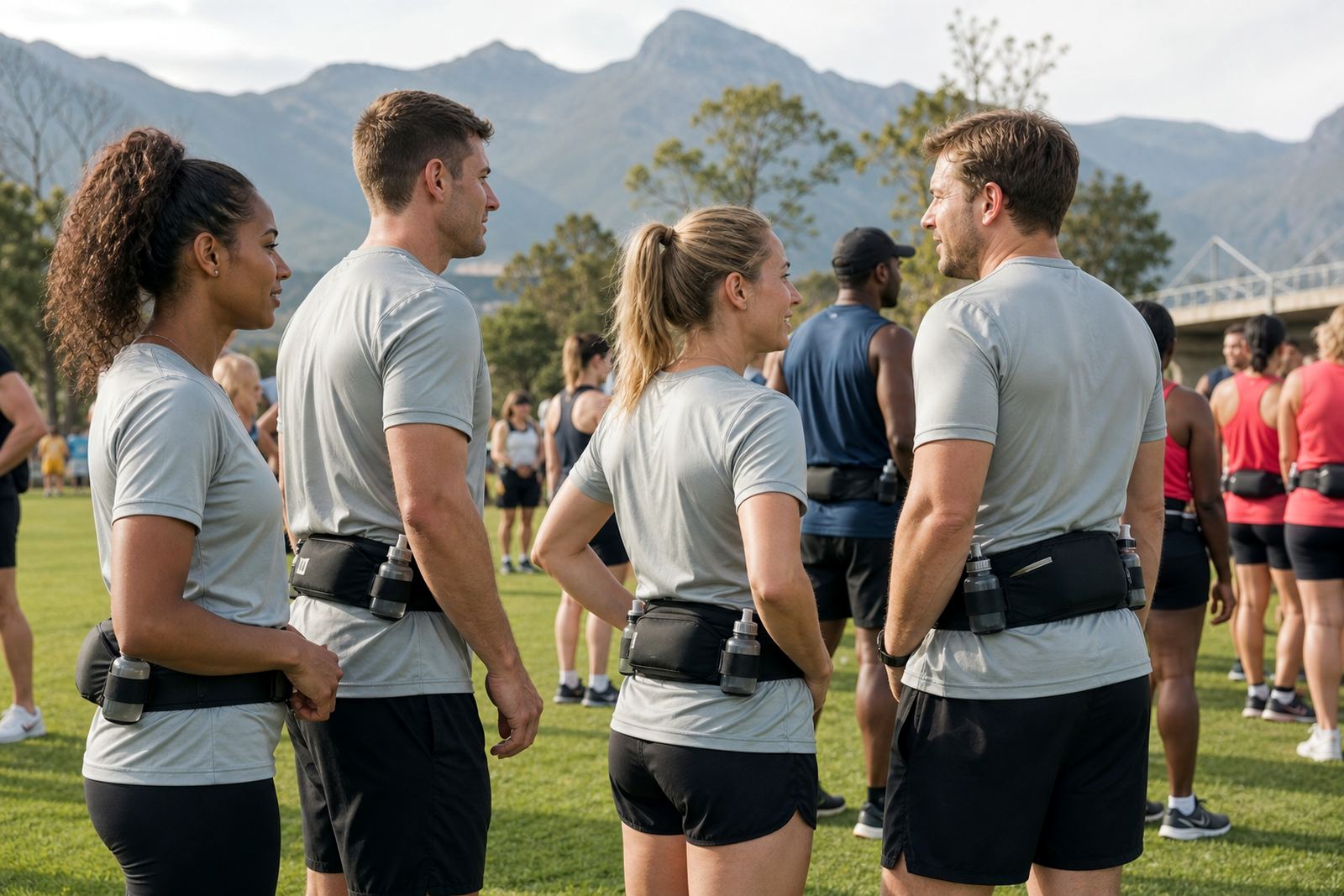
Because this was a relay, the kit plan had to support more than one runner style. Some team members wanted a lighter setup for short stages, while others needed space for a 500 ml soft flask and a few race items. We worked to a clear sizing schedule and kept the colour choice aligned across the order so the handover process stayed easy to manage.
- Client type: relay event organiser in Centurion
- Need: matching belts for race-day team order
- Use case: team kits, hydration, small essentials and clear allocation
- Runner mix: club athletes, casual entrants and mixed pace teams
What we had to work around
The main constraint was timing. The event date was fixed and the organiser needed a plan that would land before the final race briefing. That meant sizing, confirmation, packing and dispatch all had to move in a steady sequence, with no room for back and forth over late changes. We also had to allow for South African delivery timing, since the team wanted the belts in hand early enough for checking and numbering.
Another constraint was consistency. With relay teams, if one runner gets a different fit or a slightly different layout, the event can slow down at kit issue and the staff end up answering the same question several times. We kept the supply list tight and focused on repeatable belt sizes, with a layout that worked for hydration on the move and did not interfere with bibs or race tops.
Weather was part of the planning too. Centurion can be dry and warm, and some of the team were travelling from other towns, so we gave the organiser advice on fit for hot conditions and on keeping contents stable during acceleration and changeovers. It was a simple brief on paper, but the small details made the difference.
- Fixed event deadline with little margin for changes
- Need for one uniform look across teams
- Fit guidance for warm race conditions
- Kit had to stay secure during fast stage changes
Belt specification and supply plan
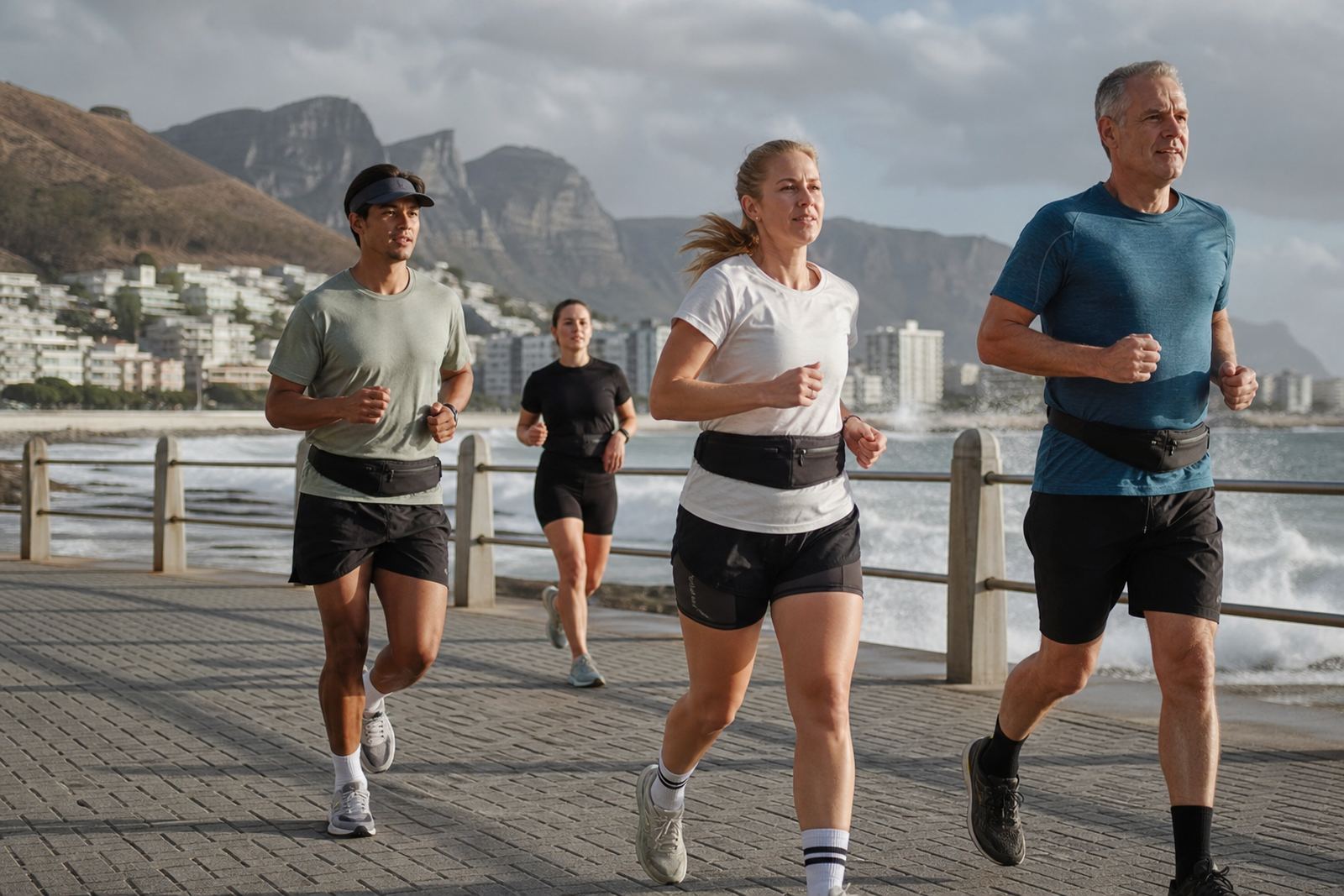
We supplied matching running and hydration waist belts selected for the event format. The belts were sized to suit a broad runner group and set up to carry the basics without excess movement. Each unit had space for essentials and a stable fit around the hips, which matters on relay legs where the runner is pushing pace and not thinking about kit.
The supply plan included participant sizing support before dispatch. That reduced the risk of belts being too loose for smaller runners or too tight for larger runners. It also helped the organiser assign the right size to the right runner before the event pack went out. For the race team, that saved time on collection day and kept the process neat.
Where the event needed uniformity, we kept the belt selection and colour choice consistent across the order. The organiser wanted the race pack to feel sorted, not improvised, so we planned the supply in a single batch and coordinated the packing sequence accordingly. This was especially useful for relay entries that had to be matched by team number and handed over with the rest of the event kit.
- Running and hydration waist belts with stable carry
- Participant sizing support before dispatch
- Matching colours across the full order
- Suitable for hydration, gels and small race items
Two-week delivery schedule and dispatch coordination
The project ran over two weeks from initial brief to dispatch. In week one we confirmed the event requirements, discussed sizing ranges and clarified how the belts would be issued at the relay venue. We then finalised the order quantities and prepared the pack plan so each runner group could be matched to the correct size.
Week two covered packing, dispatch coordination and the final support handover. The event team received guidance on how to stage the belts with the rest of their race materials, which made the collection point easier to manage. There was no need for complicated setup or extra fitting stations, just a clean handover and clear labelling by team group.
Because the organiser wanted the process to be orderly, we kept communication practical and direct. The focus was on making sure the belts arrived in time, were easy to issue, and would hold up during the relay itself. That meant fewer last minute questions and less pressure on the event crew on the morning.
- Timeline: 2 weeks from brief to dispatch
- Week 1: sizing, quantities and layout planning
- Week 2: packing, dispatch coordination and handover support
- Outcome: simple issue process for event staff
Race day outcome for teams and organisers
On race day the belts did what they were meant to do. Runners had a consistent way to carry what they needed, and the event team had a much easier time keeping kit separate by entrant and by leg. That reduced confusion at the start area and gave the organisers a tidier process when teams arrived, changed over and moved back to the finish zone.
For the runners, the main benefit was comfort. The belts sat close to the body, kept hydration and race items accessible, and did not require constant adjustment. For the event staff, the benefit was speed. A matching belt order meant fewer questions at collection and less sorting at the last minute. In relay events, that kind of order matters because the whole morning depends on momentum.
The organiser also appreciated that the kit choice matched the event tone. It was practical, not overdone, and suitable for a local South African race where some participants were serious club runners and others just wanted a clean, stress free race day. A good belt setup removes one small hassle, and on a relay that can make a real difference.
- Clearer kit issue and team allocation
- Comfortable carry for active relay use
- Less sorting at the start area
- Better runner readiness before each leg
What we would repeat for the next relay
For another relay event, we would repeat the same approach: lock the sizing early, keep the colour plan consistent and build the dispatch schedule around the event date rather than leaving it to the last minute. That method works well for road relays, trail relay formats and school or club events where the organiser needs the kit to arrive ready for issue.
We would also keep the brief focused on the actual race use. If runners need a soft flask, space for gels, or a lighter belt for short legs, it helps to define that before the order is packed. The more exact the brief, the smoother the handover. And for organisers managing multiple teams, a single clear sizing table always helps.
For Centurion and other towns where event days can be busy and travel times matter, the best result usually comes from practical planning rather than overcomplicating the order. Matching belts, clear sizes and a clean dispatch plan are enough to keep the relay moving the way it should.
- Repeat the same sizing and labelling process
- Confirm race leg needs before packing
- Use one dispatch window tied to the event date
- Keep kit issue simple for the organiser and runners
Key facts
| Project type | Relay event belt supply for team kit organisation |
|---|---|
| Location | Centurion, Gauteng |
| Timeline | 2 weeks |
| Supply | Matching running and hydration waist belts |
| Support included | Participant sizing, hydration layout advice, dispatch coordination |
| Use case | Relay teams needing secure carry for hydration and essentials |