
Project brief from a Bellville evening race team
The organiser in Bellville needed a belt solution for a night event where runners would start in low light and finish after dark. The main concern was keeping essentials close without bounce, while adding reflective detail that would help runners stand out on sealed roads, around marshals and at water tables. They also wanted one simple product range that could work across different participant groups, from regular club runners to first time entrants.
We discussed storage needs, hydration options and how the belts would be worn over race vests, t shirts and lightweight jackets. Bellville can be windy and a cool evening can turn warm once runners are moving, so fit needed to stay steady without feeling tight. The organiser also wanted a plan that would be easy to explain at pack collection and on race day, with clear sizing and little room for confusion.
- Race type: evening road run with strong low-light visibility needs
- Location: Bellville, Western Cape
- Use case: keys, gel packets, ID, phone and small hydration items
- Fit requirement: stable over light clothing and race bib layers
What made the event tricky
Night races bring a few practical limits. Reflective detail has to show up under headlights and event lighting, but the belt still has to feel light and sit flat. Some runners only carry a phone and car key, while others want room for gels and a soft flask. The organiser also had to think about race pack handling, participant sizing and a smooth handover at the venue, since late changes are common in the final week before an event.
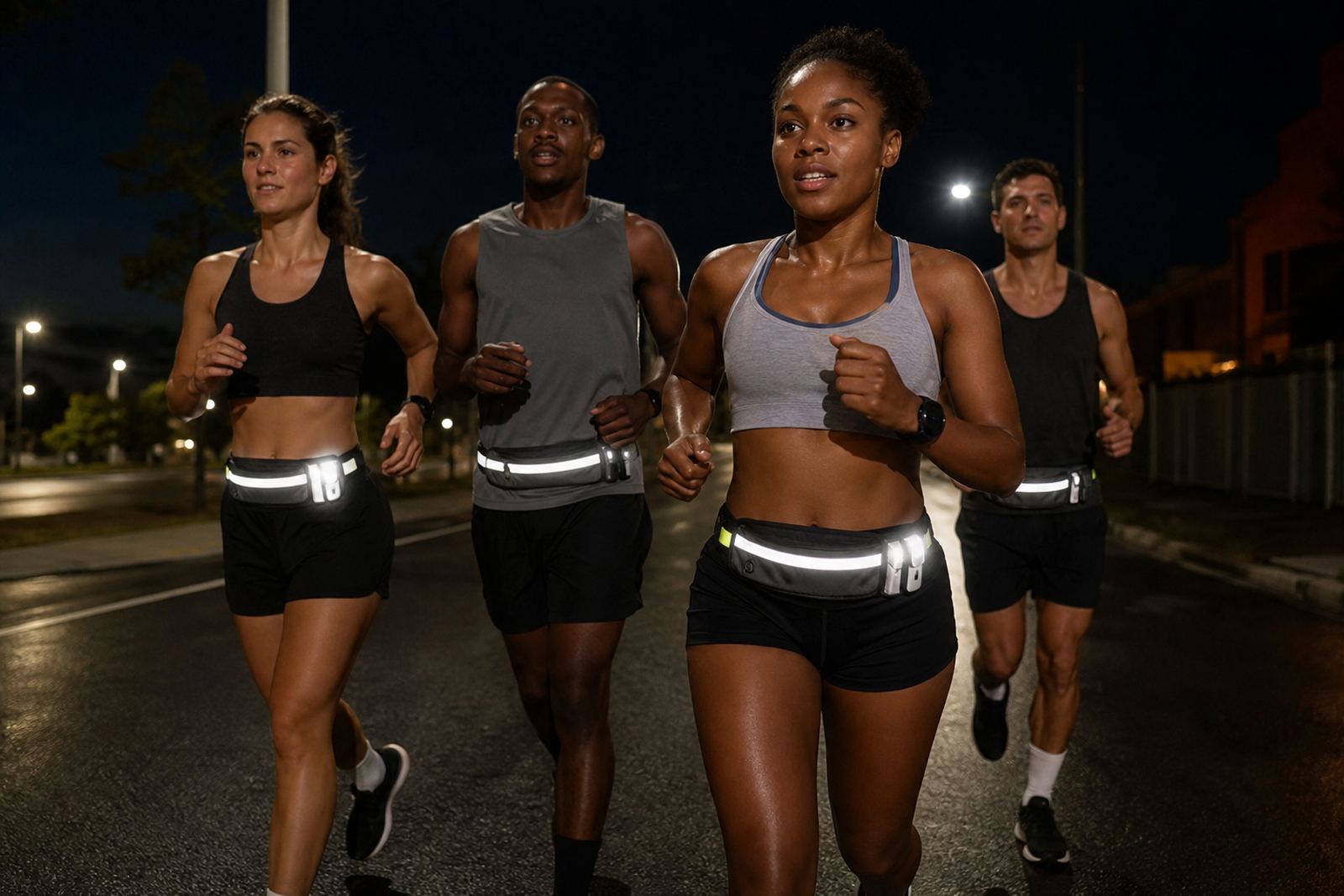
Another point was visibility across different routes around Bellville. On stretches where runners pass traffic, open areas or darker side roads, the belt needed reflective sections placed where they would be seen from the front, side and rear. We also looked at sweat, washing and repeat use, because many entrants would keep the belt for training after the event. A belt that looks good on the night but falls apart after a few washes is not useful, no matter how neat it is on paper.
- Low-light visibility from multiple angles
- Secure storage with minimal bounce
- Easy sizing for a mixed field of participants
- Suitable for repeat use after the event
The belt options we supplied
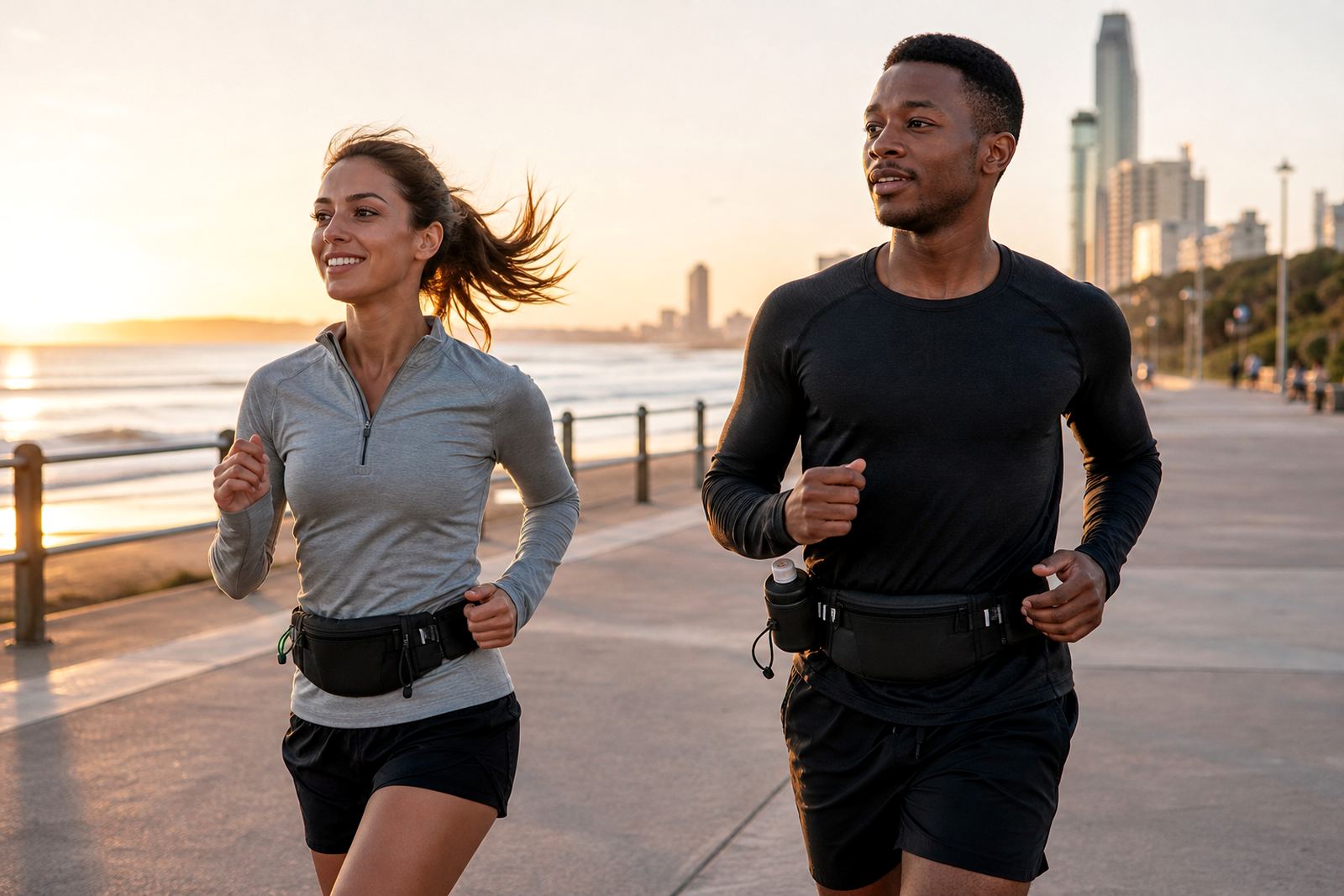
We supplied a selected mix of reflective running and hydration waist belts, with layouts chosen for road runners and night event participants. The main belt style used a snug stretch fit, breathable body panel and reflective trim positioned to catch light without adding bulk. For runners needing hydration, we included belts with a compact rear bottle cradle and a front or side pocket for gels and small items. The focus was on practical movement, not oversized storage.
Spec-wise, the belts were planned around real race use rather than casual wear. We worked with adjustable waist sizing, secure zip pockets, stretch retention and quick access openings that can be handled while moving. The materials were chosen to cope with sweat, dust and repeated packing. On the reflective side, we kept the layout bold enough to be seen at speed, but not so wide that it becomes stiff or uncomfortable on a 10 km or 21 km route.
- Reflective trim for low-light visibility
- Adjustable fit for different waist sizes
- Stretch storage for gels, keys and a phone
- Hydration-ready versions for longer distances
- Lightweight feel for road and event use
Sizing and participant handling before race day
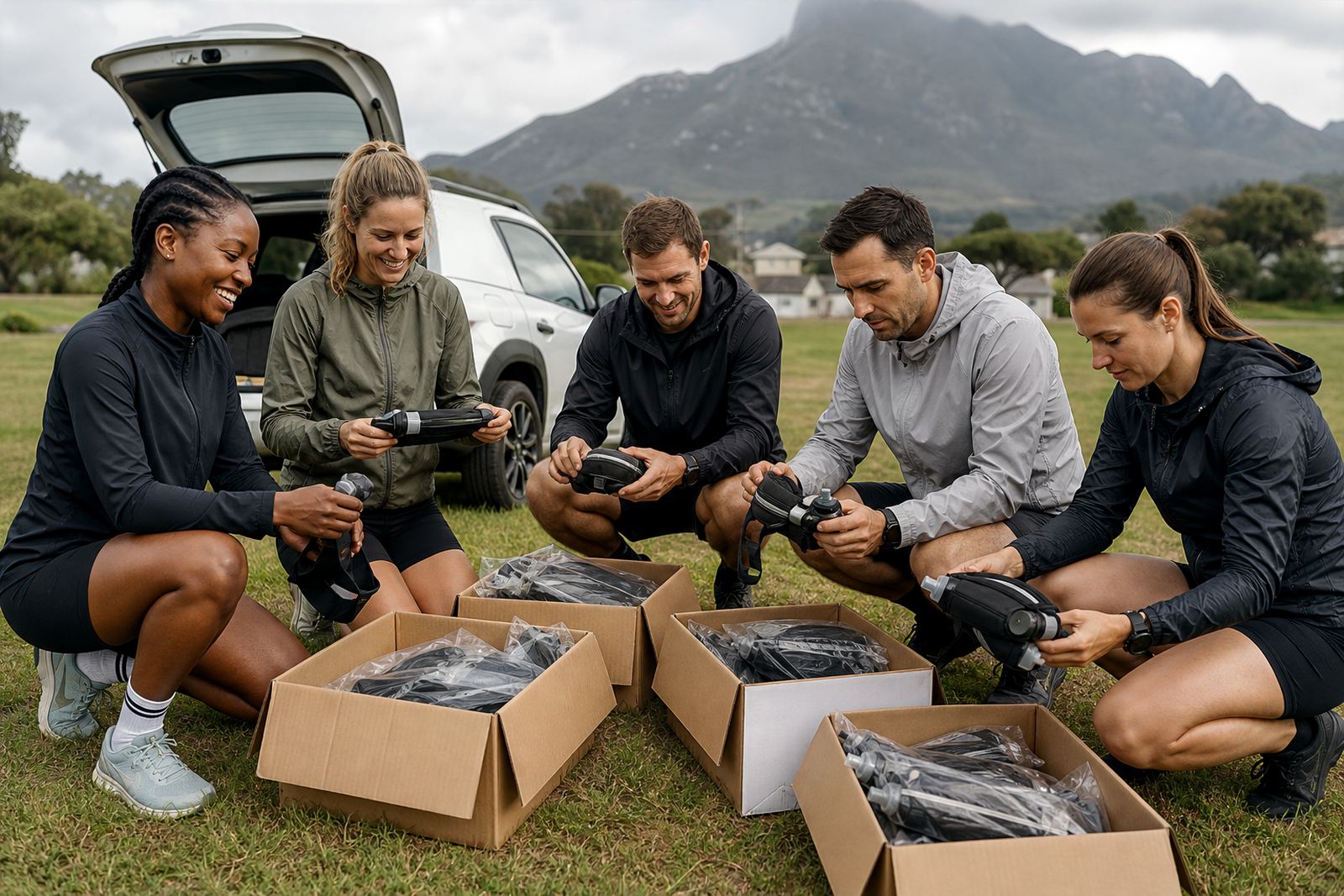
We assisted with participant sizing and order planning so the organiser could split stock into sensible groups before collection day. That reduced delays at the table and helped the race team avoid handing out belts that were too loose or too small. A little planning here saves a lot of time later, especially when runners arrive in batches after work and everyone wants to move quickly. We kept the sizing notes simple enough for volunteers to use without guesswork.
The team also wanted support for club runners, relay entrants and late sign-ups. We set up an order structure that made it easier to track quantities by size and belt type, then matched that to dispatch coordination. Because Bellville is close to our Western Cape base, we could keep the turnaround tight and respond to changes with less fuss. That meant the organiser had room to adjust numbers without scrambling at the end.
- Participant sizing notes grouped by belt type
- Clear split between standard storage belts and hydration belts
- Simple order flow for volunteers at collection
- Fast adjustment for late race entries
Timeline from brief to delivery
The full project ran over three weeks. Week one covered the brief, route needs and stock selection. Week two focused on sizing guidance, order confirmation and packing quantities for the event mix. Week three covered dispatch coordination, final checks and delivery to the Bellville race team. That timeline was short enough to stay relevant to the event date, but long enough to avoid rushed decisions on belt type or sizing splits.
We kept communication tight through the enquiry form on our contact page and used that to confirm changes as the organiser finalised numbers. The process worked well because race entries often move around right up to the last moment. There was no need for a complicated handover, just a clear plan and practical follow through. It is one of those jobs where good timing matters just as much as the product itself.
- Week 1: brief, use case and belt selection
- Week 2: sizing, quantities and order confirmation
- Week 3: packing, dispatch and event handover
- Final checks: reflective placement, fit range and storage layout
What changed on the night and after the race
The organiser reported that runners were comfortable with the belts from the start, with less shifting than the older generic belts they had used before. The reflective sections gave better peace of mind for the race team, especially where runners crossed darker patches and passed vehicle headlights. Storage was enough for the essentials without pulling the belt down at the back, and the hydration versions helped longer-distance runners keep moving without carrying a bottle in hand.
We also heard that the collection process was smoother because the sizing notes had already been sorted. That matters on event day when volunteers are busy and runners are asking about timing, route markers and what to do with their bibs. The belts held up well through the evening and could be used again for training. In short, the race got a practical product that did the job properly, which is what the organiser wanted all along.
- Better low-light visibility for runners and marshals
- More stable carry for keys, gels and phones
- Smoother pack collection due to clearer sizing
- Suitable for training use after race day
What we would repeat for the next Bellville night race
If we were doing the same event again, we would keep the same approach: early sizing guidance, a split between standard storage belts and hydration belts, and reflective placement that stays visible from all sides. We would also keep the handover simple so the race team can brief volunteers quickly. For a night race, there is no point adding complexity where a clear, well-fitted belt will do the job better.
For organisers in Bellville and other Western Cape towns, the lesson is that a small piece of kit can make a real difference to comfort and visibility. When runners can carry what they need and still move freely, the whole event feels calmer. That is especially true when the race finishes after dark and the last runners still need the same level of support as the front pack.
- Keep the size split simple for volunteers
- Use reflective zones that show from front and side
- Offer hydration only where the distance justifies it
- Leave room for a small amount of repeat stock demand after the event
Key facts
| Project location | Bellville, Western Cape |
|---|---|
| Project type | Night race reflective belt supply |
| Timeline | 3 weeks from brief to dispatch |
| Belt features | Reflective trim, adjustable fit, stretch storage |
| Hydration options | Compact bottle carry versions supplied |
| Primary use | Keys, gels, phone and small hydration items |