Start with the distance and terrain
Before you choose a belt, look at the route first. A 10 km trail at Jonkershoek asks for a different carry setup than a half marathon in Cape Town or a hot road race in Durban where you may need more fluids and quicker access to salt and gels.
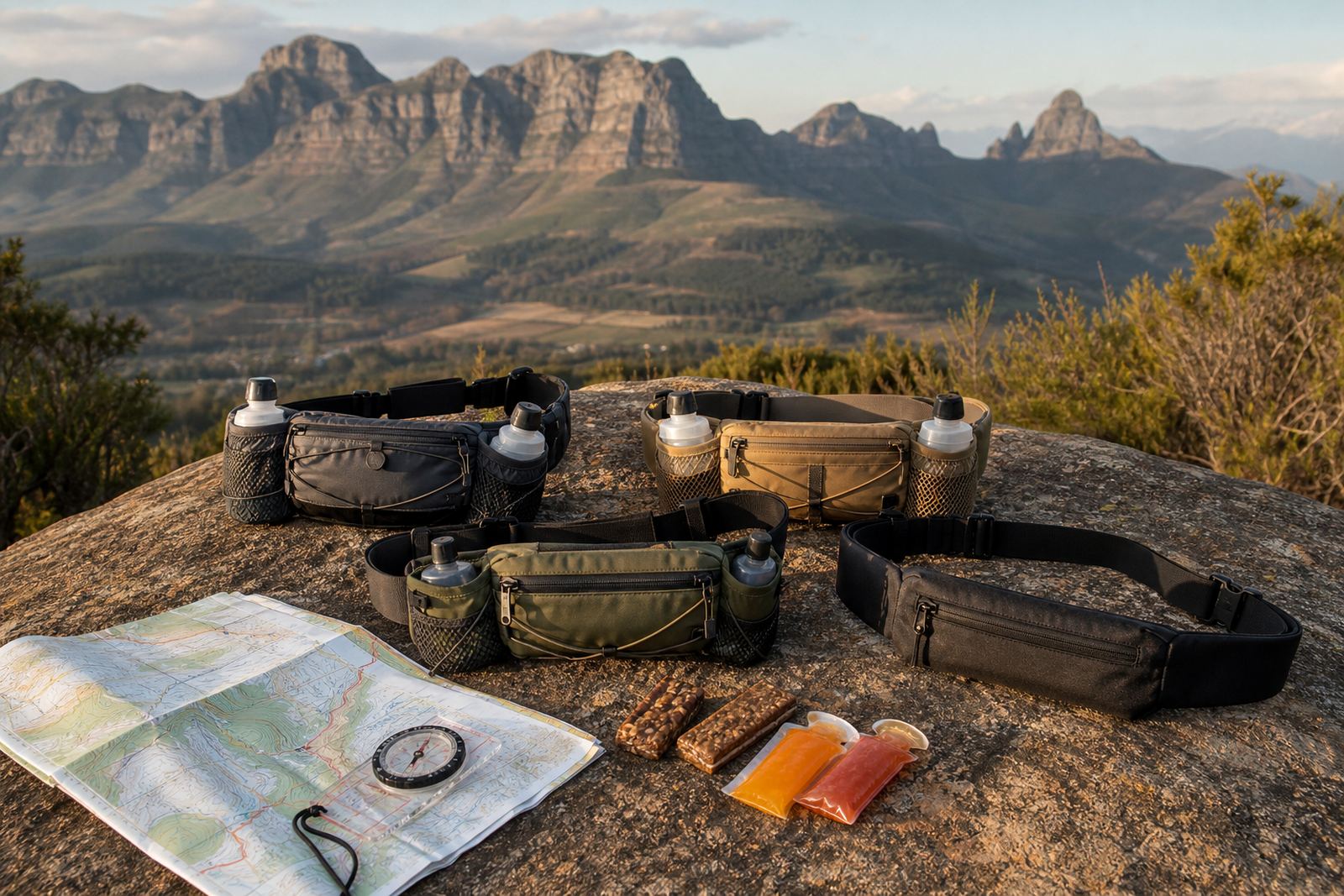
For shorter runs, a slim belt with space for a soft flask, phone and one gel may be enough. For longer mountain routes or event days, add room for a second bottle, lightweight nutrition and a pocket that closes properly so small items do not work loose on technical ground.
- Short run: phone, key, 1 soft flask, 1 or 2 gels
- Medium run: fluids, nutrition, light wind shell, ID
- Long trail: extra fuel, spare cash, blister tape, small first aid items
Check the storage layout before you buy
Good storage is not just about volume. It is about how the belt divides weight so the load sits close to the body. A wide central pocket can suit phones and flat items, while side pockets work better for gels, tabs and wrappers you want to grab without stopping.
Look for pockets that open easily with one hand, but still close securely when you are moving fast. Zips, stretch mesh and flap closures each have a place. Zips suit valuables, stretch pockets suit fast-access items, and a flap can help keep dust out on dry Western Cape trails. If you race often, think about how the belt will feel with bib number pins, timing chips and a folded buff inside.
- Central pocket for phone, ID and cash
- Side pockets for fuel, salt tabs and small snacks
- Separate sleeve for soft flasks or compact bottles
- Closed pocket for keys so they do not scratch other items
Bottle placement affects bounce and balance
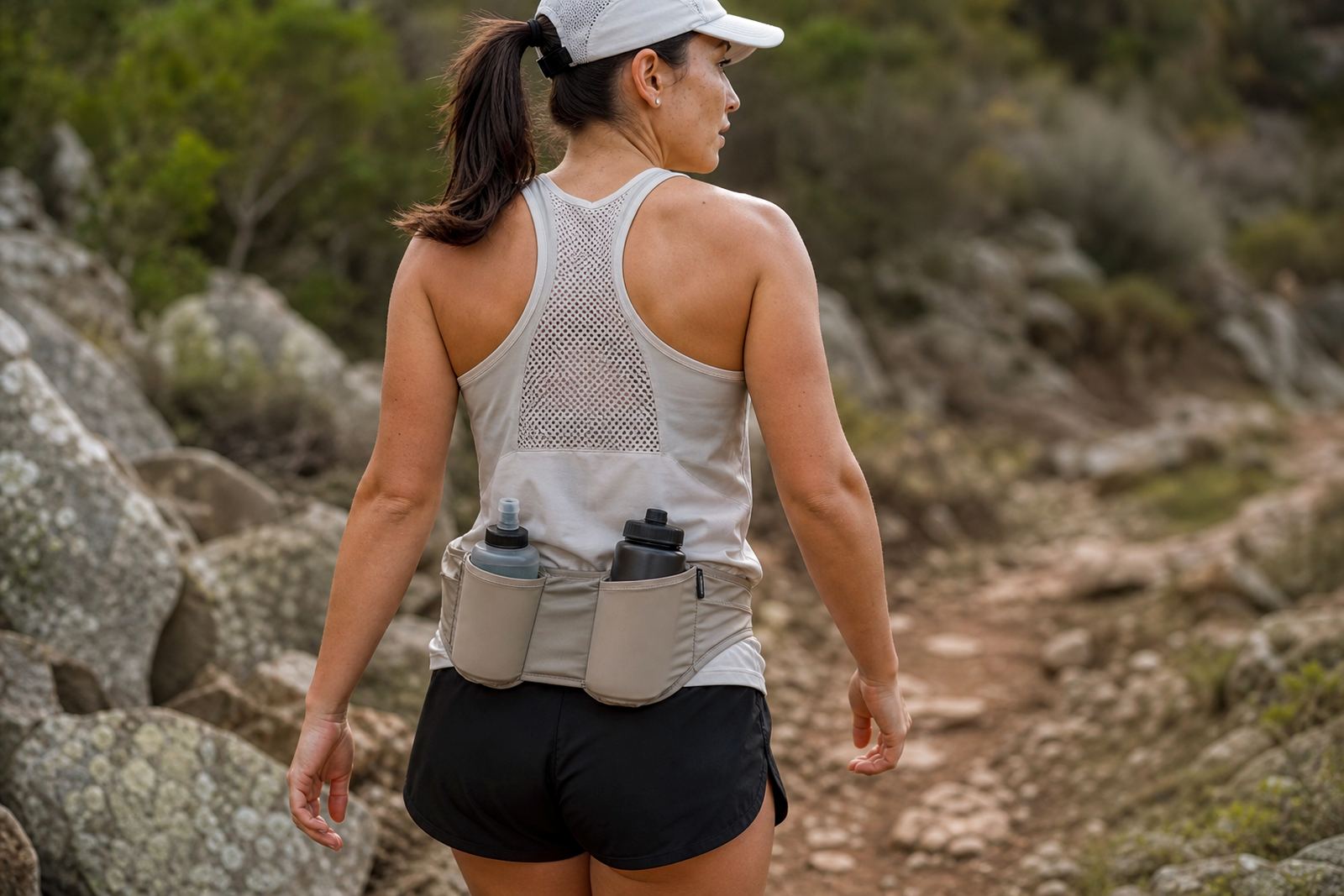
Bottle position changes the whole feel of the belt. A single bottle carried off-centre can pull the belt across your hips, especially when it gets half empty. A balanced layout with bottles on both sides is often steadier for trail runners who move over loose gravel, rocky singletrack and steep switchbacks.
Soft flasks sit close to the body and are easy to compress as you drink, which helps reduce slosh. Hard bottles can be quicker to refill at aid stations and may suit event crews or runners who prefer a firmer shape. The best choice depends on how often you drink, how far you run and whether you need to refill on course at places like Paarl, Stellenbosch or George where heat and wind can change quickly.
- Single bottle: fine for short outings or low-intensity jogs
- Dual bottle: better balance for longer runs and race day
- Soft flask: low bounce, compact and easy to stow when empty
- Hard bottle: faster to pack and refill, but can feel bulkier
Fit matters more than padding
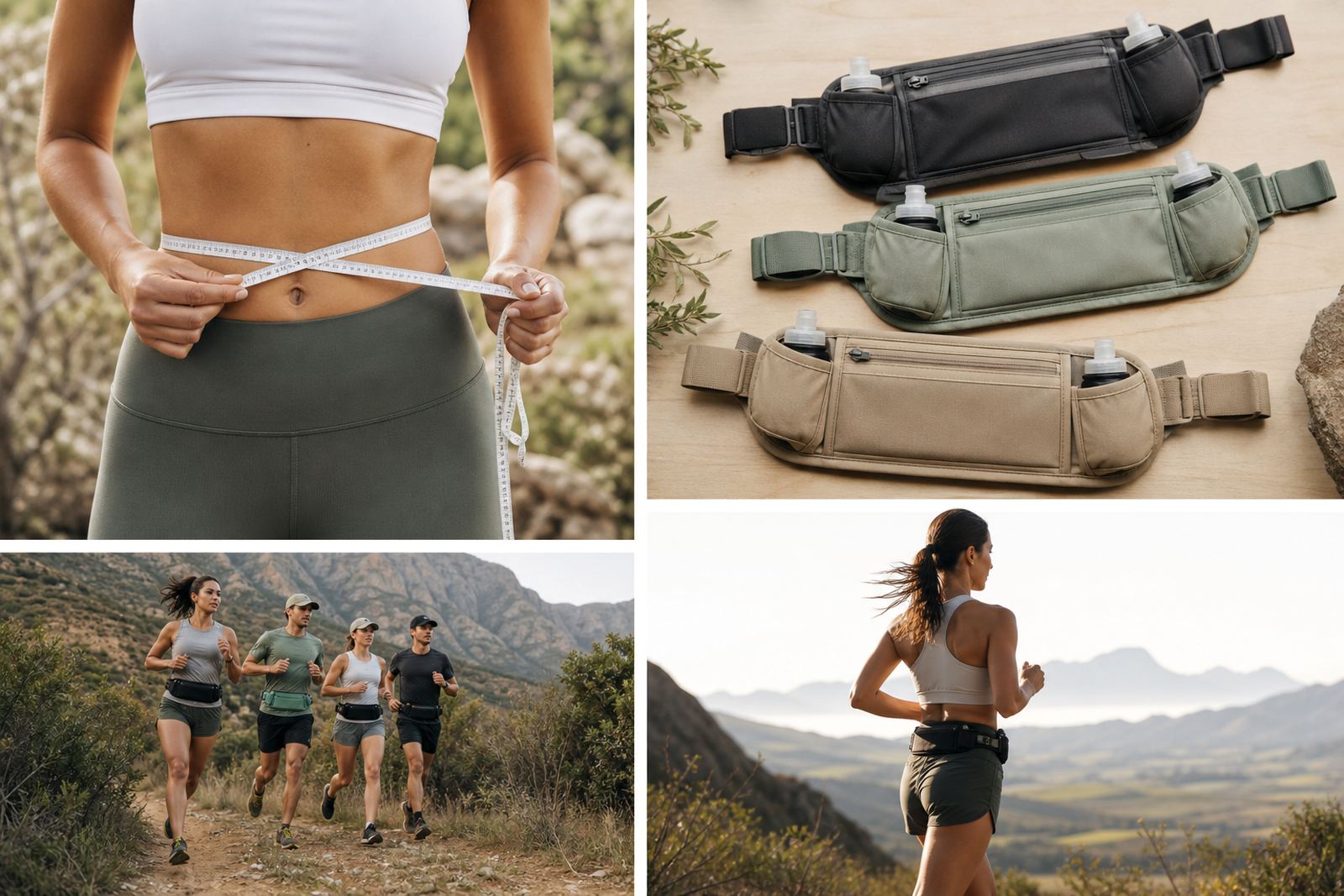
A belt can only work well if it stays put. The right fit sits snugly over the hips, not at the waist. That is important for South African runners who train in hot weather and need something that stays stable once sweat, movement and uneven ground start working against it.
When trying a belt, do a short jog, then a few strides and a small hill repeat if you can. If the belt rides up, twists, or taps against your lower back, it needs adjusting. Check the closure at the end of a run too, because some belts feel fine at the start and loosen once moisture builds up. A proper fit should let you breathe deeply without the belt digging in.
- Should sit low on the hips
- Should not bounce when you hop in place
- Should stay comfortable after 20 to 30 minutes
- Should still allow easy breathing on climbs
Match the belt to weather, events and daily training
Trail running in South Africa changes with the season and region. On humid Durban mornings you may want a setup that keeps the bottle secure and the fabric quick drying. In the Western Cape summer wind can dry sweat fast, so a stable belt with firm closures helps keep your kit from shifting when you get clipped by gusts.
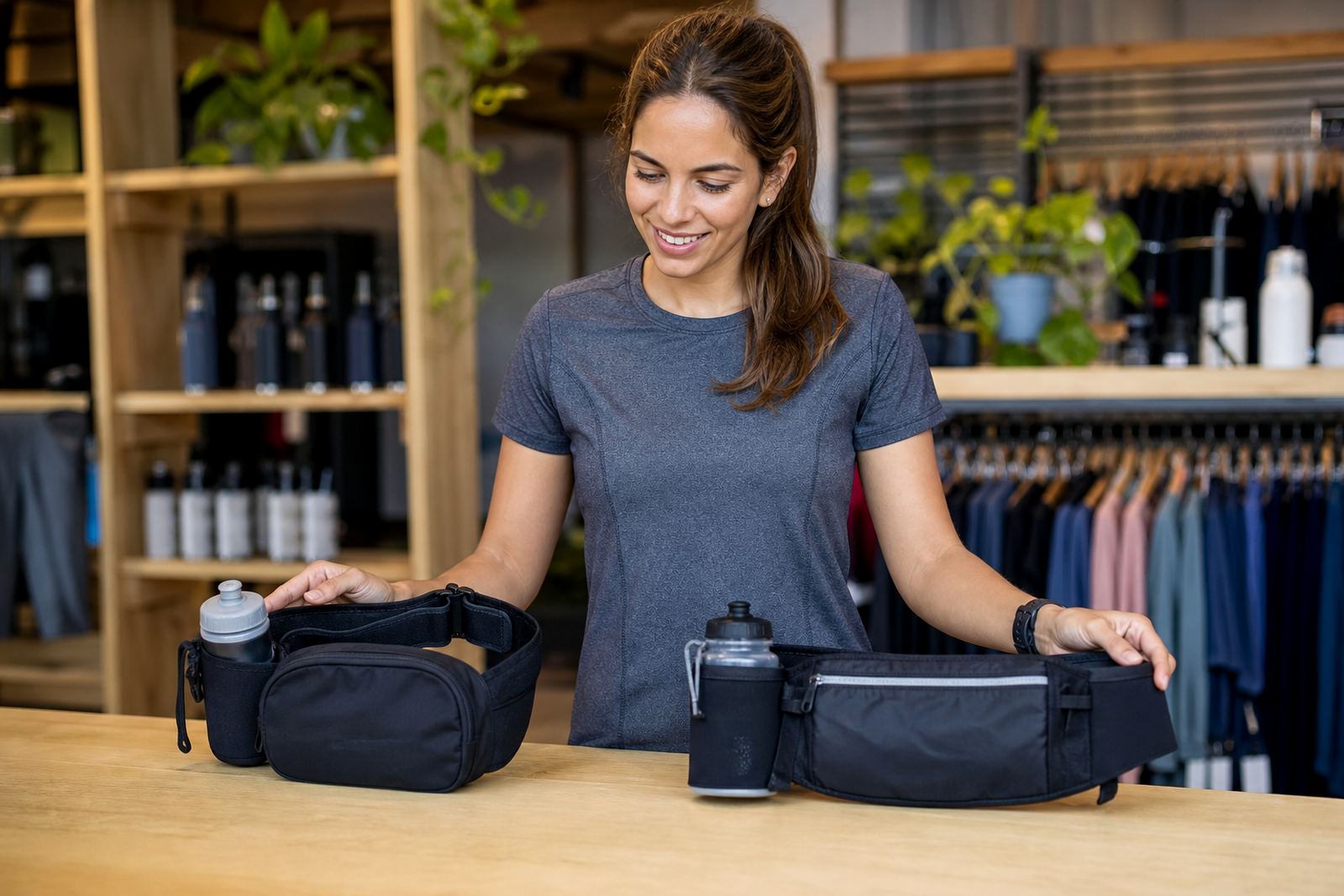
For event organisers, belt choice also affects logistics. Bulk sizing, participant fit checks and crew belt kits make race day easier when runners collect packets, pass aid stations and move through start corrals. If your club hosts regular time trials or trail mornings, keep note of the belt size ranges people use most often so reordering is simple and participants get the right fit the first time.
For training groups, repeat order support helps when new members join or when you need matching colour runs for a club or event series. A clear sizing list saves time and avoids last minute swaps.
A practical checklist for choosing the right belt
Use this checklist before you place an order or line up belts for a race. It keeps the decision practical and helps you compare models on the details that matter in real running conditions.
- Will it hold the items you carry most often?
- Does the bottle placement feel balanced on both sides?
- Can you reach fuel without removing the belt?
- Does it stay stable on downhills and uneven ground?
- Will it work with your vest, shirt and race bib?
- Is the sizing suitable for your runners or participants?
- Can you clean it easily after sweat, dust and coastal humidity?
If you are ordering for a trail event, ask for product fit briefing and dispatch coordination so the belts arrive sorted by size or crew group. That makes pack-out simpler and cuts down on confusion on race week. A little planning upfront saves a lot of chasing later.