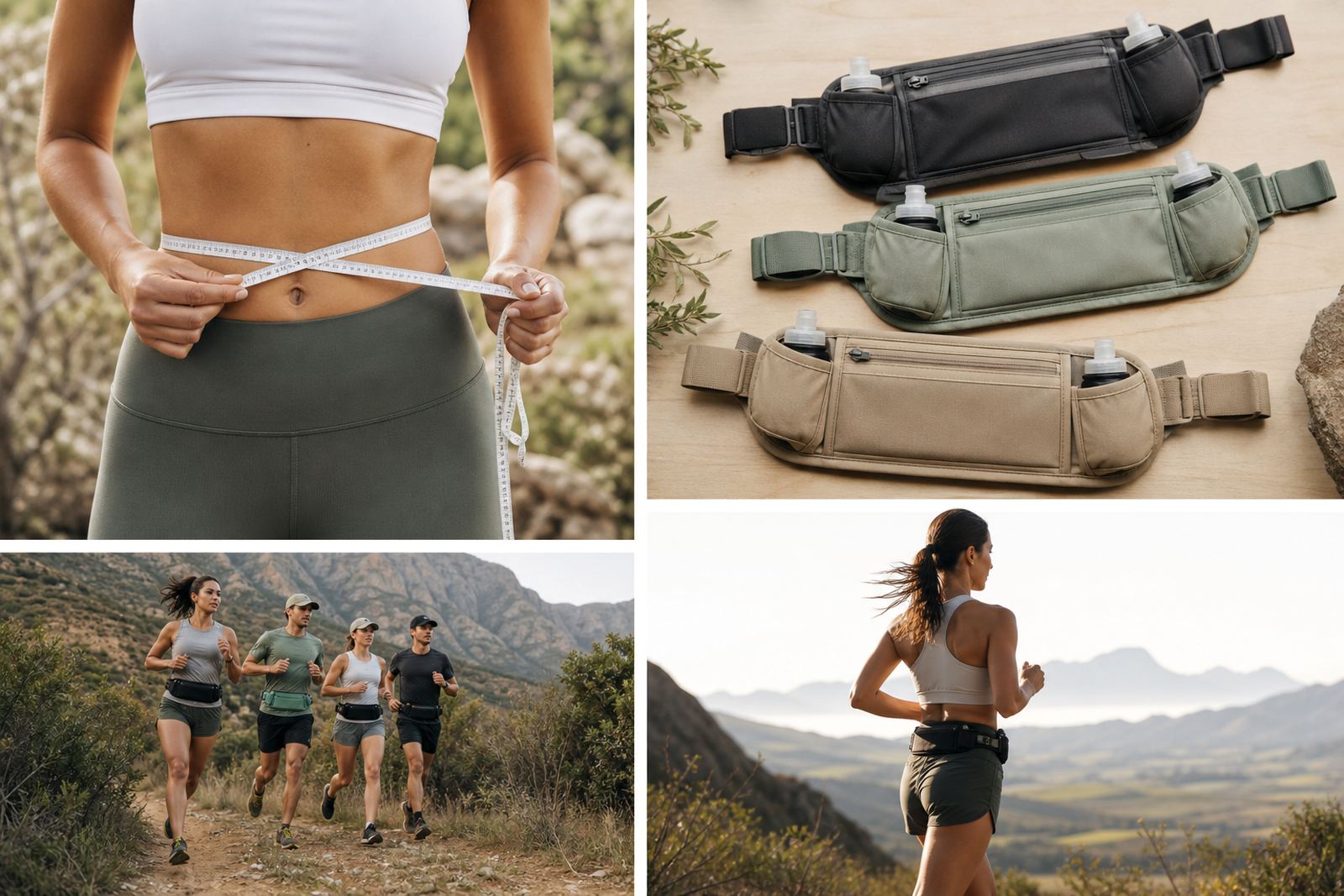
Start With Your Waist Measurement
Measure where the belt will actually sit, not where your jeans sit. For most runners that is around the hips, just above the top of the shorts or tights, where the belt can stay stable without riding up. Use a soft tape measure and stand relaxed, then breathe normally so you get a practical fit for long runs not a tight, temporary one.
If you are between two sizes, look at what you carry. A lighter kit for a 10 km road race may work with a snug fit, while a trail setup with flasks, gels and a phone needs a bit more adjustment room. In the Western Cape wind or on a humid Durban morning, a belt that is too loose will bounce and twist. Too tight, and it will feel harsh after 20 minutes.
- Measure in centimetres and keep the tape level all the way round
- Measure over the clothing you normally run in
- Note your comfort range, not only the exact number
- Check fit again after a few washes or kit changes
Choose The Right Adjustment Range For Your Runs
The best belt is one that gives you enough adjustment to handle different conditions. A winter training run in Stellenbosch with a single flask is different from a summer trail event near Cape Town where you may need extra hydration and snacks. A wider adjustment range helps when you change layers, run with a race bib, or share sizing across a club order.
For events in Johannesburg or George, where runners often do back to back training and race days, it helps to test the belt at the smallest and largest points in the range. You should still be able to breathe deeply, pick up pace on hills, and move your arms freely. If the belt needs constant tugging, the size is not right.
- Test the belt while walking, jogging and doing a few strides
- Make sure it stays level across the lower back or hips
- Check that the buckle or closure does not press into the stomach
- Leave enough room for race day hydration or extra layers in cold weather
How A Belt Should Sit During Running
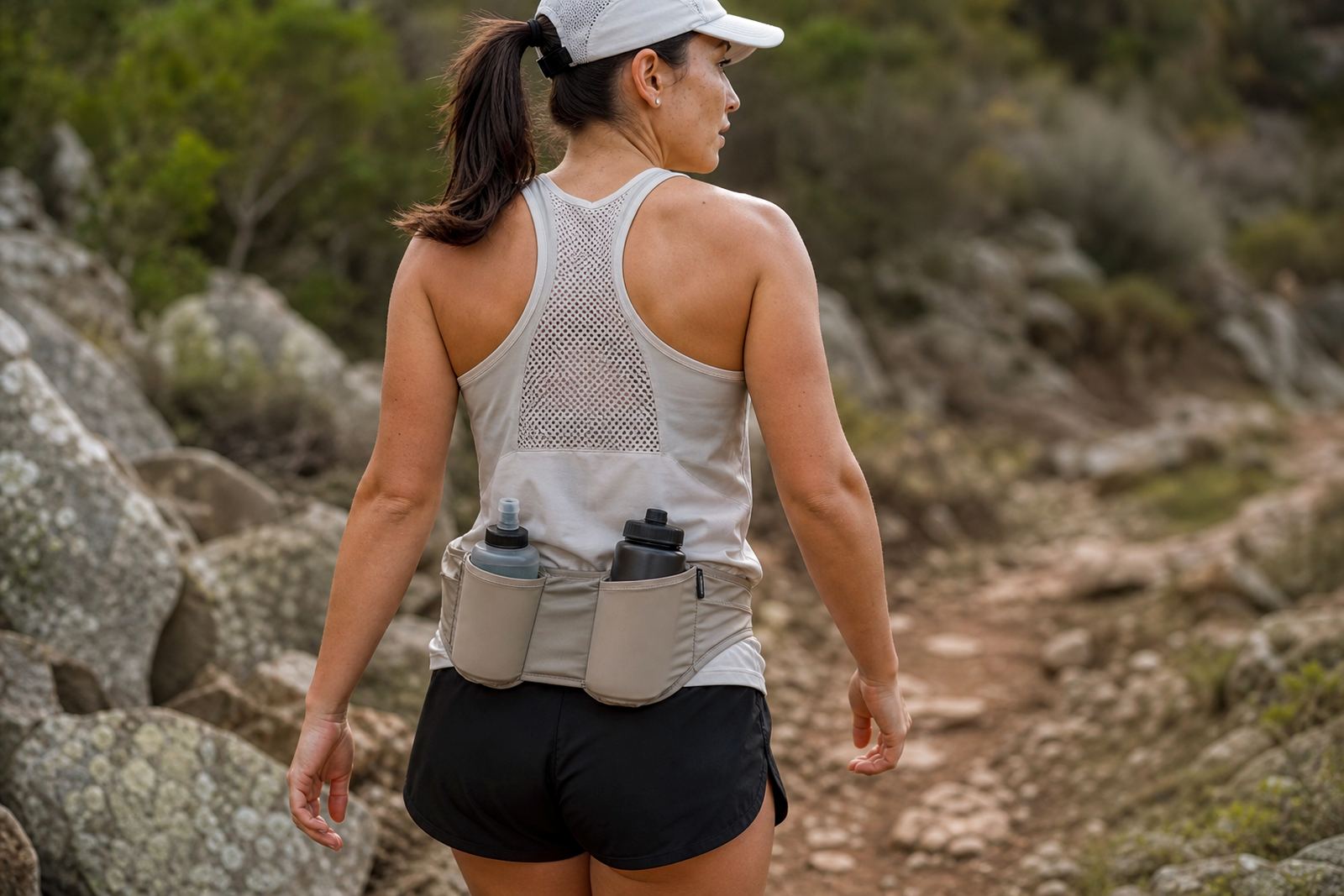
A properly fitted belt should feel secure without squeezing. It must stay in place when you climb, turn, or pick up speed. On trail routes, the belt should not bounce when you move over rocks or loose ground. On road runs, it should remain steady through corners and downhills. If you feel the belt sliding upwards, it is usually too loose or sitting too high.
Position matters as much as size. A belt worn too high can dig into the ribs. A belt worn too low can rub against the hips and shift with each stride. The aim is a firm, even fit that follows your movement. Small adjustments before you start can save a lot of irritation by kilometre five. It sounds simple but it makes a big differance to comfort.
- Stand up straight before tightening the belt
- Check that items are balanced left to right
- Move the belt slightly forward or back until it feels natural
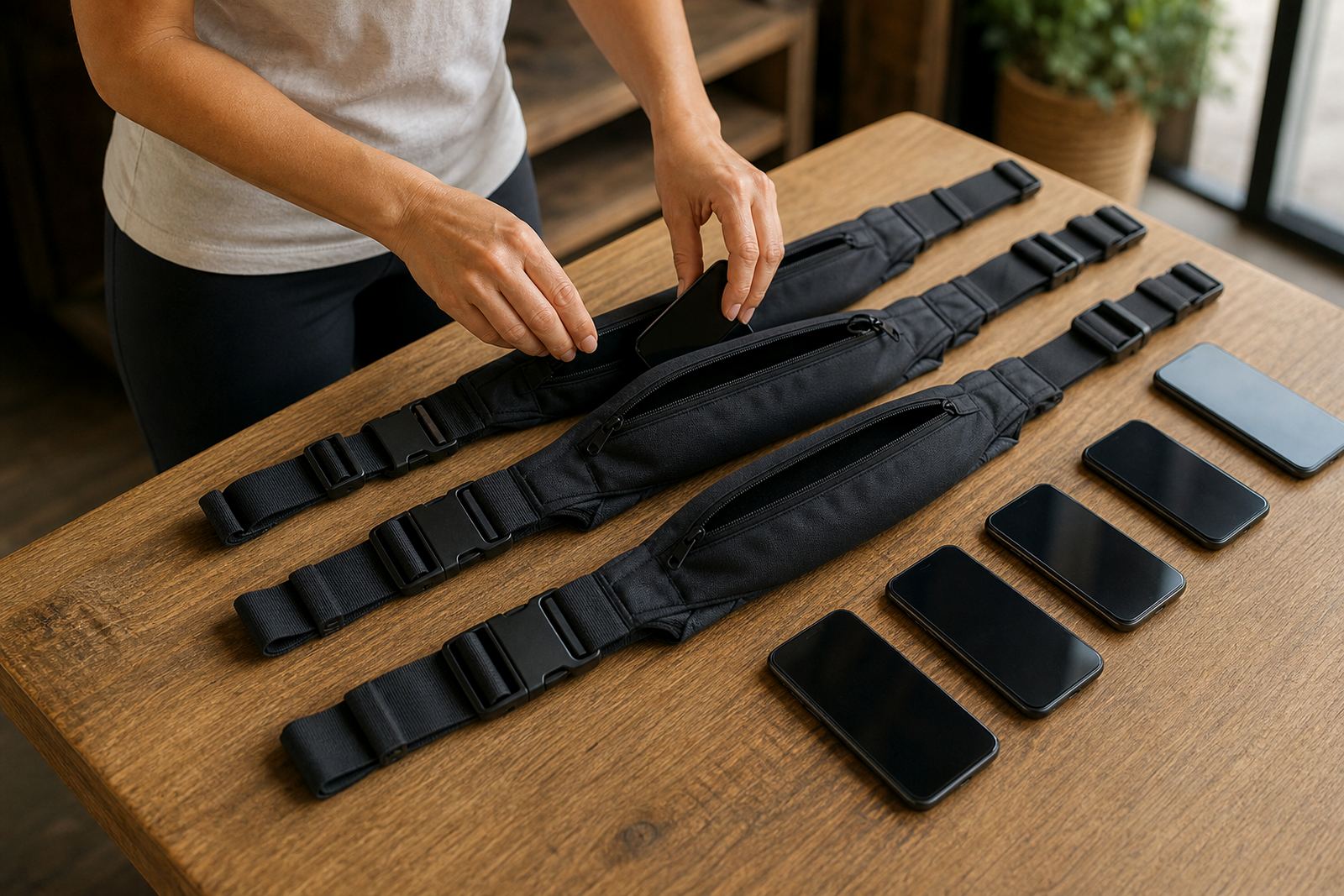
- Test with water, phone, keys and nutrition inside
Sizing For Hydration, Phones And Race Essentials
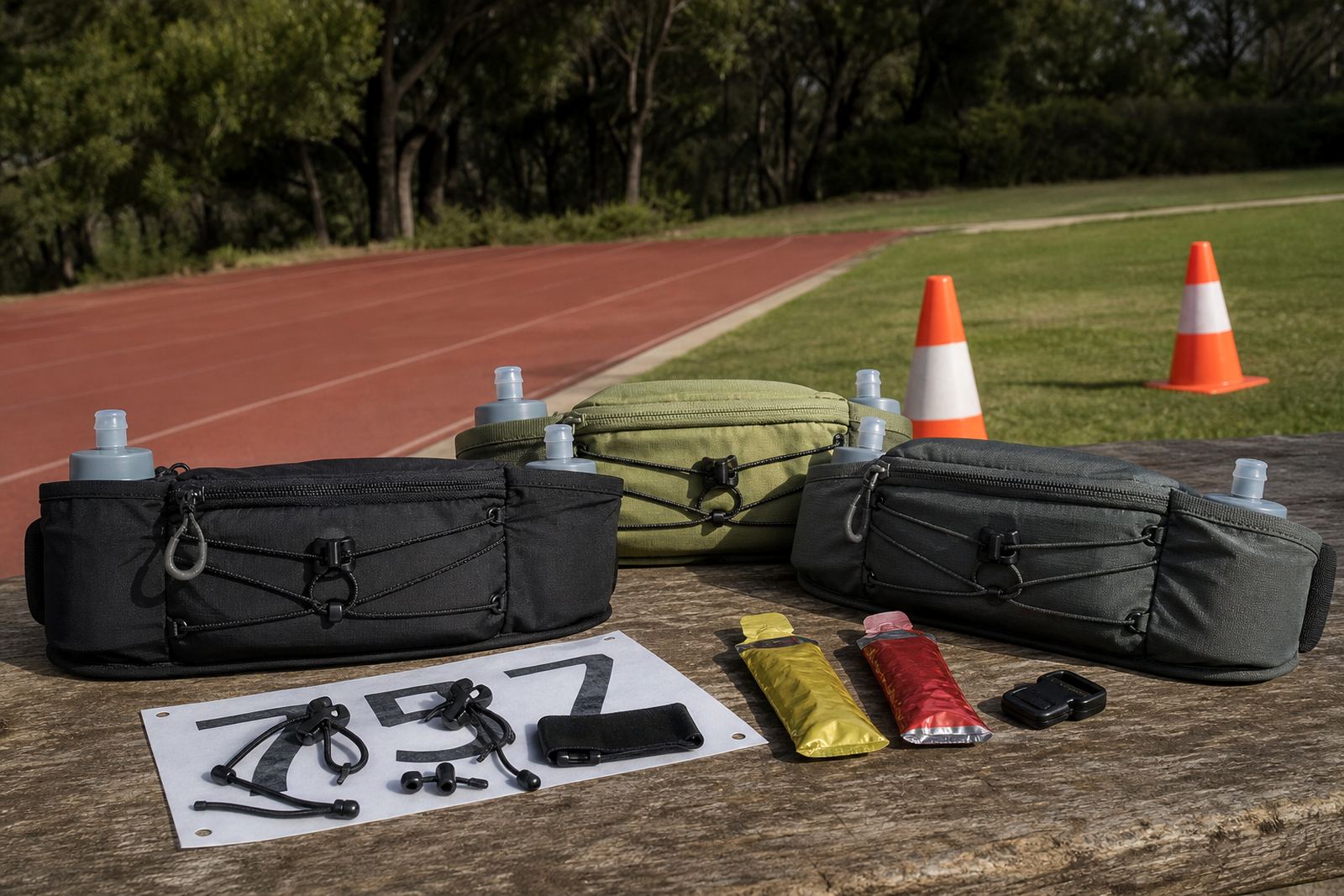
The more you carry, the more important fit becomes. A hydration belt loaded with bottles, flasks or soft containers needs a stable wrap so the weight does not pull to one side. If you carry a phone, a key and a few gels, the fit can be slightly closer because the load is lighter. For race events, participants often need a number, timing chip, fuel and small personal items, so plan the fit around the full race load.
Club orders and event bulk orders should include participant sizing as early as possible. That helps with packing, reduces exchanges, and keeps the belt comfortable for a wide range of body shapes. If the belt is for crew members or event staff, think about repeated use over long shifts, hot weather and quick access during marshalling or course support.
- Light carry: snug but flexible fit
- Medium carry: secure fit with space for movement
- Heavy carry: test with full hydration and all items inside
- Shared or group orders: confirm each runner’s waist measurement before dispatch
Simple Fit Check Before Your First Run
Before heading out, do a five minute check at home or at the start line. Put the belt on, walk around, then jog lightly. Bend forward, climb a step and swing your arms. The belt should stay in place and the contents should not bounce sharply. If you hear slapping or feel the belt creeping up, stop and readjust before you start the session.
For trail runners in the Western Cape, especially on longer climbs or uneven sections, a quick fit check is worth it every time. For road runners in Durban or Paarl, the same belt may feel different in hot, sweaty conditions, so allow for a slightly different adjustment on warmer days. A good fit should work while you are tired too, not only when you are fresh.
- Can you breathe deeply without pressure around the stomach?
- Does the belt stay steady when you bounce lightly?
- Can you reach your flask or pocket without removing the belt?
- Does the fit still feel right after 10 to 15 minutes of movement?
Sizing Tips For Clubs, Events And Repeat Orders
For running clubs, race organisers and repeat event orders, sizing is best handled with a simple plan. Gather waist measurements in centimetres, group runners by likely fit, and keep a little margin for clothing layers. This is especially useful for custom colour runs, crew belt kits and race pack inserts where the same belt may be used by many different participants.
If you are planning for a road race in Bellville, a trail event in Somerset West, or a multi-day programme in George, it helps to allow for late entries and changed line-ups. Keep an eye on load-shedding and dispatch timing too, especially when packing large quantities or checking labels after hours. A measured sizing process saves time, reduces returns and keeps event day support running smoothly.
- Collect measurements early and keep them in one list
- Allow extra adjustment for winter layers or race bibs
- Separate adult and junior sizing where needed
- Confirm fit again for repeat orders before each new event cycle
When To Ask For Fit Briefing And Order Support
If you are unsure about size, adjustment range or how the belt will carry your kit, ask for a product fit briefing before ordering. That is especially useful for mixed groups, new club members, and events where runners have different body shapes and carry different items. A proper briefing helps with hydration layout advice, participant sizing and dispatch coordination, so the right belts reach the right people on time.
For customers across South Africa, from Stellenbosch to Johannesburg and Durban, fit questions are best answered before race week. That gives enough time to plan bulk order adjustments, check stock, and prepare for event day support if needed. A belt that fits well is more than a size choice, it is part of running comfortably and finishing with less fuss.