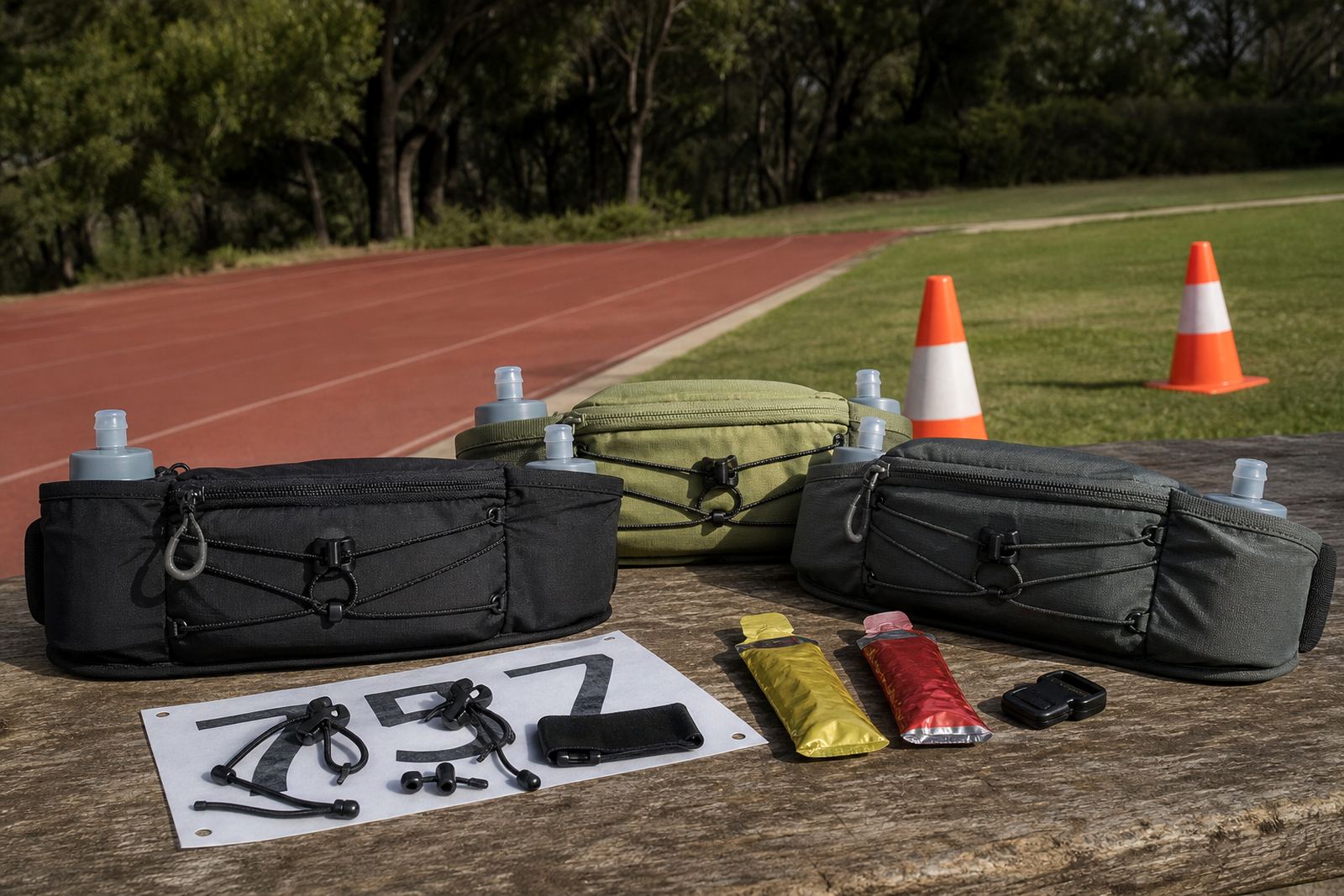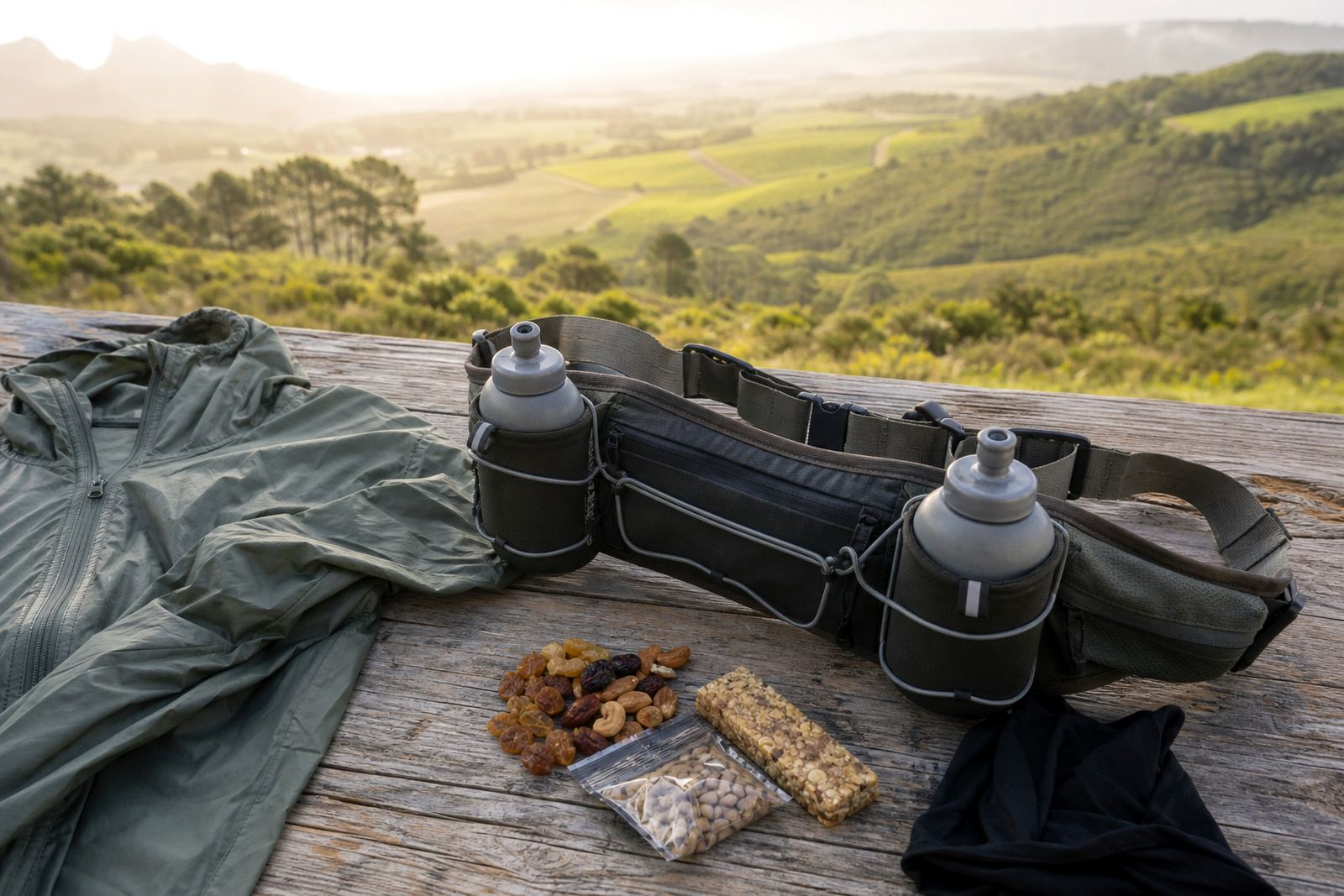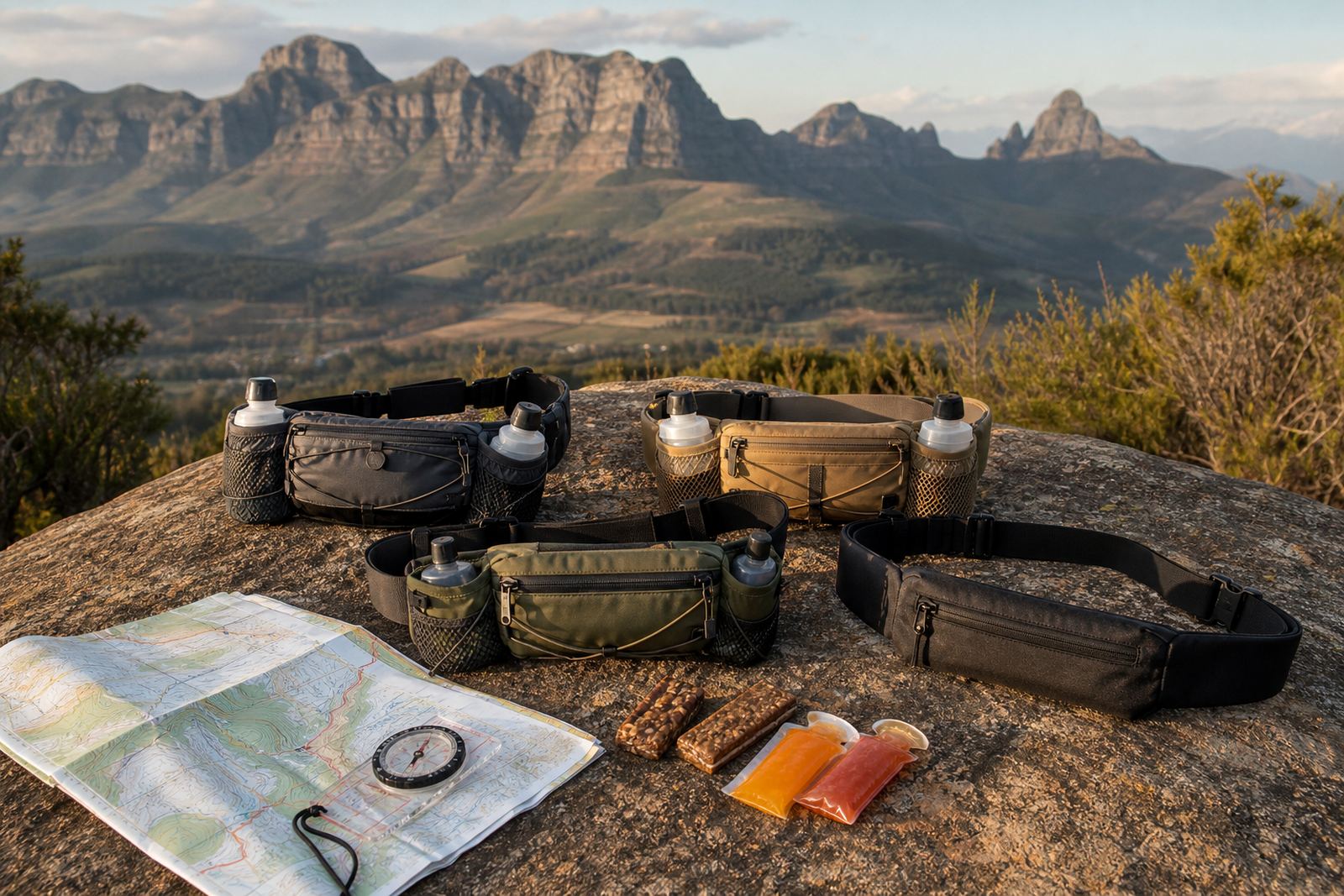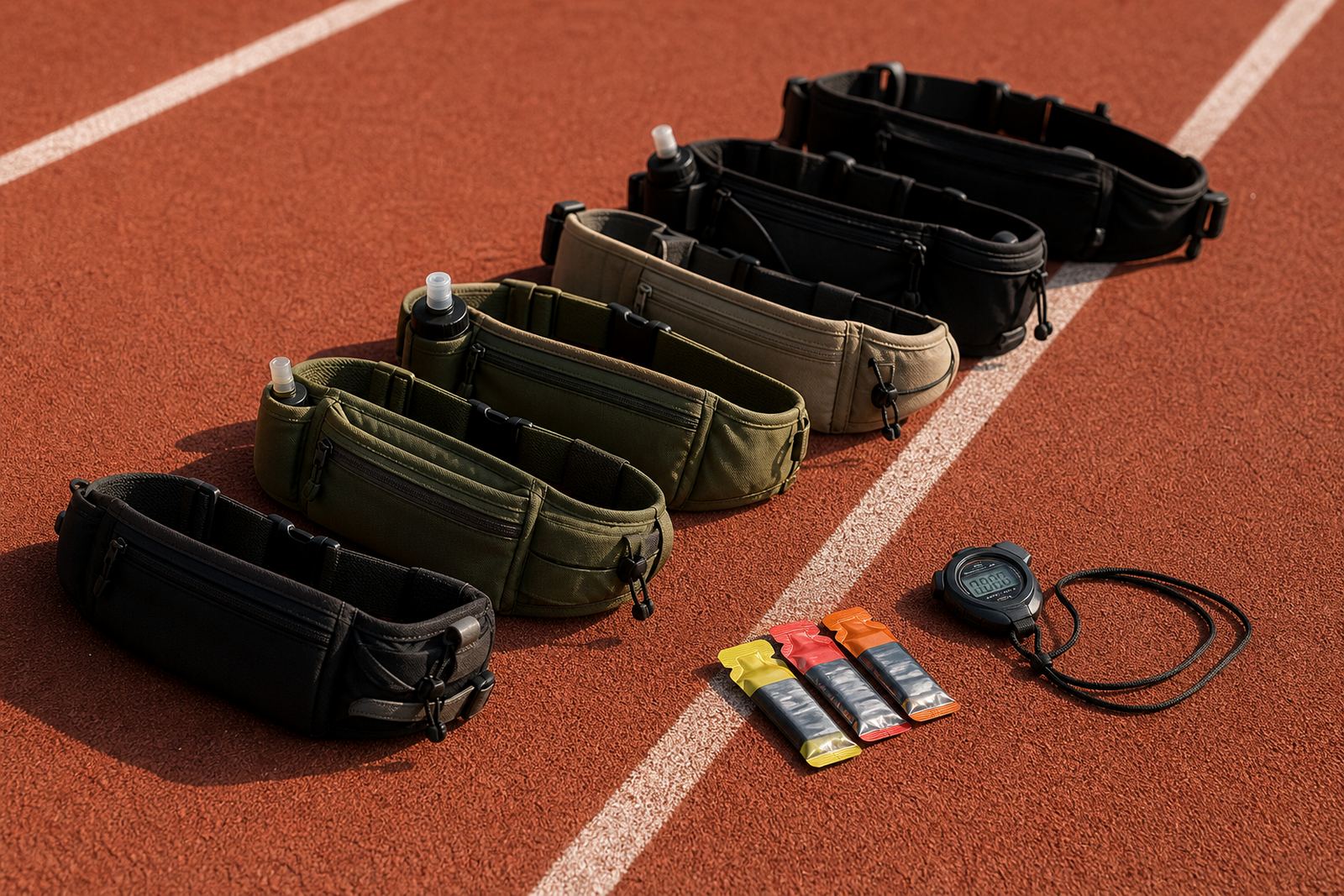
Start With Your Run Type and Distance
A road belt for a 5 km fun run will not always suit a 21 km or marathon effort. For shorter races, many runners only need room for a gel, a key and a small soft flask. For longer road mileage, especially in Cape Town wind or Durban humidity, you may want a belt that carries more fluid and sits steady when your stride opens up.
Think about where you run most often. Stellenbosch afternoons can be warm and dry, while coastal races may leave kit damp and slippery. If you train before sunrise, or after load-shedding has cut your routine short, it helps to have one belt that you can grab and use without fuss.
- Short road races: light storage and minimal movement.
- Mid-distance runs: space for hydration plus 1 or 2 gels.
- Long runs and race prep: firmer support, better layout and easier access.
Check the Fit Before You Trust It on Race Pace
A belt should feel snug at the start of the run, not loose enough to bounce and not so tight that it rides up. If it shifts around your hips while walking, it will be worse once you pick up pace. Good fit matters for road runners because the same repeated motion over 10 km or more can turn a small irritation into a real distraction.
When sizing, wear the same layer you would usually run in. A thin vest in winter around Paarl is different from a singlet in summer. If you are planning a club order or event issue, ask for participant sizing upfront so the belt choice matches body shape and kit layers, not just a general size guess.
- Wear the belt over your normal running top.
- Lift your knees and jog in place for 20 seconds.
- Check for bounce, twisting and rubbing at the hips.
- Make sure the buckle or fastening stays secure under movement.
Storage Layout Matters More Than Extra Pockets
The best road belt is not the one with the most compartments, but the one that lets you reach what you need without breaking rhythm. For road events, a simple layout usually works better than deep pockets that hide gels at the bottom. You want your keys, nutrition and soft flask to sit where you can reach them with one hand.
If you are running in a group or managing a race event, the layout also matters for consistency. A standard setup makes it easier to brief participants, pack crew belt kits and keep repeat orders simple. That saves time at dispatch and on event day when there is no room for confusion.
- Front access for gels and small items.
- Secure pocket for a key or ID.
- Stable flask position that does not swing.
- Enough space for race number or event extras where needed.
Hydration Choices for South African Road Conditions
Hydration needs change from town to town. A runner in Johannesburg winter may not need as much fluid at 6 am as someone racing in humid Durban conditions. In the Western Cape, a dry hot wind can dry you out quicker than you expect, so the right bottle position and volume matter.
For road mileage, keep the hydration setup practical. Too much weight can pull the belt down, while too little fluid means you are forced to rely on aid stations that may be far apart. If your route includes municipal parks or road closures with limited support points, plan the belt around the actual distance between water stops.
- Use a hydration layout that matches the route length.
- Test drinking while running at steady pace.
- Check that the bottle does not bounce when half full.
- For race day, confirm what water points will be available.
What to Look For in Road Belt Material and Build
Road running puts gear through repeated movement, sweat and washing. A belt should hold shape after several sessions, dry quickly and remain comfortable against the skin. If you run in humid conditions on the coast, materials that stay heavy when wet will become annoying fast. In dry inland air, you still want a finish that does not chafe over a longer run.
Look at the stitching, fastening and stretch. A belt that has good shape control around the hips will feel calmer at faster paces. It should also be easy to clean after dusty trail-to-road crossover sessions or after a race where the belt picks up sweat and salt.
- Strong stitching at stress points.
- Comfortable edge finish to reduce rubbing.
- Fast drying material for regular use.
- Good stretch without losing support.
How Clubs and Event Teams Should Plan Belt Orders
For clubs, race organisers and team managers, road belts are easier to manage when sizing, colour and quantities are planned early. A bulk order should account for men and women’s fit, different waist sizes and the number of runners who want hydration versus storage only. That avoids last minute sorting at registration or packet collection.
At events in Stellenbosch, Cape Town, George or further afield, repeat order support helps when the same race happens every year. If you are coordinating race pack inserts, event day support or custom colour runs, it is useful to lock in the belt format before entries close. One missing size can slow down the whole distribution table.
- Confirm runner numbers and size spread early.
- Separate hydration belts from storage-only belts.
- Allow extra units for late entries and replacements.
- Keep a simple checklist for pack-out and dispatch.
Final Pre-Race Checklist for Road Belt Confidence
The last test should happen before race morning, not at the start line. Wear the belt on a few training runs, including one at race pace. Check whether it stays in place when you overtake, slow down or take bends. If you carry a soft flask, fill it to the level you will use on the day so you know how the weight feels.
Use this quick final check: fit, bounce, access, hydration and comfort. If all five are right, the belt is doing its job. That means less fiddling and more focus on pace, breathing and the road ahead.
- Fit is snug but not restrictive.
- No bounce at steady or fast pace.
- Gels and keys are easy to reach.
- Hydration sits securely when partly full.
- No rubbing after 30 minutes of running.