
Start With Your Phone Size And Case
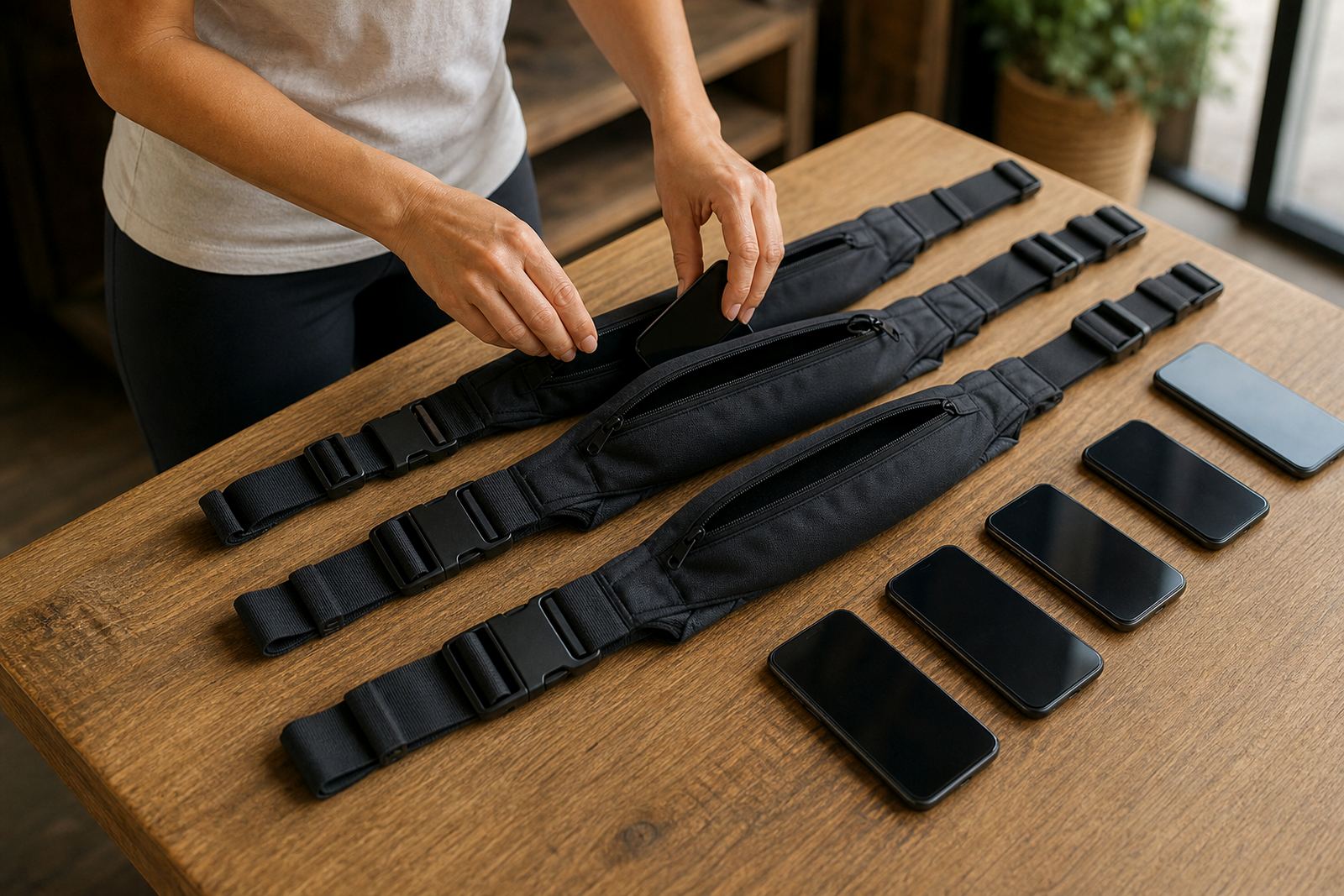
Measure your phone with the case on before you choose a belt. Many runners forget the extra bulk of a tough cover, then find the pocket feels tight once the phone is inside. If you run with a larger device, look for a compartment that gives a little stretch without letting the phone move around.
For shorter road runs in Stellenbosch or a fast parkrun in Cape Town, a compact pocket is often enough. For trail outings near Paarl or George, it helps to have a deeper pocket so the phone stays put over rocks, roots and uneven ground.
- Check length, width and thickness with the case fitted
- Allow space for a small key or card if you keep them together
- Make sure the pocket closes fully, not just partly
- Test whether the phone can be removed with one hand
Match The Pocket To Your Running Style
How you run affects how a phone pocket should sit. If you move at steady pace and keep your hands free, a rear pocket may work well. If you stop often for photos, maps or split times, a side pocket or angled pocket may be easier to reach. Runners doing long event days sometimes prefer a pocket that keeps the screen facing inward for extra protection.
In humid Durban conditions, a pocket that sits close to the body can help reduce bounce, but it should not trap too much moisture. In the Western Cape winter, you may also want a pocket that works with a light rain layer without feeling cramped.
- Fast runners usually want a low-profile pocket with very little bounce
- Trail runners often need deeper storage and a firmer hold
- Event participants may need quicker access for race timing or maps
- Walk-run athletes can choose a larger opening for easier access
Check Access, Safety And Screen Use
A phone pocket should be easy to open, but not so easy that it pops open by mistake. Look for a closure that stays secure on climbs, turns and downhill sections. If you use your phone for music or navigation, make sure you can unlock it or use the side buttons without removing it every time.
For race events, it is worth thinking about safety too. If the pocket is too loose, the phone can shift and tap against your hip. If it is too tight, you may struggle to get it out when you need a call, a map or a photo of your finish time.
- Test the zip, flap or elastic opening with wet hands
- Make sure the phone does not press into your hip bone
- Check that the screen does not switch on by accident
- Use a pocket that allows quick removal at aid stations if needed
Look At Bounce Control And Belt Balance
A phone pocket works best when the weight is spread across the belt instead of hanging to one side. If the pocket is too large for your device, the extra movement becomes obvious on downhills and when you pick up pace. A well-fitted belt should feel close and steady, even if you carry a bottle or soft flask as well.
On longer runs around Somerset West or the Jonkershoek area, balance matters more than most people think. A phone on one side and keys on the other can pull the belt off centre. If possible, place heavier items opposite the phone so the load feels even.
- Keep heavier items on opposite sides of the belt
- Try a short jog before committing to a long run
- Watch for rubbing at the lower back or hip
- Choose a belt that stays level when you lean forward
Use A Simple Fit Check Before You Buy
A quick fit check saves time later. Put the belt on over the clothing you normally run in, then move through a few practical actions: walk, jog, bend, twist and climb a step. If the pocket shifts too much in those first minutes, it will usually bother you more over a 10 km, half marathon or trail race.
During summer heat or on dusty routes, the right fit also helps keep grit out of the pocket opening. A snug fit can protect your phone better than a loose belt that flaps around. You want firm, not tight enough to restrict breathing.
- Wear the belt over the same top you run in most often
- Do a 5 minute shake-out jog before deciding
- Check breathing comfort when the belt is loaded
- Make sure the phone pocket does not press into your stomach when you sit or bend
Pack The Pocket For Race Day And Training Days
Keep the phone pocket for the phone first, then add only the small items you truly need. A crowded pocket slows you down and makes the phone harder to reach. For race day, many runners carry a phone, one card, a small amount of cash and maybe a key. For training runs, the phone may be the only item you need.
If you are preparing for a club race in Johannesburg, a coastal event in Durban or a trail day in George, plan the pocket layout the same way each time. That makes it easier to grab your device without checking every section of the belt. Small habits like this save time and keep things calm when the start line gets busy, even if the weather turns or load-shedding affects your early evening routine.
- Keep the phone in the same pocket every run
- Store keys in a separate secured section where possible
- Avoid overstuffing the pocket with gels and loose items
- Recheck the closure before you leave the car park or start pen