Start With The Distance And Conditions
Marathon training in South Africa means different needs for Cape Town wind, Johannesburg altitude, Durban heat and George trail conditions. A belt that works for a 10 km weekend jog may feel too small once you are out for 25 km with gels, salt tabs and a phone. Start by matching the belt to the longest session you will use it for, not only race day.
For cooler morning runs in Stellenbosch or Paarl, a lighter belt with one small flask pocket can be enough. For hotter routes, or long race events where aid stations are spaced out, choose a belt with a bit more carrying room so you can keep water and fuel close. The aim is steady access without overpacking.
- Short runs up to 12 km: light carry, minimal bounce, basic storage.
- Long runs from 15 km to 30 km: space for fuel, phone, keys and hydration.
- Race day: fast access matters more than extra capacity.
- Trail use: allow for more water and a secure fit over uneven ground.
Work Out What Must Fit In The Belt
Before you order, list the items you actually need on the run. Many runners carry too much on training days and then blame the belt when it feels bulky. A good marathon belt should hold the basics without forcing you to stop and unpack every time you want a gel or a sip of water.
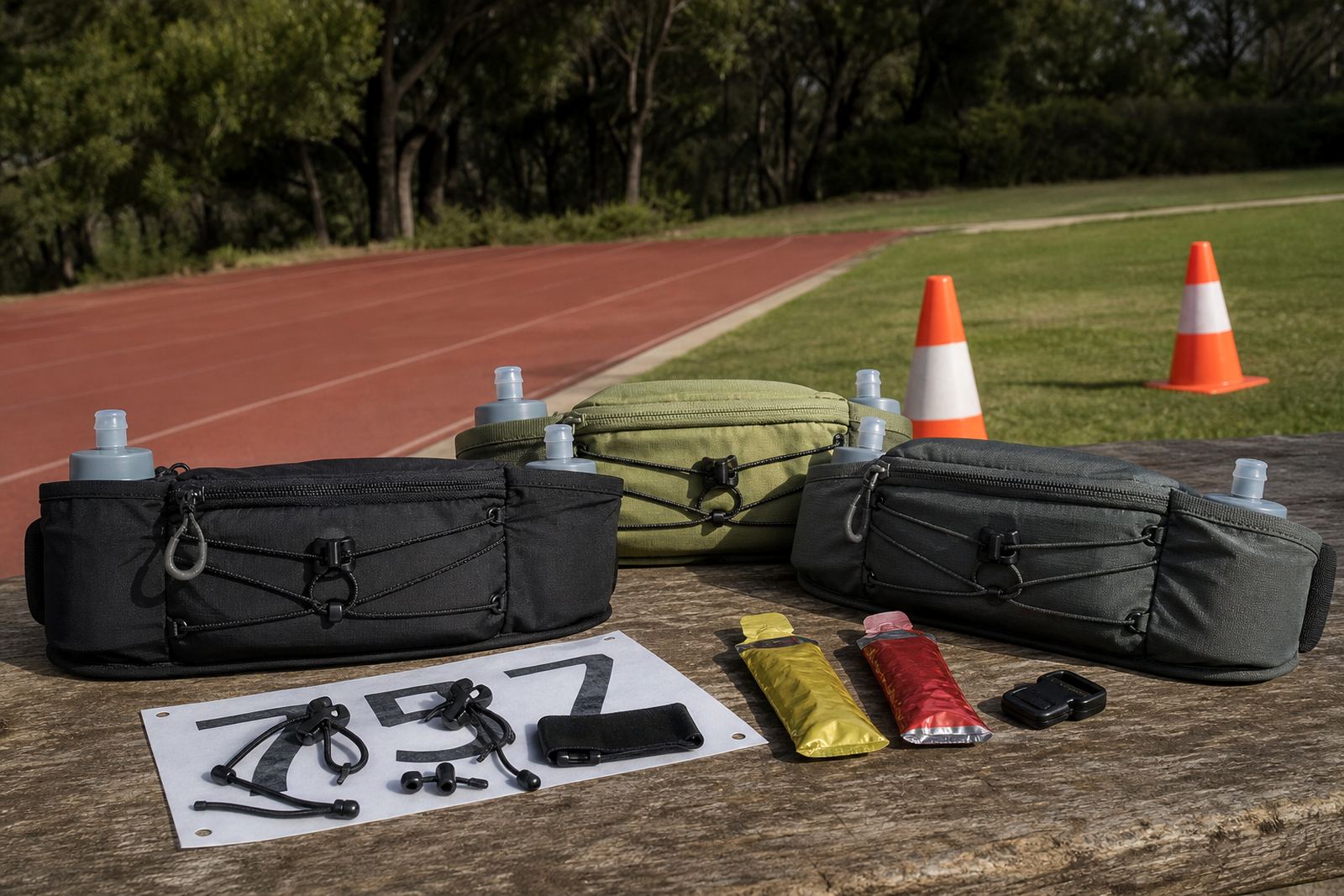
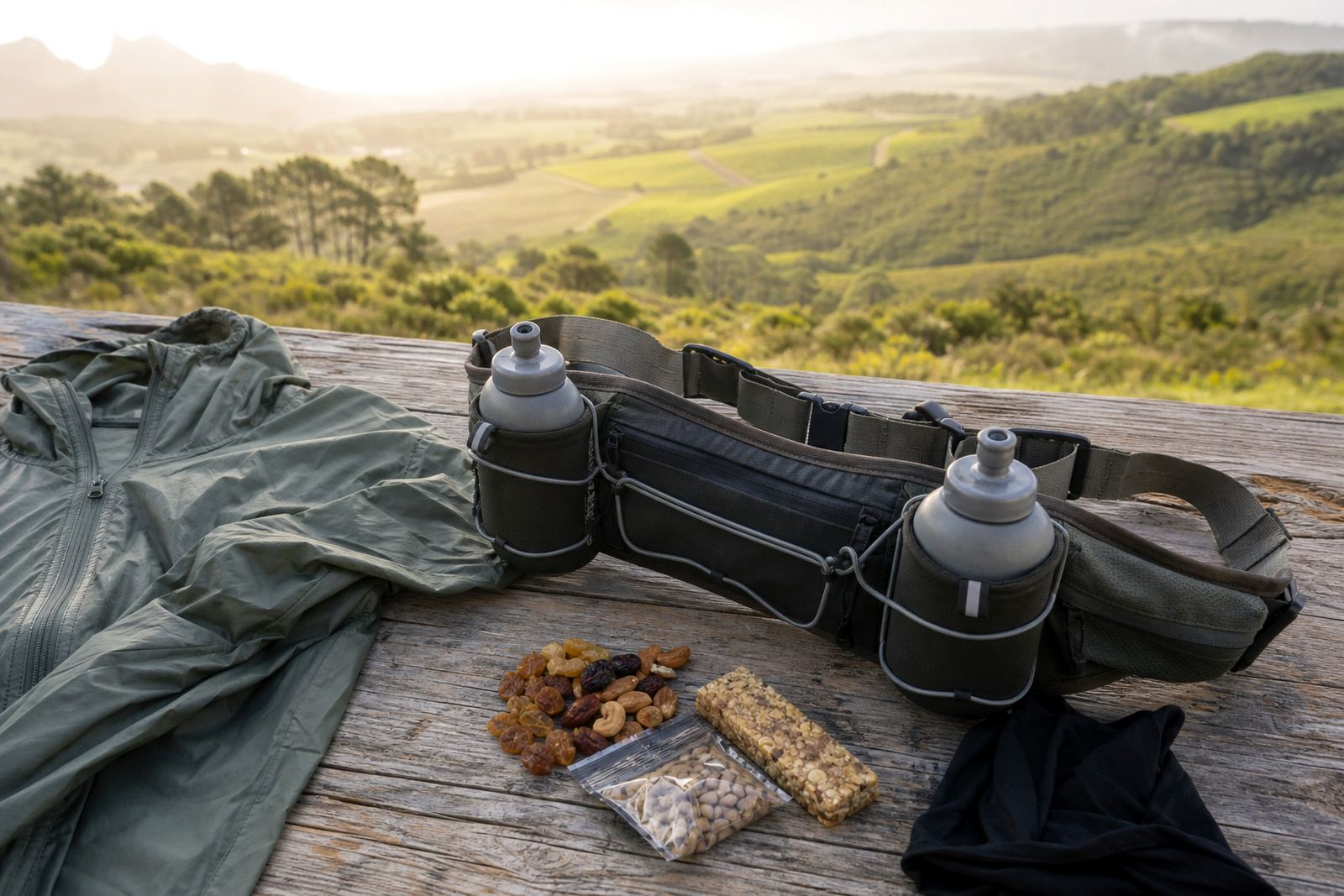
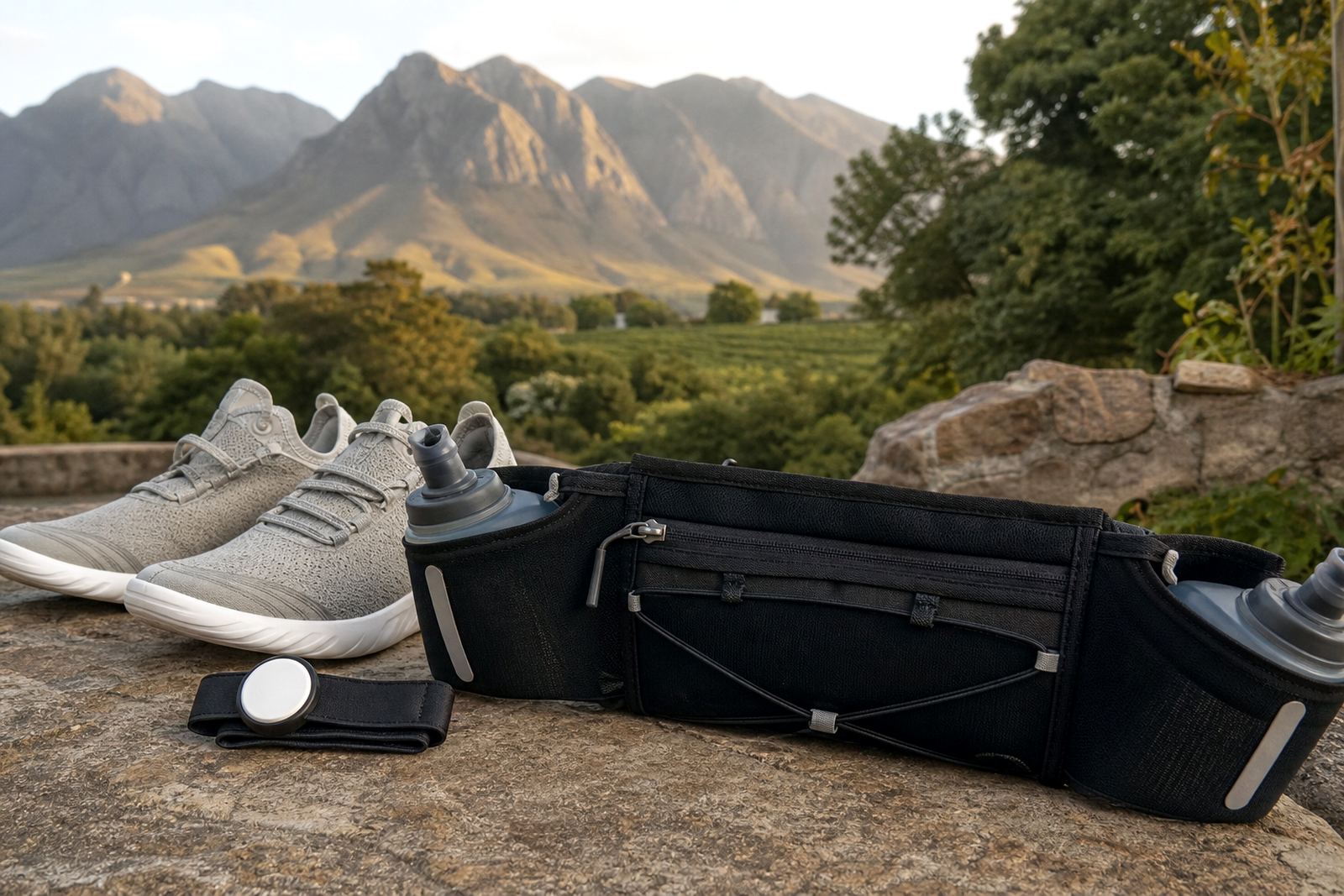
As a rule, the more access points the belt has, the easier it is to use while moving. Side pockets suit gels and wrappers. A central pocket is useful for a phone, ID and bank card. If you carry bottles, check that they sit low and close to the body. That helps reduce movement on downhills and in windy conditions.
- Keys and car fob
- Phone or timing device
- 2 to 6 gels depending on distance
- Soft flask or small hydration bottle
- Emergency card or medical note
- Salt tabs or blister plaster
Choose The Right Belt Capacity For Training And Race Day
Capacity should be comfortable rather than generous. Too little space means you struggle to carry essentials. Too much space can create shifting weight, especially when the belt is not fully loaded. For marathon training, many runners do best with a belt that sits in the middle range, large enough for fuel and hydration but still low profile.
If you train on roads around Cape Town or Stellenbosch, a sleeker belt may suit you because you can top up water more often. If you do long trail sessions or event support where you need to carry more, choose a belt with extra layout options and a firmer waistband. That gives you better control when the terrain changes.
Check the following before you decide:
- Will the belt carry one bottle or two?
- Do you need room for a phone in a secure pocket?
- Can you reach gels with one hand while running?
- Does the belt stay put when fully loaded?
- Is the material comfortable against bare skin and over a singlet?
Fit It Properly Before Your Long Run
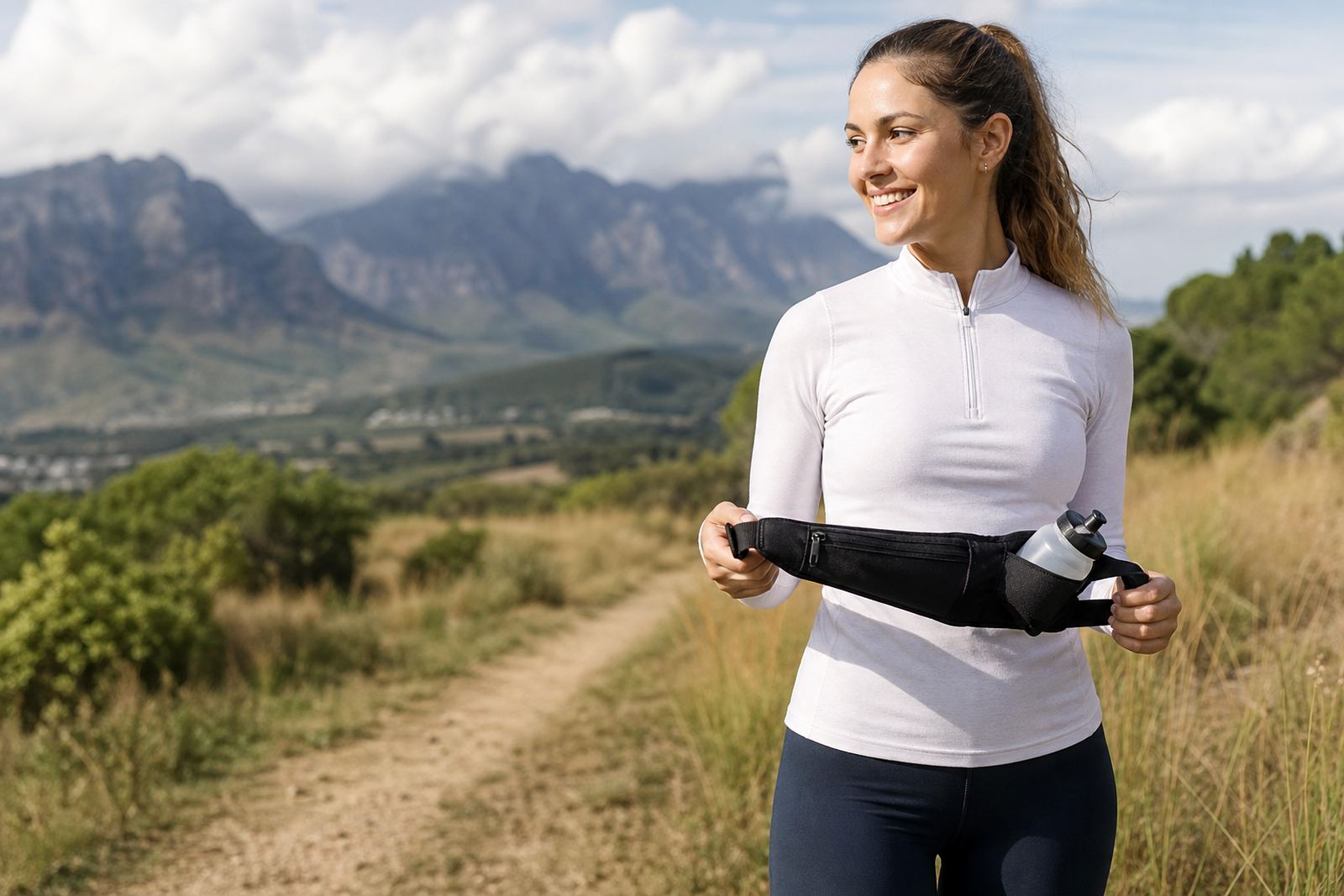
Fit makes a bigger difference than many runners expect. A belt that is too loose will bounce on every stride. Too tight and it can feel restrictive by halfway through your run. The correct fit is snug enough to stay still, yet relaxed enough to breathe deeply on hills and during hard efforts.
Try it first with the items you will actually carry. Walk for a few minutes, then jog, then do a few quicker strides. If the belt rides up, shifts side to side, or twists when you reach for a gel, adjust it before you head out on a long route. In humid Durban conditions, a poor fit becomes uncomfortable very quickly.
- Put the belt on over the same kit you usually train in.
- Load it with water and fuel before testing.
- Run on a flat road first, then a slope if possible.
- Check that pockets remain easy to reach with one hand.
- Make sure the belt does not rub at the hip bones or lower back.
Hydration Setup For South African Race Conditions
Hydration needs vary across the country and by season. A cool winter half marathon near George is not the same as a summer road race in Johannesburg or a windy coastal event in Cape Town. Your belt should support your hydration plan, not force you to overcarry. Use it to bridge the gap between water points and keep small sips available when needed.
For longer road races, a single soft flask may be enough if aid stations are frequent. For trail events and hot-weather sessions, two smaller carriers can be better balanced than one large bottle. It is also worth planning where your gels will sit in relation to the hydration pocket so you can reach them without slowing down.
Good hydration setup means:
- No sloshing from overfilled bottles
- Easy one-handed access while moving
- Weight kept close to the body
- Enough space for a spare gel or two
- Simple refilling at event points
Use The Belt Smartly On Long Training Days
Long runs are the best test of a marathon belt. Start with a planned load, then notice what you actually use. Many runners discover they need less than they first thought, or that one pocket works better for gels while another suits a phone. Keep notes after each session so your setup improves week by week.
A practical routine helps. Pack the same items in the same place each time, then adjust only one thing at a time. That way you can tell whether a change in fit, load or layout has improved comfort. If you run with a club in Bellville, Somerset West or Johannesburg, compare notes with other runners too, because small layout changes can make a big difference over 42.2 km.
- Keep training and race day pack-out consistent.
- Check zips, closures and seams before every long run.
- Replace any worn elastic or stretched pocket section early.
- Keep race day items separate from training clutter.
Quick Checklist Before You Place A Belt Order
Before you send through an enquiry, it helps to have the basics ready. That makes it easier to match sizing, quantity and event timing, especially if you are ordering for a club, race day crew or participant group. If you are arranging belts for an event in Cape Town, Stellenbosch, Durban, Johannesburg or George, a clear checklist saves time and avoids last minute changes.
Use this final check:
- How many runners need belts?
- What distance are they training for or racing?
- Will they carry bottles, flasks or only small essentials?
- Do you need help with participant sizing?
- Do you need repeat order support for a club or event series?
For marathon runners, the best belt is the one that stays out of the way while doing its job. If it holds what you need, sits still, and gives fast access when the pace picks up, you are on the right track.