

Why ultra runners choose a waist belt over a bulky pack
For an ultra athlete, the small details matter after the first 20 km and even more after 50 km. A good waist belt keeps bottles, soft flasks, gels, salt tabs, keys and a phone within reach without bouncing around the lower back. That matters on the climbs above Stellenbosch, the windy stretches near Cape Town, the heat around Durban, and the long, open roads that can feel endless by the third or fourth hour.
Many runners start with a pack and later move to a waist system when they want less heat on the upper body and quicker access to fuel. A well-fitted belt also helps if you are racing with compulsory kit, because it spreads the load lower and keeps the front of the body freer for arm swing. For trail and road ultras, the right setup can save time at aid stations and reduce the faffing that slows runners down.
Typical ultra runner setup for training and race day
The best layout depends on distance, terrain and whether the event allows bottle stops every few kilometres or expects you to carry more between aid stations. We usually plan for a runner to keep the most frequently used items at the front or side, with less urgent items tucked into a secure rear pocket. That gives a clean reach pattern when pace changes, especially on technical sections or when you are running through the dark.
- 1 or 2 hydration bottles or soft flasks, depending on race rules and aid station spacing
- Gels, chews, salt capsules and small food packets
- Phone, ID, cash card, race number backup and a compact headlamp
- Thin wind shell or emergency layer for mountain starts and coastal weather shifts
- Keys, lip balm, plasters, anti-chafe sachet and a small packet of tissue
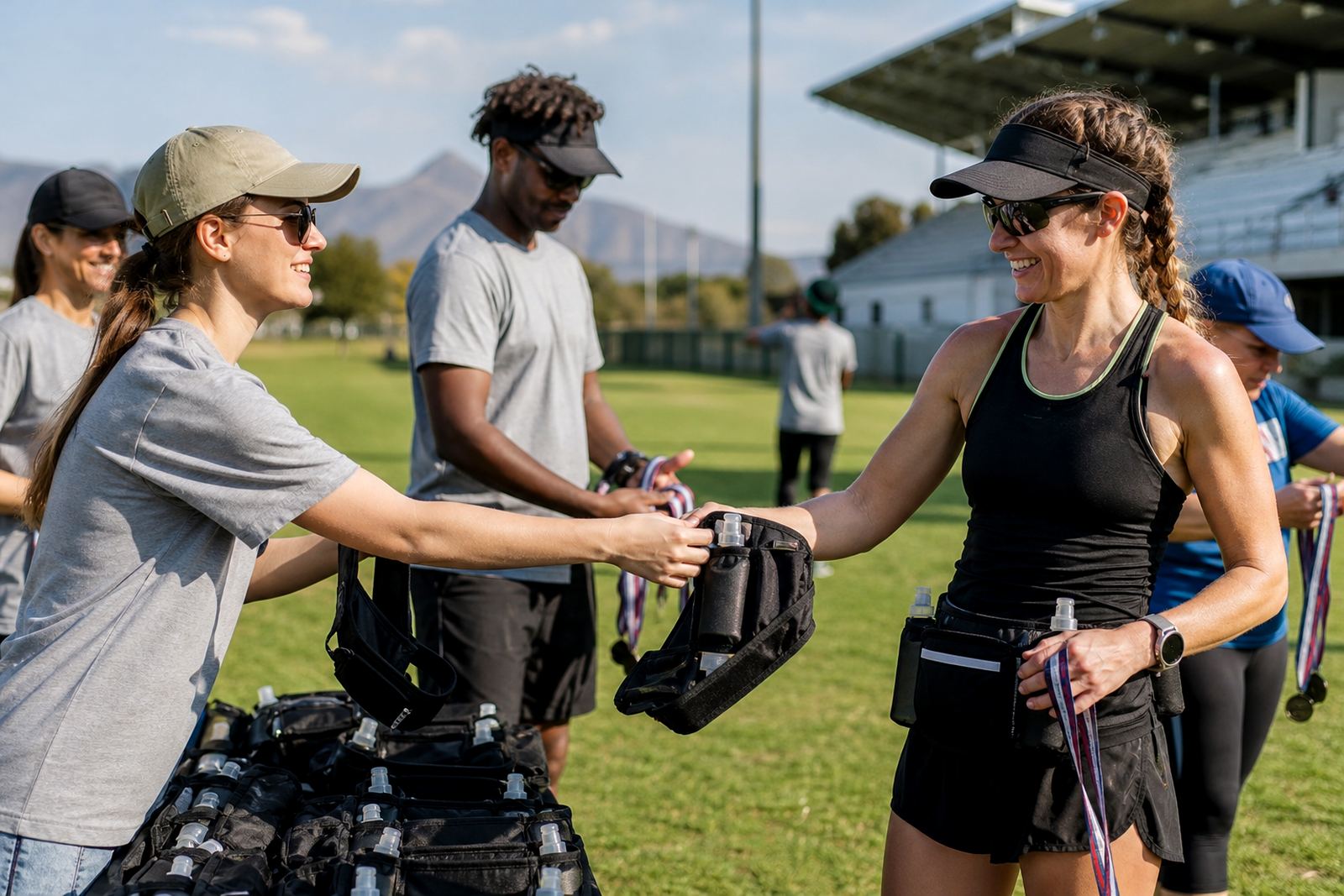
For crewed athletes, we can also plan belt kits for pacers or support runners so everyone carries the same items in the same place. That makes swaps faster at the roadside or at race village handover points.
Hydration layout advice for long hours on the move
Hydration is not just about carrying water. It is about how quickly you can drink without breaking stride, how stable the load feels when the bottle is half empty, and whether you can refill fast at an aid station. On hot days in the Western Cape or during humid sections in Durban, we often suggest a front-access layout so the runner can sip often instead of waiting until they feel flat.
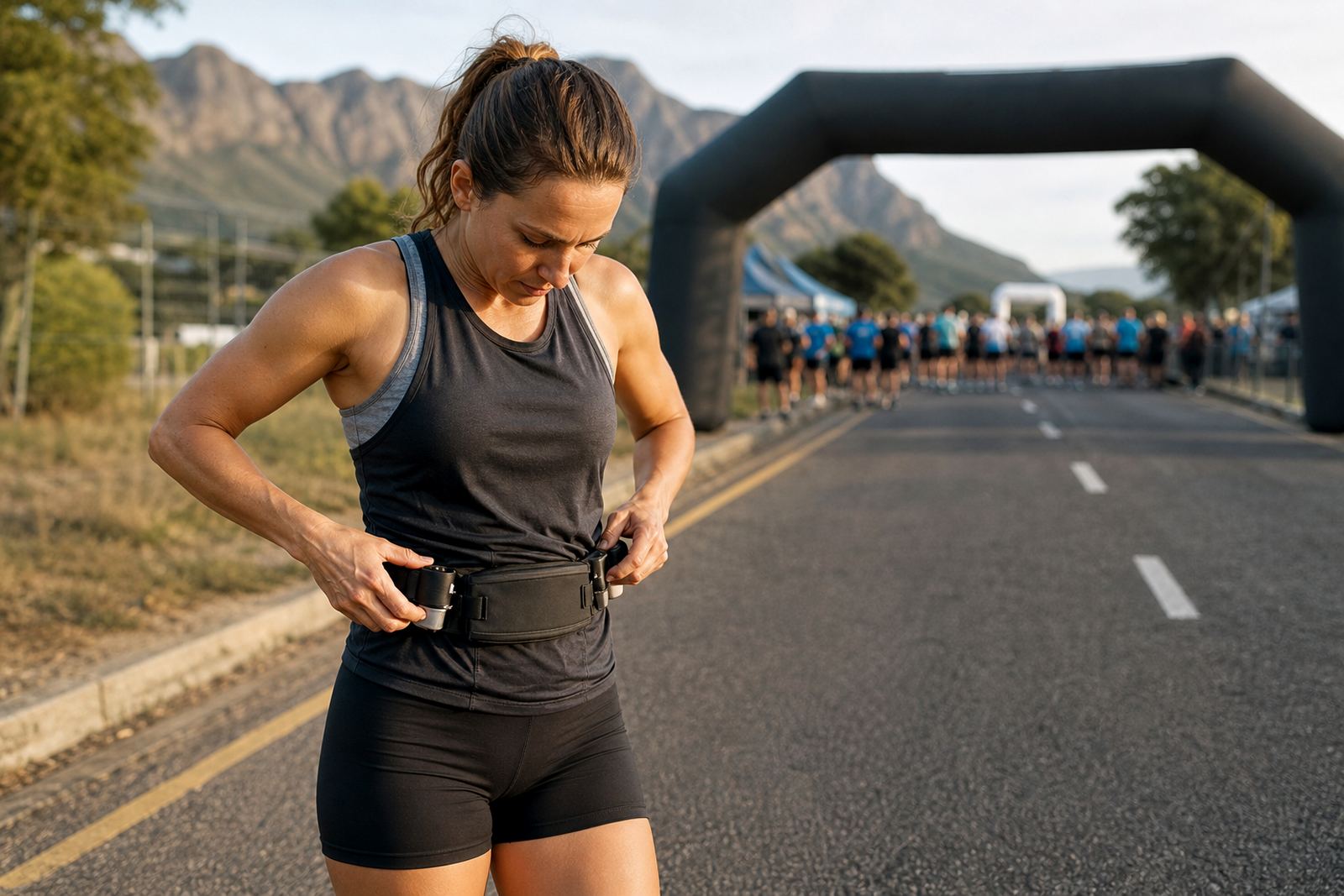
In practical terms, the belt should sit snug on the hips, not the waist, and the weight should be balanced left to right. If one side is loaded with a full flask and the other side with only gels, the belt will twist and start rubbing after a few hours. For athletes doing back-to-back long runs, we also look at how the belt behaves when wet, muddy or packed away in a drop bag overnight.
- Keep the heaviest item close to the body line
- Use the same pocket for the same item every time
- Test the belt on hills, not only on flat roads
- Check bottle caps and closures before race morning
- Plan for daylight and night sections, especially on longer events
Common mistakes ultra runners make with storage and fit
Most problems come from carrying too much, packing the wrong way, or leaving fit testing until race week. A belt that feels fine for a 10 km jog can feel awful after five hours if it rides up, shifts at the hips, or digs in when the runner starts sweating. That is why we ask about distance, terrain, heat, expected pacing and the type of clothing being worn underneath.
Another common issue is overfilling the pockets. Gels can be stacked neatly, but bulky items create pressure points and can bounce. Some runners also forget to account for load-shedding prep during evening events, where headlamp batteries, spare power banks and reflective items may need to be carried. On trail events around the Cape or in the Boland, a wet buff or compact shell may also be worth the space, even if the forecast looks kind.
Finally, many runners do not practise refilling under time pressure. If the bottle only fits neatly when standing still, it may not work well in a fast aid station queue. A few training runs with a race-day load can solve this before it becomes a problem.
Planning for clubs, events and race crews
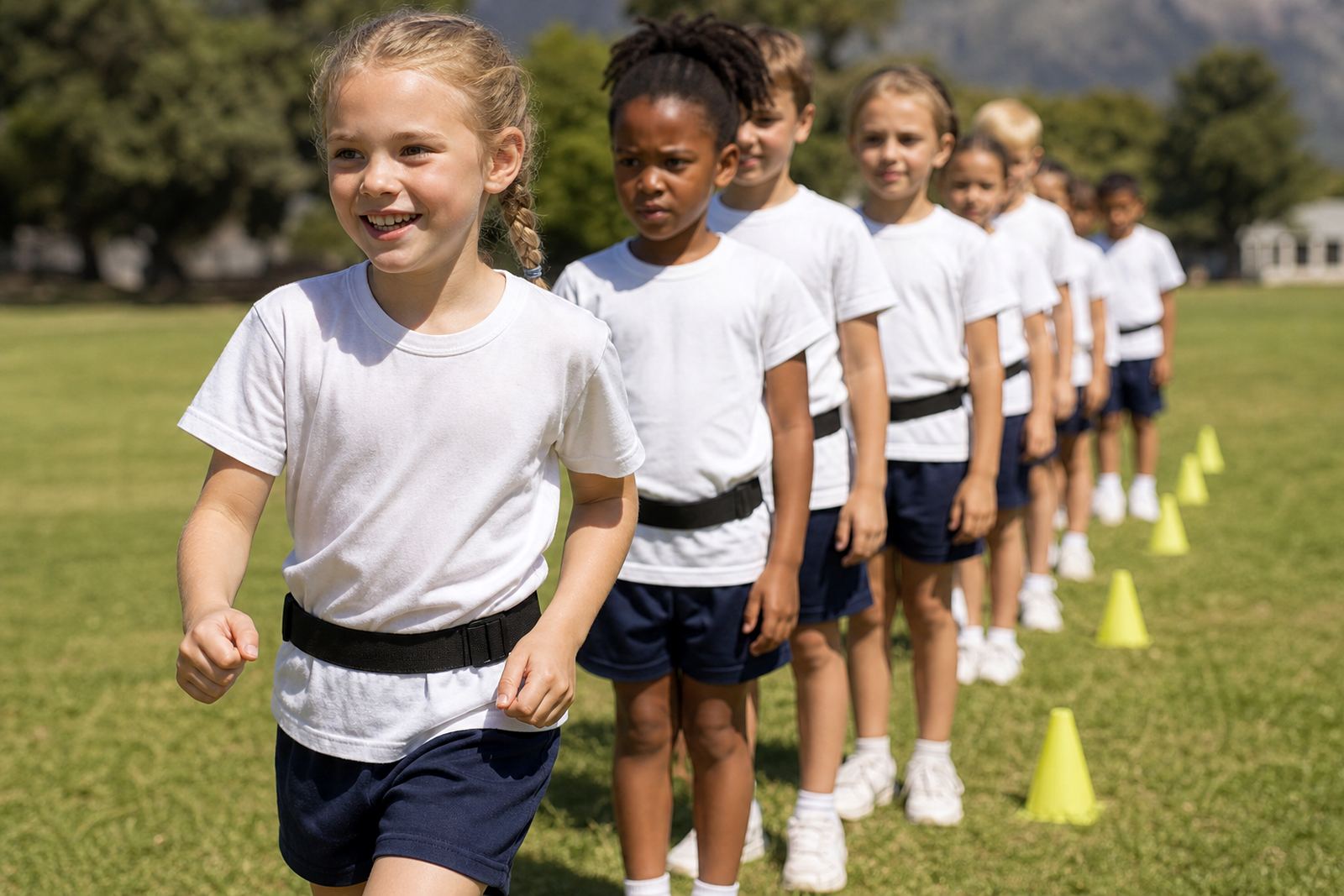
Ultra events often need more than one belt size or configuration. Clubs ordering for a team in Stellenbosch, Somerset West, Bellville or Cape Town may need participant sizing support, while race organisers in Johannesburg or George often need bulk planning for crew teams and event staff. We help with layout choices, repeat orders and dispatch coordination so the right belts arrive where they are needed, when they are needed.
For events, the useful planning questions are simple: how many runners, what distances, what compulsory kit, and whether the field includes both trail and road athletes. A 50 km field will often need a lighter configuration than a 100 miler, and a flat road ultra may call for a different pocket split than a mountain course. We also help with race pack inserts and custom colour runs when clubs want clear visual grouping for teams or pace squads.
- Participant sizing before the order is placed
- Colour matching for crew, club and event categories
- Clear pack lists for aid station and support teams
- Repeat order support for annual races and training blocks
Budget ranges for ultra runner belt orders in Rand
Budget depends on quantity, layout complexity and whether you need a simple training belt or a race-focused setup with additional carry space. For individual runners, entry-level waist belts usually sit in the lower hundreds of Rand, while more specialised hydration and storage systems cost more because of the added fit work and material use. For clubs and event organisers, bulk pricing can bring the unit cost down meaningfully once sizing is confirmed and the order is grouped together.
As a guide, many personal orders fall between R350 and R950 per belt, depending on the configuration. Club and event orders can start lower per unit on larger runs, especially where one layout is repeated across the full group. If you are planning for a marathon block, a multi-day trail event, or a race calendar that includes several venues, it usually pays to order a little extra for size swaps, late entrants and replacements. That avoids rushed buying at the last minute and keeps the team sorted before race weekend.
We base from Stellenbosch in the Western Cape and supply across South Africa, including Cape Town, Johannesburg, Durban and George. Enquiries come through the contact page form, and from there we can help with fit briefing, order planning and dispatch timing.