

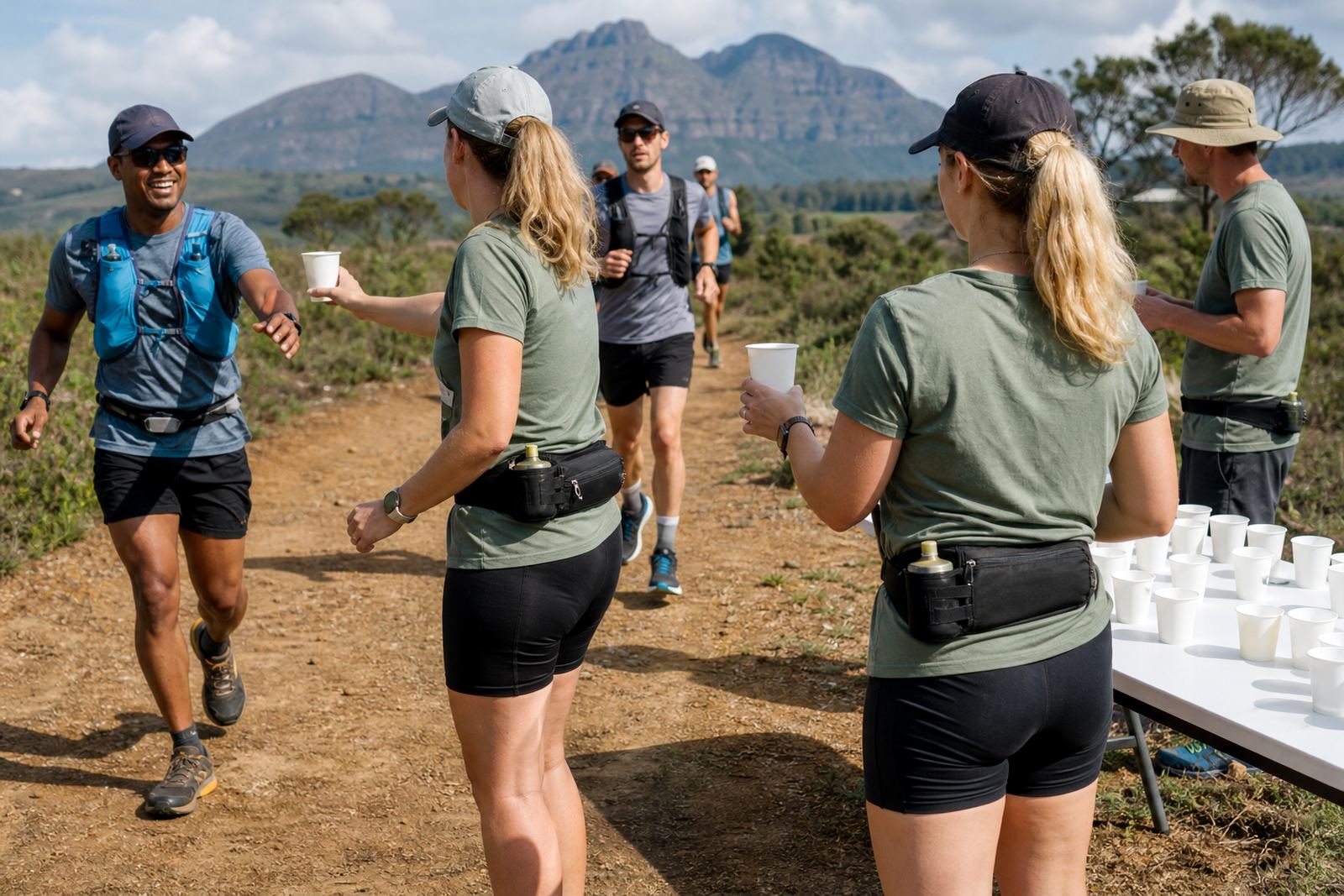
Paarl Aid Crew Setup
Home / Race Stories / Paarl Aid Crew Setup

Race Stories

Paarl Aid Crew Setup

A Paarl route support team needed a cleaner way to carry radios, gloves and small race items while moving between checkpoints. Waistbag Run set up crew belts that kept the kit secure, easy to reach and comfortable for long race day shifts.

What the Paarl crew needed on race morning

The team in Paarl was supporting a mixed road and trail event with several aid points, vehicle handovers and quick changes between standing still and moving fast. Their old carry method left radios slipping, gloves getting lost, and small supplies buried in pockets or loose bags. They needed something that sat close to the body, stayed stable while walking a route, and still let them get to the essentials without faffing about.

The brief was practical. Each crew member needed space for a radio, a spare pair of gloves, a few energy bars, small first aid items and a pen or marker. Some staff were working from the start area in Paarl, others were moving out on course, so the same belt had to work across different jobs and body sizes. The client also wanted a setup that would be easy to issue, collect and check after the event.

  • Client type: route support team for a race event
  • Town: Paarl, Western Cape
  • Carry items: radios, gloves, snacks, small race supplies
  • Goal: hands-free access with less bounce and less clutter

Constraints from the course and the weather

Paarl can get hot, especially on exposed road sections, and the crew were working through a long event day with a fair amount of movement. That meant the belts had to hold shape without digging in or riding up when the user bent, crouched or climbed in and out of support vehicles. There was also the usual Western Cape issue of dust on dry sections and a bit of sweat build-up once the sun came through.

We also had to keep the layout simple enough for mixed users. Some crew were used to radios and comms gear, others were only handling bottles and race day spares. So the setup needed clear pocket positions, a snug waist fit and a reliable closure that would not loosen under movement. With load shedding and early starts sometimes affecting prep time, the client also needed the order packed and labelled cleanly so check-in was quick on the morning. Nothing complicated, just a proper race support solution that worked.

  • Heat and perspiration were a factor on the course
  • Belts had to stay snug during bending and quick movement
  • Layout needed to suit different crew roles
  • Prep and issue had to be fast on event day

The crew belt setup we supplied

We supplied a batch of crew belts with a low-profile carry layout, chosen for route support rather than long distance running. The belts were set up to keep heavier items close to the centre, with lighter items in the outer sections so the load sat better on the hips. Each belt was sized for comfort and adjusted before dispatch so the team could issue them straight away.

The pouch layout gave enough room for the core kit without overloading the belt. Radios stayed accessible, gloves could be reached in seconds, and the small supply items had dedicated storage instead of being mixed together. We also added a simple fit briefing so the crew knew how to tighten the belt properly, where to place the heavier items, and how to keep the load balanced through the day.

  • Secure waist fit with adjustable sizing
  • Dedicated space for radio and small loose items
  • Balanced pocket layout to reduce bounce
  • Suitable for event marshals, aid crews and mobile support staff

Sizing, issue and dispatch over two weeks

The project moved from brief to packed issue in just over two weeks. In week one we confirmed the item list, checked the number of users and mapped the kit split for the different support roles. We then handled sizing guidance so the client could match the belts to staff before event day, which reduced last minute changes and kept the packing list tidy. A second round of checks made sure the labels and counts lined up with the final crew list.

By week two we had the belts packed, grouped and ready for dispatch to Paarl. The team wanted a simple handover with no mixed cartons, so we kept each group separate and marked the contents clearly. That saved time on site and made it easier to issue the right belt to the right person. It was a straightforward process but it needed attention to detail, as the crew did not have time to sort out mismatched sizes once the event started.

  • Timeline: 2 weeks from brief to dispatch
  • Step 1: crew count and role split
  • Step 2: sizing guidance and fit checks
  • Step 3: packed issue by user group

Race day results for the Paarl support team

The belts did exactly what the crew needed. Items stayed close to the body, movement was easier, and the team could reach radios and supplies without stopping or unpacking anything. That mattered at aid points where timing is tight and one person may need to pass water, another may answer comms, and a third may move between vehicles. Less fumbling means better response on the course, simple as that.

After the event, the client reported that the belts held up well through a full day of use and were easy to collect back in. That helped with stock control and made the next event planning easier. The crew also found the fit more comfortable than their previous carry method, especially for the people who were on their feet for long periods. A small thing, but on race day small things matter.

  • Faster access to radios and supplies
  • Less bounce and less shifting while walking
  • Cleaner issue and return after the event
  • Better comfort for all day route support

What we would repeat for the next Paarl event

If we were doing the same setup again, we would keep the same basic belt structure and tighten the role split even further. For example, the checkpoint crew can use a slightly different pocket layout from the moving support crew, so one group can carry comms first while another carries more small supplies. That kind of small change makes a real difference over a long day, especially when people are shifting between shade, sun and vehicle stops.

We would also keep the sizing check close to dispatch and keep the same label system for returns. That makes repeat orders easier and gives the organiser a proper record of who used what. For clubs, event managers and route teams in Paarl or anywhere else in the Western Cape, that is often the difference between a smooth morning and a scrambled one. It sounds simple because it is. Good kit should just work when the start gun goes off.

  • Refine belt layout by crew role
  • Keep pre-issue sizing in the plan
  • Use the same return and count system
  • Repeat the setup for future Paarl races

Key facts

ProjectPaarl Aid Crew Setup
Client typeRoute support team for a race event
LocationPaarl, Western Cape
Timeline2 weeks
SuppliedCrew belts for radios, gloves and small race supplies
Key benefitHands-free access with a stable, low-bounce carry

What our Running Waist Belt customers say

Verified Google reviews

Questions we get asked

Were the crew belts suitable for a full race day?

Yes. They were set up for long event shifts, with a snug fit and a layout that kept the main items close to the body.

Can the belt layout be changed for different crew roles?

Yes. We can adjust the pocket use for checkpoint staff, mobile support teams or comms-focused crew depending on the event.

How quickly can a similar order be handled?

For a straightforward crew order, we usually plan around a two week turnaround, depending on size counts and dispatch requirements.

Planning something? Send the team a message.

Contact form