
After every run: empty, shake out and check for grit
Before you put your belt away, empty all pockets and shake out dust, sand, pine needles and small bits of trail debris. This matters after beach runs, dry winter training in Gauteng, and any event where you have clipped in gels, keys or a soft flask. If grit sits in the seams or pocket corners it can wear the fabric and make zips and fasteners feel stiff over time.
Do a quick check for any pulled stitching, loose toggles or signs that the belt has been rubbing in one spot. If you use the belt often for marathons, club long runs or race events, this five minute habit can save you a bigger repair later.
- Remove all items from every pocket and pouch.
- Shake the belt gently over a bin or outside area.
- Check the lining, clips and seams for trapped dirt.
- Wipe off mud before it dries on the fabric.
Clean the belt by hand using cool water
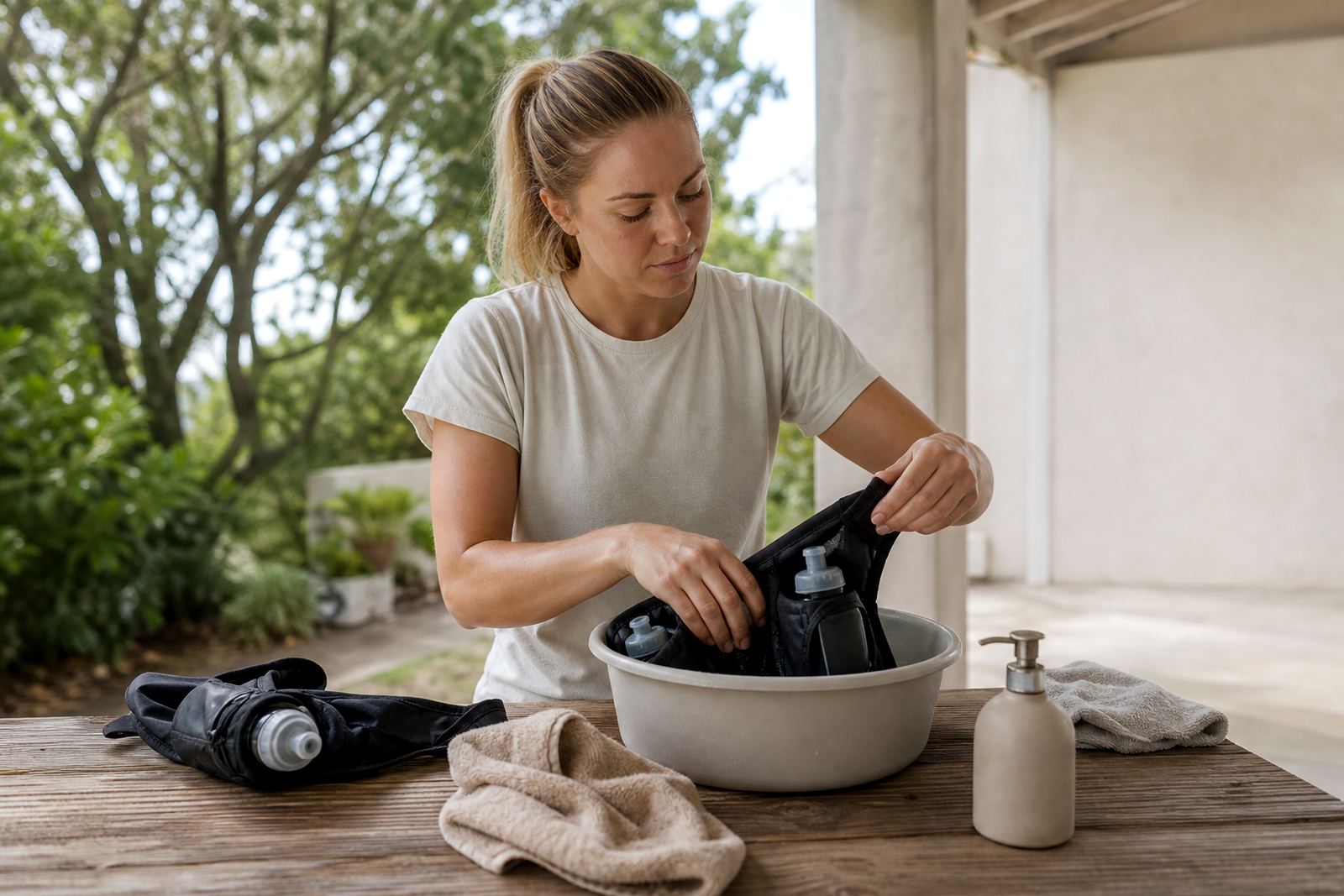
Most running waist belts can be cleaned by hand with cool or lukewarm water and a mild detergent. Use a soft cloth or your hands to lift off sweat, dust and drink residue. Avoid harsh bleach strong stain removers or hot water, because these can weaken elastic sections and affect the shape of the belt.
If the belt has been used on a wet trail or after a humid Durban morning, rinse it sooner rather than leaving salt and sweat to sit in the fabric. For belts with hydration pockets, pay extra attention to any areas that have had contact with spilled drink or sticky sports mix.
- Mix a small amount of mild detergent with cool water.
- Wipe the belt gently, inside and out.
- Rinse well until no soap remains.
- Do not wring the belt hard, especially if it has elastic panels.
Let it dry fully before you pack it away
Drying is one of the most important steps. After rinsing, press the belt between a clean towel to remove excess water, then hang it or lay it flat in a shaded airy spot. Direct sun can fade colours and make some materials feel harder than they should. In the Western Cape, a breezy stoep or laundry area often works well, while inland runners may need to keep the belt out of the heat and dust near open windows.
Never store the belt while it is still damp, even if it feels only slightly wet. A damp belt can develop a smell, and in a closed kit bag the moisture can affect the stitching and the inner padding. If you train before work and then leave the belt in your car boot all day, make sure it gets aired out properly when you get home.
- Use a towel to blot off extra water.
- Hang in the shade with good airflow.
- Keep it away from tumble dryers and heaters.
- Only pack it once all seams and pockets are dry.
Look after hydration pockets and bottle holders
If your belt carries a soft flask or bottle, rinse the holder as well as the bottle after every use. Even plain water leaves residue once it dries, and sports drinks can leave sticky marks that attract dirt. Check the elastic straps, holders and any drawcords for wear, especially if the belt is used on trail runs with lots of movement.
When fitting bottles back into place, make sure the pocket has no stones or hard bits that could rub a hole in the material. A snug fit is important, but forcing the bottle in too tightly can stretch the holder and make the belt sit unevenly on the hips.
- Rinse bottle holders after each session.
- Check for sticky residue around the opening.
- Inspect elastic, loops and fasteners for wear.
- Replace damaged inserts or worn attachments before race day.
Store the belt flat and avoid heavy kit on top
Store your belt in a cool dry place out of direct sunlight. A shelf, hanging hook or drawer works well as long as the belt is not crushed under other kit. If a waist belt is left folded tightly under shoes, bottles or a heavy bag it can lose its shape and start to sit awkwardly on the body.
For race teams, clubs and event organisers holding multiple belts for participant use, keep sizes sorted and clearly marked. That makes race pack prep simpler and helps when you are checking stock before a busy weekend in Stellenbosch, Cape Town or Johannesburg. It also makes it easier to spot any belt that needs cleaning or repair before it goes back out.
- Store in a dry shaded place.
- Avoid compressing the belt under heavy items.
- Keep different sizes and colour runs grouped separately.
- Air the belt out after long events or training blocks.
When to retire a belt or ask for support
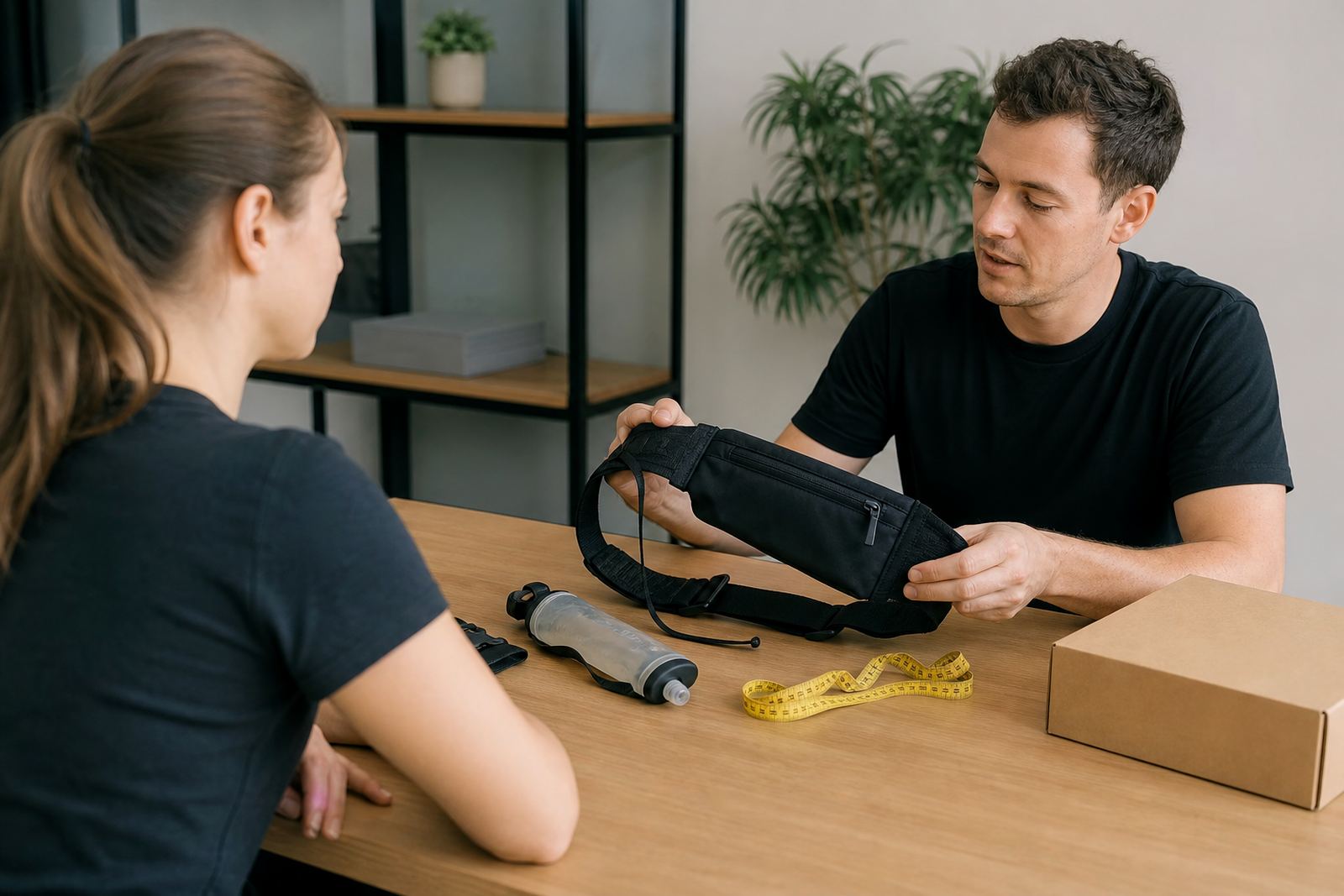
Even a well cared for belt will eventually show wear. If the elastic is stretched out, the fit keeps slipping, pockets have started tearing, or clips no longer hold properly, it may be time to replace the belt or review the setup. Runners who train through winter rain, summer heat and coastal humidity often notice wear sooner on the parts that get the most movement.
If you are unsure whether the belt is still suitable for regular use, compare the fit with a newer unit and check the stress points around the waist opening, bottle holder and any sewn joins. For clubs, events and repeat orders, it helps to review the condition of a few sample belts before planning the next batch. A little maintenance goes a long way, but there is a point where a tired belt simply won't give the same support.