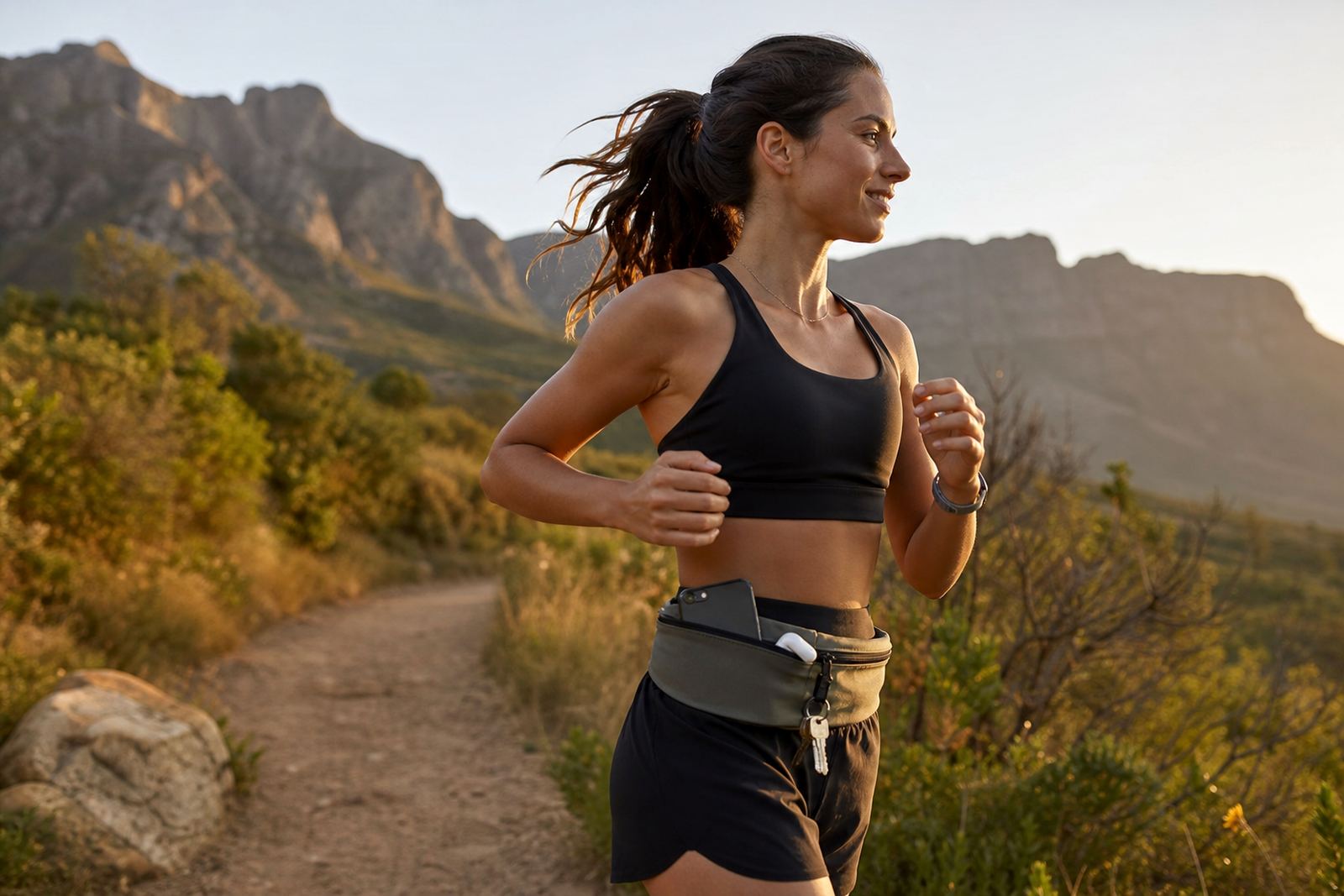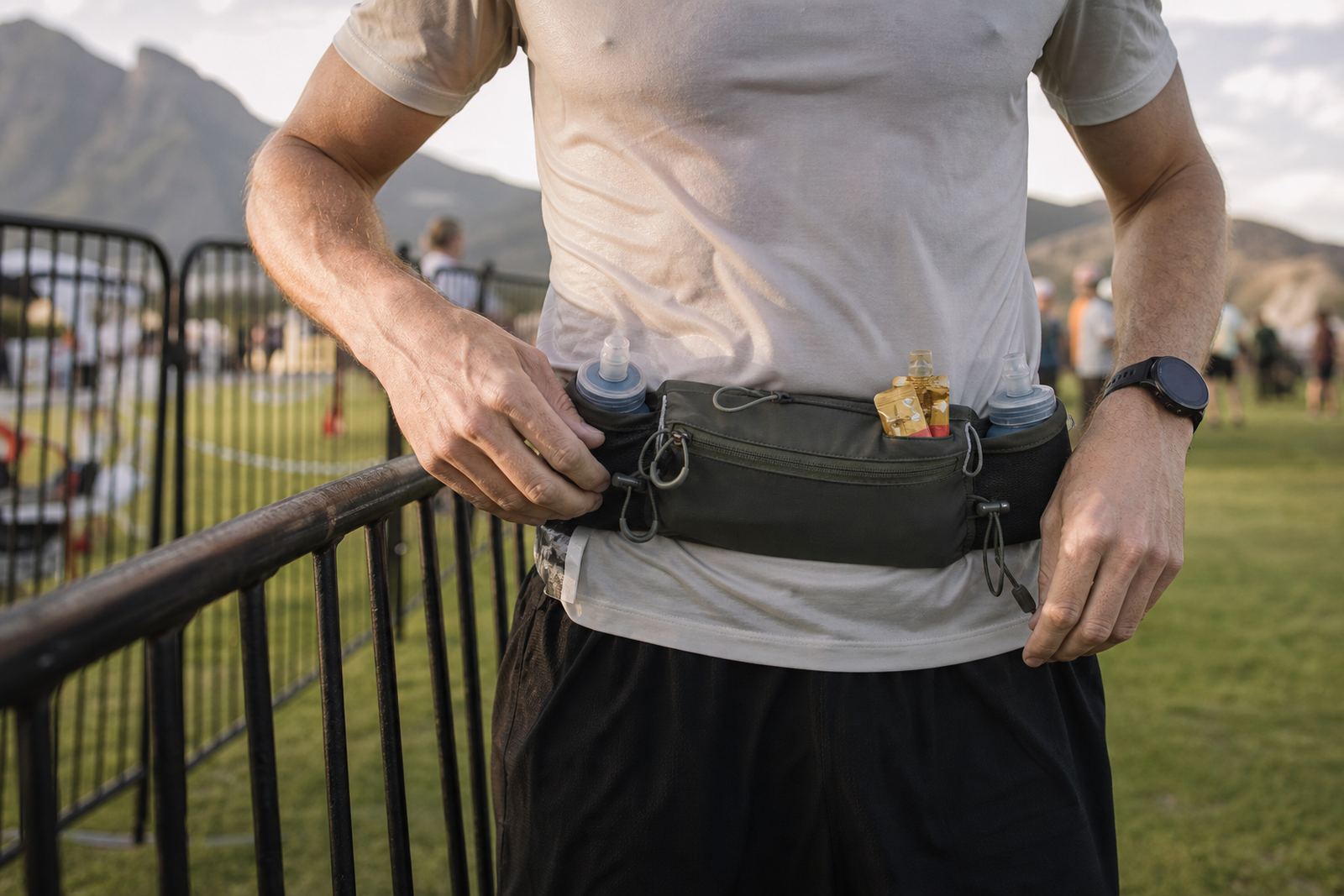

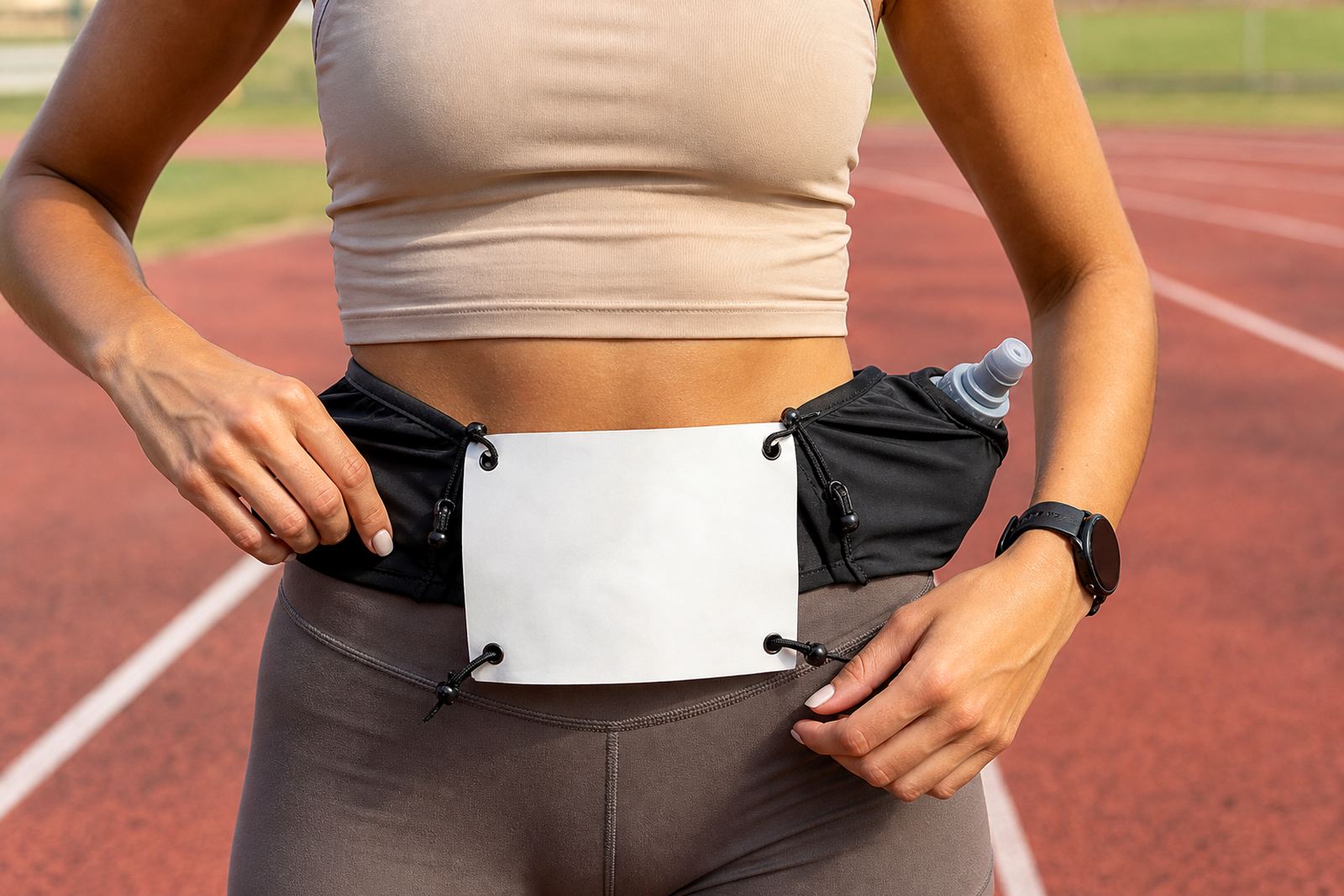
Race Number Holding Without Pins
The Bib Toggle Belt is built for runners who want a cleaner way to carry a race number. Instead of putting pins through fabric, the bib fixes onto toggle points at the front of the belt so your shirt or singlet stays intact. That matters for lighter technical tops, club kit and borrowed event kit where pin holes become a problem after a few races.
The belt sits around the waist and gives a stable base for bib display, with the number kept flat and easy to read for marshals and timing staff. It is suitable for road races, trail events, fun runs and team entries where runners need a quick, repeatable setup. On windy days in places like Stellenbosch, Cape Town or along the Durban coast, the close fit helps reduce flapping and movement.
Because the bib sits on the belt rather than on the chest, runners can place their number lower if they prefer a cleaner front view for photos and sponsor visibility. It also helps when a vest has mesh panels or pockets that do not take pins well. For race-day teams and event organisers, this makes participant prep simpler and faster.
Sizes, Fit Options And Practical Spec Points
The belt is designed for a snug but comfortable fit across a range of waist sizes. It works best when worn over a lightweight running layer or directly over the waist, depending on the event dress code and what else the runner is carrying. The waistband should stay close enough to stop bounce, but not so tight that breathing or hip movement is restricted.
- Adjustable waist fit for adult runners
- Low-profile bib attachment points at the front
- Lightweight construction for road and trail use
- Fast on and off for race morning changes
- Fits under or over a running top, depending on event rules
- Designed for repeated use across training and race days
For club orders or event packs, the sizing approach can be matched to the entry list by waist range. If you are ordering for a mixed group, it helps to separate men’s, women’s and youth entries where needed, especially if the belt will be used at a large finish-line event with many participant sizes. The fit needs to be checked before race day, not after registration has closed.
Where The Bib Toggle Belt Works Best
This product suits runners who need one simple piece of kit that handles bib display without extra fuss. It is a practical choice for trail runners who wear hydration gear, road runners doing timed races, and race organisers who want a more polished look for participant packs. It also suits smaller club events in Paarl, Somerset West and Bellville where runners often arrive with different kit preferences.
It is especially useful where runners already wear a waist belt for gels, a bottle or a phone. In those cases, the bib toggle setup keeps the race number in the right place without asking the runner to layer extra straps or clips. That can make a difference on longer runs where comfort matters, and where a bib pinned too high or too low can rub against the chest or bounce in the wind.
- Trail races with hydration packs or soft flasks
- Road races where bib visibility must be clear at all checkpoints
- Fun runs and corporate entries with mixed kit choices
- Club training sessions and time trial days
- Event pack distribution where quick fitting is needed
Fitting, Setup And Event Day Use
Installing the Bib Toggle Belt is straightforward and does not need tools, power or gas. There is no assembly bench, charging point or heated fitting process required. The runner simply adjusts the waistband, positions the belt at a comfortable height and attaches the bib to the front toggle points before heading to the start line. For race events, this can be done at registration tables, in club cars, or at a staging tent before the gun goes off.
For event teams, a short product briefing usually helps runners place the belt correctly the first time. The number should sit flat and centred, with enough tension to stay in place through movement but not so much that it folds. If the event uses timing mats or spot checks, the bib should remain unobstructed and visible from the front. On a hilly route or rocky trail, a poor fit can shift sideways, so it is worth doing a quick bounce test before the start.
If the belt is being issued in bulk, it is best to plan the fitting alongside race pack inserts or registration instructions. That reduces last-minute swapping and helps with participant flow at busy starts in Johannesburg, Cape Town or George. A small slip in planning can lead to a rushed fit, and runners feel that straight away.
Care, Cleaning And Repeat-Use Servicing
The Bib Toggle Belt is made for repeated use, so it should be cleaned and checked after each event. Sweat, dust and road grime can build up quickly in Western Cape summer heat or during humid coastal races, and that can affect the feel of the waistband over time. A light rinse after use and proper drying in shade helps keep the material in good condition.
When checking the belt between events, look for worn attachment points, stretched sections or any area where the bib sits unevenly. If a belt has been packed tightly into a kit bag with bottles, gels and shoes, it should be inspected before the next start. This is especially useful for clubs and event organisers who reuse stock across multiple race weekends.
- Rinse after sweaty or dusty events
- Dry out of direct sun where possible
- Check bib points before each reuse
- Store flat or loosely rolled, not crushed
- Keep away from sharp pins, blades and rough Velcro
If you are managing a repeat order for a team or event series, keep a small spare count aside for late entries and damaged items. That avoids delays when numbers change close to race day.
What To Confirm Before Ordering
Before placing an order, check how the belt will be used and who will wear it. The most useful details are waist range, event type, expected bib size and whether runners will also carry hydration gear. It also helps to know if the belts are for individual retail sales, a club order, or a race pack issue for a larger field.
For organisers, it is worth confirming the number of participants, the fitting window and whether the belts should be grouped by size or issued as one standard option. If the race is on technical trail in Stellenbosch or George, or on a faster road route in Durban or Cape Town, the fit expectations may differ slightly because runners carry different layers and gear. For example, a trail runner often wants a firmer hold than a 10 km road runner who carries less kit.
- Waist range needed for the group
- Expected bib dimensions and event rules
- Single orders or bulk event quantities
- Need for fit briefing or participant sizing support
- Whether the belt must work with other waist gear
When the details are clear, the order is easier to plan, pack and dispatch on time. That matters for last-minute event changes, club deadlines and race weekends where there is no room for guesswork.
Key facts
| Product type | Running bib toggle waist belt |
|---|---|
| Main use | Secure race number attachment without pins |
| Fit | Adjustable adult waist fit |
| Use cases | Trail running, road running, club events, race packs |
| Setup | No tools, no power, no gas required |
| Care | Rinse, dry in shade, inspect attachment points before reuse |