What an aid crew belt does on race day
An aid crew belt is a practical carry belt for marshals, pace crews, support runners and event helpers who need hands free movement. It keeps small items close at hand, so you are not digging through pockets or dropping supplies on dusty verges, wet tar or trail singletrack. On busy race mornings in Stellenbosch, Cape Town or Durban, that saves time and keeps the support flow steady.
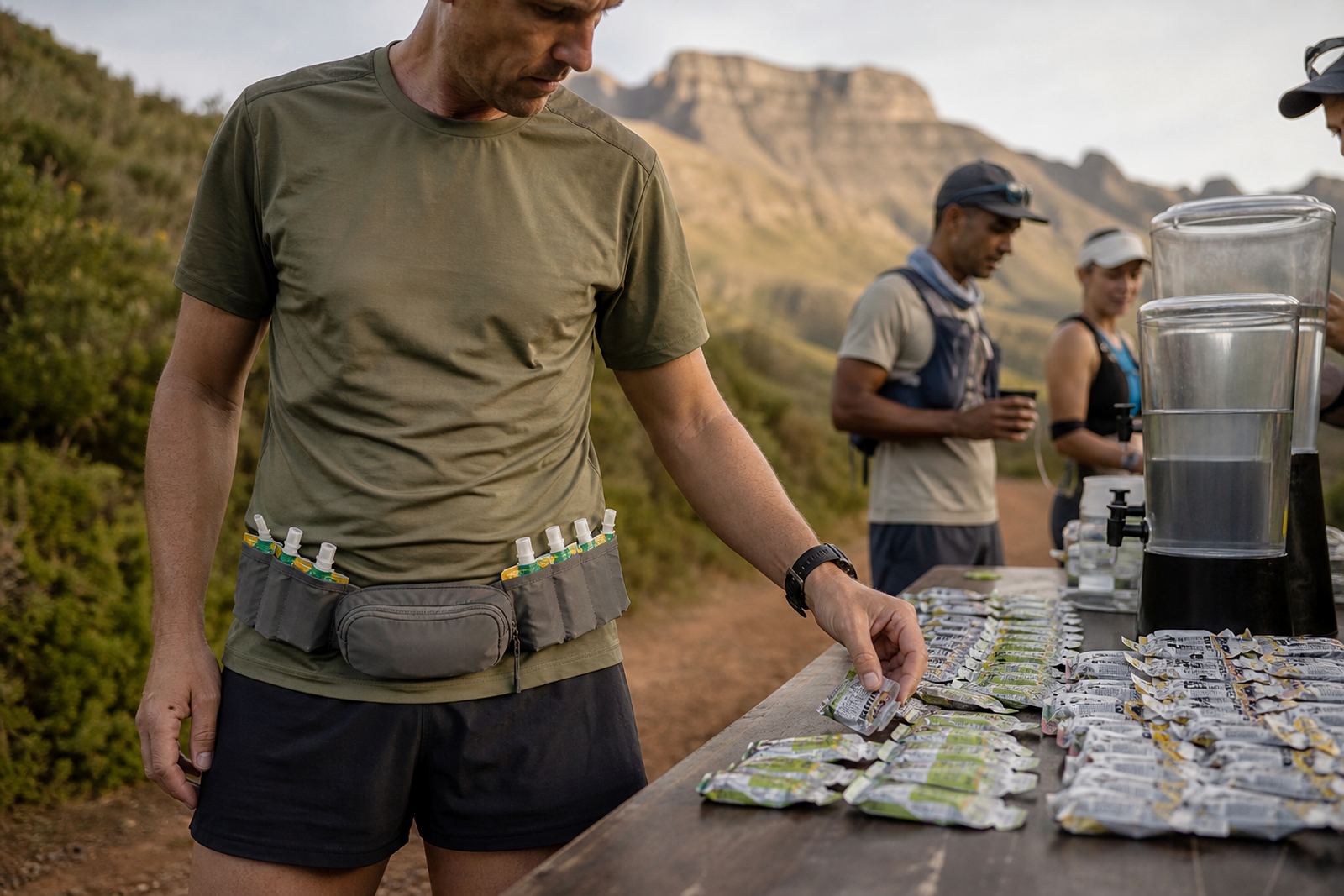
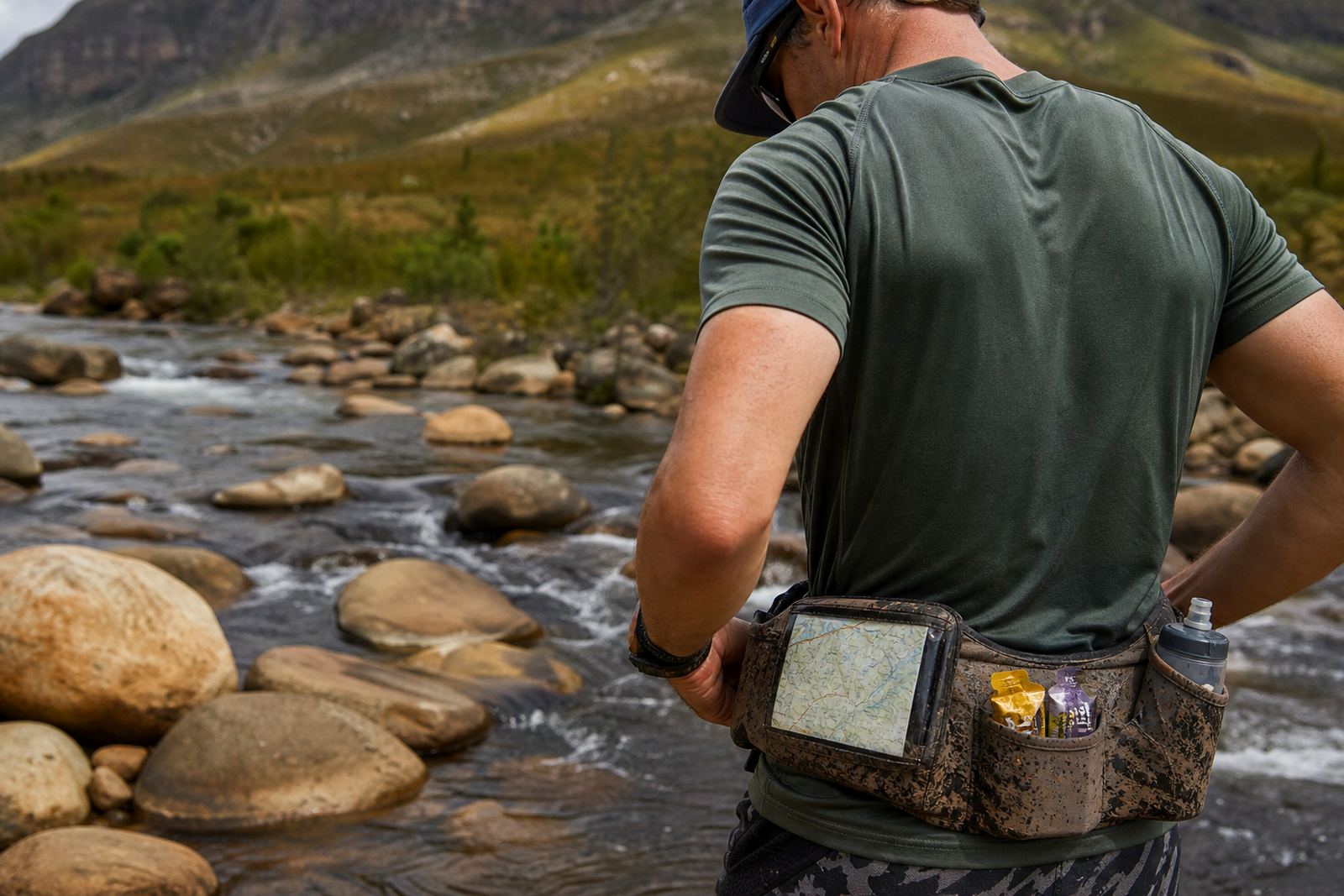
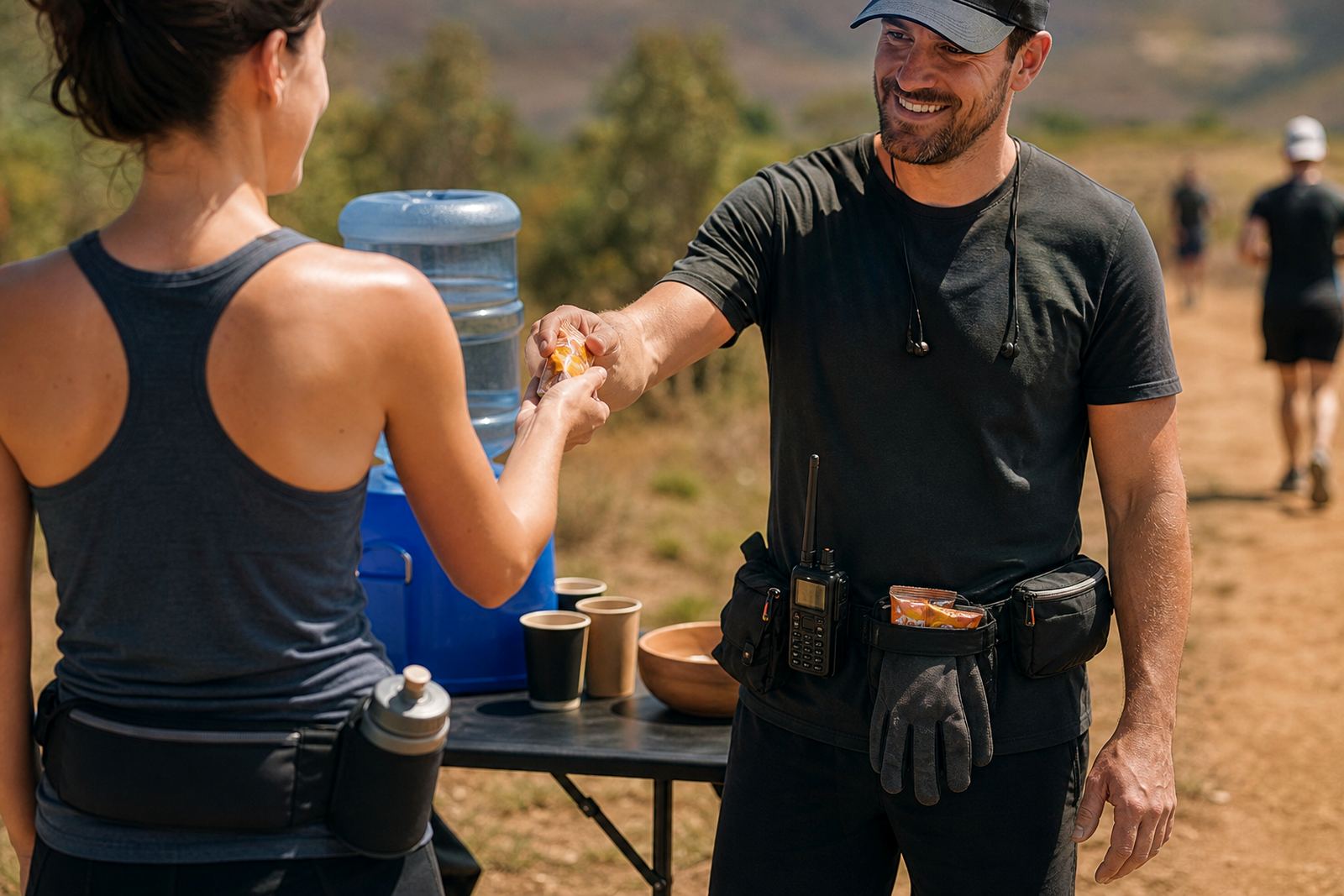
The belt is designed for light to moderate loads, not for heavy tool carry. Typical contents include energy chews, sachets, lip balm, a compact sponge, phone, gloves, tape and a small soft flask if the route plan calls for it. Some crews also use it for relay handover items and race day notes. The fit is low bounce and stable, which matters when you are walking the route, jogging between points, or standing for long stretches in the sun.
- Hands free carry for race support items
- Stable fit for walking, jogging and station work
- Easy access to small essentials during peak event times
- Suitable for road races, trail events and club days
Sizes, pouch layouts and carry options
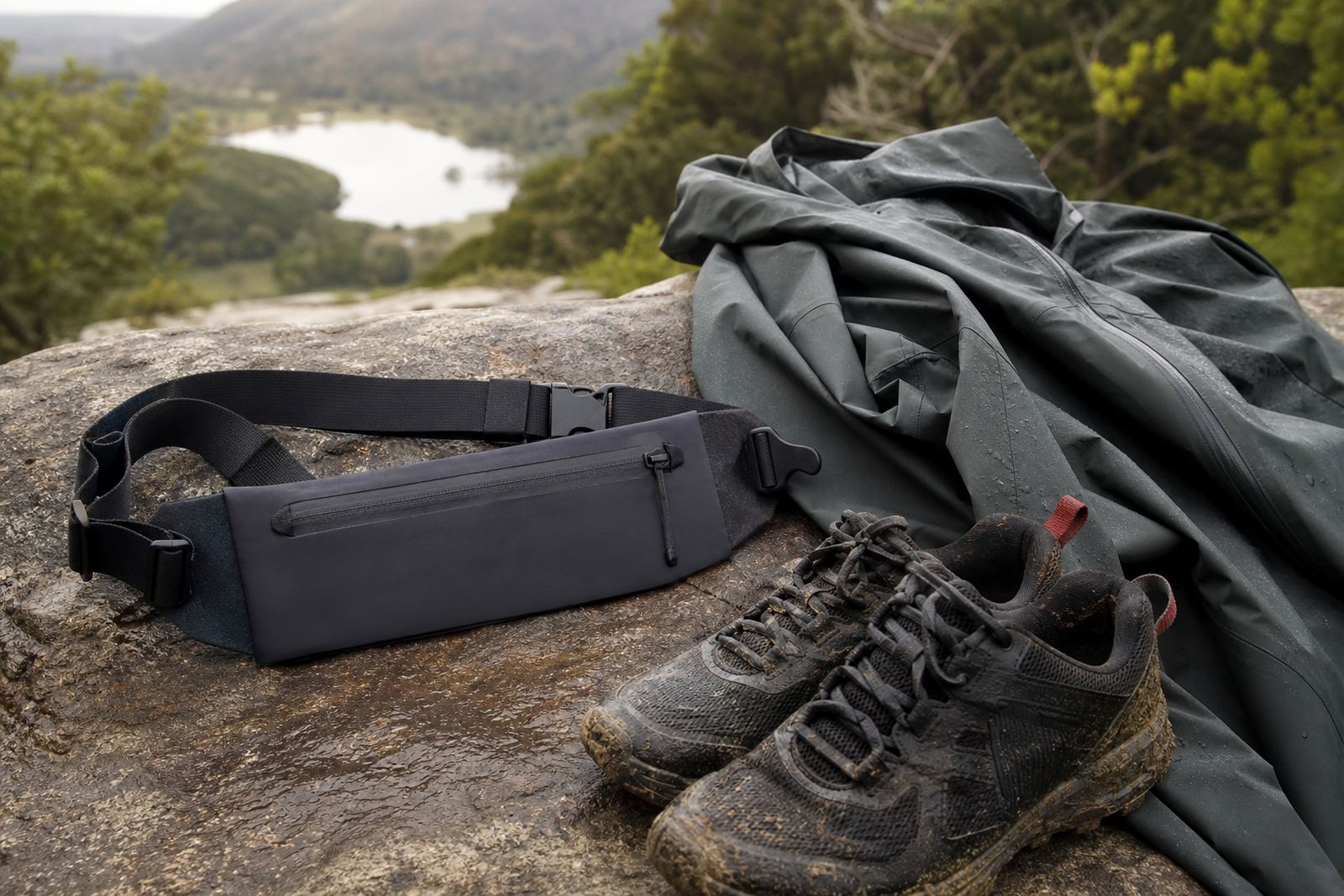
Aid crew belts are supplied in a range of sizes so the fit can be set for different body shapes and over light clothing or a wind shell. Adjustable webbing gives a snug finish without pinching, and the closure should sit flat against the waist. For event teams that work long shifts, a good fit is important because a belt that rides up becomes irritating after the first hour or two.
Layout choices depend on what the crew needs to carry. Some teams want one main pocket with quick access zip closure, while others need a split pocket arrangement for separating gels from tape or keys. If the route is dusty, a covered pocket is useful. If the event is on the coast, drainage and quick drying fabric help when sea mist or rain gets into kit. A few runs in the Cape can be chilly in the morning and hot by midday, so the belt should sit comfortably over a base layer or thin shirt.
- Adjustable waist fit for men and women
- Single pocket or split pocket layouts
- Zip closure or flap cover options
- Light, medium and larger capacity versions for different roles
Where aid crew belts work best
These belts are used by support crews on trail races, road races, fun runs, school sports days and corporate events. They suit aid stations, mobile water support, route sweep teams and pace helpers who need to stay mobile. In Stellenbosch and Paarl, they are useful on vineyard trails and steep climbing sections where crew members move between points with limited time. In Johannesburg and Pretoria type event conditions, the belt helps when the route is spread out and support teams need quick access to supplies.
They also work well for event crews who carry small emergency items, hand sanitiser, sunscreen and blister care kits. On hot summer days in Durban, a compact belt is easier than a bulkier carry bag, especially where humidity makes heavy kit uncomfortable. On windy days in George or coastal Cape Town, a secure waist carry is less likely to swing around or catch the breeze.
- Trail races with scattered aid points
- Road events with mobile support staff
- School sports, cycling support and walk events
- Finish area teams and packet distribution crews
Fit, setup and event preparation
There is no power or gas requirement for this product. Installation is simple, size the belt, set the buckle or fastening point, and check that the main pocket sits at the front or side where the wearer can reach it quickly. For events with crew briefings, it helps to assign the same belt position to each role so the team knows where to reach for items without stopping to ask. That small bit of planning saves time on busy routes.
Before race day, check that the belt is adjusted over the clothing the crew will actually wear. A belt tested over a thin T shirt may feel different over a rain jacket or a warmer top. If a support team is working in a load shedding affected start village with limited lighting, reflective detail can help with visibility while packing and loading kit before sunrise. For night events, a simple torch clip point can be useful if the role requires it. The belt should not interfere with a race bib, radio harness or hydration vest worn underneath.
- No electricity, fuel or gas needed
- Simple size adjustment before the event
- Works over light clothing or a thin outer layer
- Can be paired with other crew kit without crowding the waist
Care, cleaning and servicing between events
Aid crew belts are easiest to keep in good condition when they are cleaned after each event. Shake out dust, rinse off sweat and let the belt dry fully before storage. On muddy trail weekends, especially after wet weather in the Western Cape, check seams, zips and stitching for grit that can wear the fabric. Do not store the belt while damp, because coastal humidity can leave it smelling stale and can weaken some materials over time.
If the belt is used by several crew members across a season, regular inspection is worth doing. Look at buckle wear, loose stitching and stretched elastic sections. Replace a worn belt before race day rather than trying to make do. That is usually cheaper than dealing with a broken strap at an aid station. A quick service check before big events, especially multi day trail races, keeps the kit ready and avoids last minute drama.
- Rinse after dusty or sweaty use
- Air dry fully before packing away
- Check stitching, buckle tension and zip function
- Store flat or loosely rolled, not folded tight
What to check before placing an order
When ordering aid crew belts, start with the number of support people, the type of route and the items each person must carry. A marshal on a short urban loop needs a different setup from a trail crew member carrying gels and tape over several kilometres. It helps to confirm whether the group wants one standard size, mixed sizing, or a branded colour variation for different roles. For events in Cape Town, Durban, Johannesburg, Stellenbosch, George, Paarl, Somerset West and Bellville, we also recommend confirming the dispatch timing so kit arrives before route marking and pack out.
Useful order details include waist size range, pocket layout, preferred fastening style and whether the belts must be matched to other crew gear. If you need support with sizing for a team, the enquiry form on the contact page is the right place to start. We can help with participant or crew sizing, bulk planning and repeat order support, which is useful when the same event runs year after year. Michael van der Merwe and the team work from our Stellenbosch base and handle event supply with practical timing, clear counts and proper dispatch coordination. It keeps things orderly, even when the event calendar gets busy and the rain comes in unexpectedly.
- Number of crew members and roles
- Waist size range and fit preference
- Pocket layout and item list
- Delivery town, event date and dispatch deadline
Key facts
| Product type | Support crew waist belt for event essentials |
|---|---|
| Fit range | Adjustable sizes for light clothing to thin outer layers |
| Carry capacity | Small to medium items, not for heavy tools |
| Materials | Lightweight wipe clean webbing and pocket fabric |
| Closure | Secure buckle or fastening system with flat profile |
| Use areas | Road races, trail events, aid stations and sweep teams |